
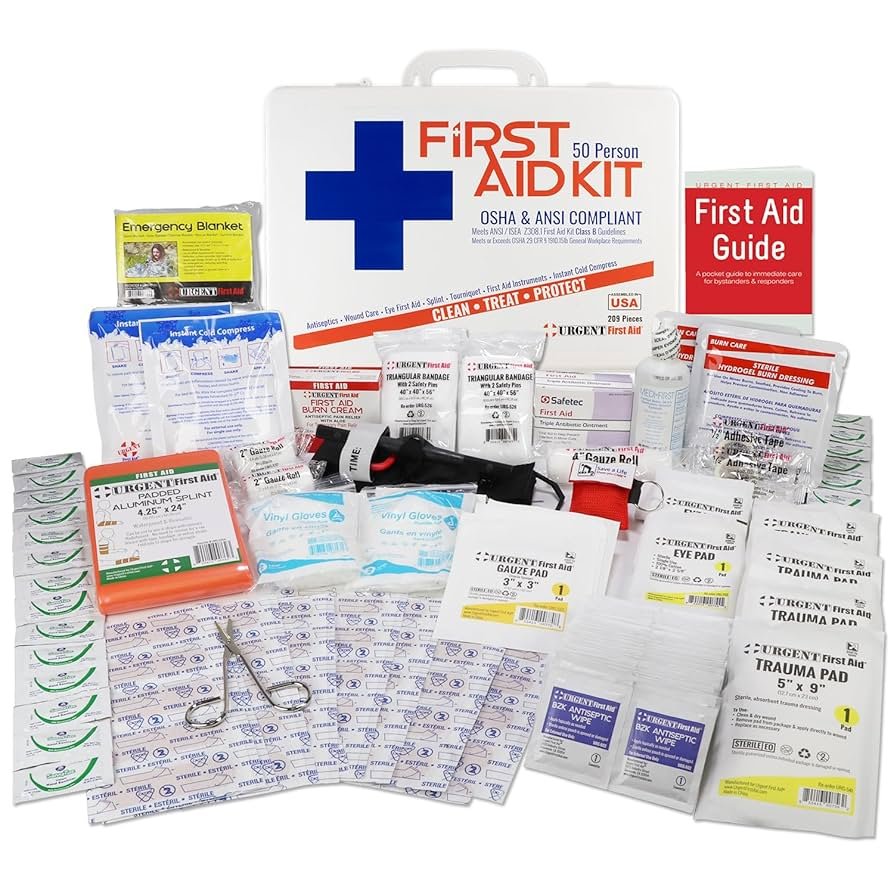
When a worker suffers a cut, burn, or sprain on the job, every second counts. Having a compliant first aid kit isn’t just a best practice for workplace safety — it’s a legal requirement under OSHA’s general industry rules. Non-compliance can lead to fines of up to $15,625 per violation as of 2026, plus increased liability if inadequate supplies contribute to the severity of an employee’s injury.
Many employers rely on outdated guidance or generic pre-assembled kits that fail to meet their workplace’s unique hazard needs. This guide breaks down the current 2026 OSHA first aid kit requirements for general industry, walks you through hazard assessment, highlights common compliance pitfalls, and gives you actionable steps to stay audit-ready.
What is the Governing OSHA Standard for General Industry First Aid?
The core regulation governing first aid requirements for general industry (all non-construction, non-maritime workplaces including offices, manufacturing facilities, warehouses, retail stores, and food service operations) is 29 CFR 1910.151, detailed on the official OSHA general industry first aid standard page.
Unlike outdated guidance from the early 2000s that prescribed a rigid minimum kit contents list for 10-person workplaces, the current standard focuses on two core requirements:
- First aid supplies must be readily accessible to all employees at all times, with no unreasonable barriers to access.
- The type and quantity of supplies must be tailored to the specific hazards present in your workplace.
While OSHA does not mandate a one-size-fits-all contents list, it defers to the voluntary ANSI/ISEA 307 first aid kit content standards as the industry benchmark for compliant kits. The 2022 edition of this standard, updated every 5 years to reflect current emergency care best practices, is the current reference for most OSHA audits.
Required First Aid Kit Contents for General Industry
A common mistake we see in workplace safety audits is employers purchasing generic pre-assembled first aid kits and assuming they are automatically compliant, without cross-referencing the contents to their specific hazard profile. To meet OSHA expectations, your kit must include both baseline ANSI/ISEA 307 required supplies and hazard-specific items tailored to your operations.
Baseline ANSI/ISEA 307 Required Supplies
All general industry first aid kits must include the following core items, regardless of workplace type:
- Adhesive bandages in multiple sizes for minor cuts and abrasions
- Sterile gauze pads (2×2 and 4×4 inch sizes)
- Adhesive surgical tape
- Antiseptic wipes and antibiotic ointment
- Disposable nitrile gloves (multiple pairs)
- CPR barrier device (face shield or mask)
- Medical-grade scissors and pointed tweezers
- Elastic bandages for sprains and strains
- Triangular bandage for slings or pressure dressings
- Instant cold packs (non-refrigerated)
- Burn dressing (minimum 4×4 inch, sterile)
- Sterile eye wash solution (minimum 4oz for low-risk workplaces, 16oz for high-risk)
- First aid instruction manual
Hazard-Specific Additions for Common General Industry Risks
In addition to baseline supplies, you must add items that address the unique hazards in your workplace. Common additions include:
- Chemical handling environments: chemical burn neutralizer, splash goggles, additional eye wash solution
- Food processing or healthcare-adjacent settings: waterproof adhesive bandages, antiseptic hand cleanser
- Manufacturing, warehousing, or fabrication: hemostatic gauze, tourniquets, large trauma dressings (6×8 inch or larger)
- Cold storage or outdoor work sites: emergency thermal blankets, hand warmers
- Areas with airborne dust, fumes, or irritants: N95 or higher respiratory masks
 A compliant first aid kit includes all ANSI/ISEA 307 baseline supplies plus hazard-specific items for your workplace.
Conducting a Formal Workplace Hazard Assessment
OSHA requires employers to conduct a formal hazard assessment to determine the appropriate first aid supplies for their workplace. This is not a one-time task: you must repeat the assessment at least annually, or whenever new hazards are introduced (such as new equipment, chemicals, or work processes).
Follow these steps to complete a compliant hazard assessment:
- Walk through your entire facility, including remote worksites and break rooms, and identify all potential injury risks: laceration hazards from sharp equipment, burn risks from hot surfaces or chemicals, crush risks from heavy machinery, chemical exposure risks, slip/trip/fall risks, etc.
- Review your OSHA 300 log of work-related injuries and illnesses for the past 3 years to identify common, recurring injuries that may require specialized supplies.
- Consult with frontline employees and your safety committee to identify unrecorded near-misses or hazards that may not appear in official logs.
- Match identified hazards to required first aid supplies: for example, a facility with metal cutting saws will need heavy-duty trauma dressings and hemostatic gauze, while a corporate office only needs basic cut and burn supplies.
For small office or break room first aid stations, sealed, labeled reusable storage containers work well for keeping small supplies like antiseptic wipes and adhesive bandages dry and organized.
First Aid Kit Placement and Accessibility Rules
Even a fully stocked first aid kit is useless if employees can’t access it quickly during an emergency. OSHA’s "readily accessible" requirement means you must eliminate all unnecessary barriers to access, with specific guidelines for placement:
- Kits must be located on the same floor/level as the employees they serve. Do not place a single kit in a basement to serve a multi-story manufacturing floor, for example.
- Travel time to the kit should never exceed 3-5 seconds for high-risk areas (such as machine shops or chemical storage rooms), which typically translates to a maximum distance of 200 feet. For low-risk areas like administrative offices, a maximum distance of 500 feet is acceptable.
- Kits must not be stored in locked cabinets or rooms unless a designated employee is available to unlock it immediately at all times. If no staff member is available to provide immediate access, the kit must be stored in an unlocked, visible location.
- All kits must be marked with high-visibility red-and-white signage that meets OSHA’s Safety Color Code standards, so employees can locate them quickly even in low-light or emergency conditions.
- Kits must not be blocked by inventory, equipment, or furniture. Mount kits at eye level or slightly lower for easy visibility.
For high-traffic manufacturing or warehousing facilities with high injury risk, a large-capacity storage bin keeps extra sterile gauze, burn dressings, and trauma supplies easily accessible for quick restocking. Standard office first aid kits often fit neatly in a tall rectangular storage bin mounted under a break room counter for out-of-the-way but immediate access.
 All first aid kits must be marked with high-visibility signage and placed in unlocked, easily reachable locations.
Inspection, Maintenance, and Restocking Protocols
OSHA does not specify an exact inspection frequency, but nearly all state OSHA plans and industry best practices require monthly inspections of all first aid kits, with immediate checks after any supplies are used. During each inspection, verify the following:
- All baseline and hazard-specific supplies are present and undamaged.
- No supplies are expired: pay special attention to antiseptic wipes, burn gel, and any medications, which often have short shelf lives.
- The kit container is intact, weatherproof if located in an unheated or outdoor area, and clearly labeled.
- Your inventory log is up to date, with records of all inspections, restocking, and used items.
Restock kits immediately after any use, using a standardized checklist to avoid missing critical items. Keep a backup stock of all core supplies on site to avoid delays in restocking. For outdoor or unheated first aid kit locations, insulated gallon-sized storage containers protect temperature-sensitive supplies like cold packs and chemical burn gel from freezing or heat damage. For general industry settings with high laceration or crush injury risk (such as metal fabrication or food processing), a heavy-duty storage tote keeps larger trauma dressings, tourniquets, and eye wash supplies separated and easy to locate during an emergency.
 Monthly inspections and detailed inventory logs are required to demonstrate OSHA compliance during audits.
Employee Training and Emergency Response Requirements
OSHA requires employers to ensure all employees know the location of first aid kits and how to use the supplies inside. If your workplace is more than 3-5 minutes away from a medical facility, you must have at least one employee per shift trained in first aid and CPR. Training must cover:
- How to assess injuries and determine when to provide on-site care vs. call 911
- How to use all supplies in your workplace’s first aid kit
- How to report injuries and near-misses to your safety team
- How to assist employees with disabilities or language barriers during an emergency
You must post emergency contact numbers (including 911 and your on-site safety officer) and a map of all first aid kit locations in common areas, and conduct annual emergency response drills to ensure employees are familiar with procedures. For remote worksites, delivery drivers, or employees working in isolated areas of a facility, compact travel-sized storage options are ideal for small, grab-and-go first aid kits that can be carried at all times.
Common Compliance Mistakes to Avoid
Even well-intentioned employers often make avoidable errors that lead to OSHA citations. The most common first aid compliance mistakes for general industry include:
- Storing kits in locked cabinets without a staff member available to unlock them immediately
- Using a generic, one-size-fits-all kit without tailoring it to your workplace’s specific hazards
- Failing to conduct an annual hazard assessment, or updating kits when new hazards are introduced
- Not maintaining documentation of inspections, restocking, and employee training
- Placing kits in locations blocked by inventory or equipment, or too far from high-risk work areas
- Failing to address first aid needs for remote workers, contractors, or multi-employer worksites (you must clearly define which party is responsible for providing and maintaining kits in shared spaces)
2026 Penalties for Non-Compliance
As of 2026, OSHA can issue significant penalties for first aid kit non-compliance, depending on the severity of the violation:
- Serious violations (hazards that could cause an accident or illness that is likely to cause death or serious physical harm): up to $15,625 per violation
- Willful or repeated violations (intentional failure to comply, or repeat offenses after prior citation): up to $156,259 per violation
Beyond OSHA fines, non-compliance can lead to increased workers’ compensation costs and liability claims if an employee’s injury is worsened by inadequate first aid supplies. Staying proactive with compliance is far less costly than responding to a citation or injury claim.
Frequently Asked Questions
What Are OSHA First Aid Kit Requirements For General Industry?
OSHA’s general industry first aid requirement (29 CFR 1910.151) mandates that employers provide readily accessible first aid kits tailored to the specific hazards of their workplace. While OSHA no longer prescribes a fixed list of kit contents, it references the ANSI/ISEA 307 standard as the benchmark for compliant supplies. Employers must also ensure employees know the location of kits and how to use them, and conduct regular inspections and restocking.
How Often Should OSHA First Aid Kits Be Inspected?
OSHA does not mandate a specific inspection frequency, but industry best practice and most state OSHA plans require monthly inspections of all first aid kits, with immediate checks after any use of supplies. Inspections should verify all items are present, undamaged, and unexpired, and that the kit container is intact. Detailed inspection logs must be kept to demonstrate compliance during audits.
What Items Must Be Included In OSHA First Aid Kits?
There is no universal mandatory list of items, but the ANSI/ISEA 307 standard outlines baseline supplies required for all general industry kits, including adhesive bandages, sterile gauze, antiseptic wipes, disposable gloves, a CPR barrier device, scissors, tweezers, elastic bandages, burn dressings, and cold packs. Additional hazard-specific supplies (such as chemical burn gel, tourniquets, or eye wash solution) must be added based on your workplace’s unique risks.
Who Is Responsible For Maintaining OSHA First Aid Kits?
The employer is ultimately responsible for ensuring first aid kits are compliant, fully stocked, and accessible at all times. Many employers delegate day-to-day inspections and restocking to a designated safety officer or trained employee, but the employer remains liable for any gaps in compliance.
Do I Need A First Aid Kit For Remote Or Work-From-Home Employees?
Yes, OSHA requires employers to provide first aid supplies for all employees, including remote workers. For employees working from home, you must provide a basic first aid kit and guidance on how to use it, or confirm that the employee has access to compliant supplies at their remote worksite.
Can I Lock My First Aid Kit?
OSHA does not prohibit locked first aid kits, but they must be stored in a location where a designated employee is available to unlock it immediately at all times. If no staff member is available to provide immediate access, the kit must be stored in an unlocked, visible location.
Do I Need To Replace All My Kits When The ANSI/ISEA Standard Updates?
No, you do not need to replace all kits immediately when a new ANSI/ISEA standard is released. You have a reasonable transition period (typically 1-2 years) to update your kits to meet the new requirements, and you only need to add or remove items that are changed in the new edition.
Conclusion
Staying compliant with OSHA first aid kit requirements for general industry is a straightforward process when you break it down into clear, actionable steps. Start by conducting a formal hazard assessment of your workplace to identify the specific risks your team faces, then build or update your kits to include both baseline ANSI/ISEA 307 supplies and any hazard-specific items you need. Place kits in highly visible, easily accessible locations, conduct monthly inspections, keep detailed documentation, and train all employees on kit locations and basic first aid response.
Start by conducting a full hazard assessment of your general industry workplace this week, cross-reference your current first aid kit contents against the latest ANSI/ISEA 307 standards, and schedule your first monthly inspection if you haven’t already. For more workplace safety compliance guidance, explore our full library of resources.

I’m Abby Lu, a passionate home cook who loves simplifying everyday meals. At PlugChef.com, I share product reviews and cooking guides to help you find the best tools for your kitchen.
Related posts:
 The Best Candied Yams Recipe: Irresistibly Sweet & Easy Guide
 Broil Hot Dogs in Oven: Quick, Juicy, and Perfect Every Time
 How to Warm Up Tortillas: Quick & Easy Methods for Perfect Softness
 Ice Cream Party Box Costco: Ultimate Treats for Every Celebration
 Wd 40 for Stainless Steel: Ultimate Cleaning and Protection Guide
 Does Dubai Chocolate Have Pistachio? Discover the Truth!

