
Freezing organic milk is one of the simplest ways to reduce waste, save money, and keep a steady supply for smoothies, cooking, or emergency use. This guide gives clear, practical steps and troubleshooting advice so your milk freezes and thaws with minimal quality loss — whether you buy organic by the gallon or open a small carton and want to extend its life.
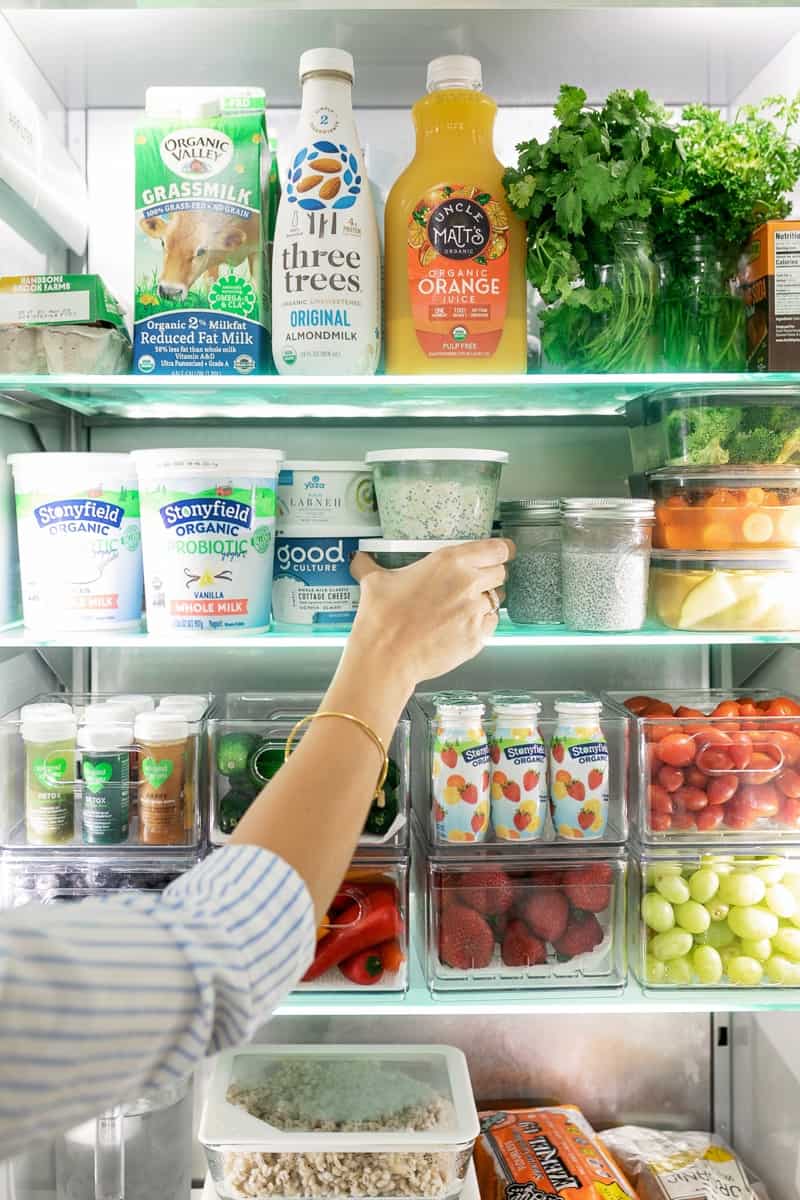
Credit: feelgoodfoodie.net
Organized fridge with labeled milk containers ready for freezing.
Quick overview: what you need to know (TL;DR)
- Freeze only fresh milk (not already spoiled).
- Use freezer-safe containers and leave headspace for expansion.
- Label with date and portion size.
- Best quality: use within 1–3 months; freezing keeps milk safe longer but texture and flavor degrade over time.
- Thaw in the refrigerator, shake or whisk before use, and do not refreeze after thawing.
Why freeze organic milk? Benefits and trade-offs
- Benefits: prevents waste, lets you buy in bulk, keeps milk on hand for cooking and smoothies.
- Trade-offs: frozen-then-thawed milk can separate and appear grainy; texture changes are normal but harmless. A common mistake is freezing milk in a full rigid container (it will crack) or leaving no headspace for expansion.
What freezing does (and doesn't) to milk
- Freezing preserves safety by stopping bacterial growth but does not kill bacteria or pathogens that were present before freezing. If milk was already contaminated or spoiled, freezing won't make it safe.
- Fat and water separate during freeze/thaw cycles. In practice this shows as a slightly grainy texture or cream layer — shaking or blending restores a usable texture for most applications.
- Nutrients: protein, calcium, and most vitamins remain largely intact; minor changes in flavor may occur.
Freezer temperature and food-safety basics
For consistent results set your freezer at 0°F (-18°C) or colder. Food-safety agencies such as the USDA and the FDA recommend those temperatures for long-term storage of perishable foods and for minimizing quality deterioration. Keep the milk away from strong-smelling foods (milk absorbs odors).
Best containers: pros, cons, and headspace
Choose containers that are freezer-safe and airtight. Below is a quick comparison.
| Container | Pros | Cons | Headspace to leave |
|---|---|---|---|
| Freezer-safe plastic jars/bottles | Durable, lightweight, inexpensive | Can absorb odors over time | 10–20% (about 1–2 inches for quart) |
| Freezer-grade glass jars (wide-mouth) | Reusable, nonreactive, eco-friendly | Risk of cracking if overfilled; heavier | 15–20% and allow gradual cooling |
| Freezer bags (double-bagged) | Space-efficient, flatten for stacking | Prone to punctures, more handling | Leave small air pocket; lay flat to freeze |
| Ice cube trays → sealed bag | Portion control for smoothies | More steps (transfer after freezing) | Fill to rim, then seal cubes in bag |
Practical note: if using glass, cool milk in the refrigerator first and never put very hot/liquid milk directly into a cold glass jar to avoid thermal shock.
Step-by-step: how to freeze organic milk (best practice)
- Inspect: make sure the milk smells and tastes fresh and is well within its “use by” date.
- Chill: if milk was recently purchased and warm, cool it in the fridge first. Freezing warm milk traps more ice crystals.
- Portion: decide your portions — 1 cup for recipes, 1–2 cups for drinking, or cubes for smoothies. Portioning reduces waste.
- Fill containers: pour milk leaving 10–20% headspace for expansion; if using bags lay flat and remove excess air.
- Seal and label: write the freezing date and portion size with a waterproof marker.
- Freeze flat and organized: place bags or shallow containers flat until solid, then stack. Store dairy away from frequently opened freezer doors to maintain steady temperature.
How long can you keep frozen milk?
- Best quality: 1–3 months.
- Acceptable for some cooked/baked uses: up to 6 months, although texture and flavor decline.
Avoid relying on frozen storage to rescue milk that was already near spoilage.
Thawing: methods and safety
Safe thawing keeps milk out of the danger zone (40–140°F / 4–60°C) where bacteria multiply quickly.
- Refrigerator thawing (recommended): move the container to the fridge and allow 12–48 hours depending on portion size. Large containers need longer.
- Cold-water thawing (faster): place sealed container in cold water, changing water every 30 minutes until mostly thawed; then refrigerate and use promptly.
- Microwave/heat: not recommended for whole containers — microwaving creates hot spots and can denature proteins; you can briefly heat small portions for recipes after thawing in the fridge.
After thawing, shake, stir, or whisk vigorously to reincorporate separated cream. Use thawed milk within 3–5 days and never refreeze.
Using thawed organic milk: best applications
- Drinking: acceptable once shaken; some people notice a slight change in mouthfeel. Taste it before serving to guests.
- Smoothies, coffee, and baking: thawed milk works very well because texture changes are less noticeable once blended or heated.
- Cooking (soups, sauces): excellent use for older frozen milk. Texture and slight flavor shifts are masked by other ingredients.
Freezing raw, pasteurized, and UHT milk — differences to consider
- Pasteurized milk (store-bought organic): freezes well; quality depends on how fresh it was before freezing.
- UHT (ultra-high temperature) milk: already shelf-stable; freezing is unnecessary but possible — texture may change on thawing.
- Raw milk: freezing does not make raw milk safer — pathogens survive freezing. If you choose to freeze raw milk, treat it with the same caution as fresh raw milk and use prompt refrigeration after thawing.
Freezing organic milk in glass jars (how to avoid breakage)
- Use wide-mouth, freezer-safe mason jars.
- Chill milk first. Fill no more than three-quarters full for quarts or leave 1–2 inches headspace.
- Avoid sudden temperature changes and place jars toward the back of the freezer where temperature is most stable.
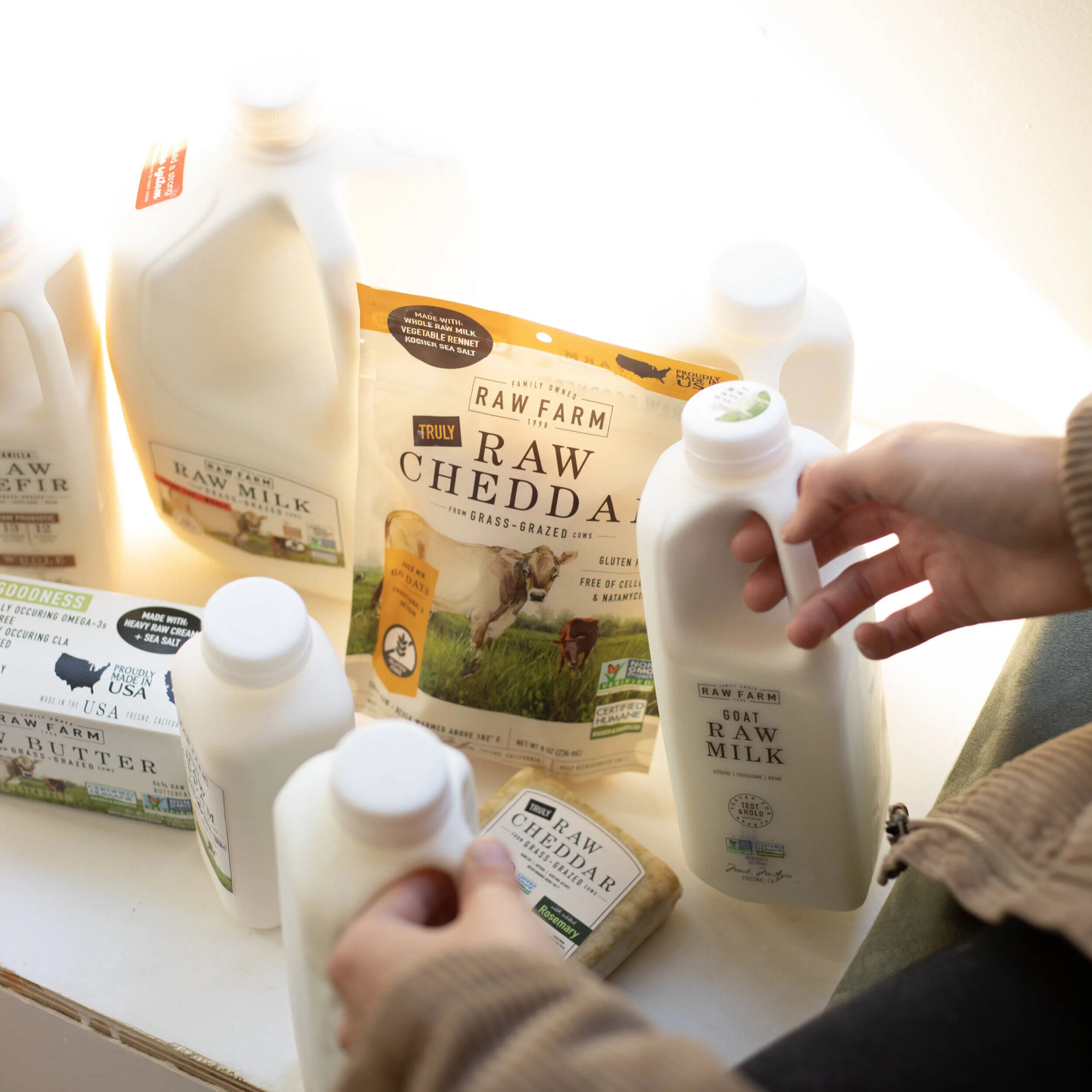
Credit: rawfarmusa.com
Wide-mouth jar used for freezing and storing milk safely.
Freezing small portions and smoothie cubes
- Use ice cube trays or small silicone molds. Once frozen, transfer cubes to a labeled freezer bag.
- Advantage: single-serve convenience and faster thawing; ideal for smoothies or iced coffee.
- Tip: freeze slightly flatter trays for faster, even freezing, then store cubes in a sturdy bag to prevent freezer burn.
Troubleshooting: common problems and fixes
- Separation or graininess after thawing: shake, whisk, or blend. If texture remains unacceptable for drinking, use it for cooking.
- Off smell or sour taste: discard — do not taste large amounts to check. Sour odor indicates spoilage.
- Freezer burn or off flavors: usually caused by poor seals or long storage; discard if flavor is unacceptable.
- Leaking containers: double-bag or use a secondary sealed container.
Labeling system and rotation
- Use a simple label: content (e.g., “Organic milk”), portion size (1 cup), freeze date.
- FIFO: “first in, first out” — place newest milk behind older stock and use older milk first. This reduces waste and keeps quality consistent.
FAQs
Can you freeze milk in its original carton?
Yes if the carton is labeled freezer-safe and you leave extra space for expansion. Paper cartons often have seams that can split; for safety and ease, transfer to a sealed freezer-safe container when possible.
Will freezing kill bacteria in milk?
No. Freezing halts bacterial growth but does not reliably kill existing bacteria or pathogens. Milk should be fresh and handled under sanitary conditions before freezing.
How much headspace should I leave when freezing milk?
Aim for about 10–20% headspace (roughly 1–2 inches in a quart-sized container). Smaller containers need proportionally less but still require some room for expansion.
Can I refreeze thawed milk?
No — do not refreeze milk that has been fully thawed. Refreezing accelerates quality loss and increases spoilage risk.
Conclusion and next steps
Freezing organic milk is easy, economical, and a smart way to reduce waste. Use freezer-safe containers, leave headspace, label clearly, and thaw slowly in the refrigerator for best results. If texture changes bother you for drinking, reserve thawed milk for smoothies, coffee, or cooking.
Try this: freeze a small 1-cup sample this week to test how thawed milk performs in your recipes — then scale up your approach based on that result.
If you want more food-storage guidance, check your local extension service or the USDA and FDA pages for general cold-storage recommendations.
Freezer storage checklist (one-minute)
- Inspect milk before freezing: fresh smell, well within sell-by date.
- Portion first: decide cups or cubes.
- Use freezer-safe container and leave 10–20% headspace.
- Label with date and size.
- Freeze flat for faster solidification, then stack.
- Thaw in fridge; shake or whisk; use within 3–5 days.
- Discard if sour, off-smelling, or unusually discolored.
One-page cheat sheet you can save
- Best freezer temp: 0°F (-18°C) or colder.
- Best quality window: 1–3 months.
- Don’t refreeze thawed milk.
- Use thawed milk in smoothies, coffee, baking if texture is off.
- For glass jars: cool first, leave more headspace, avoid thermal shock.
If this guide helped you reduce waste or plan grocery buys more confidently, take one practical step: freeze a 1-cup portion today and test it in a smoothie tomorrow to see how thawed organic milk works for you. Small experiments are the fastest way to find a system that fits your kitchen routine.

I’m Abby Lu, a passionate home cook who loves simplifying everyday meals. At PlugChef.com, I share product reviews and cooking guides to help you find the best tools for your kitchen.
Related posts:
 How to Make a Fruit Basket for a Gift: Easy DIY Guide
 Do You Need a Basket? Essential Guide for Air Fryers
 How to Choose Kitchen Appliances: Expert Tips Revealed
 Kitchen Cabinets With Black Stainless Steel Appliances: Modern Elegance
 White Kitchen Cabinets Stainless Steel Appliances: Timeless Elegance
 Top 10 Best Non-Toxic Cooking Utensils – Safe & Durable Choices for Healthy Homes

