Whether you’re a prepper building an emergency supply kit, a bulk buyer cutting grocery costs, a home gardener preserving harvests, or just looking to reduce food waste, long term storage food containers are the foundation of a reliable, organized food system. The right containers block the four primary causes of food spoilage: oxygen, moisture, light, and pests, keeping your supplies fresh, safe, and ready to use for years—or even decades. In this 2026 guide, we break down the science of food storage, compare top container types, share expert best practices, and highlight key features to prioritize when shopping for supplies.
Why the Right Long Term Storage Container Matters
According to USDA food safety standards, improper storage causes an estimated 30–40% of the U.S. food supply to go to waste each year, with the average household losing $1,500 annually to spoiled goods. For emergency preparedness, spoilage also puts critical supplies at risk when supply chains are disrupted. Unlike short-term storage containers, long term options are engineered to create an impenetrable barrier against degradation factors, ensuring your investment in bulk food, freeze-dried meals, and staple goods pays off for years. The FDA food contact guidelines further require food-grade containers to undergo rigorous leaching testing, eliminating the risk of harmful chemicals seeping into your food over time.
Key Material Features to Prioritize for Freshness and Safety
When shopping for long term storage food containers, prioritize these evidence-based features to ensure maximum freshness and safety:
- Food-grade certification: Look for containers explicitly labeled "food grade" to confirm they meet FDA safety standards for consumable contact.
- BPA-free construction: Bisphenol A (BPA) is a chemical linked to health concerns that can leach from low-quality plastics into acidic or fatty foods over time.
- Airtight seal integrity: Gasket-lined gamma seal lids or heat-sealable Mylar bags create an oxygen-free environment that stops spoilage.
- UV resistance: Opaque or UV-blocking materials prevent light from degrading nutrients and fats in stored food.
- Durable construction: High-density polyethylene (HDPE) plastic or 9.5mil+ thick Mylar resists punctures, tears, and pest damage.
A common mistake shoppers make is assuming all plastic buckets are food-safe: standard utility buckets made from recycled plastic often contain contaminants that make them unsuitable for consumable storage, even if they are airtight.
Top Long Term Storage Container Options by Use Case
The best container for your needs depends on what you’re storing, how much space you have, and how often you’ll access your supplies. Below are the most common options, broken down by use case:
5-Gallon Food-Grade HDPE Buckets with Airtight Lids
5-gallon HDPE buckets are the gold standard for bulk dry goods storage, including rice, beans, wheat, sugar, and emergency water supplies. Made from thick, BPA-free high-density polyethylene, they resist punctures, pests, and temperature fluctuations, and can be stacked 3–4 high to save space in pantries, garages, or root cellars.
Look for models with gamma seal screw-on lids, which use a rubber gasket to create an airtight seal far more reliable than standard snap-on lids. Many U.S.-made options feature 90mil thick walls for extra durability, and can last 10+ years with proper care. For stacked buckets in home pantries, add cabinet safety latches to prevent tipping, especially in high-traffic areas.
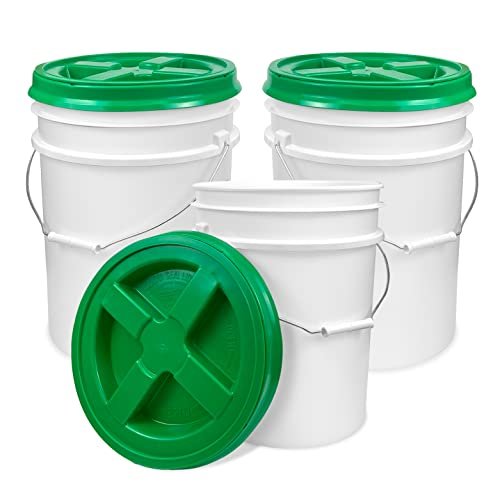
 Heavy-duty 90mil HDPE construction and gamma seal lids create an airtight, pest-proof barrier for bulk dry goods.
The ePackageSupply 5-gallon green gamma seal bucket is a top pick for preppers and bulk buyers, with a 90mil thick, food-grade HDPE build and airtight gasket lid that keeps contents fresh for 10+ years. The stackable design fits neatly in most storage spaces, and the BPA-free construction eliminates chemical leaching risks. The only downside is the limited green color option, which may not match all aesthetic preferences, and the 2-pound empty weight can be cumbersome for some users when full.
 Stackable BPA-free design and airtight gamma seal make these buckets ideal for both residential and commercial food storage.
For those needing multiple buckets, the ePackageSupply 3-pack white gamma seal option offers the same durable, food-grade build at a lower per-unit cost. The white finish shows stains more easily than colored options, but the 9-pound empty weight is manageable for most users when stacked.
 Bulk 6-pack option is cost-effective for large-scale emergency food storage and homesteading projects.
The 6-pack ePackageSupply white bucket set is ideal for homesteaders or preppers building large-scale storage systems, with the same food-grade, BPA-free build and stackable design as the smaller packs.
 Blue screw-on lids create a tight, leak-proof seal, and the 3-pack offers value for home canners and gardeners.
The House Naturals 3-pack 5-gallon bucket features a blue screw-on lid that creates an even tighter seal than standard gamma lids, making it a great pick for home canners storing pickles, sauces, or other wet goods. The 3-pack is a cost-effective option for small-scale bulk storage, though the 18.65-pound full weight can be difficult for some users to lift.
3.5-Gallon Square Food-Grade Buckets
Square food-grade buckets are a space-saving alternative to round 5-gallon models, designed to fit neatly on standard pantry shelves without wasted space. Most feature built-in plastic handles for easy transport, making them ideal for camping, fishing trips, or trips to bulk food stores where you need to carry heavy supplies.
The compact size also makes them ideal for camping trips; pair with a kitchen cleaning brush with handle to scrub out dirt and residue between uses outdoors.
 Square design fits neatly on pantry shelves, and built-in handles make transport easy for camping or bulk shopping trips.
The Mumufy 5-pack 3.5-gallon square bucket is a top pick for outdoor enthusiasts, with a food-grade HDPE build, airtight lid, and built-in handles that make carrying full buckets of charcoal, pet food, or dry goods simple. The only downsides are the limited gray color option and the bulky size when full, which may not fit in small storage spaces.
Stand-Up Mylar Bags with Oxygen Absorbers
Mylar bags are flexible, lightweight barrier bags made from BoPET (biaxially-oriented polyethylene terephthalate) film, designed to block 100% of light, moisture, and oxygen when properly sealed. They are ideal for storing smaller quantities of dry goods, dehydrated foods, freeze-dried meals, and pantry staples that you access regularly, as most feature resealable zippers for easy opening and closing.
Look for 9.5mil+ thick Mylar for standard dry goods, and 11.8mil+ thickness for items with sharp edges (like graham crackers or pasta) that could puncture thinner bags. Store filled Mylar bags in locked cabinets using child-proof drawer locks no screws to keep emergency supplies out of reach of young children.
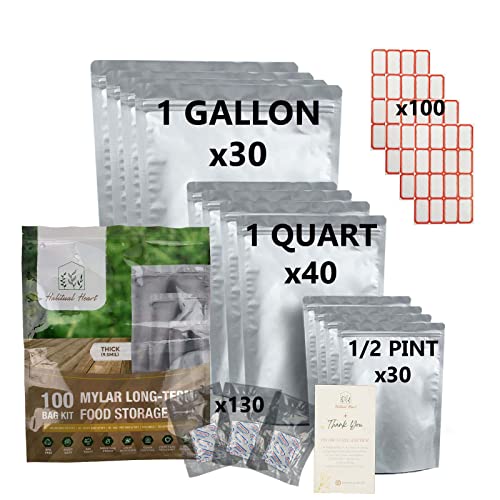 9.5mil thick Mylar blocks light, moisture, and oxygen to preserve dehydrated and dry goods for decades.
The Habitual Heart 100-pack 1-gallon stand-up Mylar bag set includes 130 300cc oxygen absorbers, enough to seal 100 bags of dry goods for 10+ years of storage. The 9.5mil thick material is puncture-resistant, and the resealable zipper makes it easy to access contents without breaking the seal for regular pantry use. The only downside is that a heat sealer is required for permanent long-term seals, which may not be on hand for casual users.
 11.8mil thick Mylar and included 400cc oxygen absorbers provide extra protection for heavy or sharp dry goods.
For users storing heavier dry goods, the 100-pack 1-gallon 11.8mil Mylar bag set offers extra puncture resistance, with included 400cc oxygen absorbers sized for larger 1-gallon portions of grains, flour, or sugar. The resealable zipper and heat-sealable top make it versatile for both short-term pantry use and 10+ year emergency storage.
Bulk 5-Gallon Mylar Bags
5-gallon Mylar bags are designed to fit inside standard 5-gallon HDPE buckets for an extra layer of protection against moisture and pests. They are ideal for users who want the stackability of 5-gallon buckets with the lightweight, space-saving benefits of Mylar, and are perfect for storing large quantities of grains, beans, or freeze-dried meals.
 10mil thick 5-gallon Mylar bags fit inside standard 5-gallon buckets for double-layer protection against spoilage.
The 10-pack 5-gallon Mylar bag set includes 2500cc oxygen absorbers sized for 5-gallon portions of bulk goods, with a 10mil thick, puncture-resistant build and resealable zipper for easy access. The only downside is the large size, which requires significant storage space when not filled, and the higher upfront cost compared to smaller Mylar bags or standard buckets.
Standalone Oxygen Absorbers for Custom Storage
Oxygen absorbers are small, iron-based packets that react with oxygen in sealed containers to reduce oxygen levels to <0.1%, stopping oxidation, mold growth, and pest egg development. They are a critical addition to any long-term storage system, and can be used in both Mylar bags and HDPE buckets.
For 1-gallon Mylar bags, use 300cc absorbers; for 5-gallon buckets or Mylar bags, use 2000–3000cc absorbers. Unopened absorbers have a shelf life of 1–2 years, and once opened, must be used within 15 minutes to remain effective. A common mistake is using oxygen absorbers with high-moisture foods like fresh produce or canned goods: absorbers only work with dry goods with <10% moisture content, as excess moisture can cause mold growth even in low-oxygen environments.
Before adding oxygen absorbers to 5-gallon buckets, scrub the rim with a kitchen cleaning brush set to remove dust or debris that could break the airtight seal.
 Convenient 20-pack of 5 absorbers minimizes waste, letting you open only what you need for each storage batch.
The 100-count 400cc oxygen absorber pack is ideal for users storing both 1-gallon Mylar bags and 5-gallon buckets, with individual 5-pack sleeves that minimize exposure to air until you’re ready to use them. The absorbers are compatible with all standard Mylar bags and food-grade buckets, and are safe for use with all dry consumables.
Best Practices for Maximizing Shelf Life with Long Term Storage Containers
Even the highest-quality containers will fail to keep food fresh if used incorrectly. Follow these evidence-based best practices to get the maximum shelf life from your stored supplies:
Prep Food Correctly Before Storage
All dry goods should have a moisture content of <10% before storage to prevent mold growth. If you’re storing homegrown or bulk produce, use a food dehydrator to dry items fully before packing. For grains and beans, mix in 1–2 tablespoons of food-grade diatomaceous earth per 5-gallon bucket to kill pest eggs and larvae without harming the food. Never store warm or freshly cooked food in long-term containers, as condensation will form inside the container and accelerate spoilage.
Seal Containers for Maximum Airtight Protection
For Mylar bags, leave 2–3 inches of space at the top of the bag before adding an oxygen absorber, squeeze out all excess air, then heat seal with a vacuum sealer or hair iron. For resealable zipper bags, press the zipper firmly multiple times to ensure a tight seal, and store the bag inside a hard-sided bucket for extra protection. For HDPE buckets, place oxygen absorbers directly on top of the food before sealing the lid, and press down firmly to engage the gamma seal gasket.
Label and Rotate Stock Regularly
Label every container with the contents, date packed, and expected use-by date. Use a first-in, first-out (FIFO) rotation system, using older supplies first and restocking with new items to avoid spoilage. Store all containers in a cool, dark, dry environment with a consistent temperature of 50–70°F; avoid attics, garages, or outdoor sheds where temperature fluctuations and sunlight will degrade food and container materials faster.
Avoid Common Storage Mistakes
- Never store onions, garlic, or potatoes with other dry goods, as they release moisture and gases that cause spoilage
- Do not overfill containers: leave 1–2 inches of headspace for expansion, especially for grains that may swell over time
- Avoid using non-food-grade containers, even if they are airtight: low-quality plastics can leach harmful chemicals into food over years of storage
- Do not reuse oxygen absorbers: once opened, they are fully activated and will no longer remove oxygen from sealed containers
Long Term Storage Container Comparison Guide
Use this table to select the right container for your specific needs:
| Container Type | Best Use Case | Expected Shelf Life (Proper Storage) | Pros | Cons |
|---|---|---|---|---|
| 5-Gallon HDPE Bucket with Gamma Lid | Bulk dry goods, emergency water, homesteading supplies | 10+ years | Stackable, pest-proof, reusable, high capacity | Bulky, heavy when full, requires oxygen absorbers |
| 3.5-Gallon Square HDPE Bucket | Camping, small bulk purchases, pet food, charcoal | 10+ years | Space-saving, portable, fits standard shelves | Smaller capacity, less widely available than 5-gallon models |
| 1-Gallon Stand-Up Mylar Bag | Dehydrated foods, freeze-dried meals, flour, sugar | 10–25 years | Lightweight, resealable, blocks all light | Puncture risk if mishandled, requires heat sealer for permanent seals |
| 5-Gallon Mylar Bag | Large bulk grain and dry goods storage | 10–25 years | Fits inside 5-gallon buckets for extra protection, lightweight | Large size requires significant storage space, difficult to seal without vacuum equipment |
Frequently Asked Questions
What is the difference between food-grade and non-food-grade storage containers?
Food-grade containers are manufactured to meet strict FDA safety standards, meaning their materials will not leach harmful chemicals into stored food, even over long periods or when in contact with acidic or fatty foods. Non-food-grade containers, like standard utility buckets not labeled for food contact, often contain recycled plastics or additives that can contaminate consumables, posing health risks with long-term use.
How long can food last in Mylar bags with oxygen absorbers?
When stored in a cool, dark, dry environment (ideally 50–70°F with <10% humidity), dry goods stored in heat-sealed Mylar bags with properly sized oxygen absorbers can last 10 to 25 years, depending on the food type. For example, white rice and dried beans can last 25+ years, while whole wheat flour and dried herbs typically last 10–15 years.
Do I need oxygen absorbers for 5-gallon food storage buckets?
Yes, for long-term storage of dry goods (over 1 year), oxygen absorbers are critical. Without them, oxygen trapped in the bucket will feed mold, bacteria, and pest eggs, leading to spoilage within 6–12 months. For 5-gallon buckets of dry goods, use 2000–3000cc of oxygen absorbers per bucket, placed on top of the food before sealing the lid.
Can I reuse long-term food storage containers?
Yes, HDPE buckets and Mylar bags can be reused multiple times if properly cleaned and dried between uses. Buckets should be washed with a kitchen cleaning scrub brush to remove all food residue, then fully dried to prevent mold. Mylar bags can be resealed if the zipper is intact, but heat-sealed bags will need to be cut open and re-sealed for new contents.
Are 5-gallon food storage buckets safe for storing water?
Yes, food-grade HDPE 5-gallon buckets with airtight gamma lids are safe for long-term potable water storage, as long as they are new or thoroughly cleaned and sanitized before use. Store water buckets off the floor in a cool, dark place to prevent plastic degradation, and rotate stored water every 6–12 months for freshness.
Conclusion
Long term storage food containers are a low-cost, high-impact investment for anyone looking to reduce food waste, build emergency preparedness, or simplify bulk buying and home food preservation. The right container—whether a heavy-duty HDPE bucket, space-saving square pail, or flexible Mylar bag—will keep your supplies fresh, safe, and accessible for years, protecting your budget and your peace of mind.
When selecting containers, prioritize food-grade, BPA-free materials with airtight seals, and match the container type to your specific use case: 5-gallon buckets for bulk emergency supplies, square buckets for camping and small-space storage, and Mylar bags for regular pantry access to dry goods. Follow best practices for prepping, sealing, and rotating stock to maximize shelf life, and store containers in a cool, dark, dry space away from temperature fluctuations.
If you’re ready to build your long-term food storage system, start by assessing your household’s bulk buying and emergency prep needs, then select containers that fit your space and usage frequency. For more home organization and food preservation tips, check out the PlugChef blog for actionable guides to simplify your kitchen routine.

Hi, I’m Daniel Brooks—a food lover and kitchen gear enthusiast. I enjoy testing cookware, utensils, and gadgets to see what really works in everyday cooking. At PlugChef.com, I share honest reviews, comparisons, and simple guides to help you choose the best tools for a safer, smarter, and more enjoyable kitchen.
Related posts:
 Best Kitchen Gadgets Under $20: Affordable Tools for Every Culinary Task
 Under Cabinet Hidden Kitchen Outlets: Revolutionize Your Space-Saving Solutions
 Shelf for Under Kitchen Sink: Maximize Space with Pull-Out Organizers
 Best Beeswax Wraps for Zero Waste Kitchen: Eco-Friendly Food Storage Solution
 Lysol Antibacterial Kitchen Cleaner: Ultimate Germ-Fighting Power for Surfaces
 Hope’S Perfect Kitchen Cleaner Reviews: Ultimate Streak-Free Multi-Surface Solution