Clutter is the top complaint for home cooks, with small appliances like air fryers, coffee makers, and stand mixers taking up 20 to 30 percent of average kitchen counter space. Not only does this clutter make meal prep slower and more frustrating, but it also creates tripping hazards, hides food spills, and makes your kitchen feel smaller than it is. The right kitchen appliance storage cabinet ideas solve all these problems: they free up valuable counter real estate, protect your appliances from dust and damage, and add intentional style to your space, no matter your kitchen’s size or design aesthetic.
From compact no-drill options for renters to full-height pantry cabinets for bulk storage, the solutions below are tailored to fit every layout, budget, and household need. We’ve rounded up the most functional, stylish options on the market, plus expert tips for choosing, installing, and organizing your cabinets to get the most out of your space.
Why Dedicated Appliance Storage Cabinets Are a Kitchen Game-Changer
Many homeowners assume appliance storage is just about hiding clutter, but the benefits go far beyond aesthetics. A dedicated cabinet for your small appliances cuts down on repetitive counter clearing and wiping, streamlines your cooking workflow, and reduces the risk of accidents from haphazardly placed hot or sharp items.
In practice, the biggest mistake people make is storing appliances on countertops out of habit, rather than assigning them a consistent, easy-to-access spot. For example, keeping your air fryer on a low shelf of a pantry cabinet instead of the counter means you only pull it out when you need it, freeing up space for daily meal prep. For households with young children, closed cabinets also keep heavy or hot appliances out of reach, adding a critical safety layer to your kitchen.
When chosen to match your existing decor, these cabinets can even act as a design feature, not just a storage tool — a rustic bakers rack can anchor a farmhouse kitchen, while a slim modern pantry cabinet blends seamlessly into a minimalist space.
Top Cabinet Solutions for Every Kitchen Layout and Need
Freestanding Bakers Racks for Multi-Appliance Stations
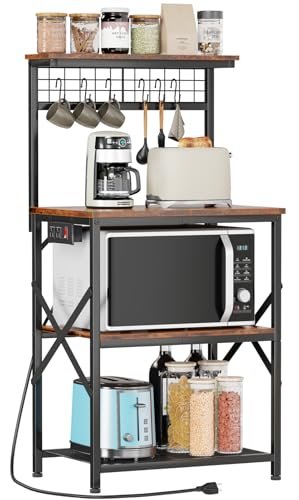
Freestanding bakers racks are the most versatile option for home cooks who use multiple small appliances daily, from coffee makers and blenders to air fryers and toaster ovens. Most feature 4 to 5 tiered shelves, plus hanging hooks for utensils, mugs, or pot holders, and many include built-in power outlets so you can use appliances directly on the rack without running cords across countertops.
For compact kitchens, a slim 4-tier model like the Furologee Kitchen Bakers Rack offers a rustic brown finish that complements farmhouse and cottage decor, plus 6 S hooks for hanging coffee mugs or cooking utensils. Its built-in power outlet supports appliances up to 125V, making it ideal for use as a dedicated coffee bar or microwave station. The main tradeoff is its limited width, which won’t accommodate extra-wide appliances like large toaster ovens.
If you need more space for multiple appliances, the 39.4-inch wide Denkee Large Bakers Rack offers 5 tiers of storage and 3 built-in power outlets, enough to power a microwave, coffee maker, and air fryer at the same time. Its sturdy grey metal frame supports up to 250 lbs per shelf, making it a reliable choice for heavy cookware as well as small appliances. For renters or people who frequently rearrange their kitchen, the Giantex 5-Tier Mobile Storage Cabinet adds rolling lockable casters, so you can move your appliance station anywhere in the room without lifting.
 This rack combines cookware storage, appliance plug-in access, and utensil hanging in one freestanding unit.
 Locking casters let you secure the unit in place when not moving it around the kitchen.
 Extra width accommodates multiple small appliances at once for busy cooking stations.
Under-Sink Organizers for Hidden, Out-of-the-Way Storage
The space under your kitchen sink is one of the most underutilized storage areas in most homes, and it’s perfect for storing less frequently used appliances like immersion blenders, hand mixers, or portable dishwashers, plus cleaning supplies. The main challenge with under-sink storage is that items get pushed to the back and forgotten, so a pull-out organizer is the most practical solution.
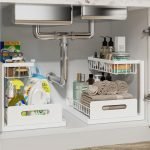
The REALINN Under-Sink Organizer is a 2-pack of sliding shelves that pull out fully, letting you reach items at the back of the cabinet without crawling under the sink. Its water-resistant black metal construction resists leaks and humidity, making it safe for kitchen and bathroom under-sink spaces alike. The main tradeoff is its fixed width, so you’ll need to measure your under-sink clearance before purchasing to ensure it fits around your plumbing.
A common mistake when buying under-sink organizers is choosing a model that’s too tall to fit around your sink’s plumbing — always measure the vertical clearance under your sink first, and look for adjustable height models if your plumbing is uneven. For extra organization, pair the pull-out shelves with small bins to corral appliance cords and cleaning supplies.
 Slides out fully to let you reach items stored at the back of deep under-sink cabinets.
Magnetic and Wall-Mounted Solutions for Renters and Small Spaces
If you can’t modify your existing kitchen cabinets (or don’t want to deal with the hassle of drilling and painting), magnetic storage solutions are a renter-friendly way to add extra storage for small appliances, spices, and accessories without any permanent changes.
The HuggieGems 4-Pack Magnetic Spice Storage Racks are designed to stick to any ferrous metal surface, including your refrigerator, oven side, or even the inside of metal cabinet doors. Their slim black metal design holds standard-sized spice jars securely, and they require no tools, adhesives, or drilling to install. The main tradeoff is their limited weight capacity, so they’re best for lightweight items like spices, measuring spoons, or small appliance cords, not heavy jars or appliances.
For extra small appliance storage, you can also use magnetic hooks on your fridge to hang air fryer liners, pot holders, or even small cutting boards, freeing up cabinet space for larger items. These solutions are ideal for tiny kitchens where every inch of storage counts, and they can be removed in minutes when you move out.
 No-drill installation makes these racks ideal for renters who can’t modify their kitchen surfaces.
Tall Pantry Cabinets for Bulk and Oversized Appliance Storage
If you have larger appliances that don’t fit on countertops or in standard lower cabinets — like stand mixers, slow cookers, or extra coffee makers — a tall freestanding pantry cabinet is the most space-efficient solution. These cabinets range from 60 to 72 inches tall, with a slim profile that fits in narrow gaps between walls and other cabinets, or alongside kitchen islands, without taking up extra floor space.
For a sleek modern look, the SteeLoong 71-inch Tall Metal Pantry Cabinet has a white powder-coated finish and 4 adjustable shelves, so you can customize the space to fit items of all sizes, from tall cereal boxes to small countertop appliances. Its slim 16-inch depth fits easily in tight spaces, and the gold handles add a subtle luxurious touch. The main tradeoff is its white finish, which shows fingerprints and grease splatters more easily than darker options, so it requires regular wiping down to keep looking its best.
If you prefer a farmhouse or rustic aesthetic, the HOSTACK 71-inch Tall Kitchen Pantry Storage Cabinet has a white and weathered brown finish that complements cottage and farmhouse kitchen decor. It works as a microwave stand, coffee bar, or even a wine rack, with multiple shelves and compartments to store all your kitchen essentials. The slightly wider 19-inch depth fits larger appliances with room to spare. For tech-savvy cooks, the Irontar 70.9-inch Tall Kitchen Pantry adds integrated USB charging ports and power outlets, so you can charge your phone or tablet while cooking without cluttering your countertops with cords. Its glass doors let you see stored items at a glance, so you don’t have to rummage through shelves to find what you need.
 Slim profile fits narrow gaps between cabinets or alongside kitchen islands for extra pantry storage.
 Multi-functional design works as a microwave stand, coffee bar, or wine storage unit.
 Built-in drawers add concealed storage for utensils, gadgets, and small pantry items.
 Integrated charging ports eliminate countertop cable clutter for kitchen gadgets and phones.
Cookware Organizers to Free Up Cabinet Shelf Space
Pots, pans, and baking sheets take up a huge amount of cabinet shelf space, often leaving no room for small appliances. A dedicated cookware organizer lets you store your cookware vertically, either inside a cabinet or on the countertop, freeing up entire shelves for blenders, air fryers, and other small appliances.
The Deco Brothers Pan Organizer Rack is a compact 5-tier bronze-finished rack that fits standard 10 to 12-inch pans, and can be used either inside a cabinet or on the countertop for easy access while cooking. Its sturdy steel construction supports up to 50 lbs per tier, so you can stack heavy cast iron skillets without worrying about bending or breaking. The main tradeoff is that extra-large stock pots or wide griddles may not fit on the tiers, so measure your largest pan before purchasing.
In practice, storing cookware vertically also reduces scratches and scuffs on non-stick surfaces, which extends the life of your pans and saves you money on replacements over time. For extra organization, use the rack’s side compartments to store pot lids, keeping them separate from the pans themselves.
 Eliminates the need to stack heavy pans, reducing scratches and making cookware easy to grab.
How to Choose the Right Appliance Storage Cabinet for Your Kitchen
With so many options on the market, picking the right cabinet for your space can feel overwhelming. Use these key considerations to narrow down your choices and find a solution that fits your needs:
- Measure your space first: Before shopping, measure the width, depth, and height of the space you want to fill, plus any clearance needed for doors to open fully. For under-sink cabinets, measure the vertical clearance around your plumbing to avoid buying an organizer that won’t fit. For narrow gaps between cabinets, look for slim pantry cabinets that are 12 to 18 inches deep, rather than standard 24-inch deep models.
- Check weight capacity: If you plan to store heavy appliances like stand mixers or full stock pots, look for cabinets rated for at least 25 to 50 lbs per shelf. Avoid lightweight particleboard models for heavy items, as they can warp or break over time.
- Prioritize features that match your needs: If you use multiple appliances at once, look for models with built-in power outlets to avoid running extension cords across countertops. If you rearrange your kitchen often, opt for mobile cabinets with lockable casters. If you have young kids, choose cabinets with soft-close doors to prevent pinched fingers.
- Match your decor style: Appliance storage cabinets don’t have to look like utilitarian storage units. Look for finishes, hardware, and designs that complement your existing kitchen aesthetic — rustic wood, matte black metal, and white shaker-style cabinets all work with different design themes.
When planning your storage layout, follow industry-standard storage planning guidelines from the National Kitchen and Bath Association to ensure your cabinet placement aligns with efficient kitchen workflow and ergonomic access. If you prefer custom durable labels for your storage bins, engraving a wooden cutting board to use as a wipeable, long-lasting marker is a popular DIY option that holds up to kitchen splatters and frequent cleaning.
Safety Tips for Appliance Storage Cabinets
Proper installation and use of your appliance storage cabinet is critical to avoiding accidents and damage to your kitchen. Follow these guidelines to keep your space safe:
- Secure tall freestanding cabinets to the wall: The U.S. Consumer Product Safety Commission recommends securing all freestanding storage cabinets over 30 inches tall to wall studs to prevent tip-over hazards, especially in homes with young children or in earthquake-prone regions. Most cabinets come with a wall anchor kit; if yours doesn’t, purchase one separately and install it according to the manufacturer’s instructions.
- Avoid storing heat-generating appliances in enclosed cabinets: Unless a cabinet is specifically designed for high-heat appliances, store toaster ovens, air fryers, and other heat-emitting items on open shelves or countertops, and let them cool completely before putting them away. Storing hot appliances in enclosed spaces can create fire hazards and damage cabinet finishes.
- Use childproofing hardware for lower cabinets: For households with toddlers, pair lower cabinet doors with easy-to-install safety locks to prevent access to heavy or hot appliances. No-drill safety locks work perfectly for renters who can’t modify their cabinets, while permanent child-resistant cabinet latches are ideal for owned homes. For extra security, add kid-safe drawer locks to lower drawers that store small appliance cords or accessories.
- Don’t overload shelves: Check your cabinet’s weight capacity before loading it with heavy appliances. Overloading shelves can cause them to sag or break over time, damaging your appliances and creating injury risks.
- Keep cords organized: To avoid tripping hazards and electrical fires, coil excess appliance cords and store them in a dedicated bin or drawer, rather than leaving them dangling from cabinet shelves.
Frequently Asked Questions
What size cabinet do I need for a standard stand mixer?
Most full-size stand mixers are 10 to 12 inches wide, 14 to 16 inches deep, and 12 to 15 inches tall. Look for cabinets with at least 12 inches of interior width and 15 inches of depth to fit the mixer with its bowl attached, plus a little extra room to pull it out safely. Adjustable shelves let you reconfigure space as your appliance lineup changes.
Are under-sink organizers safe for kitchen appliances?
Yes, as long as you choose a water-resistant model rated for the weight of your appliances. Avoid storing heat-generating appliances (like toaster ovens or coffee makers that retain heat) in under-sink cabinets unless they are fully cooled, and make sure the organizer doesn’t block the cabinet’s ventilation or plumbing access points.
Can I install magnetic spice racks on cabinet doors instead of my fridge?
Absolutely, as long as your cabinet doors have a solid metal surface (not just a metal frame with a wood or laminate front). Magnetic racks work on any ferrous metal surface, so they’re a great way to use the inside of cabinet doors for small spice jars, measuring spoons, or even small appliance cords.
Do pantry cabinets with power outlets require special wiring?
Most freestanding pantry cabinets with built-in power outlets plug into a standard 120V wall outlet, just like any other small appliance. Avoid models that require hardwiring unless you’re comfortable working with electrical systems, and never plug a high-wattage appliance (like a microwave or air fryer) into a cabinet outlet that’s already powering another device.
How do I keep my appliance storage cabinets organized long-term?
Assign a dedicated spot for each appliance, and store items you use daily at eye level for easy access. Use drawer dividers or small bins to corral cords and accessories, and do a quick declutter every 3 to 6 months to remove appliances you no longer use. For small items like spices or measuring tools, magnetic racks or adhesive hooks on cabinet interiors keep them off shelves and out of the way. Wipe down cabinet interiors and appliance exteriors monthly with a sturdy cleaning brush set to cut through grease and prevent dust buildup on appliance vents.
Conclusion
The right kitchen appliance storage cabinet does more than just hide clutter — it streamlines your cooking workflow, protects your appliances from dust and damage, and ties your kitchen’s aesthetic together, no matter your space constraints or design style. Whether you’re working with a tiny apartment kitchen with limited cabinet space, or a spacious gourmet kitchen with room for a full pantry, there’s a solution that fits your needs, budget, and household requirements.
Start by measuring your available space and listing the appliances you use most often to narrow down your options: daily-use items like coffee makers and air fryers are best stored at eye level for quick access, while occasional-use items like holiday bakeware or portable blenders can go on lower or higher shelves. For households with young children, don’t forget to add childproofing hardware to lower cabinets to keep little ones safe from heavy or hot appliances.
Ready to transform your kitchen? Browse our full library of kitchen organization guides, product reviews, and DIY tips to find more ways to maximize your space and simplify your cooking routine.

Hi, I’m Daniel Brooks—a food lover and kitchen gear enthusiast. I enjoy testing cookware, utensils, and gadgets to see what really works in everyday cooking. At PlugChef.com, I share honest reviews, comparisons, and simple guides to help you choose the best tools for a safer, smarter, and more enjoyable kitchen.
Related posts:
 Best Kitchen Gadgets Under $20: Affordable Tools for Every Culinary Task
 Under Cabinet Hidden Kitchen Outlets: Revolutionize Your Space-Saving Solutions
 Shelf for Under Kitchen Sink: Maximize Space with Pull-Out Organizers
 Best Beeswax Wraps for Zero Waste Kitchen: Eco-Friendly Food Storage Solution
 Best Water Filter for Pod Coffee Maker: Enhance Your Coffee Experience
 Best Kitchen Counter Compost Bin: Top Picks for Odor-Free Recycling