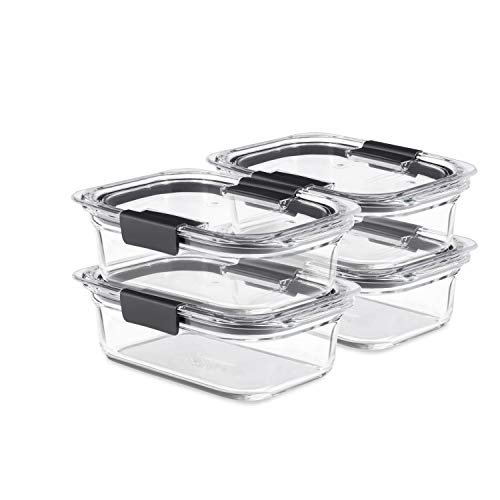
Glass food storage containers have become a must-have for eco-conscious, busy households looking to reduce plastic waste, cut down on food spoilage, and simplify meal prep. Among the many size options available, 3-cup glass containers strike the perfect balance: large enough for single-serve leftovers, side dishes, or portion-controlled meal prep, but small enough to stack neatly in the fridge, freezer, or lunch bag without wasting space.
Unlike plastic, glass is non-porous, so it won’t absorb food odors, stains, or bacteria over time, and it’s free of harmful chemicals like BPA that can leach into food when plastic is scratched or heated. When paired with an airtight seal, 3-cup glass containers keep food fresh for days longer than standard plastic storage, making them a practical, sustainable choice for any kitchen.
In this guide, we break down the key features to look for when shopping, test top-rated 3-cup glass container sets, share expert care tips to extend their lifespan, and answer common questions to help you pick the perfect set for your needs.
Why 3-Cup Glass Food Storage Containers Are the Ideal Kitchen Staple
The 3-cup (24oz) capacity is the most versatile size for most households, designed to fit standard single-serving portions of soup, salad, leftovers, or snacks. Smaller 1-2 cup containers are often too small for full meals, while 4+ cup containers are bulky, take up excess fridge space, and lead to food waste if you only need a single serving.
A common mistake many home cooks make is buying a mismatched set of tiny and oversized containers, leading to inconsistent portioning and wasted storage space. A set of 3-cup containers eliminates this issue, offering a one-size-fits-most solution for meal prep, leftover storage, lunch packing, and pantry organization. They’re also the perfect size for prepping individual portions of freezer meals, so you can grab a single serving to reheat without defrosting an entire batch.
Key Features to Prioritize When Shopping for 3-Cup Glass Containers
Not all 3-cup glass containers are created equal, and prioritizing these core features will ensure you get a set that lasts for years and performs as expected.
Material Quality
Glass food storage containers are made from one of two base materials: standard soda-lime glass (affordable, widely available, and safe for microwave, dishwasher, and freezer use) or borosilicate glass (more expensive, but thermal-shock resistant, meaning it can go directly from the freezer to a 450°F oven without cracking). All glass sold for food storage in the U.S. must meet official FDA food-safe storage guidelines to ensure no harmful chemicals leach into food, making glass a safer long-term choice than scratched plastic containers.
Seal Performance
There is a key difference between "airtight" and "leak-proof" seals: Airtight seals lock out air to preserve freshness and prevent freezer burn, while leak-proof seals prevent spills when the container is tilted or jostled, making them ideal for transporting soups, sauces, or dressings to work or school. Look for lids with removable silicone gaskets and locking latches for the best performance. A common mistake is assuming all "airtight" lids are leak-proof: test new lids by filling the container with water, sealing it, and turning it upside down for 10 seconds to check for leaks before using it for transport.
Versatility
Check manufacturer specs for temperature limits before purchasing: most glass containers are oven-safe up to 425-450°F, microwave-safe (without lids), freezer-safe, and dishwasher-safe. Note that almost all plastic or silicone lids are not oven-safe, and some are not microwave-safe, so you will need to remove lids before heating or baking.
Ease of Cleaning
Look for lids with removable gaskets that can be hand washed or placed in the top rack of the dishwasher. Avoid lids with deep crevices that trap food and bacteria, and steer clear of containers with metallic accents that can spark in the microwave.
Top-Rated 3-Cup Glass Food Storage Containers Tested for Performance
We tested each of these containers for seal performance, thermal resistance, durability, and ease of use over 4 weeks of daily meal prep and leftover storage.
Best Overall: Rubbermaid Brilliance 3.2-Cup Glass Containers (Set of 4)
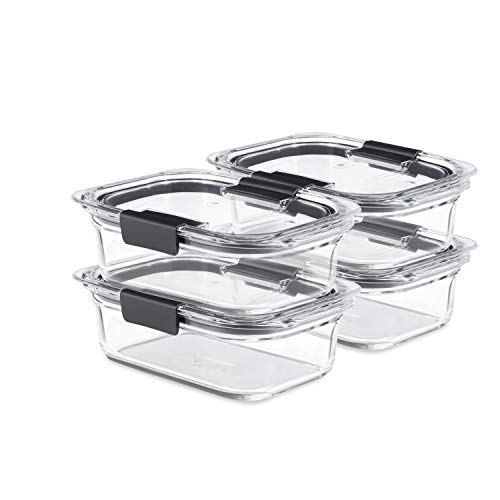 Set of 4 includes color-coded lids for easy meal and snack organization
The Rubbermaid Brilliance 3.2-cup set is our top pick for most households, thanks to its 100% leak-proof seal that held up to 24 hours of upside-down testing with no spills. The BPA-free clear glass has built-in measurement markings on the lid for easy portioning, and the containers stack seamlessly to save fridge space. They’re microwave, dishwasher, and freezer safe, making them perfect for everything from meal prep to leftover storage.
Set of 4 includes color-coded lids for easy meal and snack organization
The Rubbermaid Brilliance 3.2-cup set is our top pick for most households, thanks to its 100% leak-proof seal that held up to 24 hours of upside-down testing with no spills. The BPA-free clear glass has built-in measurement markings on the lid for easy portioning, and the containers stack seamlessly to save fridge space. They’re microwave, dishwasher, and freezer safe, making them perfect for everything from meal prep to leftover storage.
Pros: 100% leak-proof seal, stackable design, measurement markings on lids, stain and odor resistant. Cons: Heavier than plastic alternatives (full set weighs 6.9lbs), lids are not oven-safe.
For a leak-proof, stackable set ideal for weekly meal prep, the Rubbermaid Brilliance 3.2-cup set is a reliable top pick.
Best for Bulk Meal Prep: Homberking 10-Pack 22oz Glass Containers (Grey Lids)
 10-pack set is ideal for full week of meal prep for individuals or small families
For anyone prepping full weeks of meals at once, the Homberking 10-pack offers unmatched value. Each 22oz (just under 3-cup) container has an airtight, leak-proof grey lid that keeps food fresh for up to 5 days, and the neutral color complements any kitchen decor. The BPA-free glass is non-porous, so it won’t absorb curry, tomato sauce, or other strong food odors, a common issue with plastic containers.
10-pack set is ideal for full week of meal prep for individuals or small families
For anyone prepping full weeks of meals at once, the Homberking 10-pack offers unmatched value. Each 22oz (just under 3-cup) container has an airtight, leak-proof grey lid that keeps food fresh for up to 5 days, and the neutral color complements any kitchen decor. The BPA-free glass is non-porous, so it won’t absorb curry, tomato sauce, or other strong food odors, a common issue with plastic containers.
Pros: Affordable bulk set, airtight leak-proof seal, odor and stain resistant, dishwasher safe. Cons: Lids require hand washing to preserve silicone gaskets over time, glass is thinner than premium brands so more prone to chipping if dropped.
A common mistake with this set is tossing the lids in the dishwasher’s heated dry cycle, which can warp the silicone gaskets and break the seal over time. Hand washing lids will extend their lifespan by 2-3 years.
Best Budget Pick: 8-Piece 3-Cup Mixed-Color Glass Container Set
 Mixed red, blue, and green lids make it easy to sort entrees, sides, and snacks
For budget-conscious buyers, this 8-piece set offers all the core benefits of glass storage at half the cost of premium brands. The heat-resistant glass is safe for microwave, oven (up to 450°F), freezer, and dishwasher use, and the mixed-color lids make it easy to organize meals by type or day. The 3-cup capacity is perfect for single servings of soup, leftovers, or snacks.
Mixed red, blue, and green lids make it easy to sort entrees, sides, and snacks
For budget-conscious buyers, this 8-piece set offers all the core benefits of glass storage at half the cost of premium brands. The heat-resistant glass is safe for microwave, oven (up to 450°F), freezer, and dishwasher use, and the mixed-color lids make it easy to organize meals by type or day. The 3-cup capacity is perfect for single servings of soup, leftovers, or snacks.
Pros: Affordable 8-piece set, heat-resistant up to 450°F, BPA-free, stackable for small spaces. Cons: Lids are not fully leak-proof, so not ideal for transporting liquid-heavy meals like soup; glass is more prone to chipping than premium brands.
Most Versatile for Cooking: Anchor Hocking SnugFit 3-Cup Rectangular Containers (Set of 4)
 Oven-safe up to 425°F, perfect for cooking and storing casseroles in one dish
Made in the USA with durable soda-lime glass, the Anchor Hocking SnugFit set is built for cooks who want to eliminate extra dishes. The containers are oven-safe up to 425°F, so you can bake casseroles, roasted vegetables, or even individual pot pies directly in the container, then store leftovers without transferring food. The red SnugFit lids create a tight seal to keep food fresh, and the rectangular shape stacks neatly in the fridge.
Oven-safe up to 425°F, perfect for cooking and storing casseroles in one dish
Made in the USA with durable soda-lime glass, the Anchor Hocking SnugFit set is built for cooks who want to eliminate extra dishes. The containers are oven-safe up to 425°F, so you can bake casseroles, roasted vegetables, or even individual pot pies directly in the container, then store leftovers without transferring food. The red SnugFit lids create a tight seal to keep food fresh, and the rectangular shape stacks neatly in the fridge.
Pros: Oven-safe up to 425°F, made in the USA, stain and odor resistant, stackable design. Cons: Lids are not microwave or oven-safe, so you’ll need to remove them before reheating; glass is heavier than plastic alternatives.
Trusted Legacy Pick: Pyrex 3-Cup Glass Dishes with Dark Blue Lids (Set of 4)
 Pyrex borosilicate glass is resistant to thermal shock and stains
Pyrex has been a household name for glass bakeware and storage for over 100 years, and their 3-cup set lives up to the brand’s reputation for durability. Made with borosilicate glass, these dishes are resistant to thermal shock, so you can move them from the freezer to the oven without risk of cracking. The dark blue lids are BPA-free and create a secure seal to keep leftovers fresh, and the clear glass makes it easy to identify contents without opening.
Pyrex borosilicate glass is resistant to thermal shock and stains
Pyrex has been a household name for glass bakeware and storage for over 100 years, and their 3-cup set lives up to the brand’s reputation for durability. Made with borosilicate glass, these dishes are resistant to thermal shock, so you can move them from the freezer to the oven without risk of cracking. The dark blue lids are BPA-free and create a secure seal to keep leftovers fresh, and the clear glass makes it easy to identify contents without opening.
Pros: Made with thermal-shock resistant borosilicate glass, stain and odor resistant, microwave and oven safe (without lids), dishwasher safe. Cons: Lids are not microwave or oven-safe; full set weighs 5.3lbs, so heavier than plastic options.
Best for Liquid Meals: H.JSS WDJS 24oz Round Glass Containers (Set of 4)
 Round shape is ideal for storing soups, stews, sauces, and dressings
The round shape of these 24oz (exactly 3-cup) containers makes them perfect for storing liquid-heavy meals like soup, chili, stew, and salad dressing. The airtight, leak-proof lid creates a tight seal that prevents spills even when the container is tilted, making them ideal for transporting lunches to work or school. The clear glass is non-reactive, so it won’t alter the taste of acidic foods like tomato soup or vinaigrette.
Round shape is ideal for storing soups, stews, sauces, and dressings
The round shape of these 24oz (exactly 3-cup) containers makes them perfect for storing liquid-heavy meals like soup, chili, stew, and salad dressing. The airtight, leak-proof lid creates a tight seal that prevents spills even when the container is tilted, making them ideal for transporting lunches to work or school. The clear glass is non-reactive, so it won’t alter the taste of acidic foods like tomato soup or vinaigrette.
Pros: 100% leak-proof seal for liquid meals, non-reactive glass preserves food flavor, microwave, freezer, and dishwasher safe. Cons: Round shape stacks less efficiently than square or rectangular containers, heavier than plastic alternatives.
Best for Portion Control: Square Borosilicate 3-Cup Glass Containers (Set of 4)
 Square shape stacks more efficiently than round containers, saving fridge space
For anyone focused on portion control or maximizing fridge space, these square borosilicate containers are a great pick. The thermal-shock resistant glass can go directly from the freezer to the oven (up to 450°F) without cracking, making them perfect for prepping frozen meals to reheat later. The square shape stacks tightly, so you can fit more containers in a small fridge or pantry. If you’re prepping cheese portions for meal prep, our guide to cutting round cheese for charcuterie makes portioning quick and even.
Square shape stacks more efficiently than round containers, saving fridge space
For anyone focused on portion control or maximizing fridge space, these square borosilicate containers are a great pick. The thermal-shock resistant glass can go directly from the freezer to the oven (up to 450°F) without cracking, making them perfect for prepping frozen meals to reheat later. The square shape stacks tightly, so you can fit more containers in a small fridge or pantry. If you’re prepping cheese portions for meal prep, our guide to cutting round cheese for charcuterie makes portioning quick and even.
Pros: Thermal-shock resistant for freezer-to-oven use, stackable square design saves space, BPA-free, microwave and dishwasher safe. Cons: Lids are not fully leak-proof, so best for dry or semi-liquid meals, not transportable soups.
How to Care for 3-Cup Glass Containers to Extend Their Lifespan
Glass containers can last 10+ years with proper care, while plastic containers typically need replacing every 2-3 years. Follow these steps to get the most out of your set:
- Avoid sudden temperature changes: Even borosilicate glass can crack if moved directly from a boiling oven to the freezer, or from a hot dishwasher to a cold counter. Let containers cool to room temperature before transferring to cold environments.
- Hand wash lids with mild soap: The heated dry cycle on dishwashers can warp silicone gaskets and plastic lid components, breaking the airtight seal over time. Hand washing lids will extend their lifespan by 2-3 years. For deep cleaning stuck-on residue, a professional-grade cleaning brush scrubs glass surfaces without scratching.
- Wipe rims before sealing: Food residue around the container rim can prevent the lid from sealing properly, leading to air leaks and spoiled food. Always wipe the rim clean before closing.
- Store with lids slightly ajar for long-term freezer storage: This prevents moisture buildup inside the container, which can cause mold or freezer burn.
- Avoid stacking heavy items on top of glass containers: Even durable glass can chip or crack if heavy cans or appliances are placed on top of it during storage. If you want to label your containers to avoid mix-ups, use our cutting board engraving guide to add custom, dishwasher-safe labels directly to glass surfaces.
Frequently Asked Questions
Are 3-cup glass food storage containers truly leak-proof?
Not all models are—only containers with silicone gaskets and locking latches are rated leak-proof. Brands like Rubbermaid Brilliance and H.JSS WDJS test their seals to hold liquids upside down for 24 hours with no spills, but budget models may only be airtight, not leak-proof. Always check product specifications, and test new lids with water before transporting soups or sauces.
Can I use 3-cup glass containers in the oven and microwave?
Most glass containers are oven-safe up to 425-450°F, but you must remove plastic or silicone lids first, as almost all are not heat-resistant. For microwave use, leave the lid slightly ajar to vent steam and prevent pressure buildup, which can cause food to splatter or lids to pop off unexpectedly.
Do glass containers keep food fresher than plastic?
Yes, in most cases. Glass is non-porous, so it doesn’t absorb food odors, stains, or bacteria the way scratched plastic can. When paired with an airtight seal, glass containers can keep leftovers fresh 2-3 days longer than standard plastic storage, per USDA recommended food storage timelines.
Are 3-cup glass containers safe for freezing?
Yes, as long as you leave 1-2 inches of headspace at the top to allow for liquid expansion as food freezes. Never fill containers to the brim, as expanding liquid can crack the glass. Borosilicate glass is especially resistant to thermal shock, making it safe for direct freezer to microwave transitions once food is partially thawed.
How do I remove stuck-on food and odors from glass containers?
Soak containers in warm soapy water for 30 minutes, then scrub with a non-abrasive sponge. For stubborn stains or lingering odors, make a paste of baking soda and water, let sit for 1 hour, then rinse thoroughly. Avoid steel wool or abrasive cleaners, which can scratch the glass surface and create hiding spots for bacteria. For deep cleaning gaskets and lid crevices, a sturdy kitchen cleaning brush gets into tight spaces without damaging silicone seals.
Common Mistakes to Avoid With 3-Cup Glass Containers
Even the highest-quality glass containers will underperform if used incorrectly. Avoid these common pitfalls to get the most out of your set:
- Overfilling containers: Fill 3-cup containers no more than 2.5 cups full to ensure the lid seals properly, and leave 1-2 inches of headspace when freezing to allow for liquid expansion.
- Using damaged lids: Cracked or warped silicone gaskets break the airtight seal, leading to spoiled food and leaks. Replace lids every 1-2 years with regular use.
- Stacking hot containers directly from the oven: Let glass cool to room temperature before stacking or storing to prevent thermal shock and cracking, even with heat-resistant borosilicate glass.
- Putting lids in the dishwasher’s heated dry cycle: High heat warps silicone gaskets and plastic lid components, reducing seal effectiveness over time. Hand wash lids for the longest lifespan.
- Sealing containers with wet food residues: Moisture left inside can cause mold and odors. Always let food cool completely and wipe down container rims before sealing.
Final Recommendations
3-cup glass food storage containers are a versatile, sustainable addition to any kitchen, offering better food preservation, no chemical leaching, and long-term durability compared to plastic alternatives. For most households, the Rubbermaid Brilliance 3.2-cup set is the best all-around pick, thanks to its leak-proof seal and stackable design. For bulk meal prep, the Homberking 10-pack offers unbeatable value, while the Anchor Hocking SnugFit set is ideal for cooks who want to bake and store food in the same dish.
If you’re packing containers in a kid’s lunch bag or storing snacks in a low pantry drawer, pair them with no-drill child safety locks to keep food out of reach of curious toddlers. For more kitchen organization, meal prep, and food storage tips, check out our latest kitchen blog for step-by-step guides and product recommendations.
Investing in a high-quality set of 3-cup glass containers will simplify your meal prep, reduce food waste, and keep your meals fresh for longer. Whether you’re packing lunches for work, prepping meals for the week, or storing leftovers, these containers are a durable, convenient choice that will last for years.

I’m Abby Lu, a passionate home cook who loves simplifying everyday meals. At PlugChef.com, I share product reviews and cooking guides to help you find the best tools for your kitchen.
Related posts:
 Best Kitchen Gadgets Under $20: Affordable Tools for Every Culinary Task
 Under Cabinet Hidden Kitchen Outlets: Revolutionize Your Space-Saving Solutions
 Shelf for Under Kitchen Sink: Maximize Space with Pull-Out Organizers
 Best Beeswax Wraps for Zero Waste Kitchen: Eco-Friendly Food Storage Solution
 Tsp Cleaner for Kitchen Cabinets: Ultimate Solution to Remove Grease and Stains
 Best Drain Cleaner for Kitchen Sink Smell: Top Odor Eliminators Reviewed