The average U.S. household throws away nearly 30% of the food it purchases annually, per USDA food waste reduction guidance — a costly, avoidable problem that often stems from poor storage. A 3-gallon food storage container hits the perfect sweet spot between small countertop canisters and oversized bulk bins, holding enough dry goods to cut down on frequent grocery trips while fitting easily on standard 12-inch deep pantry shelves and most cabinet storage. Far more versatile than single-use plastic bags, these containers keep ingredients fresh, reduce clutter, and work for everything from bulk flour and rice to meal prepped leftovers, pet kibble, and even sous vide cooking. For households with young children, pair these containers with no-drill childproof locks to secure lower storage shelves out of reach.
Why 3 Gallons Is the Ideal Bulk Storage Size
A 3-gallon container holds 384 fluid ounces, or roughly 48 cups of dry goods — enough for 25 pounds of all-purpose flour, 20 pounds of white rice, or 15 pounds of dried pasta for most households. Smaller 1-gallon containers require constant refilling for bulk shoppers, while 5+ gallon bins are often too heavy to lift safely when full, and too large for standard home pantry shelving. The 3-gallon size also aligns with most commercial kitchen shelving standards, making it a versatile pick for both home cooks and foodservice operators. Unlike larger bins, it does not require a dedicated storage area, and can be tucked under counters, on top of refrigerators, or on low pantry shelves without blocking access to other items. For more on this, see our guide on non toxic dog food storage container.
Key Features to Prioritize When Shopping
Not all 3-gallon containers are built equal, and prioritizing the right features for your use case will ensure you get years of reliable use.
Airtight Seal Technology
The primary purpose of a food storage container is to block air, moisture, and pests from spoiling contents, so the seal is the most critical feature to evaluate. Look for containers with a silicone gasket between the lid and base, rather than a thin plastic lip, as silicone creates a tighter, more durable seal that holds up to repeated use. A common mistake many shoppers make is assuming any container labeled "airtight" is effective: test the seal by placing a dry piece of paper inside the closed container, then tilting it upside down for 10 seconds. If the paper stays in place, the seal is functional; if it falls out, the lid will not keep food fresh long-term.
Material Safety & Durability
All food storage containers should meet current FDA food contact safety standards to avoid chemical leaching into consumables, so always opt for BPA-free construction, a non-negotiable for both human and pet food storage. For high-traffic home kitchens, HDPE (high-density polyethylene) is the most impact-resistant option, and will not crack if dropped. For commercial use or sous vide cooking, choose shatter-resistant polycarbonate rated for temperatures between -40°F and 210°F, which can safely hold hot and frozen items without warping. Avoid thin, flexible plastic containers, as they scratch easily, harbor bacteria in surface grooves, and degrade faster with repeated washing.
Stackability & Space Efficiency
To maximize limited pantry or cabinet space, look for containers with recessed lids that nest securely when stacked, rather than lids that stick out and cause stacks to wobble or slide. Square and rectangular containers fit more snugly on shelves than round options, eliminating wasted space between bins. For small kitchens, look for stackable designs that can hold 2-3 containers per shelf, doubling your storage capacity without expanding your footprint.
Visibility & Labeling Compatibility
Clear containers let you identify contents at a glance, which is ideal for busy households that store a wide variety of ingredients. Opaque containers, however, are better for light-sensitive items like flour, spices, and coffee, as UV exposure can cause these ingredients to go rancid or lose flavor faster. If you use opaque containers, prioritize models with a smooth, flat exterior that is compatible with dry-erase labels or adhesive label makers for easy date and content tracking.
Top 3-Gallon Food Storage Containers for Every Use Case
We’ve evaluated the most popular options on the market to match containers to specific needs, with a focus on durability, seal effectiveness, and real-world usability.
Best for Home Pantry Dry Goods: Shazo 2-Pack 9.5L Bulk Storage Containers
 Ideal for storing bulk dry goods like flour, rice, and cereal in home pantries.
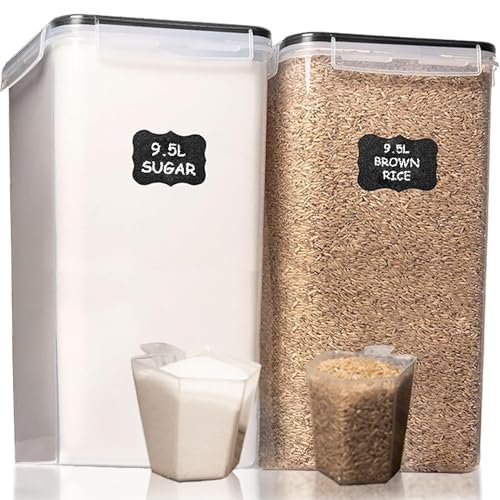
The Shazo 2-pack is the top pick for home bulk shoppers, with each 9.5L (~2.5 gallon) container holding enough flour, sugar, rice, or cereal for a family of 4 for 1-2 months. The airtight lid features a silicone gasket that blocks moisture and pests, and the leakproof design prevents messy spills if containers are jostled on shelves. Made of 100% BPA-free plastic, it is safe for all food types, and the sleek black finish complements most modern kitchen aesthetics.
Pros:
Ideal for storing bulk dry goods like flour, rice, and cereal in home pantries.
The Shazo 2-pack is the top pick for home bulk shoppers, with each 9.5L (~2.5 gallon) container holding enough flour, sugar, rice, or cereal for a family of 4 for 1-2 months. The airtight lid features a silicone gasket that blocks moisture and pests, and the leakproof design prevents messy spills if containers are jostled on shelves. Made of 100% BPA-free plastic, it is safe for all food types, and the sleek black finish complements most modern kitchen aesthetics.
Pros:
- Secure silicone seal keeps dry goods fresh for up to 12 months
- Large capacity reduces the need for frequent refills
- Leakproof design prevents messy spills in pantries
- BPA-free construction meets food safety standards Cons:
- Larger footprint may not fit in extremely narrow cabinet shelves
- Opaque black exterior requires labeling for content identification A common mistake with this model is overfilling past the fill line, which can pop the lid seal and compromise freshness. Leave 1-2 inches of headspace when filling to ensure a tight closure. If you’re ready to streamline your pantry bulk storage, shop the Shazo 2-pack here.
Best for Commercial & High-Volume Kitchens: Rubbermaid Commercial 3.5-Gallon Polycarbonate Food Storage Box
 Shatter-resistant design built for high-volume commercial kitchen use.
The Rubbermaid Commercial square container is purpose-built for busy restaurants, cafeterias, and sous vide enthusiasts. The 3.5-gallon capacity holds enough ingredients for batch cooking, and the heat-resistant polycarbonate construction is safe for sous vide temperatures up to 185°F, as well as hot holding and freezing. The clear exterior lets staff identify contents at a glance, cutting down on prep time during busy service, and the stackable design fits standard commercial shelving to maximize limited back-of-house space. It is also NSF-certified for foodservice use, meeting strict hygiene standards for professional kitchens.
Pros:
Shatter-resistant design built for high-volume commercial kitchen use.
The Rubbermaid Commercial square container is purpose-built for busy restaurants, cafeterias, and sous vide enthusiasts. The 3.5-gallon capacity holds enough ingredients for batch cooking, and the heat-resistant polycarbonate construction is safe for sous vide temperatures up to 185°F, as well as hot holding and freezing. The clear exterior lets staff identify contents at a glance, cutting down on prep time during busy service, and the stackable design fits standard commercial shelving to maximize limited back-of-house space. It is also NSF-certified for foodservice use, meeting strict hygiene standards for professional kitchens.
Pros:
- Shatter-resistant polycarbonate withstands daily heavy use
- Heat-safe for sous vide, hot holding, and freezing
- Clear exterior eliminates the need to open containers to check contents
- Stackable design maximizes commercial storage space Cons:
- Square shape leaves small gaps when stacked with round containers
- Not fully airtight, so not ideal for long-term dry goods storage For commercial kitchens, pair this container with a dry-erase labeling system to track ingredient dates and support FIFO (first in, first out) inventory protocols to reduce waste.
Best for Pet Food Storage: IRIS USA WeatherPro Airtight Pet Food Container
 Translucent body lets you monitor pet food levels without opening the seal.
Pet food stored in its original bag is rarely airtight, leaving kibble exposed to moisture, pests, and oxidation that degrades nutritional value and causes spoilage. The IRIS USA WeatherPro container solves this problem, with an airtight lid that locks out moisture and pests, and a translucent body that lets you check food levels at a glance without breaking the seal. It holds up to 10 pounds of dry dog or cat kibble, the exact equivalent of 3 gallons of dry pet food, and the lightweight 1.15-pound build makes it easy to move when refilling. Made in the USA, it meets FDA food contact standards for safe storage of both pet and human consumables.
Pros:
Translucent body lets you monitor pet food levels without opening the seal.
Pet food stored in its original bag is rarely airtight, leaving kibble exposed to moisture, pests, and oxidation that degrades nutritional value and causes spoilage. The IRIS USA WeatherPro container solves this problem, with an airtight lid that locks out moisture and pests, and a translucent body that lets you check food levels at a glance without breaking the seal. It holds up to 10 pounds of dry dog or cat kibble, the exact equivalent of 3 gallons of dry pet food, and the lightweight 1.15-pound build makes it easy to move when refilling. Made in the USA, it meets FDA food contact standards for safe storage of both pet and human consumables.
Pros:
- Airtight seal blocks moisture, pests, and odors
- Translucent body eliminates the need to open the container to check levels
- Lightweight build is easy to lift and move when full
- Made in USA with BPA-free, food-grade materials Cons:
- 10-pound capacity is too small for households with multiple large-breed dogs
- Black lid may show dust and pet hair more easily than lighter colors For households with larger pets, pair this container with a secondary storage bin for treats and supplements to keep all pet food organized in one area.
Best for All-Purpose & Long-Term Storage: ePackageSupply 3.5-Gallon HDPE Bucket with Gamma Lid
 90-mil thick construction is durable enough for long-term prepper storage.
For preppers, homesteaders, or anyone needing a heavy-duty all-purpose storage solution, the ePackageSupply HDPE bucket is a top pick. The 3.5-gallon capacity holds enough dry goods, water, or fermentation supplies for emergency kits or small-batch preservation projects, and the 90-mil thick HDPE construction is 3x thicker than standard food storage containers, making it crack-resistant even if dropped or stacked under heavy weight. The orange gamma screw-on lid creates a true airtight, pest-proof seal that holds up for years of long-term storage, and the non-porous HDPE material will not absorb odors or stains from strong foods like garlic, curry, or fermented vegetables. It is also BPA-free and Made in USA, meeting all federal food safety standards.
Pros:
90-mil thick construction is durable enough for long-term prepper storage.
For preppers, homesteaders, or anyone needing a heavy-duty all-purpose storage solution, the ePackageSupply HDPE bucket is a top pick. The 3.5-gallon capacity holds enough dry goods, water, or fermentation supplies for emergency kits or small-batch preservation projects, and the 90-mil thick HDPE construction is 3x thicker than standard food storage containers, making it crack-resistant even if dropped or stacked under heavy weight. The orange gamma screw-on lid creates a true airtight, pest-proof seal that holds up for years of long-term storage, and the non-porous HDPE material will not absorb odors or stains from strong foods like garlic, curry, or fermented vegetables. It is also BPA-free and Made in USA, meeting all federal food safety standards.
Pros:
- Ultra-durable 90-mil HDPE construction resists cracks and impacts
- Gamma screw-on lid creates a fully airtight, pest-proof seal
- Non-porous material does not absorb odors or stains
- BPA-free and Made in USA for safe food storage Cons:
- Opaque white exterior requires labeling for content identification
- 2-pound empty weight may be heavy for some users when full This bucket is also safe for non-food storage uses, including cleaning supplies, craft supplies, and seasonal holiday decorations.
Best for Meal Prep & Portion Control: Youngever 2-Pack Large Food Storage Boxes
 Leakproof design makes these ideal for transporting prepped meals to work or school.
The Youngever 2-pack is designed for busy meal preppers, with each rectangular container holding enough food for 2-3 adult servings, perfect for prepping weekly lunches or dinner batches. The leakproof lid prevents messy spills when transporting meals to work, school, or the gym, and the BPA-free plastic is dishwasher safe on both top and bottom racks, with no warping from high heat. The durable construction holds up to daily use, and the bright blue and red colors make it easy to identify your containers in a shared office fridge or family freezer. For easy entertaining, pair these containers with our guide to cutting cheese for charcuterie boards to pre-portion snacks for gatherings.
Pros:
Leakproof design makes these ideal for transporting prepped meals to work or school.
The Youngever 2-pack is designed for busy meal preppers, with each rectangular container holding enough food for 2-3 adult servings, perfect for prepping weekly lunches or dinner batches. The leakproof lid prevents messy spills when transporting meals to work, school, or the gym, and the BPA-free plastic is dishwasher safe on both top and bottom racks, with no warping from high heat. The durable construction holds up to daily use, and the bright blue and red colors make it easy to identify your containers in a shared office fridge or family freezer. For easy entertaining, pair these containers with our guide to cutting cheese for charcuterie boards to pre-portion snacks for gatherings.
Pros:
- Large capacity holds 2-3 servings per container for easy meal prep
- Leakproof lid prevents spills during transport
- Dishwasher safe for easy cleaning
- Durable BPA-free plastic holds up to daily use Cons:
- Rectangular shape does not stack as securely as round containers
- Bright colors may not complement all kitchen aesthetics
Best for Space-Saving Home Storage: Komax Extra Large Airtight Pet & Dry Goods Bin
 Built-in handles make it easy to move heavy pet food containers.
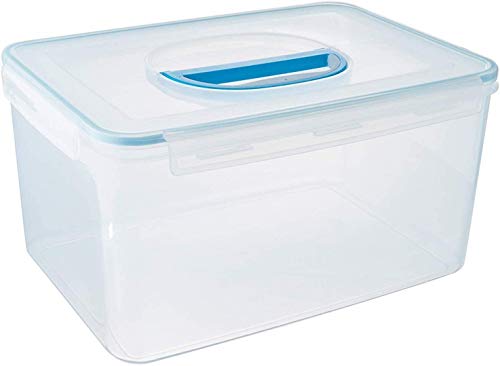
The Komax extra large bin is a versatile pick for households that need to store both pet food and bulk dry goods in a compact footprint. The 48.6-cup (≈3 gallon) capacity holds up to 12 pounds of dry kibble or 18 pounds of rice, and the water and airtight seal blocks moisture and pests to keep contents fresh for months. The clear exterior lets you check supply levels at a glance, and the built-in handles make it easy to lift and move even when fully loaded, a helpful feature for seniors or anyone with mobility limitations. It is also BPA-free and safe for both human and pet food storage.
Pros:
Built-in handles make it easy to move heavy pet food containers.
The Komax extra large bin is a versatile pick for households that need to store both pet food and bulk dry goods in a compact footprint. The 48.6-cup (≈3 gallon) capacity holds up to 12 pounds of dry kibble or 18 pounds of rice, and the water and airtight seal blocks moisture and pests to keep contents fresh for months. The clear exterior lets you check supply levels at a glance, and the built-in handles make it easy to lift and move even when fully loaded, a helpful feature for seniors or anyone with mobility limitations. It is also BPA-free and safe for both human and pet food storage.
Pros:
- Water and airtight seal keeps contents fresh and pest-free
- Built-in handles make heavy containers easy to move
- Clear design for easy content identification
- BPA-free construction meets food safety standards Cons:
- Large footprint may not fit in small cabinet spaces
- 2-pound empty weight may be heavy for some users when full
Best for Collapsible Bulk Storage: Komzon Rice Storage Containers
 Collapsible design saves space when not in use for seasonal bulk storage.
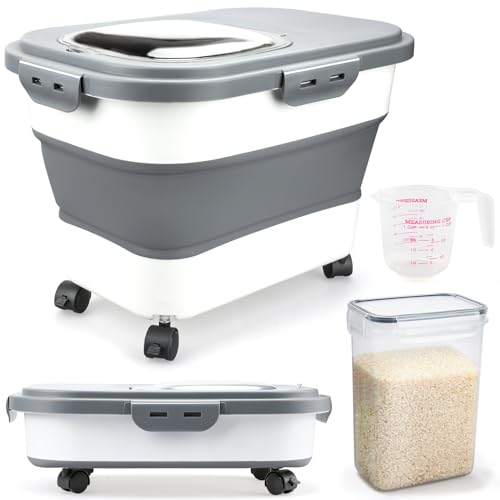
The Komzon rice storage container is a top pick for households with limited storage space, with a unique collapsible design that reduces the container’s height by 70% when empty, making it easy to tuck in closets or under beds when not in use. It holds up to 30 pounds of rice, flour, or pet food, and the rolling wheels make it easy to move even when fully loaded, a helpful feature for seniors or anyone who struggles to lift heavy bulk bins. The clear airtight lid blocks moisture and pests to keep dry goods fresh, and the BPA-free construction is safe for all food types. It also includes a built-in scoop for easy portioning.
Pros:
Collapsible design saves space when not in use for seasonal bulk storage.
The Komzon rice storage container is a top pick for households with limited storage space, with a unique collapsible design that reduces the container’s height by 70% when empty, making it easy to tuck in closets or under beds when not in use. It holds up to 30 pounds of rice, flour, or pet food, and the rolling wheels make it easy to move even when fully loaded, a helpful feature for seniors or anyone who struggles to lift heavy bulk bins. The clear airtight lid blocks moisture and pests to keep dry goods fresh, and the BPA-free construction is safe for all food types. It also includes a built-in scoop for easy portioning.
Pros:
- Collapsible design saves 70% of space when empty
- Rolling wheels make heavy loaded containers easy to move
- Airtight lid keeps dry goods fresh and pest-free
- BPA-free construction meets food safety standards Cons:
- Requires assembly before first use, which can be inconvenient for some shoppers
- Wheels are not lockable, so the container may roll on uneven surfaces A common mistake with this model is not locking the wheels when the container is full on a sloped surface, which can cause it to roll and spill. If you need a stationary container, opt for a non-wheeled model instead. Shop the Komzon rice storage container here.
Best for Stackable Home Storage: Sistema KLIP IT 5L Airtight Food Container
 Clip-lock lid creates a secure seal to keep snacks and leftovers fresh.
The Sistema KLIP IT container is a top pick for households that prioritize stackable storage, with a unique clip-lock lid that creates a secure airtight seal, and a recessed lid design that lets you stack multiple containers securely without slipping. The 5L (~1.3 gallon) size is ideal for storing smaller bulk items like nuts, dried fruit, or snack mixes, and the clear body with bright blue clips makes it easy to identify contents at a glance. It is made of 100% BPA-free plastic, and is dishwasher safe for easy cleaning.
Pros:
Clip-lock lid creates a secure seal to keep snacks and leftovers fresh.
The Sistema KLIP IT container is a top pick for households that prioritize stackable storage, with a unique clip-lock lid that creates a secure airtight seal, and a recessed lid design that lets you stack multiple containers securely without slipping. The 5L (~1.3 gallon) size is ideal for storing smaller bulk items like nuts, dried fruit, or snack mixes, and the clear body with bright blue clips makes it easy to identify contents at a glance. It is made of 100% BPA-free plastic, and is dishwasher safe for easy cleaning.
Pros:
- Secure clip-lock seal keeps food fresh for months
- Stackable design maximizes cabinet and pantry space
- BPA-free construction is safe for all food types
- Clear body for easy content identification Cons:
- Smaller 5L capacity is not ideal for large bulk items like flour or rice
- Clip mechanism can be stiff for users with limited hand strength If you frequently store hot meal prep, opt for a polycarbonate container rated for high temperatures, and pair it with a dish scrub brush with soap dispenser for easy, hygienic cleaning after use.
Pro Tips for Maximizing Freshness & Organization
Getting the most out of your 3-gallon containers requires a few simple best practices to keep food fresh and your storage space tidy.
FIFO Inventory Management
Adopting a first in, first out (FIFO) system ensures you use older ingredients before they expire, cutting down on waste. Label every container with the date you filled it, and place newer containers behind older ones on shelves so you naturally reach for the oldest stock first. Most dry goods stored in airtight 3-gallon containers stay fresh for 6-12 months when kept in a cool, dark place away from direct sunlight and heat sources.
Shelf Organization Hacks
Use tiered shelf organizers to stack 2-3 containers per shelf, doubling your storage capacity without expanding your footprint. Keep frequently used items like flour, sugar, and pasta at eye level for easy access, and store heavier items like rice buckets or pet food bins on lower shelves to prevent tipping. For small pantries, store containers on top of the refrigerator or under counter overhangs to use otherwise wasted vertical space.
Cleaning & Maintenance
Wash containers with warm soapy water after each use, and avoid abrasive scrubbers that can scratch the plastic surface and harbor bacteria. For stubborn food odors or stains, soak the container and lid in a 1:1 mix of water and white vinegar for 30 minutes before washing. Replace containers immediately if you notice deep scratches, cracked silicone gaskets, or warped lids, as these defects can compromise the airtight seal and lead to food spoilage. Use a non-abrasive kitchen cleaning brush with handle to scrub out stuck-on residue without damaging the container surface.
Multi-Use Storage Ideas
3-gallon containers are not just for food: use them to store cleaning supplies, craft supplies, seasonal holiday decorations, or even kids' toys to reduce clutter across your home.
Common Mistakes to Avoid
Even the highest-quality 3-gallon container will underperform if used incorrectly. Avoid these common pitfalls to get the most out of your investment:
- Overfilling containers: Leave 1-2 inches of headspace when filling to allow the lid to seal properly. Overfilling can cause the seal to pop open, letting air and moisture in and spoiling food faster.
- Storing in direct sunlight: UV rays degrade plastic over time and accelerate spoilage of light-sensitive ingredients, even in airtight containers. Store all containers in a cool, dark pantry or cabinet away from windows and heat sources like ovens or dishwashers.
- Using damaged containers: Cracked lids, warped plastic, or torn silicone gaskets compromise the airtight seal, creating entry points for pests and moisture. Replace damaged containers immediately to avoid food safety risks.
- Mixing food types: Never store raw meat, seafood, or produce with dry goods in the same container, even if it is airtight, to avoid cross-contamination and foodborne illness. Use separate containers for raw and dry ingredients.
Frequently Asked Questions
How much food does a 3-gallon storage container hold?
A standard 3-gallon container holds ~48 cups of dry goods, equivalent to 25 pounds of all-purpose flour, 20 pounds of white rice, 15 pounds of dried pasta, or 10-12 pounds of dry pet kibble. For liquid storage, it holds 3 gallons (384 fluid ounces) of water, broth, or other liquids.
Are 3-gallon food storage containers safe for hot food?
It depends on the container material: polycarbonate and high-temperature HDPE containers are safe for hot foods up to 210°F, making them suitable for sous vide cooking, hot holding, and storing leftovers. Standard PET plastic containers should not be used for hot items, as they can warp and leach chemicals into food. Always check the manufacturer’s temperature rating before using a container for hot food.
How do I know if my container is truly airtight?
The easiest at-home test is to place a dry piece of paper inside the sealed container, then tilt it upside down for 10 seconds. If the paper stays in place, the seal is effective. If it falls out, the lid is not creating a tight enough seal to keep air and moisture out, and will need to be adjusted or replaced.
Can I use 3-gallon containers for sous vide cooking?
Yes, as long as the container is made of food-grade, heat-resistant polycarbonate or HDPE rated for sous vide temperatures (typically 130°F to 185°F). Avoid containers with decorative coatings, unknown plastic types, or thin walls, as they may warp or leach chemicals at high temperatures. The Rubbermaid Commercial polycarbonate container is a top pick for sous vide use, as it is rated for temperatures up to 210°F.
How long does food stay fresh in a 3-gallon airtight container?
Dry goods like flour, rice, pasta, and cereal stay fresh for 6-12 months when stored in a cool, dark place in an airtight 3-gallon container. Perishable meal prepped foods stay fresh for 3-5 days in the refrigerator, or up to 3 months in the freezer. Pet kibble stored in an airtight container stays fresh for 6-8 months, depending on the brand and ingredients.
Conclusion
A 3-gallon food storage container is one of the most versatile, cost-effective tools for streamlining kitchen organization, reducing food waste, and keeping ingredients fresh for longer. Whether you need a container for home pantry bulk storage, commercial kitchen use, pet food, meal prep, or long-term prepper storage, there is a model built to fit your specific needs. Prioritize features like airtight silicone seals, BPA-free food-grade materials, and stackable designs to get the most value out of your purchase, and avoid common mistakes like overfilling or storing containers in direct sunlight to extend their lifespan. Upgrade your kitchen organization today by exploring our full range of storage and cleaning tools to build a more efficient, hygienic space.

I’m Abby Lu, a passionate home cook who loves simplifying everyday meals. At PlugChef.com, I share product reviews and cooking guides to help you find the best tools for your kitchen.
Related posts:
 Best Microwave Egg Cooker: Quick, Delicious Breakfasts Made Easy
 Best Electric Fondue Pot for Meat: Top Picks for Delicious Dips
 Best Electric Grinder for Meat and Vegetables: Top Multifunctional Picks Reviewed
 Best Blenders for Making Green Smoothies: Top Picks for Smooth Results
 Best Cheap Coffee Grinders: Top Picks for Flavorful Brews
 Best Coffee And Tea Maker for Versatile Brewing at Home