
Rust on kitchen tools is common, but most spots are fixable at home with safe, inexpensive supplies. This guide shows clear, tested methods for different metals and rust severities, step-by-step instructions (with exact ratios and timings), safety notes, prevention tips, and when to repair versus replace. In practice, following a gentle→stronger progression prevents damage and saves time.

Credit: www.youtube.com
Quick overview: Pick the right method for the metal and rust level
- Light surface rust on stainless-steel flatware and utensils → baking soda paste, lemon + salt (low risk).
- Moderate rust on stainless or plated items → white vinegar soak + gentle scrubbing (moderate risk to polish).
- Heavy rust, pitting, or flaky plating → mechanical removal, oxalic-acid products, or professional restoration (higher risk).
- Cast iron / carbon steel → mechanical removal followed by immediate re-seasoning (special workflow).
- Very severe corrosion or antiques → consider electrolysis or a professional restorer.
Common mistake: starting with harsh abrasives on polished stainless. Always start mild and escalate only if needed.
Tools & materials checklist (easy to gather)
- White distilled vinegar, baking soda, table salt, fresh lemon juice
- Soft sponges, nylon scrub brush, old toothbrush
- Fine steel wool (0000) and brass or nylon brush (for less scratching)
- Food-grade oil (vegetable, canola, or refined mineral oil)
- Disposable nitrile gloves, safety glasses
- Towels, drying rack, plastic tub or glass jar for soaking
- Optional: oxalic-acid rust cleaner (follow label), electrolysis kit (advanced)
- Small container for neutralizing/collecting rinse water if using chemicals
Safety note: when using acids or commercial rust removers, work in a ventilated area and use gloves and eye protection. For guidance on safe disposal of household hazardous waste, consult the EPA’s household hazardous waste advice at https://www.epa.gov.
Identify the metal before you start
- Stainless steel — magnetic tests can help but aren’t definitive. If it’s stamped “stainless,” it’s usually corrosion-resistant but not rust-proof; surface rust appears as small brown spots.
- Carbon steel / plain iron — not stainless; will rust more quickly and needs oiling after cleaning.
- Tin-plated or chrome-plated — thin coating over metal; rust usually appears where the coating is chipped.
- Silver or silver-plated — reacts differently; avoid strong abrasives that remove plating.
If you’re unsure, test a hidden area with a gentle method first.
Method A — Gentle home remedies (best first step for light rust)
Use these first to preserve finishes.
Baking soda paste (best for delicate stainless)
- Mix: 3 parts baking soda + 1 part water to form a thick paste.
- Apply: spread on rust spots with a cloth or toothbrush.
- Wait: 20–45 minutes for light rust; up to 90 minutes for stubborn spots.
- Scrub: rub gently with a soft brush or fine nylon pad along the grain.
- Rinse and dry: wash with dish soap and dry immediately. In practice: baking soda mildly abrades and neutralizes rust without dulling polished surfaces.
Lemon + salt (good for spot treatment)
- Sprinkle coarse salt over the rusted area.
- Squeeze lemon juice to saturate the salt; leave 20–60 minutes.
- Scrub with the lemon rind or a soft brush; rinse and dry. Trade-off: acidic action speeds rust removal but can matt a polished finish if left too long.
Vinegar soak (for removable parts)
- Soak: submerge parts in white vinegar. Times: 30–180 minutes for light/moderate rust; 6–12 hours for tougher spots.
- Check hourly: acid will continue to act—don’t soak longer than necessary.
- Scrub with nylon brush or 0000 steel wool, rinse thoroughly, and dry. Pro tip: after vinegar, buff with a tiny amount of oil to restore luster on stainless.
Method B — Mechanical removal (for durable metals and cast iron)
When rust is stubborn or covers a large area.
Fine steel wool and brushing (stainless and carbon steel)
- Use only 0000-grade steel wool on stainless; work gently with the grain.
- For carbon steel, stiffer brushes or coarser pads are OK but expect finish change.
- After rust removal, clean with soap, rinse, and dry immediately.
Cast iron / carbon steel workflow (remove rust + re-season)
- Remove loose rust with a wire brush or 0000 steel wool.
- If heavy, soak in a 50:50 white vinegar:water mix for maximum 30–60 minutes, checking every 10–15 minutes; remove once rust loosens. (Note: longer soaks etch iron.)
- Scrub to bare metal, rinse, and dry completely. Heat in oven or on stovetop briefly to evaporate moisture.
- Apply a thin coat of oil (1 tsp spread thinly) and bake upside down at 425–450°F (220–230°C) for 45–60 minutes. Repeat 1–2 times to build a durable seasoning. Important: do not put unseasoned carbon steel in a dishwasher—detergent + moisture speeds corrosion.
Electrolysis (advanced, for antiques or tools)
- Electrolysis removes rust chemically using a DC current and alkaline bath without aggressive abrasion.
- Requires correct setup, grounding, and safety measures—if unfamiliar, seek a detailed guide or professional service.
Method C — Chemical cleaners (when home remedies fail)
Use only when mechanical or household methods do not work.
Oxalic-acid products and commercial removers
- Follow the product label exactly: concentration, contact time, and neutralization.
- Always test on a small, hidden area first.
- Use gloves and eye protection; work in ventilation.
- Rinse repeatedly and wash with dish soap before food use.
Trade-offs: faster and effective for heavy staining, but may alter a finish, dull polish, or require more rinsing to ensure food safety.
Disposal and environmental safety
- Collect rinse water and leftover chemical per label instructions and local disposal rules.
- For broad guidance on household hazardous waste and disposal, see https://www.epa.gov.
- Never pour concentrated chemicals down household drains without following local regulations.
Step-by-step quick repair plan (start here in practice)
- Identify metal and rust severity.
- Test a gentle method on an inconspicuous area (baking soda paste).
- If spot lifts, finish with thorough rinse and dry; apply oil if carbon steel.
- If not, move to vinegar soak or lemon + salt for targeted areas.
- For larger areas or deep rust, use mechanical cleaning; protect finishes by moving from fine to coarser as needed.
- If still unsuccessful, use a labeled chemical rust remover or consult a professional restorer.
Practical timing guide: small spoon = 30–45 minutes using baking soda; skillet edge with moderate rust = 1–6 hours including soaking and scrubbing; heavy pitting or full-strip restoration = multiple hours or professional work.
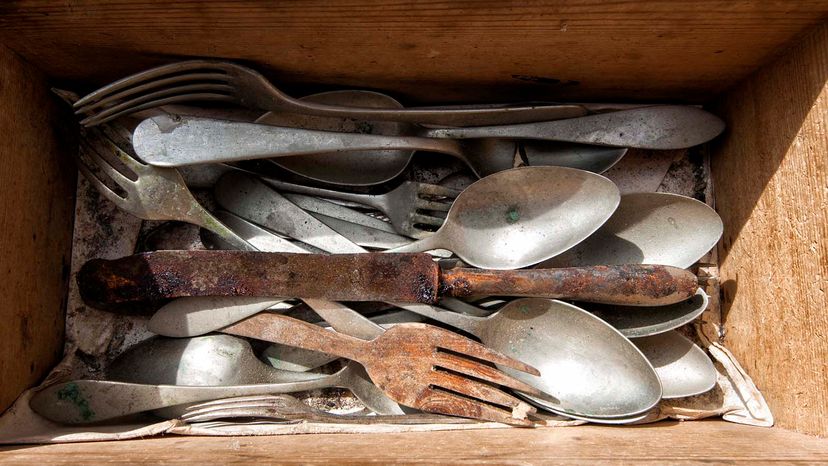
Credit: home.howstuffworks.com Surface corrosion forming on a metal spatula before treatment.
When to repair vs. replace
Repair:
- Surface rust or shallow pitting that is removed by cleaning.
- Plated items with small localized corrosion that polish out.
Replace:
- Deep pitting that compromises strength or creates sharp edges.
- Flaking plating that exposes substrate across large areas.
- Structural deformation (warped, cracked handles) or persistent bacterial-harboring roughness.
- Any utensil used for food prep that cannot be restored to a smooth, clean surface.
Honest assessment: if safety or hygiene is in doubt after cleaning, replace the item.
Prevention: routine care that stops rust before it starts
- Dry immediately and thoroughly after washing—wipe dry and air-dry in a ventilated rack.
- Oil carbon steel and cast iron after each use or weekly if stored dry: a thin film of food-grade oil prevents moisture contact.
- Don’t leave acidic foods on bare metal surfaces for long (tomato, citrus); clean promptly.
- Avoid leaving mixed metals stacked wet together; contact with dissimilar metals can accelerate corrosion.
- Use utensil holders that drain, and consider silica gel packets in drawers in humid climates.
- Inspect tools monthly; treating tiny spots early saves hours later.
In practice, a 30-second wipe-and-dry routine after washing prevents most rust problems.

Credit: www.homedit.com Stainless-steel utensils restored and dried after rust removal.
Professional restoration and special cases
- Antiques and high-value silver: consult a conservator to avoid diminishing value.
- Tools with moving parts: professional service can restore tolerances, remove pitting, and recoat surfaces.
- If electrolysis is considered for a sentimental or expensive item, ask a professional restorer for advice first—improper electrolysis can cause hydrogen embrittlement or surface damage.
Common mistakes and troubleshooting
- Using coarse abrasives first — creates grooves that trap moisture and food, inviting more rust.
- Over-soaking in acids — leads to etching and permanent dulling of stainless finishes.
- Not fully rinsing chemical residues — can affect taste and safety.
- Skipping re-seasoning for cast iron — a cleaned pan will rust rapidly without a protective layer.
- Rust returns quickly after cleaning — look for missed pitting, trapped moisture, or storage problems. Re-clean, dry thoroughly, and apply a protective oil.
If finish appears dull after treatment, polish with a non-abrasive stainless cleaner and then protect with a thin oil where appropriate.
FAQ
Q: Is rust on utensils dangerous? A: Small rust flakes are not typically poisonous, but rusted, rough surfaces can harbor bacteria and lead to uneven cooking or contamination. Clean and restore a smooth surface or replace utensils with deep pitting.
Q: Will vinegar remove all rust? A: Vinegar is effective for many surface and moderate rust issues but may require hours and follow-up scrubbing. For heavy pitting, use mechanical methods or commercial cleaners.
Q: How should I re-season a cast-iron pan after rust removal? A: Dry thoroughly, apply a thin, even coat of food-safe oil, and bake upside down at 425–450°F (220–230°C) for 45–60 minutes. Repeat once or twice to build a durable coating.
Q: Can I use steel wool on stainless steel flatware? A: Use only very fine (0000) steel wool sparingly. Coarser wool scratches and damages the finish.
Q: How do I dispose of leftover rust remover? A: Follow product label and local rules. For broader household hazardous waste disposal guidance, consult the EPA at https://www.epa.gov.
Conclusion
Most rust on kitchen utensils is fixable with a stepwise approach: start gentle (baking soda, lemon + salt), escalate to vinegar soaks for moderate problems, and use mechanical or chemical methods only when needed. Cast iron and carbon-steel tools require immediate drying and re-seasoning. Prevent recurrence with prompt drying, routine oiling where appropriate, and sensible storage. If an item remains unsafe or structurally compromised after cleaning, replace it.
Try the gentlest method that fits your utensil now — test a hidden spot, follow the steps above, and bookmark this guide for the next time rust shows up.

Hi, I’m Daniel Brooks—a food lover and kitchen gear enthusiast. I enjoy testing cookware, utensils, and gadgets to see what really works in everyday cooking. At PlugChef.com, I share honest reviews, comparisons, and simple guides to help you choose the best tools for a safer, smarter, and more enjoyable kitchen.
Related posts:
 How to Make a Fruit Basket for a Gift: Easy DIY Guide
 Do You Need a Basket? Essential Guide for Air Fryers
 How to Choose Kitchen Appliances: Expert Tips Revealed
 Kitchen Cabinets With Black Stainless Steel Appliances: Modern Elegance
 White Kitchen Cabinets Stainless Steel Appliances: Timeless Elegance
 Top 10 Best Non-Toxic Cooking Utensils – Safe & Durable Choices for Healthy Homes

