

Slow, clogged bathroom drains are one of the most common household headaches — they cause standing water, unpleasant odors, and can even lead to costly water damage if left unaddressed. The good news? Most minor to moderate bathroom drain clogs can be fixed in 10–15 minutes with basic household supplies, no plumber required. In this guide, we’ll walk you through safe, effective steps to clear sink, tub, and shower drain pipes, plus simple prevention tips to keep them flowing smoothly for months to come. Whether you’re dealing with a hair clog in the shower or soap scum buildup in the sink, these easy methods will leave your drains sparkling and your bathroom fresh.
Why Do Bathroom Drain Pipes Clog?
Before you start cleaning, it helps to understand what’s causing the clog, so you can pick the right method for the job. The vast majority of bathroom drain blockages come from four common culprits:
- Hair: The #1 cause of shower and tub clogs, hair wraps around drain stoppers and binds with soap scum to form dense, sticky clogs deep in pipes.
- Soap scum: A combination of body oils, minerals from hard water, and soap residue that hardens into a sticky, pipe-narrowing buildup over time.
- Mineral deposits: Hard water leaves calcium and lime scale on pipe walls, which narrows the drain opening and traps other debris.
- Foreign objects: Cotton swabs, floss, jewelry, and small pieces of cotton or facial wipes that get washed down sinks and lodge in the P-trap or deeper pipes. Identifying the cause of your clog will help you pick the most effective cleaning method and avoid wasting time on fixes that won’t work for your specific issue.
What You’ll Need
We’ve split supplies into basic household items for minor clogs, and specialized tools for tougher, deeper blockages.
Basic Household Supplies
These items are likely already in your home, and work for 80% of minor bathroom drain clogs:
- Rubber gloves and safety goggles to protect against gunk and cleaning fumes
- White vinegar and baking soda for a non-toxic fizzing reaction that breaks down buildup
- Dish soap to cut through grease and soap scum
- Hot tap water (not boiling for PVC pipes, which are common in homes built after 1990)
- An old toothbrush for scrubbing drain covers and visible debris
- A bucket and old towels to catch spills and debris
Specialized Tools for Tough Clogs
For persistent clogs that don’t respond to basic methods, these tools will help you reach deep into pipes:
- A cup plunger for sink clogs, or a flange plunger for tub and shower clogs
- A manual drain snake (auger) for pulling out hair and debris 2–6 feet down pipes
- A P-trap wrench for removing the U-shaped pipe under sinks to clear trapped debris
- A pipe brush for scrubbing the inside of pipes and the P-trap
- A wet/dry vac for sucking out standing water and loose debris from deep clogs
- Optional: An enzyme-based drain cleaner for monthly maintenance, or a calcium lime rust remover for hard water mineral buildup
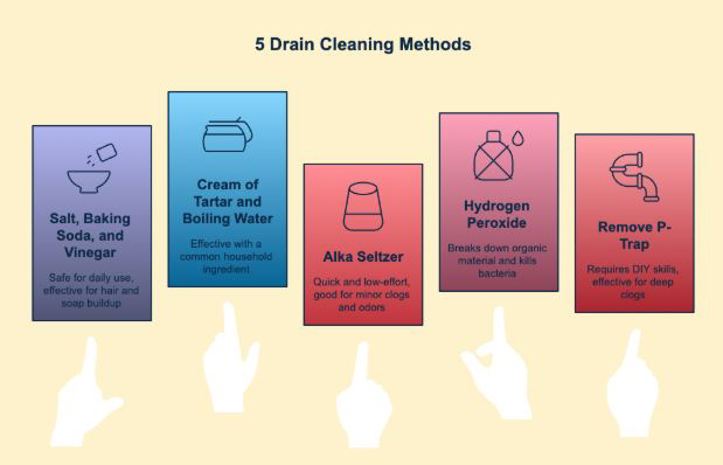 Tools shown include a cup plunger, drain snake, baking soda, vinegar, and protective gloves for safe drain maintenance.
Image source: www.ars.com
Tools shown include a cup plunger, drain snake, baking soda, vinegar, and protective gloves for safe drain maintenance.
Image source: www.ars.com
Critical Safety Precautions
Cleaning drain pipes is low-risk if you follow these simple safety rules:
- Always wear gloves and goggles to avoid contact with dirty drain water, gunk, and cleaning fumes. If you’re working with chemical cleaners, wear a face mask to avoid inhaling toxic fumes.
- Never mix chemical drain cleaners with vinegar, bleach, or ammonia — this creates toxic chloramine or chlorine gas that can cause serious respiratory damage.
- Test hot water temperature on a small section of exposed pipe first if you have older metal pipes, to avoid warping or cracking brittle metal.
- Keep all cleaning products away from children and pets, and store them in a locked cabinet after use.
- If you have a septic system, avoid harsh lye-based drain cleaners, as they kill the beneficial bacteria your system needs to break down waste.
- Work in a well-ventilated area: open a window or run the bathroom fan to clear fumes from cleaning products.
Step 1: Prep Your Drain for Cleaning
Proper prep will make the cleaning process faster and avoid messy spills:
- Clear the area around the drain, and lay down old towels to catch any water or debris that falls out of the pipe.
- Place a bucket directly under the P-trap (the U-shaped pipe under your sink) to catch standing water and gunk when you remove it.
- Remove the drain stopper or cover: unscrew it if necessary, or use a flathead screwdriver to pry off a stuck cover.
- Use an old toothbrush to scrub away visible hair and surface gunk from the drain opening, dumping debris directly into the trash (not back down the drain).
Quick prep checklist:
- Make sure your bucket is large enough to hold 1–2 cups of water
- Have a rag on hand to plug the overflow hole on sinks, which creates a tighter seal for plunging
- Wear non-slip shoes in case of spills
Easy, Non-Toxic Cleaning Methods for Minor Clogs
These methods work for slow drains caused by light soap scum and hair buildup, with no harsh chemicals required:
- Hot water flush: Pour a kettle of hot (not boiling for PVC) tap water down the drain to loosen surface buildup. For extra grease, add a few drops of dish soap to the hot water first to cut through oily residue.
- Baking soda and vinegar reaction: Pour ½ cup of baking soda down the drain, followed by ½ cup of white vinegar. Cover the drain with a plug or wet rag to keep the fizzing reaction inside the pipe, let sit for 15–30 minutes (longer for stubborn clogs), then flush with a kettle of hot water. Pro tip: For shower and tub drains, sprinkle baking soda directly on the drain surface before adding vinegar to target hair and soap scum buildup directly.
- Plunger method: Use a cup plunger for sinks, or a flange plunger for tubs and showers. For sinks, plug the overflow hole with a wet rag to create a tight seal. Place the plunger over the drain, push down firmly 10–15 times, then lift to check drainage. Repeat 2–3 times if needed. Common mistake: Using too much force can damage pipe seals, so use steady, firm pressure instead of hard slams.
Advanced Techniques for Stubborn, Deep Clogs
If non-toxic methods don’t clear the clog, try these more targeted techniques, starting with the most common fix for moderate blockages:
Clean the P-Trap First
Most minor to moderate clogs are located in the P-trap, the U-shaped pipe under your sink that catches debris before it enters your main drain line. Cleaning it takes 5 minutes and fixes the majority of bathroom sink clogs in practice:
- With the bucket still under the P-trap, use a P-trap wrench to loosen the slip nuts on both ends of the U-shaped pipe.
- Carefully remove the P-trap, and dump all debris (hair, gunk, small lost items like earrings) into the bucket.
- Scrub the inside of the P-trap with a pipe brush and soapy water to remove stuck buildup.
- Reattach the P-trap, tighten the slip nuts hand-tight plus a ¼ turn with the wrench, then run water to check for leaks. If your P-trap is old and corroded, replace it with a new plastic one for $5–$10 at any hardware store for a long-term fix.
Use a Drain Snake for Deep Clogs
A manual drain snake (also called an auger) is a flexible, coiled wire that can reach clogs 2–6 feet down the pipe, far deeper than a plunger. Insert the snake into the drain, turn the handle clockwise to hook onto hair and debris, pull the snake out to remove the clog, and repeat until you no longer pull up gunk. For clogs deeper than 6 feet, an electric drain snake may be needed, but these require care to avoid scratching or cracking pipes. Common mistake: Forcing the snake too hard can damage pipe walls, so stop if you feel strong resistance and adjust the angle.
Chemical and Enzyme Cleaners
Chemical drain cleaners (lye or acid-based) dissolve organic clogs in 15–30 minutes, but they carry significant risks: they can corrode older metal pipes, warp PVC, and release toxic fumes if mixed with other cleaners. The U.S. Environmental Protection Agency recommends using them only as a last resort, following all label instructions, and never using them on pipes older than 30 years learn about safe drain cleaner use.
Enzyme-based cleaners are a safer alternative: they use live bacteria to eat organic material, are safe for all pipe types and septic systems, but take 4–12 hours to work, so they’re best for overnight use or regular maintenance. For hard water areas with stubborn mineral buildup, a calcium lime rust remover can dissolve deposits that other methods miss. For a chemical-free deep sanitize, a handheld steam cleaner can kill bacteria and loosen deep grime without damaging pipes.
For heavy soap scum and grease buildup that’s slowing drainage, a dedicated grease cutter can cut through residue faster than natural methods alone. When scrubbing drain covers and pipe surfaces, use a non-abrasive scrubber to avoid scratching metal or plastic fixtures.
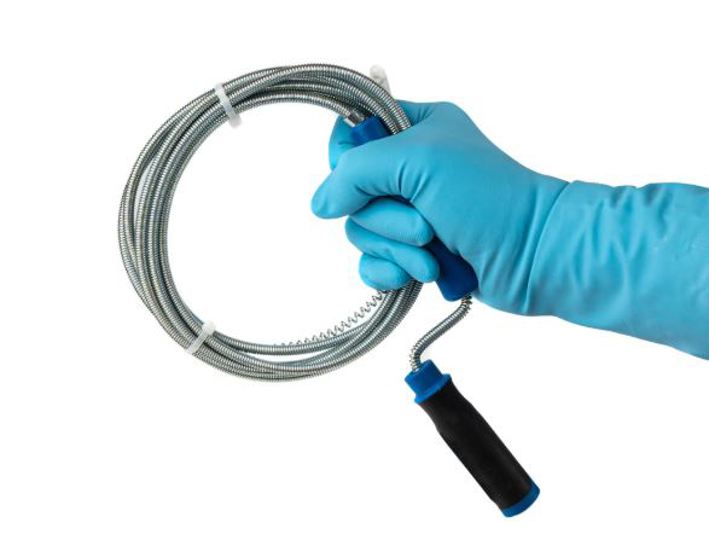 A manual drain snake can reach clogs deep in pipes that a plunger cannot dislodge.
Image source: www.ars.com
A manual drain snake can reach clogs deep in pipes that a plunger cannot dislodge.
Image source: www.ars.com
How to Prevent Future Bathroom Drain Clogs
Regular maintenance takes 5 minutes a week and will prevent most clogs from forming in the first place:
- Wipe loose hair from tub, shower, and sink drains with a paper towel after each use to stop it from washing down the pipe.
- Use a stainless steel mesh drain strainer instead of a plastic one, and clean it by dumping debris in the trash once a week.
- Avoid rinsing hair, cotton swabs, floss, or grease down bathroom drains; throw these items in the trash instead.
- Flush drains once a week with a kettle of hot (not boiling for PVC) water to melt soap scum before it builds up.
- For hard water homes, flush drains monthly with a mix of 1 cup white vinegar and 1 gallon hot water to prevent mineral deposits.
- For monthly deep maintenance, use an enzyme-based drain cleaner overnight to break down organic buildup before it forms a clog.
- If your bathroom sink has a garbage disposal, flush it weekly with a dedicated garbage disposal cleaner to grind up stuck organic waste and prevent clogs from forming in the drain line.
- For persistent odors between deep cleans, a natural drain deodorizer can eliminate smells without harsh chemicals. For a gentle, plant-powered cleaning option that’s safe for all pipe types, plant-powered cleaning solutions work well for light maintenance and deodorizing.
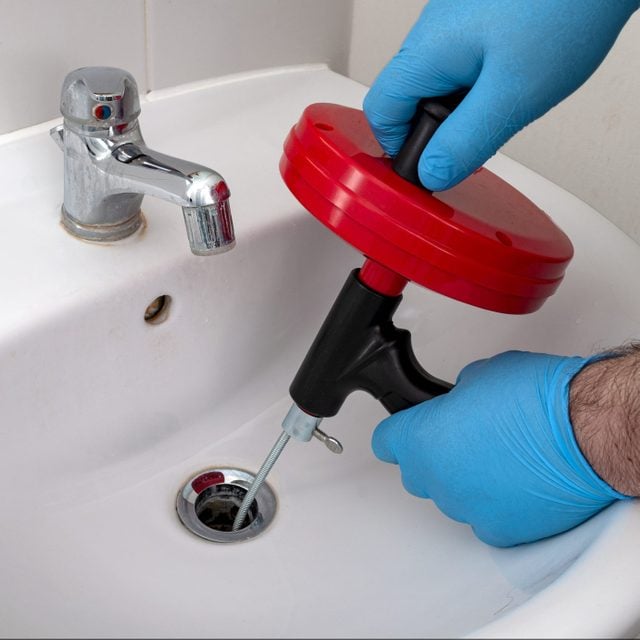 Regular drain maintenance prevents slow drainage, bad odors, and costly plumbing repairs.
Image source: www.familyhandyman.com
Regular drain maintenance prevents slow drainage, bad odors, and costly plumbing repairs.
Image source: www.familyhandyman.com
When to Call a Professional Plumber
If you’ve tried the methods above and your drain is still slow or clogged, it’s time to call a licensed plumber. These red flags indicate a more serious issue that DIY fixes won’t resolve:
- Water is backing up into multiple drains at the same time (this signals a main sewer line clog, not just a bathroom drain issue)
- You smell sewage coming from drains, even after cleaning
- You’ve tried P-trap cleaning, snaking, and natural methods, and the drain is still slow or clogged
- You notice water damage around the drain (stains on the ceiling below a second-floor bathroom, soft flooring, or peeling paint)
- You have old, corroded galvanized pipes that you’re worried about damaging with DIY tools Persistent slow drainage can lead to standing water, which creates ideal conditions for mold growth; the CDC notes that even small amounts of mold can trigger respiratory issues in sensitive individuals read more about mold risks from water damage.
Frequently Asked Questions
How often should I clean bathroom drain pipes?
For average household use, deep clean your bathroom drains every 3 months. Do a quick hot water flush and clean your drain strainer weekly to prevent buildup. If you have long hair, hard water, or multiple people using the bathroom daily, increase deep cleans to once a month.
What’s the best way to unclog a bathroom drain without harsh chemicals?
Start with a hot water flush to loosen surface buildup, followed by a baking soda and vinegar mixture, then a plunger. If the clog persists, use a manual drain snake to remove hair and debris deep in the pipe. Chemical cleaners should only be used as a last resort.
Can chemical drain cleaners damage my pipes?
Yes. Lye and acid-based chemical drain cleaners can corrode older metal pipes, warp PVC plastic pipes, and damage garbage disposal components. The U.S. Environmental Protection Agency recommends avoiding frequent use of chemical cleaners, and never using them on pipes older than 30 years.
How do I prevent hair clogs in my shower and tub drains?
Use a stainless steel mesh hair catcher over your drain, wipe away loose hair after each shower, and avoid rinsing hair down the drain when shaving or conditioning. A monthly baking soda and vinegar flush will break down any small amounts of hair that make it past the strainer.
Can I use a drain snake on PVC pipes?
Yes, but stick to a manual drain snake instead of an electric model. Avoid forcing the snake if you feel strong resistance, as this can scratch or crack PVC pipe walls. For PVC drains, non-toxic methods are almost always effective for minor to moderate clogs.
Is it safe to pour boiling water down my bathroom drain?
Only if your home has metal or ABS pipes. Boiling water can warp PVC pipes (common in homes built after 1990), leading to leaks. For PVC drains, use hot tap water instead of boiling water for all flushing steps.
Final Thoughts
Cleaning your bathroom drain pipes doesn’t require expensive tools or harsh chemicals. Most minor clogs can be fixed in 10–15 minutes with basic household supplies, and regular weekly maintenance will prevent slow drainage, bad odors, and costly plumbing repairs down the line. If you do encounter a stubborn clog that won’t respond to DIY methods, don’t hesitate to call a licensed plumber to avoid damaging your pipes or causing water damage.
For more easy, non-toxic home maintenance tips, browse our full library of home cleaning guides to keep every room in your home sparkling.

I’m Abby Lu, a passionate home cook who loves simplifying everyday meals. At PlugChef.com, I share product reviews and cooking guides to help you find the best tools for your kitchen.
Related posts:
 Dried Flower Bud in a Spice Rack: Transform Your Cooking
 Coollog Waterproof under Sink Mat: Ultimate Leak Protection
 Recipe for Oven Roasted Shrimp: Easy, Quick & Delicious Delight
 Lemon Juice to Whiten Clothes: Natural Whitening Hacks That Work
 Tequila Sunrise With Cranberry Juice: Refreshing Twist to Classic Cocktail
 Can You Freeze Pudding Cups: Ultimate Guide to Safe Storage

