Tired of scrubbing baked-on grease off stovetops, scraping stuck-on food out of microwaves, or wrestling with moldy refrigerator gaskets? A steam cleaner for kitchen appliances is the chemical-free, time-saving solution you’ve been looking for. Unlike harsh chemical sprays that leave toxic residue near food prep areas and damage appliance finishes over time, these units use only heated water to lift grime, kill bacteria, and leave surfaces spotless in seconds. This guide covers everything you need to know to choose the right model, clean every kitchen appliance safely, and avoid common mistakes that can damage your surfaces or your unit.
How Steam Cleaning Works for Kitchen Surfaces
Steam cleaners heat water to 212°F (100°C) or higher to create pressurized, low-moisture steam. When applied to surfaces, the steam expands into tiny pores in grime, grease, and food buildup, lifting it away without abrasive scrubbing. The high temperature also kills 99.9% of common household bacteria, mold spores, and pathogens on contact, per EPA guidance on chemical-free surface disinfection, making it ideal for food-contact surfaces where chemical residue is a risk. Because the process uses only water, there’s no sticky residue left behind, and surfaces dry in 1-2 minutes. For more on this, see our guide on steam cleaner for kitchen cabinets.
Benefits of Using a Steam Cleaner for Kitchen Appliances
Steam cleaning offers distinct advantages over traditional chemical cleaning methods for kitchen spaces:
- Chemical-free safety: No toxic fumes or residue near food, making it safe for households with children, pets, or allergies. It’s a chemical-free food prep sanitation method that meets food safety standards for contact surfaces.
- Extends appliance lifespan: Regular steam cleaning removes abrasive grease and grime that can corrode stainless steel finishes, clog dishwasher filters, and degrade appliance seals over time.
- Cuts cleaning time: Baked-on oven grease and microwave splatters loosen in seconds, eliminating the need for 10+ minutes of scrubbing per surface.
- Eco-friendly: Reduces plastic waste from disposable cleaning wipes and chemical spray bottles.
- Versatile: With the right attachments, a single unit can clean stovetops, ovens, refrigerators, countertops, and even range hood filters.
Kitchen Appliances You Can Safely Steam Clean
Most sealed kitchen surfaces are safe for steam cleaning, but it’s important to match your technique and attachments to each appliance to avoid damage.
Stovetops & Cooktops
For glass, ceramic, and stainless steel stovetops, use a nylon brush attachment to lift baked-on grease without scratching. Wipe away loosened grime with a microfiber cloth immediately to prevent water spots on stainless steel finishes. Avoid steam on unsealed stone cooktops, which can be etched by moisture. For more on this, see our guide on portable kitchen air cleaner.
Ovens & Toaster Ovens
Always unplug the oven before cleaning interior surfaces. Use a crevice tool to clean door seams and a grout brush for interior walls. For extremely tough, baked-on grease, pre-treat with a small amount of warm water before steaming to speed up the process. Never direct steam at heating elements or electronic control panels.
Microwaves
Heat a bowl of water inside the microwave for 2 minutes first to loosen stuck-on splatters, then use a small brush attachment to steam the interior walls and ceiling. This method removes even caked-on sauce without scrubbing, and the steam deodorizes the unit at the same time. For more on this, see our guide on foam cleaner spray for kitchen.
Refrigerators
Use a crevice tool to clean mold and food buildup from rubber door gaskets, a common breeding ground for bacteria. Steam the exterior stainless steel with a microfiber pad to disinfect handles and eliminate fingerprints. Avoid directing steam at the interior electronic control panel or temperature sensors.
Dishwashers
Steam the door gasket, filter, and lower spray arm to remove mold, food debris, and mineral buildup. Avoid steam on the electronic control panel and detergent dispenser to prevent damage. For more on this, see our guide on top picks stainless steel cleaner for kitchen sinks.
Countertops & Backsplashes
Steam cleaning is safe for sealed granite, quartz, ceramic tile, and stainless steel countertops. Use a flat mop pad for large surface areas to speed up cleaning. Avoid unsealed natural stone (marble, travertine) and painted backsplashes, which can be damaged by moisture and heat.
Surfaces to Avoid
Never use steam on unsealed wood, unsealed natural stone, painted surfaces, electrical components, or non-stick cookware coatings, which can degrade with high heat and moisture.
Step-by-Step Guide to Steam Cleaning Common Kitchen Appliances
Follow these simple steps for streak-free, sanitized results every time:
Stovetop
- Clear the stovetop of all cookware and loose debris with a dry cloth.
- Fill your steam cleaner with distilled water, heat to the manufacturer’s recommended temperature.
- Attach the nylon brush head, run it slowly over the stovetop in circular motions to lift baked-on grease.
- Wipe away loosened grime with a clean, damp microfiber cloth.
- Dry the surface with a second dry cloth to prevent water spots on stainless steel.
Oven
- Unplug the oven and remove all racks and accessories.
- Pre-treat tough, baked-on grease with a small amount of warm water if desired.
- Use the crevice tool to clean door seams and the grout brush for interior walls.
- Wipe away loosened grime with a damp cloth, then dry thoroughly before replacing racks.
Microwave
- Remove the turntable and any loose food debris.
- Heat a bowl of water in the microwave for 2 minutes to loosen stuck-on splatters.
- Use the small brush attachment to steam the interior walls and ceiling.
- Wipe clean with a microfiber cloth, replace the turntable.
How to Choose the Right Steam Cleaner for Your Kitchen
The best model for your needs depends on how often you clean and which appliances you need to tackle:
Power & Heat Output
Handheld models for spot cleaning should have at least 1000W of power, while canister models for full kitchen deep cleans need 1500W+ to generate enough pressure to dissolve heavy, baked-on grease.
Water Tank Capacity
Handheld models have 300ml to 750ml tanks, enough for 10-20 minutes of continuous cleaning (ideal for spot-cleaning individual appliances). Canister models have 1L to 2L tanks, enough for 30+ minutes of runtime to clean your entire kitchen without refilling.
Attachment Set
Look for kits that include a crevice tool (for refrigerator gaskets and oven seams), nylon brush (for stovetop grates without scratching), grout brush (for tile backsplashes), flat mop pad (for countertops and floors), and window squeegee (for appliance glass doors). For regular range hood cleaning, prioritize a model that includes a specialized tile cleaning tool to cut through greasy buildup.
Pressure Settings
Adjustable pressure is ideal for kitchen use: use low settings for delicate surfaces like microwave interiors and glass, and high settings for tough baked-on oven and stovetop grease.
Top-Rated Steam Cleaners for Kitchen Appliances
All models below are selected for their performance on common kitchen messes, with specific use cases for appliance cleaning:
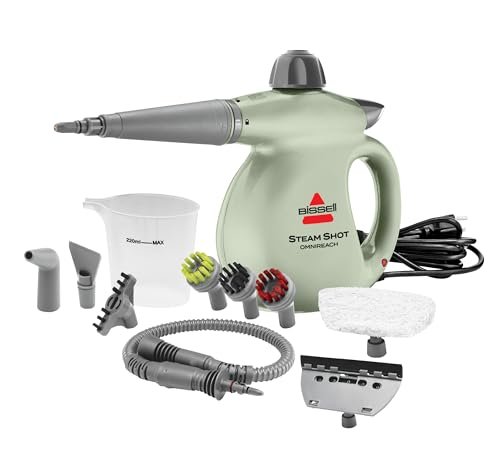
BISSELL Steam Shot OmniReach Handheld Portable Steam Cleaner
 Ideal for quick spot-cleaning stovetop splatters, microwave interiors, and refrigerator handles
This 4-pound compact handheld model heats up in 10 seconds and includes 10 attachments, including a crevice tool for refrigerator gaskets and a nylon brush for stovetop grates. It’s perfect for daily post-cooking cleanup, and its chemical-free operation is safe for all food-contact surfaces.
Pros: 10 versatile attachments, lightweight for overhead cleaning (range hoods, upper cabinets), 10-second heat-up for immediate use.
Cons: 20oz tank requires refilling for full oven deep cleans, 6-foot cord may need an extension for large kitchens.
For everyday quick cleanups after cooking, the BISSELL Steam Shot OmniReach is a compact, versatile pick that fits easily in a kitchen cabinet.
Ideal for quick spot-cleaning stovetop splatters, microwave interiors, and refrigerator handles
This 4-pound compact handheld model heats up in 10 seconds and includes 10 attachments, including a crevice tool for refrigerator gaskets and a nylon brush for stovetop grates. It’s perfect for daily post-cooking cleanup, and its chemical-free operation is safe for all food-contact surfaces.
Pros: 10 versatile attachments, lightweight for overhead cleaning (range hoods, upper cabinets), 10-second heat-up for immediate use.
Cons: 20oz tank requires refilling for full oven deep cleans, 6-foot cord may need an extension for large kitchens.
For everyday quick cleanups after cooking, the BISSELL Steam Shot OmniReach is a compact, versatile pick that fits easily in a kitchen cabinet.
Gautye Steam Cleaner
 Adjustable handle reduces back strain when cleaning high surfaces like range hoods and refrigerator tops
This 1200W model features a 3-level adjustable handle, so you can clean the top of your refrigerator or range hood without straining your back. Its 1.69-quart large tank lets you clean your entire kitchen (stovetop, microwave, fridge, counters) without refilling, and the 15 included accessories include a filter brush for range hoods and dishwashers.
Pros: Adjustable handle for reduced fatigue, 1.69-quart tank for extended cleaning, 15 accessories cover all kitchen needs.
Cons: Bulkier than smaller handheld models, corded design limits mobility.
If you regularly deep clean your entire kitchen in one session, the Gautye’s large tank and adjustable handle make it a practical, low-effort choice.
Adjustable handle reduces back strain when cleaning high surfaces like range hoods and refrigerator tops
This 1200W model features a 3-level adjustable handle, so you can clean the top of your refrigerator or range hood without straining your back. Its 1.69-quart large tank lets you clean your entire kitchen (stovetop, microwave, fridge, counters) without refilling, and the 15 included accessories include a filter brush for range hoods and dishwashers.
Pros: Adjustable handle for reduced fatigue, 1.69-quart tank for extended cleaning, 15 accessories cover all kitchen needs.
Cons: Bulkier than smaller handheld models, corded design limits mobility.
If you regularly deep clean your entire kitchen in one session, the Gautye’s large tank and adjustable handle make it a practical, low-effort choice.
Phueut Pressurized Handheld Multi-surface Steam Cleaner
 Lightweight 3.9-pound design is easy to maneuver for detailed grout and crevice cleaning
This 3.9-pound pressurized handheld model is perfect for renters or anyone who needs a portable option for spot-cleaning kitchen messes. Its 12 attachments include a crevice tool for refrigerator gaskets and a nylon brush for stovetop grates, and the pressurized steam lifts baked-on oven grease without scrubbing.
Pros: Lightweight for extended use, 12 versatile attachments, safe for all sealed kitchen surfaces.
Cons: 15oz tank requires refilling for large jobs, shorter steam runtime for deep cleans.
For renters or anyone needing a lightweight, portable option for spot-cleaning kitchen messes, the Phueut pressurized steamer delivers reliable chemical-free performance.
Lightweight 3.9-pound design is easy to maneuver for detailed grout and crevice cleaning
This 3.9-pound pressurized handheld model is perfect for renters or anyone who needs a portable option for spot-cleaning kitchen messes. Its 12 attachments include a crevice tool for refrigerator gaskets and a nylon brush for stovetop grates, and the pressurized steam lifts baked-on oven grease without scrubbing.
Pros: Lightweight for extended use, 12 versatile attachments, safe for all sealed kitchen surfaces.
Cons: 15oz tank requires refilling for large jobs, shorter steam runtime for deep cleans.
For renters or anyone needing a lightweight, portable option for spot-cleaning kitchen messes, the Phueut pressurized steamer delivers reliable chemical-free performance.
TICYACK Handheld Steam Cleaner with 16 Accessories
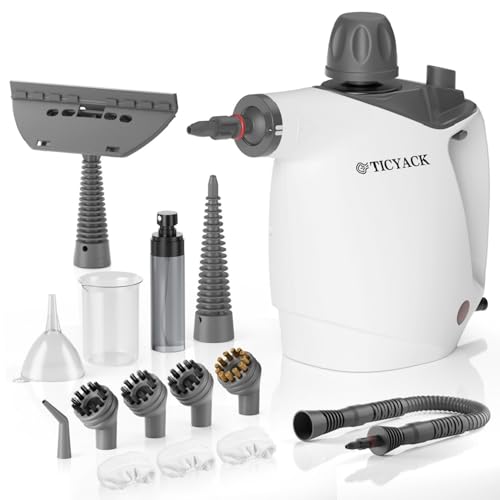 16 included attachments make it easy to tackle everything from stovetop grates to car interiors
This model stands out for its 500ml large water tank and 16 included accessories, including a small brush for coffee maker carafes and air fryer baskets. Its built-in safety lock prevents accidental steam activation, making it family-friendly for homes with kids near food prep areas.
Pros: 500ml tank reduces refill trips, safety lock for safe use, 16 attachments cover every kitchen (and even car) cleaning need.
Cons: Lower steam pressure for extremely tough, baked-on grease, 5-minute heat-up time.
For families who want a safe, versatile steamer for all their kitchen cleaning needs, the TICYACK model’s safety lock and large accessory kit make it a smart pick.
16 included attachments make it easy to tackle everything from stovetop grates to car interiors
This model stands out for its 500ml large water tank and 16 included accessories, including a small brush for coffee maker carafes and air fryer baskets. Its built-in safety lock prevents accidental steam activation, making it family-friendly for homes with kids near food prep areas.
Pros: 500ml tank reduces refill trips, safety lock for safe use, 16 attachments cover every kitchen (and even car) cleaning need.
Cons: Lower steam pressure for extremely tough, baked-on grease, 5-minute heat-up time.
For families who want a safe, versatile steamer for all their kitchen cleaning needs, the TICYACK model’s safety lock and large accessory kit make it a smart pick.
1250W Powerful Handheld Steam Cleaner
 High 1250W power output dissolves baked-on oven grease in seconds
This high-power 1250W model is built for tough kitchen messes. Its optional detergent container lets you add a small amount of natural dish soap for extra cutting power on greasy stovetops and ovens, and its compact design fits into narrow spaces like behind the refrigerator.
Pros: High power for tough grease, optional detergent container for extra cleaning power, safety lock for use around kids.
Cons: Small 12oz tank needs frequent refilling for large jobs, bright orange color may not match all kitchen decor.
If you regularly deal with stubborn, baked-on kitchen grease, the 1250W model’s high power output cuts through messes faster than lower-wattage handheld options.
High 1250W power output dissolves baked-on oven grease in seconds
This high-power 1250W model is built for tough kitchen messes. Its optional detergent container lets you add a small amount of natural dish soap for extra cutting power on greasy stovetops and ovens, and its compact design fits into narrow spaces like behind the refrigerator.
Pros: High power for tough grease, optional detergent container for extra cleaning power, safety lock for use around kids.
Cons: Small 12oz tank needs frequent refilling for large jobs, bright orange color may not match all kitchen decor.
If you regularly deal with stubborn, baked-on kitchen grease, the 1250W model’s high power output cuts through messes faster than lower-wattage handheld options.
Dovety Pressurized Handheld Steam Cleaner
 Compact ergonomic design fits easily into tight spaces like dishwasher seals and oven door crevices
This affordable pressurized model is perfect for everyday spot-cleaning. Its 12 accessories include a crevice tool for moldy dishwasher seals and sink grout, and its safety lock prevents accidental steam burns in busy kitchen spaces.
Pros: 12 versatile attachments, safety lock for worry-free use, lightweight for overhead cleaning.
Cons: 15oz tank needs refilling for full kitchen cleans, 3-minute heat-up time.
For affordable, reliable everyday kitchen cleaning, the Dovety pressurized steamer offers solid performance for spot-cleaning and small deep-clean jobs.
Compact ergonomic design fits easily into tight spaces like dishwasher seals and oven door crevices
This affordable pressurized model is perfect for everyday spot-cleaning. Its 12 accessories include a crevice tool for moldy dishwasher seals and sink grout, and its safety lock prevents accidental steam burns in busy kitchen spaces.
Pros: 12 versatile attachments, safety lock for worry-free use, lightweight for overhead cleaning.
Cons: 15oz tank needs refilling for full kitchen cleans, 3-minute heat-up time.
For affordable, reliable everyday kitchen cleaning, the Dovety pressurized steamer offers solid performance for spot-cleaning and small deep-clean jobs.
awasky Steam Cleaner Handheld
 10-second heat-up time means you can start cleaning immediately after cooking
This model boasts the fastest heat-up time on our list at just 10 seconds, so you can start cleaning splatters immediately after cooking without waiting. Its 750ml large tank lets you clean your entire kitchen (stovetop, microwave, fridge, counters) without refilling, and the lockable trigger maintains continuous steam flow for large surfaces like countertops.
Pros: 10-second heat-up eliminates wait time, 750ml tank for extended cleaning, lockable trigger reduces hand fatigue.
Cons: No adjustable pressure for delicate surfaces, bulkier than ultra-light handheld models.
For busy home cooks who want to clean up fast after meal prep, the awasky’s 10-second heat-up and large tank eliminate wait time and refill interruptions.
10-second heat-up time means you can start cleaning immediately after cooking
This model boasts the fastest heat-up time on our list at just 10 seconds, so you can start cleaning splatters immediately after cooking without waiting. Its 750ml large tank lets you clean your entire kitchen (stovetop, microwave, fridge, counters) without refilling, and the lockable trigger maintains continuous steam flow for large surfaces like countertops.
Pros: 10-second heat-up eliminates wait time, 750ml tank for extended cleaning, lockable trigger reduces hand fatigue.
Cons: No adjustable pressure for delicate surfaces, bulkier than ultra-light handheld models.
For busy home cooks who want to clean up fast after meal prep, the awasky’s 10-second heat-up and large tank eliminate wait time and refill interruptions.
OneAmg Pressurized Handheld Steam Cleaner
 Reaches 221°F to kill mold spores in bathroom and kitchen damp areas
This model reaches a maximum temperature of 221°F, hot enough to kill deep-set mold spores in refrigerator drip pans, under-sink areas, and dishwasher seals. Its 10 attachments include a small nozzle for coffee maker spouts and toaster crumb trays, making it ideal for detailed small-space cleaning.
Pros: High max temperature for sanitization, 10 versatile attachments, compact for small kitchen storage.
Cons: Small 15oz tank needs refilling for large jobs, only available in yellow.
For anyone prioritizing sanitization of damp, mold-prone kitchen areas, the OneAmg’s high 221°F heat output eliminates mold and bacteria without harsh chemicals.
Reaches 221°F to kill mold spores in bathroom and kitchen damp areas
This model reaches a maximum temperature of 221°F, hot enough to kill deep-set mold spores in refrigerator drip pans, under-sink areas, and dishwasher seals. Its 10 attachments include a small nozzle for coffee maker spouts and toaster crumb trays, making it ideal for detailed small-space cleaning.
Pros: High max temperature for sanitization, 10 versatile attachments, compact for small kitchen storage.
Cons: Small 15oz tank needs refilling for large jobs, only available in yellow.
For anyone prioritizing sanitization of damp, mold-prone kitchen areas, the OneAmg’s high 221°F heat output eliminates mold and bacteria without harsh chemicals.
OHHSUN Ultra-Lightweight Handheld Steam Cleaner
 2.8-pound lightweight design reduces fatigue during extended cleaning sessions
At just 2.8 pounds, this is the lightest model on our list, making it ideal for cleaning overhead surfaces like range hoods, upper cabinets, and refrigerator tops without arm fatigue. Its pressurized steam lifts grease from stovetop grates and dishwasher filters, and the bright yellow color makes it easy to find in a crowded kitchen drawer.
Pros: Ultra-lightweight design, 10 attachments for all kitchen tasks, affordable price point.
Cons: Small 12oz tank, lower steam pressure for extremely tough grease.
For anyone who struggles with arm fatigue during long cleaning sessions, the OHHSUN’s ultra-light 2.8lb design makes cleaning overhead surfaces effortless.
2.8-pound lightweight design reduces fatigue during extended cleaning sessions
At just 2.8 pounds, this is the lightest model on our list, making it ideal for cleaning overhead surfaces like range hoods, upper cabinets, and refrigerator tops without arm fatigue. Its pressurized steam lifts grease from stovetop grates and dishwasher filters, and the bright yellow color makes it easy to find in a crowded kitchen drawer.
Pros: Ultra-lightweight design, 10 attachments for all kitchen tasks, affordable price point.
Cons: Small 12oz tank, lower steam pressure for extremely tough grease.
For anyone who struggles with arm fatigue during long cleaning sessions, the OHHSUN’s ultra-light 2.8lb design makes cleaning overhead surfaces effortless.
AGOAL 2500W Handheld Steam Cleaner
 2500W high power output handles tough, baked-on grease on stovetops and oven interiors
With the highest power output on our list at 2500W, this model dissolves even months of baked-on oven and stovetop grease in half the time of lower-wattage options. Its 3 included brush heads include a stiff grout brush for tile backsplashes and a soft brush for delicate glass appliance doors.
Pros: Highest power for tough messes, 3 specialized brush heads, compact for easy storage.
Cons: 10oz tank needs frequent refilling for large jobs, red color may not suit all kitchen aesthetics.
For deep cleaning sessions where you’re tackling months of baked-on grease, the AGOAL 2500W model’s high power output gets the job done in half the time of lower-wattage options.
2500W high power output handles tough, baked-on grease on stovetops and oven interiors
With the highest power output on our list at 2500W, this model dissolves even months of baked-on oven and stovetop grease in half the time of lower-wattage options. Its 3 included brush heads include a stiff grout brush for tile backsplashes and a soft brush for delicate glass appliance doors.
Pros: Highest power for tough messes, 3 specialized brush heads, compact for easy storage.
Cons: 10oz tank needs frequent refilling for large jobs, red color may not suit all kitchen aesthetics.
For deep cleaning sessions where you’re tackling months of baked-on grease, the AGOAL 2500W model’s high power output gets the job done in half the time of lower-wattage options.
Safety Tips for Steam Cleaning Kitchen Appliances
Follow these guidelines to avoid injury or damage to your appliances:
- Always unplug electrical appliances first: Never spray steam directly into electrical components, control panels, or plug sockets to avoid shock or damage to electronic parts.
- Test on a small inconspicuous area first: Test steam on a hidden spot of stainless steel, countertop, or appliance finish first to ensure it doesn’t cause discoloration or damage, especially on vintage or delicate surfaces.
- Wear heat-resistant gloves: Steam temperatures reach 212°F+; wearing heat-resistant gloves prevents accidental burns from hot steam or heated appliance surfaces.
- Never point the nozzle at people or pets: Pressurized steam can cause serious burns; always point the nozzle away from people, children, and pets during use.
- Allow surfaces to dry completely before use: After steam cleaning, wipe surfaces dry and let them air dry fully before using the appliance to avoid electrical damage or water spots.
Common Steam Cleaning Mistakes to Avoid
Even experienced cleaners make these errors, which can damage your steam cleaner or your appliances:
- Using too little water: Running the unit with low water levels can overheat the heating element, causing permanent damage. Always fill to the recommended line with distilled water for best results.
- Holding the nozzle too close to surfaces: Holding the nozzle less than 2 inches from delicate surfaces like stainless steel or glass can cause etching, warping, or discoloration. Keep the nozzle 3-4 inches away for optimal results.
- Skipping the wipe-down step: Loosened grime and grease will reattach to surfaces as the steam dries if you don’t wipe it away immediately with a clean microfiber cloth.
- Using tap water in hard water areas: Tap water contains minerals that build up in the nozzle and heating element over time, reducing steam pressure and causing clogs. Use distilled or demineralized water to extend the life of your steam cleaner. For consistent, low-effort kitchen maintenance, pair steam cleaning with a daily kitchen upkeep checklist to prevent grime from building up between deep cleans.
Frequently Asked Questions
What kitchen appliances can a steam cleaner effectively clean?
Steam cleaners work on ovens, microwaves, refrigerators, stovetops, dishwashers, toaster ovens, air fryer baskets (non-electrical parts), coffee maker carafes, and range hood filters. Always unplug electrical appliances before cleaning, and avoid steam on control panels with electronic components.
How fast do handheld steam cleaners heat up?
Entry-level handheld models take 15-30 seconds to reach operating temperature, while premium high-wattage models can heat up in as little as 5 seconds. Canister-style steam cleaners for whole-kitchen deep cleans take 1-3 minutes to heat up, but offer longer run times and higher pressure for tough, built-on grease.
Are steam cleaners safe for all kitchen surfaces?
Yes, for sealed surfaces: stainless steel, sealed granite/quartz countertops, ceramic tile, glass, and properly oiled sealed wood (like butcher block). Avoid unsealed natural stone (marble, travertine), unsealed wood, painted surfaces, electrical components, and non-stick cookware coatings, which can be damaged by heat and moisture.
What accessories come with multi-surface steam cleaners?
Most kits include a crevice tool (for gaskets and seams), grout brush (for tile backsplashes), nylon brush (for stovetop grates and filters without scratching), flat mop pad (for countertops and floors), and window squeegee (for appliance glass doors). Premium models may also include a small detail brush for coffee makers and toaster crumbs.
Can steam cleaners remove grease and mold in kitchens?
Yes: steam at 212°F or higher dissolves hardened baked-on grease on ovens and stovetops in seconds, no scrubbing needed. It also kills 99.9% of common mold spores and bacteria like salmonella and E. coli on contact, making it ideal for damp areas like under sinks, dishwasher seals, and refrigerator drip pans that are prone to mold growth.
How large are water tanks in handheld steam cleaners?
Handheld models typically have 300ml to 750ml tanks, enough for 10-20 minutes of continuous cleaning, ideal for spot-cleaning individual appliances. Canister models have 1L to 2L tanks, enough for full kitchen deep cleans of multiple surfaces without refilling. Larger tanks reduce downtime but add weight to the unit.
Conclusion
A steam cleaner for kitchen appliances is a smart, eco-friendly investment that cuts down on scrubbing time, eliminates harsh chemical residue near food, and extends the lifespan of your cooking tools. For quick daily spot-cleaning, a lightweight handheld model with a 10-second heat-up time is ideal. For monthly deep cleans of your entire kitchen, opt for a model with a large 1L+ tank and high 1500W+ power output. For regular maintenance, pair steam cleaning with appliance care guidance to keep your kitchen running smoothly for years to come. Ready to ditch harsh chemical cleaners for good? Pick a steam cleaner that matches your kitchen’s size and cleaning needs to start enjoying spotless, sanitized appliances with minimal effort today.

I’m Abby Lu, a passionate home cook who loves simplifying everyday meals. At PlugChef.com, I share product reviews and cooking guides to help you find the best tools for your kitchen.
Related posts:
 Hisense Dehumidifier And Small Appliance Repair Near Liberty Mo: Top Reviews
 Kitchen Appliances List: Must-Have Gadgets for Every Modern Kitchen
 Bundle Packages for Kitchen Appliances: Ultimate Kitchen Upgrade Solutions
 Best Smart Coffee Mug Warmer: Discover Ultimate Temperature Control Solutions
 Best Food Sealers Vacuum Packing: Discover Top Picks for Freshness
 Best Long Lasting Mug Warmer: Top Picks to Keep Your Drinks Hot