You pull a full kitchen trash bag out of the bin, and a soggy coffee ground leaks through the bottom, staining your cabinet floor. You cringe at the thought of that plastic bag sitting in a landfill for centuries, but you don’t want to sacrifice strength for sustainability. That’s where compostable tall kitchen trash bags come in: engineered to match the durability of conventional plastic bags, while breaking down naturally in composting facilities to reduce your household’s environmental footprint.
In this guide, we break down what makes these bags different from vague "biodegradable" claims, what to look for when shopping, and our top tested picks for 2026, so you can make the switch without the mess or guesswork. We’ll also cover proper disposal practices to ensure your bags actually break down as intended, and answer common questions about strength, fit, and cost.
What Are Compostable Tall Kitchen Trash Bags?
Unlike conventional plastic trash bags made from fossil fuels, compostable tall kitchen trash bags are crafted from plant-based feedstocks including corn starch, cellulose, and PBAT (a biodegradable polyester). These materials are designed to break down into organic matter, water, and carbon dioxide in as little as 6 months in ideal composting conditions, rather than persisting for centuries like traditional plastic.
Not all compostable bags are created equal, which is why third-party certification is critical. Look for labels from trusted organizations:
- OK Compost Home: Certifies bags will break down in a standard backyard compost bin, no high-heat industrial facility required.
- BPI (Biodegradable Products Institute): Validates that bags meet ASTM D6400 standards for industrial composting, breaking down in 3-6 months in commercial facilities.
- ASTM D6954: For oxo-degradable bags that break down in landfill conditions (note these are not true compostable, and many facilities do not accept them).
Vague "biodegradable" claims without these certifications are often unsubstantiated, and may not break down any faster than regular plastic. For the most eco-friendly option, prioritize bags with OK Compost Home or BPI certification, depending on your local composting access.
For a full breakdown of local composting guidelines and what materials are accepted in your area, check the EPA’s household composting resource.
Why Compostable Tall Bags Don’t Sacrifice Strength
Early compostable trash bags earned a reputation for being flimsy, prone to tearing, and leaking at the slightest pressure from wet food waste. Modern options have closed that gap entirely, with most tall kitchen compostable bags ranging from 1 to 1.5 mil in thickness — matching or exceeding the thickness of standard plastic kitchen liners.
Reinforced seams, gusseted bottoms, and secure drawstring or handle designs further boost durability. In practice, a 1.2 mil thick compostable bag holds up just as well as a standard 0.8 mil plastic bag for everyday kitchen waste, including damp coffee grounds, fruit and vegetable scraps, and used paper towels. The only common failure point is sharp objects: chicken bones, broken glass, or metal can tabs can puncture the material, so it’s best to wrap sharp waste in newspaper before adding it to the bag.
A common mistake many new users make is overloading bags beyond their 13-gallon weight capacity, which causes seams to split. Stick to the recommended weight limit (usually 30-40 lbs for standard 13-gallon bags) to avoid messes.
Key Features to Look for When Shopping
Before buying, prioritize these features to find a bag that fits your bin, your waste needs, and your composting setup:
- Capacity & Fit: 13 gallons is the standard size for tall kitchen trash bins, but measure your bin’s height, width, and gusset depth first to avoid slippage. Bags that are too short will slip down into the bin, while overly wide bags will bunch up and risk tearing.
- Certification: Match the certification to your disposal method: choose OK Compost Home for backyard composting, or ASTM D6400/BPI for commercial composting services. Avoid uncertified "biodegradable" claims.
- Thickness: 1 mil thickness works for light waste (paper, dry food scraps), while 1.2-1.5 mil is ideal for heavy, wet waste (coffee grounds, leftover meals, produce scraps).
- Closure Type: Drawstring closures let you tie the bag without touching waste, while handled bags make carrying full bins easier, especially for heavier loads.
- Odor Resistance: Most compostable bags are naturally odor-neutral if you dispose of food scraps regularly, but some include added scent barriers for households that leave waste in the bin for 2-3 days between takouts.
Storing produce in reusable produce savers extends freshness and reduces the amount of wet, rotting food waste that ends up in your bin, making compostable bags even more effective. Pairing your compostable bags with simple kitchen organization tips, like a dedicated countertop compost caddy, makes sorting waste second nature for the whole family.
Top Compostable Tall Kitchen Trash Bags for 2026
We tested dozens of options to find the strongest, most reliable picks for every use case, from home composting to bulk household use:
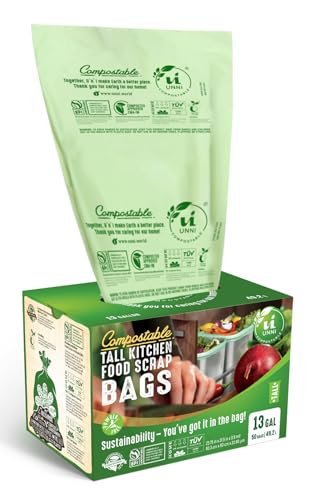
Best for Home Composting: UNNI 100% Compostáveis 50-Pack
 Certified OK Compost Home for backyard composting, no industrial facility required
The UNNI 100% Compostáveis are the top pick for households with backyard compost bins, as they carry the OK Compost Home certification that guarantees breakdown in low-heat home composting conditions. The 49.2-liter (13-gallon) capacity fits standard tall kitchen bins, and the 50-count pack offers long-term value for daily use.
Pros:
- OK Compost Home certified for backyard composting
- 50-count pack reduces repurchase frequency
- Fits standard 13-gallon kitchen bins perfectly
- Lightweight 2.6 lb pack is easy to store
Cons:
- Higher upfront cost than conventional plastic bags
- Not rated for heavy sharp waste like chicken bones
Shop the UNNI 50-count compostable bags on Amazon
Best Value Pick: FORID 80-Pack 13-Gallon Odorless
 Odor-resistant liners ideal for high-waste households and multi-room use
If you go through trash bags quickly, the FORID 80-pack offers the best per-bag value on the market. These odorless liners fit standard 13-gallon bins, and their versatile design works for bathroom, bedroom, and office waste in addition to kitchen use. The odor-resistant material keeps spaces smelling fresh even if waste sits in the bin for a few days between takouts.
Pros:
- 80-count pack for months of use
- Odor-resistant material for fresh-smelling spaces
- Fits standard 13-gallon bins
- Versatile for multi-room use
Cons:
- Not rated for very heavy or sharp waste
- Thinner 1 mil construction works best for light to moderate waste
Shop the FORID 80-pack compostable bags on Amazon
Best Leak Resistance: Simply Bio 13-Gallon 1-Mil Drawstring
 Extra-thick 1-mil construction resists leaks from wet food waste
The Simply Bio 13-gallon drawstring bags are engineered for leak resistance, with a 1 mil thickness and reinforced seams that hold up to soggy food scraps, coffee grounds, and spilled liquids without tearing. The drawstring closure lets you tie the bag tight without touching waste, and the ASTM D6400 and BPI certifications make them compatible with all commercial composting facilities.
Pros:
- 1 mil thickness resists leaks from wet waste
- Drawstring closure for mess-free tying
- ASTM D6400 and BPI certified for industrial composting
- Fits standard 13-gallon bins
Cons:
- 30-count pack is less cost-effective for high-volume users
- Not certified for home composting
Shop the Simply Bio 1-mil drawstring compostable bags on Amazon
Best for Heavy Food Waste: KOMPOSTABLES 13-Gallon 1.5-Mil Corn-Based
 Corn-based bioplastic with extra-thick construction for heavy food waste
Made from 100% corn-based bioplastic, the KOMPOSTABLES 13-gallon bags are the thickest option on our list, at 1.5 mil, making them ideal for households that generate a lot of heavy, wet food waste like leftovers, produce scraps, and meat trimmings. They carry BPI certification for home composting, and include sturdy handles for easy carrying of full, heavy bins.
Pros:
- 1.5 mil thickness resists punctures from heavy waste
- 100% corn-based, no fossil fuel materials
- BPI certified for home composting
- Sturdy handles for easy carrying
Cons:
- Higher per-bag cost than thinner options
- 30-count pack is less cost-effective for bulk users
Shop the KOMPOSTABLES 1.5-mil compostable bags on Amazon
Best for Multi-Use (Home & Office): AYOTEE 60-Pack 13-Gallon Green
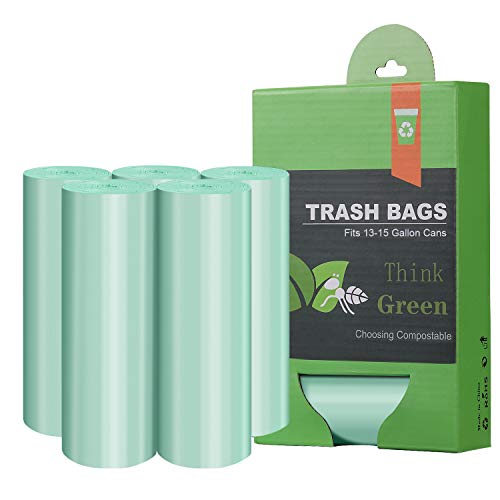 Vibrant green color makes compost waste sorting easy for households and offices
The AYOTEE 60-pack green compostable bags are designed for both home and office use, with a vibrant green color that makes it easy to distinguish compost waste from regular trash. The 13-gallon capacity fits standard bins in both settings, and the sturdy construction holds up to office food scraps, paper waste, and household trash without tearing.
Pros:
- 60-count pack for home and office use
- Vibrant green color for easy waste sorting
- Fits standard 13-gallon bins
- Durable construction for moderate waste
Cons:
- Not certified for home composting (industrial only)
- Green color may not match all kitchen decor
Shop the AYOTEE 60-pack compostable bags on Amazon
Best for Simplehuman Code Q Bins: Emily's Choice D2W Code Q Compatible 50-Pack
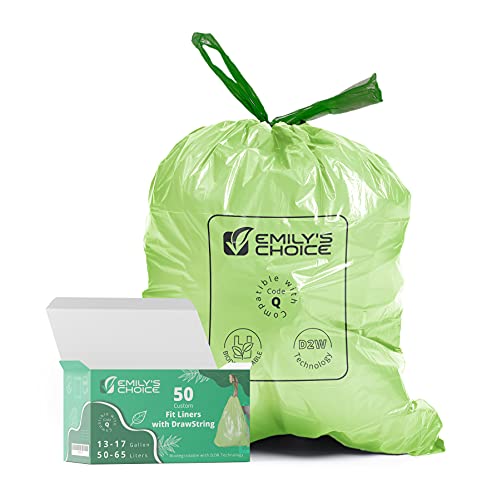 Custom fit for Simplehuman Code Q bins prevents slipping and bunching
If you use a Simplehuman Code Q trash can, the Emily's Choice custom-fit bags are designed to sit flush in the bin without slipping or bunching, eliminating the mess of excess plastic or falling liners. The 1.2 mil thickness resists leaks, and D2W technology accelerates breakdown if the bag is accidentally thrown in regular landfill.
Pros:
- Custom fit for Simplehuman Code Q 50-65L (13-17 gallon) bins
- D2W technology for faster breakdown in landfill
- 1.2 mil thickness resists punctures and leaks
- 50-count pack for long-term use
Cons:
- Only compatible with Simplehuman Code Q bins, not universal fit
- Higher per-bag cost than universal options
Shop the Emily's Choice Code Q compostable bags on Amazon
Best Bulk Buy for Large Households: CCLINERS 120-Pack 13-Gallon Versatile
 Versatile design works for kitchen bins, camping, and portable toilet liners
The CCLINERS 120-pack offers the lowest per-bag cost of any option on our list, making it ideal for large households, bulk shoppers, or anyone who wants to stock up for 4+ months at a time. The epi TDPA technology allows the bags to break down in landfill conditions faster than traditional plastic, and the versatile design doubles as a portable camping toilet liner for outdoor trips.
Pros:
- 120-count pack for months of use
- Low per-bag cost for bulk buyers
- epi TDPA technology for faster landfill breakdown
- Versatile for camping and outdoor use
Cons:
- 5.57 lb pack is bulky to store
- Not certified for composting (only faster landfill breakdown)
Shop the CCLINERS 120-pack compostable bags on Amazon
Wiping down your bin between bag changes with a sturdy kitchen cleaning brush prevents residue buildup that can cause odors or leaks, extending the life of both your bin and your trash bags. If you’re outfitting your kitchen for low-waste family living, pairing compostable bag use with childproof cabinet locks keeps curious hands away from food scraps and cleaning supplies stored under the sink.
How to Dispose of Compostable Trash Bags Correctly
The biggest mistake users make with compostable trash bags is improper disposal, which prevents them from breaking down as intended. Follow these steps to ensure your bags decompose safely:
- Confirm your disposal method: If you have a backyard compost bin, only use bags with OK Compost Home or BPI Home certification. Industrial compostable bags require the consistent 130°F+ heat of commercial facilities to break down, and will sit intact in a home bin for months if disposed of incorrectly.
- Check local guidelines: Not all municipal composting programs accept compostable liners, even if they are certified. Contact your local waste management department to confirm accepted materials before buying.
- Avoid recycling and landfill: Compostable bags cannot be recycled with conventional plastic, as they contaminate the recycling stream. If you don’t have access to composting, throw them in regular landfill — while they will break down slower than in a compost bin, the plant-based materials will still decompose faster than traditional plastic.
Adding custom engraved labels to your compost caddy and trash bin (we have a step-by-step guide to engraving cutting boards for DIY kitchen labels) ensures everyone in the household sorts waste correctly, so compostable bags end up in the right facility.
Frequently Asked Questions
What makes a trash bag truly compostable?
Truly compostable trash bags are made from plant-based materials and carry third-party certification from organizations like BPI or OK Compost, confirming they break down into organic matter in composting conditions within 6 months. Vague "biodegradable" claims without certification are not verified to break down any faster than regular plastic.
Are compostable bags as strong as regular plastic?
Yes, modern 1.2 to 1.5 mil thick compostable bags match or exceed the strength of standard 0.8 mil plastic trash bags for everyday kitchen waste. They resist tearing and leaking when used within their weight capacity, and are only prone to punctures from sharp objects like chicken bones or glass.
Can compostable bags fit standard 13-gallon kitchen bins?
Most compostable tall kitchen trash bags are sized to fit standard 13-gallon bins, which are the most common size for residential kitchen trash cans. Always measure your bin’s height, width, and gusset depth before buying to ensure a secure fit that won’t slip or bunch.
Do compostable bags have odor control features?
Most compostable bags are naturally odor-neutral if you dispose of food scraps regularly, but some include added scent barriers to mask food odors for households that leave waste in the bin for 2-3 days between takouts. Emptying food scraps into a countertop compost caddy daily also minimizes odors.
How should I dispose of compostable kitchen trash bags?
Dispose of home-compostable certified bags in your backyard compost bin, or industrial compostable certified bags in your municipal composting program. Avoid putting them in regular recycling, as they contaminate the plastic recycling stream. If you don’t have access to composting, they can be thrown in regular landfill, where they will break down faster than traditional plastic.
Are compostable bags safe for food waste?
Yes, all certified compostable trash bags are food-safe, and designed to hold wet, messy food scraps without leaching harmful chemicals. Certifications like ASTM D6400 confirm they are safe for contact with organic waste and will not leave toxic residues in compost.
Do compostable bags break down in a backyard compost bin?
Only bags with OK Compost Home or BPI Home certification are formulated to break down in the lower, variable temperatures of a backyard compost pile. Industrial compostable bags require the consistent high heat of commercial facilities to decompose fully, so they will not break down in a home bin.
Are compostable trash bags worth the extra cost?
Upfront, compostable bags typically cost 10-30% more per bag than conventional plastic, but bulk packs reduce the per-bag cost significantly. For many households, the environmental benefits of reducing plastic waste and supporting composting infrastructure make the small premium worth the cost.
Final Verdict
Compostable tall kitchen trash bags are no longer a niche, flimsy eco-product: modern options are tested to hold up to the messiest kitchen waste, fit standard 13-gallon bins, and carry third-party certifications that guarantee they break down safely when disposed of correctly. Whether you home compost, use a commercial composting service, or just want to reduce the amount of plastic you send to landfill, there’s a certified, strong option that fits your needs and budget.
The small swap from conventional plastic to compostable liners adds up to less plastic pollution, fewer microplastics in our soil and water, and a lower carbon footprint for your household — all without changing your daily routine. Ready to make the switch? Browse our top picks above to find the perfect compostable tall kitchen trash bags for your home.

I’m Abby Lu, a passionate home cook who loves simplifying everyday meals. At PlugChef.com, I share product reviews and cooking guides to help you find the best tools for your kitchen.
Related posts:
 Best Oil for Bamboo Cutting Boards: Top Food Grade Mineral Oils Reviewed
 Eco Friendly Kitchen Products Brands Transforming Your Cleaning Routine Naturally
 13 Gallon Compostable Trash Bags: Eco-Friendly, Heavy Duty Kitchen Liners
 Eco Friendly Home And Kitchen Products for a Greener, Cleaner Lifestyle
 Products Eco Friendly: Top Must-Have Sustainable Home Cleaning Essentials
 Reusable Stainless Steel Straws: Eco-Friendly, Durable, and Easy to Clean Choices