
A properly seasoned bamboo cutting board looks better, resists stains and odors, and lasts years longer. This guide gives clear, practical steps — from cleaning and choosing the right oil to repairing deep cuts and setting a maintenance routine — so you can protect your board and keep it food-safe.
 Example bamboo board ready for care and seasoning.
Credit: www.youtube.com
Example bamboo board ready for care and seasoning.
Credit: www.youtube.com
Why season a bamboo cutting board?
Seasoning (oiling) saturates the wood fibers with a food-safe oil that:
- Blocks moisture to prevent warping and cracking.
- Limits bacterial growth by reducing small cracks where microbes hide.
- Restores color and reduces knife scarring.
- Makes cleanup easier and extends usable life.
In practice, untreated bamboo becomes dry and brittle over months of kitchen use. A quick oiling restores water resistance and improves appearance without changing performance.
What oil should you use (and which to avoid)
Use only food-safe, non-rancid oils. Here’s what I recommend based on durability and safety.
Recommended (best)
- Food-grade mineral oil (USP grade): odorless, long shelf life, easy to apply. Ideal for monthly maintenance.
- Food-safe board creams (mineral oil + beeswax): add surface protection and sheen; good for final buffing.
- Fractionated coconut oil (MCT): resists rancidity better than unrefined coconut oil.
Avoid
- Vegetable/olive/canola/salad oils: they oxidize and go rancid, leaving sticky residue and odor.
- Nut-based oils (e.g., walnut, almond) if anyone with nut allergies will use the board.
Quick comparison
| Oil type | Rancidity risk | Best use |
|---|---|---|
| Mineral oil (USP) | None | Monthly maintenance, initial seasoning |
| Beeswax + mineral oil creams | None | Protective finish, aesthetics |
| Fractionated coconut oil | Low | Alternative to mineral oil |
| Olive/vegetable oils | High | Not recommended |
| Nut oils | Medium (allergen risk) | Avoid if allergy risk |
Tools and supplies you’ll need
- Food-grade mineral oil or board cream
- Clean, lint-free cloths or paper towels
- Fine sandpaper (120–220 grit) for repairs
- Mild dish soap and warm water
- Optional: plastic scraper, soft brush, gloves
Step-by-step: How to season your bamboo cutting board
Follow these steps for an effective, long-lasting seasoning.
Clean the board
- Wash with warm, soapy water and a soft sponge immediately after use. Do not soak the board or put it in a dishwasher — heat and prolonged water will warp it.
- For routine sanitation, follow current food-safety guidance from the USDA or FDA on proper cleaning and sanitizing of food-contact surfaces (USDA, FDA).
Dry completely
- Pat dry with a towel and then stand upright to air-dry fully. Oil will not penetrate properly if the board is even slightly damp.
Optional: repair deep cuts and stains
- Sand shallow grooves lightly with 120–220 grit sandpaper to smooth the surface. Wipe away dust.
- For stubborn stains or odors, sprinkle coarse salt and rub with half a lemon, then rinse and dry before oiling.
Apply the oil
- Pour a small puddle (about a tablespoon for a medium board) onto the surface.
- Using a clean lint-free cloth, rub the oil into the wood with the grain in circular and back-and-forth strokes until the surface looks evenly coated. Don’t forget the board edges and ends — these absorb moisture.
- For a new or very dry board, apply a generous first coat and let sit.
Let it soak
- Allow the oil to penetrate for at least 20–60 minutes. For initial treatments on a new board or very dry bamboo, let it sit overnight and then reapply a second thin coat.
- In practice, you’ll see the surface change from dull to slightly darker and richer as the oil absorbs.
Remove excess and buff
- Wipe off any excess oil with a clean cloth so the surface feels dry to the touch and not greasy.
- Buff lightly to a smooth finish. If using a beeswax/mineral oil cream, buff until the sheen is even.
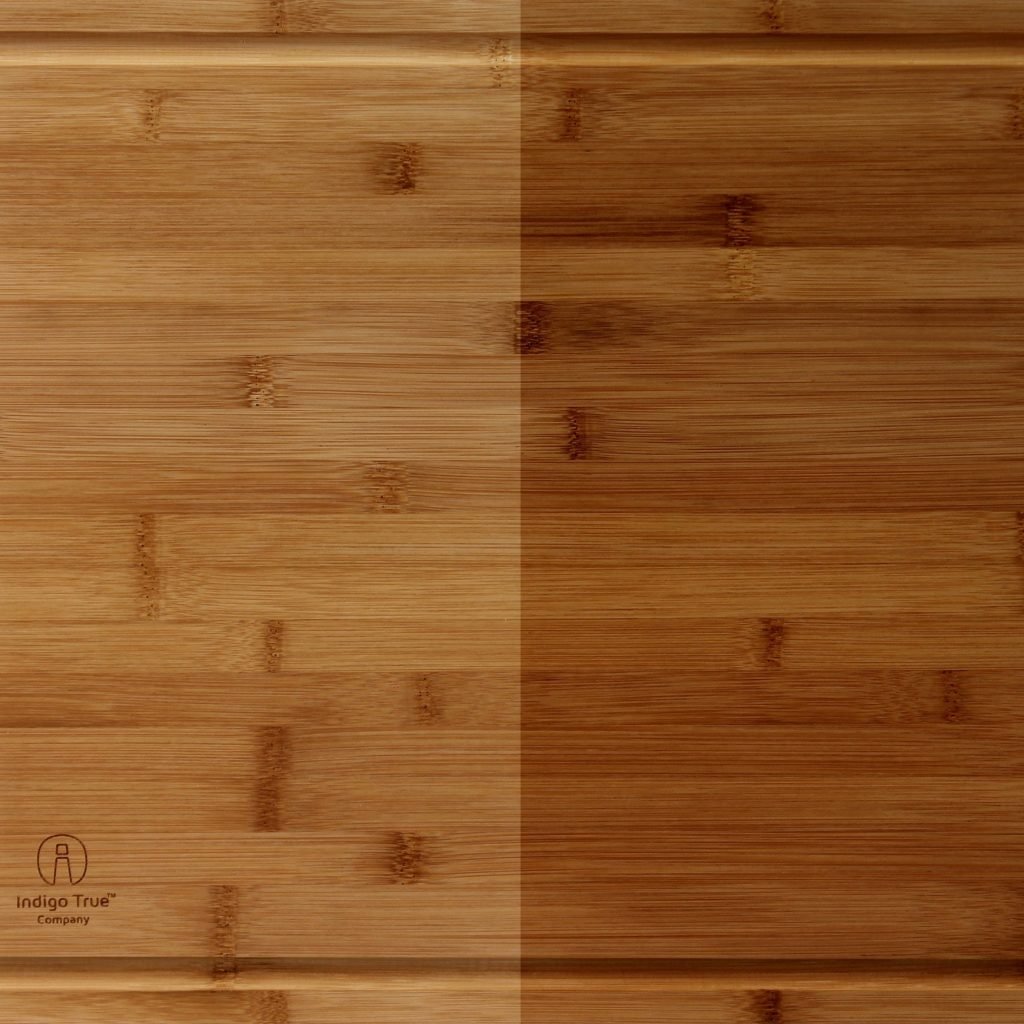
 Before-and-after: oil restores color and reduces dryness.
Credit: totallybamboo.com
Before-and-after: oil restores color and reduces dryness.
Credit: totallybamboo.com
How often to oil your board
- Daily cooks: oil every 3–4 weeks.
- Occasional cooks: oil every 2–3 months.
- New board or very dry board: oil twice in the first 24 hours, then monthly.
A practical sign it needs oiling: if the board looks matte, feels dry, or water beads instead of soaking in, it’s time. In practice, a small monthly reminder on your phone prevents neglect.
Dealing with stains, odors and deep damage
- Stains: Sand lightly, then re-oil. For surface stains, a paste of baking soda + water can help lift residue.
- Odors: Rub with coarse salt and lemon, rinse, dry, then oil.
- Deep gouges or cracks: If wood is split or deep grooves collect food, sand the area smooth. For irreversible damage, consider replacing the board — deep cracks can harbor bacteria and compromise safety.
Food safety: cleaning and sanitizing
Clean with hot, soapy water after each use. For occasional sanitizing, follow government guidance on food-contact surface sanitizers — the USDA and FDA are authoritative resources for safe handling and sanitizing practices (USDA, FDA). Avoid harsh chemical cleaners that could leave residues or damage the bamboo.
Storage and everyday care
- Store upright with air circulation to prevent trapped moisture.
- Never leave the board soaking in water or near heat sources. Heat can warp and dry out bamboo.
- Use both faces alternately to distribute wear.
- Consider a cutting mat for heavy-duty tasks to reduce wear on the board.
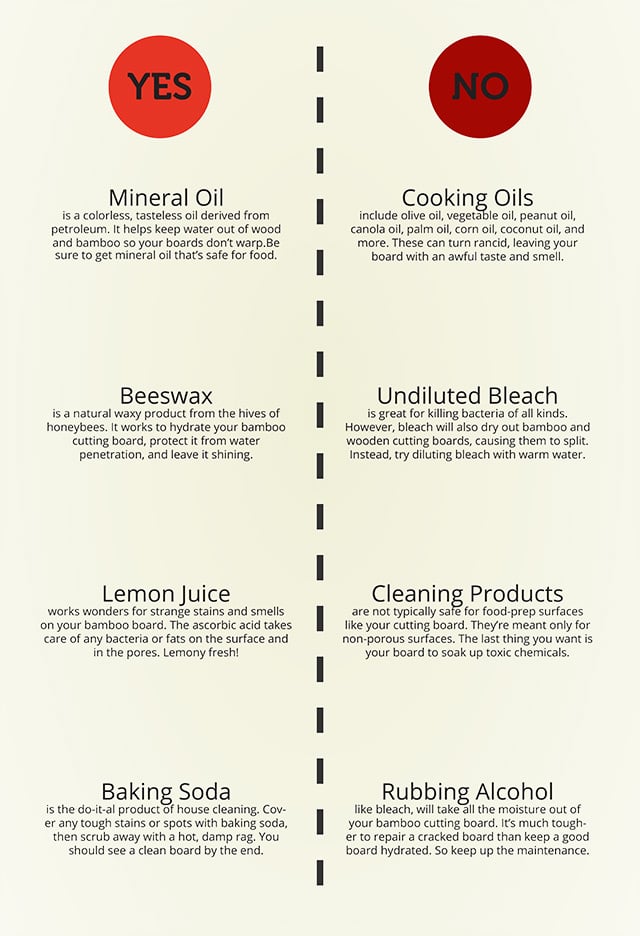 Quick care steps: clean, dry, oil, store upright.
Credit: www.campchef.com
Quick care steps: clean, dry, oil, store upright.
Credit: www.campchef.com
Common mistakes to avoid
- Using vegetable oils or olive oil to season (they go rancid).
- Putting bamboo boards in the dishwasher.
- Oiling a wet board — oil won’t absorb and can create a sticky surface.
- Skipping edge and end grain treatment — these areas absorb moisture and are most likely to crack.
Quick troubleshooting
- Oily surface after application: wipe excess and buff; do not use heavy soap to remove.
- Persistent odor after cleaning and oiling: sand surface lightly and reapply oil.
- Deep mold or decay: discard the board. Do not try to restore structurally compromised wood used for food prep.
FAQ
Q: Can I use butcher block oil or furniture oil? A: Use food-grade mineral oil or products labeled safe for cutting boards. Furniture oils may contain solvents or scents that are unsafe for food contact.
Q: How long does seasoning last? A: The protection depends on use. Frequent wetting or heavy chopping wears the finish faster — typically maintenance every 1–3 months keeps a board protected.
Q: Is beeswax necessary? A: Beeswax adds a surface layer that enhances repellency. It’s optional but useful for a finishing coat after mineral oil.
Q: What about bamboo vs. hardwood care differences? A: Bamboo is harder and less porous than some hardwoods but still benefits from regular oiling. It can be more brittle, so avoid over-soaking.
Conclusion
Seasoning a bamboo cutting board is an easy maintenance task that adds years to its life. Clean and dry the board, use a food-grade mineral oil (or a mineral oil/beeswax cream), apply evenly, let it soak, then wipe and buff. Repeat on a schedule that matches your use pattern — monthly for frequent cooks, less often for light use. Set a calendar reminder, and your board will stay attractive, sanitary, and reliable.
Take action: set a monthly reminder now and apply a thin coat of food-grade mineral oil to your board to protect it and restore its finish.

I’m Abby Lu, a passionate home cook who loves simplifying everyday meals. At PlugChef.com, I share product reviews and cooking guides to help you find the best tools for your kitchen.
Related posts:
 How to Make a Fruit Basket for a Gift: Easy DIY Guide
 Do You Need a Basket? Essential Guide for Air Fryers
 How to Choose Kitchen Appliances: Expert Tips Revealed
 Kitchen Cabinets With Black Stainless Steel Appliances: Modern Elegance
 White Kitchen Cabinets Stainless Steel Appliances: Timeless Elegance
 Top 10 Best Non-Toxic Cooking Utensils – Safe & Durable Choices for Healthy Homes

