

Are you ready to transform your dinner routine with a dish that’s both simple and bursting with flavor? Chicken thighs with apricot jam offer a perfect balance of savory and sweet that will surprise your taste buds.
This recipe is easy to make, uses ingredients you might already have, and delivers a meal that feels special without any fuss. Keep reading, and you’ll discover how to create a dish that’s juicy, tender, and packed with a delicious twist that’ll have everyone asking for seconds.
Your next favorite dinner is just a few steps away.

Credit: quichemygrits.com
Choosing The Right Chicken Thighs
Choosing the right chicken thighs shapes the taste and texture of your dish. Each type offers a different cooking experience and flavor. Knowing the differences helps you pick the perfect cut for Chicken Thighs With Apricot Jam. This section explains key points to consider for the best results.
Bone-in Vs Boneless
Bone-in chicken thighs keep the meat juicy and add rich flavor. Bones help the meat cook evenly and slowly. Boneless thighs cook faster and are easier to eat. They are great for quick meals or recipes needing bite-sized pieces. Bone-in is best for deep flavor; boneless suits fast cooking.
Skin-on Vs Skinless
Skin-on thighs give a crispy texture when cooked right. The skin holds moisture and adds fat for richer taste. Skinless thighs are leaner and cook faster. They work well in lighter dishes or if you want less fat. Skin-on is perfect for roasting; skinless fits stews or sautés.
Fresh Vs Frozen
Fresh chicken thighs have a tender texture and pure flavor. They need to be used soon after purchase for best quality. Frozen thighs last longer and are easy to store. Freezing can slightly change texture but is fine for many recipes. Thaw frozen meat safely in the fridge before cooking.
Credit: quichemygrits.com
Apricot Jam As A Flavor Booster
Apricot jam adds a unique touch to chicken thighs. It brings an exciting mix of flavors that enhances the dish deeply. The jam’s natural sweetness and subtle tartness lift the taste of the savory chicken. This combo creates a rich, balanced flavor profile that keeps every bite interesting.
Sweetness And Tang Balance
Apricot jam offers both sweet and tangy notes. The sweetness softens the savory meat’s intensity. The tanginess cuts through the richness of the chicken thighs. This balance stops the dish from feeling too heavy or too sweet. It brightens the overall flavor without overpowering it.
Complementing Savory Notes
The fruity flavors of apricot jam blend well with spices and herbs. It works beautifully with garlic, rosemary, and thyme. The jam enhances the chicken’s natural juices and browning. This creates a warm, inviting taste that feels fresh and comforting. The result is a dish full of depth and layers.
Selecting Quality Apricot Jam
Choose apricot jam with real fruit pieces and minimal added sugar. Natural jams give better flavor and texture. Avoid jams with artificial colors or preservatives. Look for organic or homemade varieties if possible. Good quality jam makes a noticeable difference in taste and aroma.
Preparing The Chicken Thighs
Trim excess fat from the chicken thighs and pat them dry with paper towels. Season both sides with salt and pepper for a simple, tasty base. This helps the apricot jam stick and adds flavor during cooking.
Preparing the Chicken Thighs Tender chicken thighs with apricot jam create a delightful dish. Preparing them well ensures a delicious outcome. Start with fresh, high-quality chicken thighs for the best flavor and texture. Follow these steps to achieve a mouthwatering result.Trimming And Seasoning
Trim excess fat from the thighs. This prevents greasy outcomes. Pat the chicken dry with paper towels. Dry skin crisps better during cooking. Season generously with salt and pepper. Add garlic powder for extra flavor. A touch of paprika enhances color and taste.Marinating Tips
Combine apricot jam, soy sauce, and mustard for a simple marinade. Add a splash of lemon juice for brightness. Marinate the chicken for at least an hour. Overnight marination deepens the flavor. Ensure all pieces are well-coated.Achieving Crispy Skin
Preheat the oven to 400°F (200°C). Arrange chicken thighs on a baking sheet. Place them skin-side up for the best texture. Bake until the skin turns golden and crispy. This usually takes 30-35 minutes. Let the chicken rest for a few minutes before serving.Cooking Methods For Best Results
Choosing the right cooking method can transform chicken thighs with apricot jam from a simple dish to a memorable meal. Each technique offers a unique texture and flavor profile that highlights the sweetness of the apricot jam and the richness of the chicken. Understanding these methods helps you control the outcome and impress your guests.
Pan-seared Technique
Pan-searing chicken thighs gives you a crispy, golden skin that contrasts beautifully with the sticky apricot glaze. Use medium-high heat and a heavy skillet to get a nice crust without burning the jam. Try adding a splash of water or broth to the pan to loosen any caramelized bits, creating an easy sauce to spoon over the thighs.
Have you ever noticed how the caramelization changes when you flip the chicken just once? This simple step keeps the skin intact and juicy underneath. Don’t forget to baste the chicken with the apricot jam during cooking for an extra layer of flavor.
Oven Roasting
Oven roasting is perfect if you want hands-off cooking and evenly cooked chicken. Start by browning the thighs in a pan, then transfer them to a preheated oven to finish. The dry heat helps the apricot jam thicken into a lovely glaze that clings to the meat.
Try roasting at 400°F (200°C) for about 25-30 minutes. This temperature crisps the skin without drying out the chicken. Have you experimented with adding fresh herbs or garlic to the roasting pan? It can deepen the flavors and make your dish stand out.
Grilling Options
Grilling chicken thighs with apricot jam adds a smoky dimension that enhances the sweetness of the jam. Use indirect heat to avoid burning the sugar in the jam while still getting those appealing grill marks. Brush the chicken with apricot jam several times during grilling to build a sticky, flavorful coating.
Consider wood chips or charcoal for a subtle smoky aroma that complements the fruity glaze. Ever tried pairing grilled apricot-glazed chicken with a fresh green salad or grilled vegetables? It balances the richness and keeps your meal light and satisfying.
Making The Apricot Glaze
Making the apricot glaze is where the magic happens in this chicken thighs recipe. The glaze brings a perfect balance of sweet and tangy flavors that complement the rich taste of the meat. Crafting it carefully ensures every bite is bursting with deliciousness.
Combining Jam With Spices
Start by mixing apricot jam with a few key spices to add depth. Cinnamon, ground ginger, and a pinch of chili flakes work beautifully. These spices enhance the sweetness and add warmth without overpowering the natural fruitiness.
Try stirring in a small amount of garlic powder or smoked paprika for a subtle kick. You can adjust these based on your taste. Have you ever thought about how a tiny pinch of spice can transform a simple glaze?
Adjusting Sweetness And Acidity
Balancing the glaze’s sweetness is crucial. If the jam feels too sugary, squeeze in fresh lemon juice or a splash of apple cider vinegar to brighten it up. The acidity cuts through the richness of the chicken and prevents the glaze from being one-dimensional.
Don’t hesitate to taste as you go. If it’s too tart, add a bit more jam or a drizzle of honey. Finding the right harmony between sweet and sour will make your glaze irresistible.
Applying The Glaze
Brush the glaze generously over the chicken thighs during the last 10 minutes of cooking. This timing allows the sugar in the jam to caramelize without burning. You want a shiny, sticky coating that locks in flavor and moisture.
For extra flavor, baste once or twice while cooking. Notice how the glaze thickens and clings to the chicken, creating a mouthwatering finish. How often have you skipped glazing, missing out on that final burst of taste?

Credit: quichemygrits.com
Serving Suggestions
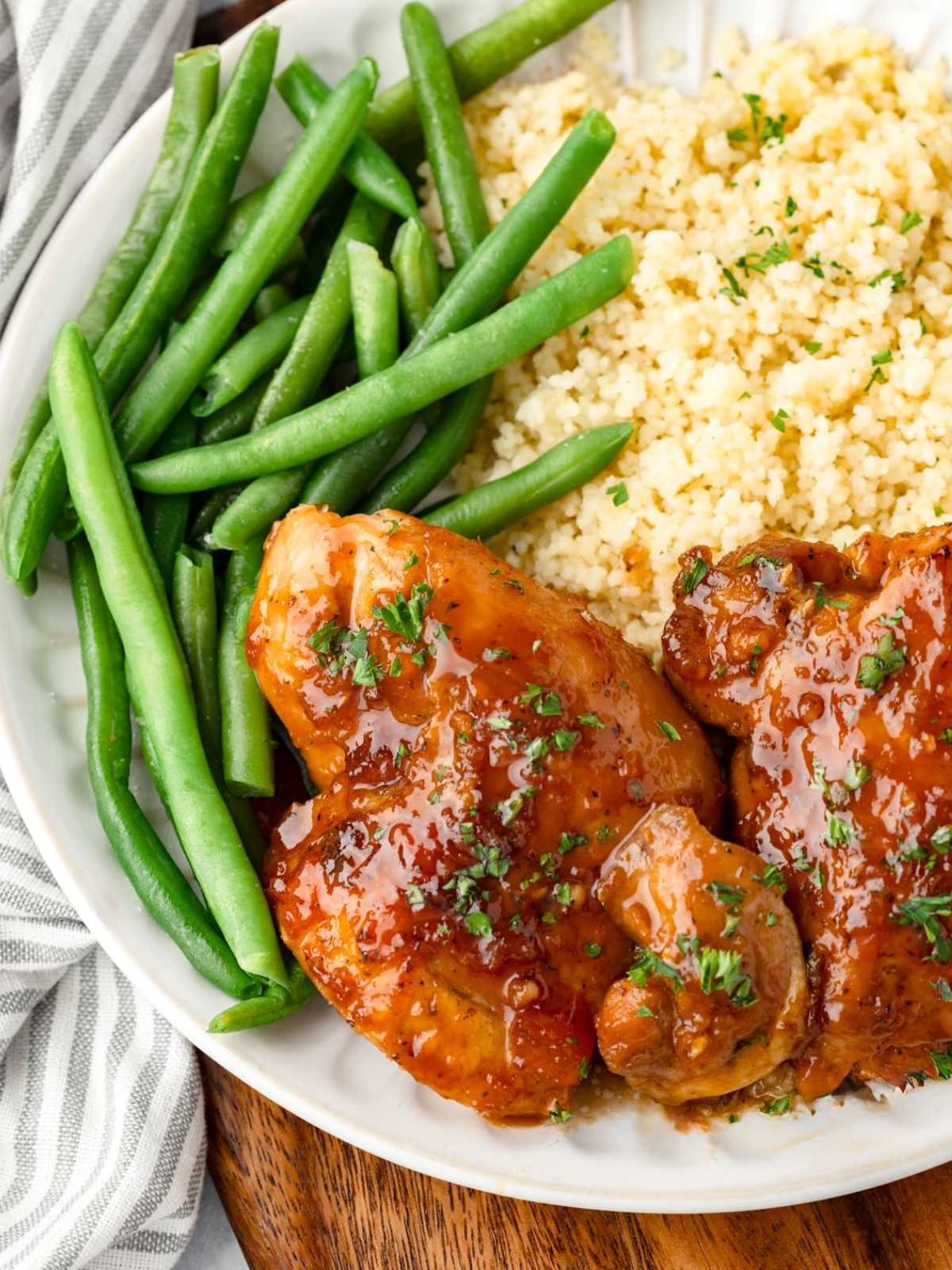
Serving chicken thighs with apricot jam offers a delightful mix of sweet and savory flavors. Choosing the right sides and garnishes enhances the dish’s taste and presentation. Drinks that complement this combo can elevate the entire meal experience.
Perfect Side Dishes
- Steamed jasmine rice absorbs the sauce well.
- Roasted vegetables add a smoky flavor contrast.
- Creamy mashed potatoes balance the sweetness.
- Quinoa salad adds a light, nutty texture.
- Grilled asparagus offers a fresh and crisp bite.
Garnishing Ideas
- Fresh thyme or rosemary sprigs add aroma.
- Chopped toasted almonds give a crunchy touch.
- Thin slices of green onion brighten the plate.
- Orange zest adds a citrusy twist to flavors.
- Pomegranate seeds provide color and a burst of tartness.
Pairing With Beverages
- A light white wine like Sauvignon Blanc complements the dish.
- Freshly brewed iced tea cools the palate nicely.
- Sparkling water with lemon offers a refreshing contrast.
- A fruity cider matches the apricot sweetness well.
- Light beer balances the rich and sweet flavors.
Tips For Storing And Reheating
Storing and reheating chicken thighs with apricot jam properly can keep your dish tasting fresh and delicious for days. Knowing how to handle leftovers not only saves time but also maintains the juicy texture and vibrant flavors you love. Are you ready to make your next meal just as enjoyable as the first?
Proper Storage Techniques
Let the chicken cool to room temperature before storing it in the fridge. Placing hot food directly in the fridge can raise the temperature and affect other items.
Use airtight containers to lock in moisture and prevent the apricot jam’s sweetness from spreading to other foods. Glass containers work well because they don’t absorb odors.
Label your containers with the date to keep track of freshness. Chicken thighs with apricot jam usually stay good for up to 3-4 days in the fridge.
Reheating Without Drying
Reheating chicken thighs without drying them out is key to preserving their juicy texture. Use a low heat setting in the oven or microwave.
Cover the chicken with foil or a microwave-safe lid to trap steam. This keeps the meat tender and the apricot jam sauce glossy.
If you reheat in a pan, add a splash of water or broth and heat gently. Stirring occasionally helps distribute heat evenly without overcooking.
Freezing Guidelines
Freeze leftovers quickly to maintain flavor and texture. Place the chicken thighs in freezer-safe bags or containers, removing as much air as possible.
Label with the freezing date and use within 2-3 months for the best taste. Apricot jam helps protect the meat during freezing by adding moisture and a natural glaze.
Thaw frozen chicken overnight in the fridge before reheating to avoid uneven cooking. Avoid refreezing once thawed to keep the quality intact.
Frequently Asked Questions
What Makes Apricot Jam Good For Chicken Thighs?
Apricot jam adds a sweet, tangy flavor that complements chicken thighs. It creates a delicious glaze, balancing savory and fruity notes. This enhances the meat’s juiciness and tenderness, making the dish flavorful and appealing.
How To Cook Chicken Thighs With Apricot Jam Glaze?
Start by seasoning chicken thighs with salt and pepper. Brown them in a pan until golden. Then, brush apricot jam mixed with spices over the thighs. Bake or simmer until cooked through and the glaze caramelizes.
Can I Use Fresh Apricots Instead Of Jam?
Yes, fresh apricots can be used but require cooking down. Simmer chopped apricots with sugar and lemon juice until thick. This homemade jam can replace store-bought apricot jam for the recipe.
What Side Dishes Pair Well With Apricot Jam Chicken?
Serve with rice, quinoa, or roasted vegetables to balance flavors. A fresh green salad or steamed broccoli also complements the sweet and savory chicken dish well.
Conclusion
Chicken thighs with apricot jam bring sweet and savory together. This dish cooks quickly and tastes rich. It suits busy weeknights or special dinners. The apricot jam adds a nice twist to the usual chicken flavors. Try this recipe to enjoy a simple, tasty meal.
Your family will love the mix of juicy chicken and sweet sauce. Cooking this dish is easy, even for beginners. Give it a try and enjoy a new favorite dinner.

Hi, I’m Daniel Brooks—a food lover and kitchen gear enthusiast. I enjoy testing cookware, utensils, and gadgets to see what really works in everyday cooking. At PlugChef.com, I share honest reviews, comparisons, and simple guides to help you choose the best tools for a safer, smarter, and more enjoyable kitchen.
Related posts:
 What Type of Cooking Utensils are Safe: Expert Picks
 What Innovations Could Blenders Make: Unleashing Future Tech
 Smart Strategies to Organize a Small Kitchen: Maximize Space
 How to Organize a Kitchen Cabinet: Expert Tips & Tricks
 How to Organize Kitchen Drawers: Expert Tips and Tricks
 How to Organize a Corner Kitchen Cupboard: Expert Tips

