
If you’ve ever looked at a wedge of authentic Spanish Manchego cheese and wondered, “How can I slice this beautifully for a cheese board?”, you’re not alone. Manchego—from sheep’s milk and protected by the Queso Manchego PDO (Protected Designation of Origin) system—is firm, flavorful and deserves a slicing method that both preserves its texture and highlights its nutty finish. According to cheesemonger experts, the way you cut firm cheeses affects not just appearance, but aroma and flavor release.
In this guide, we’ll walk through step-by-step how to cut Manchego cheese for your cheese board, including the best cutting technique, tools to use, and presentation suggestions—whether the board is for a casual get-together or an upscale soiree.

What is Manchego Cheese?
Manchego cheese is from Spain. It is made from sheep’s milk. The sheep are called Manchega sheep. This cheese is hard and yellow. It has a rich taste. Manchego is aged. This makes it more flavorful. You can eat it fresh or aged.
What Makes Manchego Special
Manchego isn’t just another cheese—it’s a culinary symbol of Spain’s La Mancha region. Made from 100% Manchega sheep’s milk, this firm, ivory-colored cheese carries a Protected Designation of Origin (PDO) status, ensuring authenticity and regional integrity.
Its signature flavor profile—nutty, slightly tangy, and aromatic—intensifies with age. Younger versions (3 months) are supple and mild, while aged Curado and Viejo styles (6–12 months) offer rich caramel notes and a crystalline texture.
For cheesemongers and food stylists alike, how you cut Manchego directly affects its texture, aroma, and aesthetic on the cheese board. The goal is simple: highlight both taste and tradition.

Why Cutting Manchego Correctly Matters
Each slice of Manchego carries a delicate balance of fat crystals, protein structure, and aged rind flavor.
Improper cutting—such as hacking through the wedge or removing the rind completely—can:
Disrupt internal structure (making it crumble or oil out).
Flatten flavor distribution.
Spoil the clean, geometric look expected on curated boards.
According to the Spanish Ministry of Agriculture, slicing at a 15°–20° angle from the wedge’s point allows the perfect thickness for bite and aroma. Serving at 18 – 20 °C (room temperature) maximizes flavor release and mouthfeel.
Tools You’ll Need
For precision and presentation, start with the right equipment:
Flat-blade cheese knife — essential for firm cheeses like Manchego.
Check Price on AmazonCheese plane or slicer — ensures uniform thickness (ideal 3–5 mm).
Check Price on AmazonWood or marble serving board — provides contrast and prevents heat transfer.
Check Price on AmazonFood thermometer (optional) — ensures the cheese reaches serving temperature.
Pro Tip: Warm your knife blade for a few seconds in hot water before cutting—this helps glide through firm aged Manchego without cracking.

Step-by-Step: How to Cut Manchego for a Cheese Board
Step 1: Prep & Temper
Remove the wedge from refrigeration 30–40 minutes before serving. Manchego’s complex fats and proteins soften slightly at room temperature, releasing its signature nutty aroma.
Step 2: Secure the Wedge
Place the wedge flat side down on a non-slip surface. Ensure the rind (with its crosshatch pattern) faces outward.
Step 3: Cut Triangular Slices
Using your flat knife, slice from the narrow tip toward the rind at a slight downward angle. Aim for 3 – 5 mm-thick slices. Keep a thin strip of rind on each slice—it adds both authenticity and visual appeal.
Step 4: Optional Cube Cut for Tastings
For informal boards or sampling platters, turn slices sideways and cut them into 1 cm cubes. The cube format works well for younger Manchego (3 – 6 months), which has a softer bite.
Step 5: Arrange for Presentation
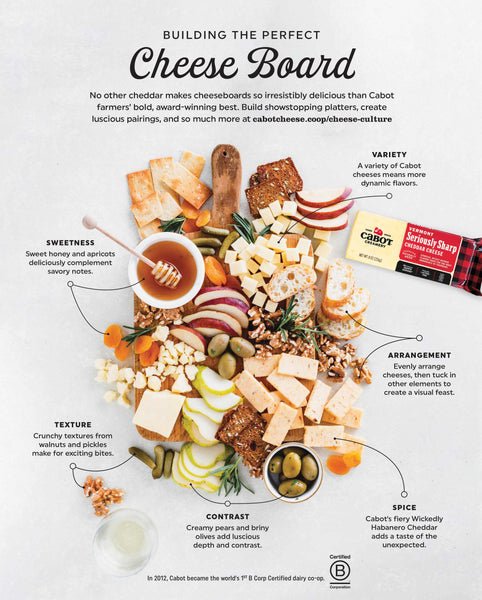
Fan the slices in a semi-circle or spiral pattern, alternating rind sides outward for contrast. Pair with color-contrasting elements—green grapes, ruby figs, or honey drizzle.

Image: how to serve Manchego on cheese board
What to Pair with Manchego on a Cheese Board
| Category | Recommended Pairings | Why It Works |
|---|---|---|
| Fruits | Quince paste (membrillo), grapes, pears | Sweet balances Manchego’s saltiness |
| Nuts | Marcona almonds, walnuts | Add texture and earthy depth |
| Condiments | Honey, fig jam, tomato marmalade | Amplify umami and acidity |
| Cured meats | Jamón Serrano, chorizo | Classic Spanish match; protein balance |
| Wine | Tempranillo, Rioja, or dry Sherry | The acidity and tannin cut through fat |
| Bread/Crackers | Rustic baguette, water crackers | Neutral base preserves flavor clarity |
Shop Spanish Tapas Serving Set on Amazon
Fact: Aged Manchego contains up to 25 % protein and 32 % fat, making it rich yet balanced. That’s why crisp wines or light fruits pair best—they offset density.
Understanding Manchego’s Aging Stages
| Type | Aging Period | Texture | Flavor Profile |
|---|---|---|---|
| Semi-Curado | 3 – 6 months | Smooth, creamy | Mild, slightly nutty |
| Curado | 6 – 9 months | Firm, sliceable | Buttery with sweet notes |
| Viejo | 12 – 24 months | Hard, crumbly | Sharp, savory, caramelized finish |
Each style responds differently to cutting:
Semi-Curado: Best sliced thin for smooth mouthfeel.
Curado: Classic triangular cuts maintain integrity.
Viejo: Use a cheese chisel or paring knife to break into rustic shards.
Shop on Amazon Cheese Chisel Knife
Serving Temperature & Display Science
According to the Spanish Cheese Makers Association, the ideal serving temperature for Manchego is 18 °C, allowing butterfat to soften without melting.
Avoid cutting while cold—the internal fat network is brittle and will fracture. Conversely, avoid direct sunlight or heat sources; oils may surface and dull flavor.
If serving outdoors, use an insulated cheese dome or shaded tray to maintain stability.
Shop On Amazon Cheese Dome with Cooling Base
Advanced Presentation: Professional Cheesemonger Tricks
Layering Technique: Stack two overlapping slices to create height and depth.
Texture Play: Pair Manchego slices beside creamy brie or crumbly blue cheese to showcase contrast.
Color Composition: Surround with red jam, golden nuts, and green grapes for visual harmony.
Thematic Serving: Present Manchego on a rustic olive-wood board with Spanish décor accents for authenticity.
Shop On Amazon Rustic Olive Wood Board Set
Common Mistakes to Avoid
Removing the rind entirely — reduces authenticity and aroma context.
Cutting too thick — makes slices chewy and oily.
Serving straight from the fridge — suppresses aroma and alters texture.
Mixing strong cheeses — Manchego’s subtlety can be overpowered by blue or truffle cheeses.
Ignoring knife cleanliness — leftover oils from other cheeses cause discoloration.

Image: cutting Manchego wedge
Frequently Asked Questions
How Do You Properly Cut Manchego Cheese?
Cut Manchego into small, thin wedges for easy serving and better taste.
What Knife Is Best For Cutting Manchego Cheese?
Use a sharp, thin-bladed cheese knife to cut clean, smooth slices.
Should Manchego Be Cut Before Or After Serving?
Cut Manchego just before serving to keep it fresh and tasty.
How Thick Should Manchego Slices Be For A Cheese Board?
Slices about 1/4 inch thick work well for balance and flavor.
Can you eat the rind on Manchego?
Yes, though it’s waxed for protection. Most experts recommend keeping a thin rind strip for presentation but not eating the outer layer.
How long does cut Manchego last?
Store in wax paper or breathable cheese paper for up to 2 weeks refrigerated; avoid plastic wrap, which traps moisture.
Can Manchego be frozen?
Freezing isn’t recommended—it alters fat structure and flavor.
What’s the best wine for aged Manchego?
Try a Reserva Rioja (aged Tempranillo) or a dry Sherry—both accentuate the cheese’s nutty depth.
Is Manchego healthy?
Yes, in moderation. A 30 g serving delivers about 120 kcal, 7 g fat, and 8 g protein—a nutrient-dense option rich in calcium and vitamin A.
Conclusion
Cutting and serving Manchego cheese the right way turns a simple cheese board into a statement of craft and culture. Whether you’re curating a Spanish tapas night or enhancing your culinary hosting game, precision slicing and thoughtful pairing make all the difference.
Start with the right tools, honor the cheese’s natural structure, and elevate presentation with complementary flavors and textures.
With practice, you’ll serve Manchego that looks as exquisite as it tastes—rich, balanced, and authentically Spanish.

I’m Abby Lu, a passionate home cook who loves simplifying everyday meals. At PlugChef.com, I share product reviews and cooking guides to help you find the best tools for your kitchen.
Related posts:
 What Type of Cooking Utensils are Safe: Expert Picks
 What Innovations Could Blenders Make: Unleashing Future Tech
 Smart Strategies to Organize a Small Kitchen: Maximize Space
 How to Organize a Kitchen Cabinet: Expert Tips & Tricks
 How to Organize Kitchen Drawers: Expert Tips and Tricks
 How to Organize a Corner Kitchen Cupboard: Expert Tips

