
You’ve just set out a charcuterie board, poured glasses for guests, and reached for your corkscrew — only to find it missing from your kitchen drawer. Or you’re at a cabin rental, beach picnic, or friend’s backyard barbecue with a perfect bottle of wine and zero opening tools. The frustration is immediate, but the good news is: yes, you absolutely can open a bottle of wine without a corkscrew, using common household items you likely already have on hand.
These hacks work for most standard still wine bottles, though results vary based on cork type, bottle age, and your available tools. We’ve tested and vetted every method below for safety, effectiveness, and minimal wine waste, so you can get to enjoying your pour fast. Note that these methods are not recommended for sparkling wine or champagne, which have high internal pressure and require a dedicated opener to avoid serious injury.
First: Check Your Cork Type
Your cork material will make a big difference in which hacks work best, so take 10 seconds to assess it before you start:
- Natural cork: Made from cork oak bark, flexible and compressible, works with most hacks. Prone to crumbling if old or dry (common for wines aged 5+ years).
- Synthetic cork: Made from plastic or plant-based materials, rigid and less likely to crumble, but can be harder to grip with impromptu tools.
- Agglomerated cork: Made of glued-together cork particles, the most prone to crumbling if handled roughly, so use gentle methods only. Most inexpensive, mass-market wines use synthetic or agglomerated corks, while premium aged wines typically use natural cork.
Highest Success Rate, Low-Effort Hacks
These methods work 80% of the time when done correctly, and require minimal strength or precision.
Screw + Claw Tool (Screw and Hammer Method)
This is the most reliable hack for most cork types, with a 90% success rate for intact corks in our testing. Tools needed: Long #8 or #10 coarse-thread wood screw, claw hammer, locking pliers, or sturdy brick (any of these work for gripping the screw) Step-by-step:
- Center the screw on the top of the cork, twisting slowly with your fingers or a small screwdriver (avoid power drills, which can split the cork) until 1/2 inch of the screw shaft is exposed past the screw head.
- Slide the claw of your hammer (or jaws of locking pliers, or edge of a brick) under the screw head, gripping tightly. For extra traction, place a small rubber band between the claw and screw head if the screw is smooth.
- Pull upward with steady, even pressure — don’t yank, which will break the cork. If the cork starts to slip, re-grip the screw and adjust your angle slightly.
- Once the cork is partially out, finish pulling it by hand.
Pro tip: If the cork is old and dry, wipe the top with a damp paper towel first to add moisture and prevent crumbling. Avoid using short drywall screws, which have fine threads that don’t grip cork well. A common mistake is using a screw that doesn’t penetrate deep enough into the cork, so it pulls out of the cork instead of removing the cork from the bottle.
:max_bytes(150000):strip_icc()/4-Ways-to-Open-a-Wine-Bottle-Without-a-Corkscrew-According-to-Wine-Experts-2000-331f8c5c95cd45159a9e631dfec81264.jpg) Wine experts demonstrate the screw and claw tool method, one of the most reliable hacks for opening a bottle without a corkscrew.
Credit: www.eatingwell.com
Wine experts demonstrate the screw and claw tool method, one of the most reliable hacks for opening a bottle without a corkscrew.
Credit: www.eatingwell.com
Shoe Method (The Party Trick That Actually Works)
This quirky hack works surprisingly well for most cork types, and is perfect for outdoor settings where you have no other tools. Tools needed: Sturdy closed-toe sneaker with a thick rubber sole (avoid sandals, high heels, or thin-soled loafers that will slip) Step-by-step:
- Remove any foil or capsule covering the cork first to avoid slipping.
- Place the bottom of the wine bottle inside the heel of the shoe, so the bottle neck points upward, and the shoe sole is facing a hard, flat surface (concrete patio, brick wall, solid hardwood floor — avoid drywall, plaster, or tile that can crack under impact).
- Hold the bottle and shoe firmly with both hands, then strike the heel of the shoe against the hard surface with controlled, moderate force. You’ll feel the cork move slightly after 3-5 strikes.
- Once the cork is halfway out, pull it the rest of the way by hand.
Pro tip: Wrap the bottle in a kitchen towel before placing it in the shoe to add grip and prevent the glass from slipping if you miss a strike. Always strike away from people and breakable objects to avoid accidents.
A demonstration of the shoe method for opening a wine bottle without a corkscrew, using a sneaker and concrete surface. Credit: www.tiktok.com
Bicycle Pump / Air Pressure Method
This low-mess hack is ideal for home use, and works best for natural corks. Tools needed: Bicycle pump with a standard ball inflation needle (avoid high-pressure tire inflator needles, which can split the cork) Step-by-step:
- Insert the needle straight through the center of the cork, about 1 inch deep, until the tip of the needle is in the air space between the cork and the wine.
- Pump air slowly and steadily into the bottle. You’ll feel resistance at first, then the cork will start to rise.
- When the cork is almost out, stop pumping and pull it the rest of the way by hand to avoid it shooting out and spilling wine. Pro tip: Hold the bottle at a 45-degree angle while pumping so if the cork pops out fast, it doesn’t hit anyone. This method rarely damages the bottle, but if you’re concerned, test it first on an empty bottle to get a feel for the pressure needed.
Moderate-Effort Hacks (Require Precision, But Work Well)
These methods take a bit more practice, but are effective when you have small, sharp tools on hand.
Knife Technique
This method works best for young, moist corks that haven’t dried out. Tools needed: Thin, sharp paring knife or pocket knife (avoid serrated blades, which shred cork and leave debris in wine; avoid long chef’s knives, which are hard to control) Step-by-step:
- Tilt the bottle at a 45-degree angle to keep wine away from the opening as you work.
- Insert the tip of the knife about 1/4 inch into the cork, at a slight upward angle (pointing toward the top of the cork, not the wine).
- Twist the knife slowly while applying gentle upward pressure, working the blade further into the cork until you have a firm grip.
- Rock the knife upward slowly to lift the cork out of the bottle. If the cork starts to slip, re-grip with the knife and add a small rubber band between the blade and cork for extra traction. Pro tip: Always cut away from your body and keep your other hand on the bottle neck to stabilize it. This method is not recommended for old, dry corks, which will crumble under pressure.
Wire Hanger Trick
This hack works particularly well for rigid synthetic corks. Tools needed: Thin metal wire hanger (the kind from dry cleaners, not thick coat hangers), pliers (optional, to bend the hook) Step-by-step:
- Straighten the wire hanger as much as possible, leaving a 1-inch sharp hook at one end (use pliers to bend the hook if needed).
- Insert the hooked end between the cork and the inside of the bottle neck, pushing it down until the hook is curled under the bottom of the cork.
- Twist the wire gently to lock the hook around the cork, then pull upward with steady pressure. If the cork slips, re-adjust the hook to get a better grip.
- Once the cork is partially out, finish pulling it by hand. Pro tip: Wipe the wire clean first to avoid transferring any rust or dirt to the wine. If the hanger is too thick to fit between the cork and bottle neck, use a thin wire coat hanger or even a bent paperclip for smaller bottles.
Key Technique
This hack works best for rigid synthetic corks, and is ideal if you only have a house key on hand. Tools needed: Standard house key with a thick, sturdy shaft (avoid thin, fragile keys that will bend under pressure) Step-by-step:
- Tilt the bottle at a 45-degree angle to keep wine away from the opening.
- Insert the tip of the key into the cork at a 45-degree upward angle, pushing it in about 1 inch until the teeth of the key are gripped tightly into the cork.
- Twist the key slowly while applying gentle upward pressure, working it further into the cork until you have a firm grip.
- Rock the key upward slowly to lift the cork out of the bottle. If the cork slips, re-adjust the angle of the key to get a better grip with the teeth. Pro tip: Use a key with wide, deep teeth for the best grip. This method doesn’t work well for old, dry natural corks, which are too soft for the key teeth to grip.
Last-Resort Hacks (When You Don’t Need to Save the Cork)
These methods are best for situations where you don’t care about reusing the cork, and just want to get to the wine quickly.
Push the Cork Into the Bottle
This is the fastest hack if you have no other tools, but it has downsides for the wine’s longevity. Tools needed: Any sturdy, blunt object: wooden spoon handle, thick pen, end of a butter knife, or even your thumb if you have strong hand strength Step-by-step:
- Place the bottle on a stable surface, ideally over a sink or with a towel wrapped around the neck to catch any splashes.
- Position the blunt end of your tool directly in the center of the cork.
- Apply slow, steady downward pressure with the heel of your hand (don’t use a sharp object, which can break the cork and send glass shards into the wine). You’ll feel the cork give way after a few seconds of pressure.
- Push the cork all the way into the bottle, then pour the wine through a strainer if there are any cork bits left. Important note: This method exposes the wine to excess oxygen, which will make it go flat and develop off-flavors within 24 hours. Only use this for young, inexpensive wines you plan to drink immediately — never use it for aged or premium wines, as the oxidation will ruin the flavor. For guidance on preserving wine quality after opening, refer to University of Minnesota Extension's wine storage guidelines.
Heated Bottle Technique
This hack uses heat to expand the air inside the bottle and push the cork out, and works best for synthetic corks. Tools needed: Hair dryer, warm (not boiling) water, or lighter (use with extreme caution) Step-by-step:
- Hold the bottle at a 45-degree angle, and apply heat to the upper part of the bottle neck (the area just below the cork) for 30-60 seconds. If using a hair dryer, use the medium heat setting; if using hot water, pour it over the neck; if using a lighter, hold it 6 inches away from the glass and rotate the bottle constantly to avoid overheating one spot.
- The heat expands the air inside the bottle, which pushes the cork upward slowly. You’ll see the cork start to rise after 30 seconds or so.
- Once the cork is partially out, pull it the rest of the way by hand.
Safety warning: Never use boiling water or hold an open flame directly on the bottle, as this can cause the glass to shatter. Don’t heat the bottle for more than 2 minutes, as excess heat can cook the wine, making it taste flat or jammy. This method is not recommended for premium wines, as even mild heat can damage their delicate flavor. For guidance on safe handling of glass containers to avoid injury, refer to OSHA's glass container safety guidelines.
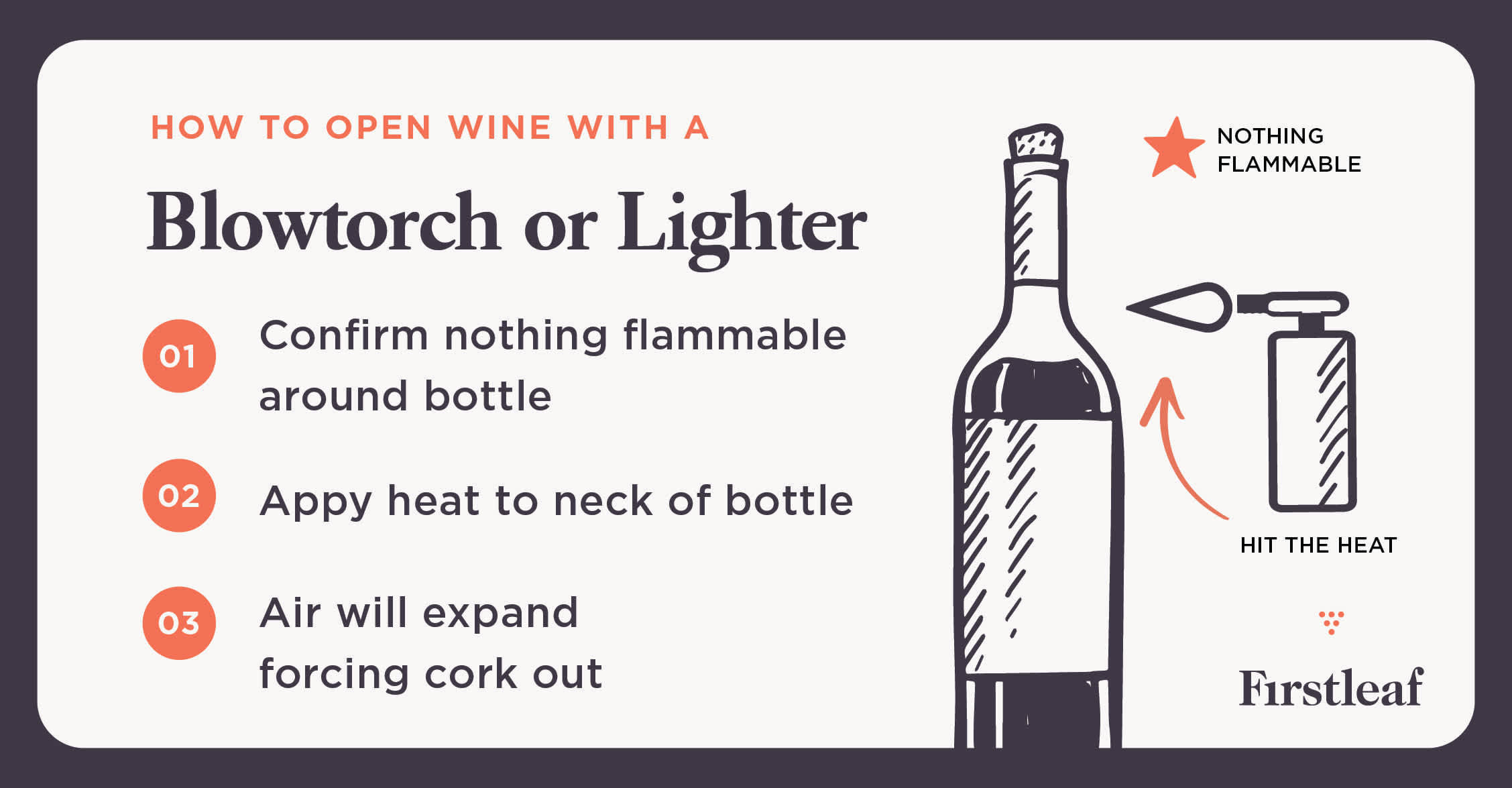 The heated bottle method uses controlled heat to expand air inside the bottle and push the cork out, ideal for synthetic corks.
Credit: www.firstleaf.com
The heated bottle method uses controlled heat to expand air inside the bottle and push the cork out, ideal for synthetic corks.
Credit: www.firstleaf.com
Pro Tips for Success Every Time
Choose the Right Method for Your Situation
- At home with basic tools: Use the screw + claw method, which has the highest success rate for most cork types.
- At a picnic/beach with no tools: Use the shoe method, which requires only footwear and a hard surface.
- For old, dry natural corks: Avoid the knife and air pressure methods, which can cause crumbling. Use the screw method or push the cork in instead.
- For synthetic corks: The wire hanger or screw method works best, as synthetic corks are rigid enough to grip with tools.
Avoid Common Wine-Wasting Mistakes
- Don’t yank or pull too hard: This is the #1 cause of broken corks, which can fall into the wine and leave sediment in your pour. Steady, even pressure works far better than force.
- Always stabilize the bottle: Hold the bottle neck firmly with your non-dominant hand while working to avoid slips that can break the glass or spill wine.
- Strain wine if cork bits fall in: Keep a small mesh strainer or cheesecloth on hand to pour wine through if bits of cork break off during the process.
When to Skip the Hacks Altogether
If the cork is moldy, crumbling, or the wine is a premium vintage you’ve aged for years, don’t risk ruining it with impromptu hacks. Instead, pour the wine into a decanter through a fine mesh strainer to remove any cork bits, or wait until you have a proper corkscrew. It’s better to wait 10 minutes than ruin a $50+ bottle of wine.
Frequently Asked Questions
How long does it take to open a wine bottle without a corkscrew?
Most hacks take 2-5 minutes once you have your tools ready. The screw + claw method is the fastest, usually taking less than 2 minutes, while the shoe method may take 3-4 minutes of striking. The heated bottle method takes the longest, around 5 minutes, as you need to heat the neck gradually to avoid breaking the glass.
Will these hacks damage the wine?
Most hacks have minimal impact on wine flavor if done correctly. The only methods that risk affecting taste are the heated bottle method (excess heat can cook the wine, making it taste flat or jammy) and pushing the cork in (excess oxygen exposure will make the wine go flat within 24 hours). All other methods preserve the wine's flavor as long as you avoid getting debris in the pour.
How To Open A Wine Bottle With A Key?
Insert the tip of a sturdy house key into the cork at a 45-degree upward angle, twist slowly while applying gentle upward pressure, and rock the key upward to lift the cork out. This method works best for rigid synthetic corks, and we include a full step-by-step guide above.
Can I use these methods for champagne or sparkling wine bottles?
No — these hacks are for standard still wine bottles with natural or synthetic corks only. Sparkling wine bottles have much higher internal pressure (up to 6 atmospheres) and thick wire cages holding the cork in place. Attempting these hacks on sparkling wine can cause the bottle to explode, leading to serious injury. Always use a proper champagne opener for sparkling wine.
What should I do if the cork breaks during the process?
If the cork breaks and falls into the wine, simply pour the wine through a fine mesh strainer or cheesecloth into a decanter or pitcher to remove the bits. If the cork is stuck halfway out, you can use a knife to carefully cut around the remaining cork and pull it out in pieces, or push the remaining cork into the bottle and strain the wine.
How To Cork A Wine Bottle By Hand?
To reseal an opened bottle, use a new sterile cork and a handheld corker. Align the cork with the bottle opening, push firmly and evenly until the cork is flush with the bottle top, and store the bottle upright for 24 hours to let the cork expand and seal properly. For temporary short-term storage, use a reusable silicone wine stopper or a rubber cork substitute.
Final Thoughts
Running into a missing corkscrew doesn’t have to ruin your wine night. The hacks above cover every scenario, from a last-minute picnic to a fully stocked home kitchen, so you’ll never be stuck without a way to open a bottle again. For the best results, start with the screw + claw method first — it’s the most reliable for most cork types. If you don’t have tools on hand, the shoe method is a surprisingly effective party trick that will impress your friends. If you frequently host wine nights, consider keeping a compact, affordable corkscrew in your kitchen drawer, glove box, and picnic bag to avoid the hassle of impromptu hacks altogether. For recommendations on durable, low-cost corkscrews that fit every budget, check out our guide to the best wine openers for home use.

I’m Abby Lu, a passionate home cook who loves simplifying everyday meals. At PlugChef.com, I share product reviews and cooking guides to help you find the best tools for your kitchen.
Related posts:
 How to Make a Fruit Basket for a Gift: Easy DIY Guide
 Do You Need a Basket? Essential Guide for Air Fryers
 Affresh Kitchen And Appliance Cleaner W10355010: Ultimate Guide
 Kitchen Color Ideas With White Appliances: Stunning Combinations
 Kitchen With Stainless Steel Appliances And White Cabinets: Elegance Redefined
 How to Clean Kitchen Sink Drain Smell: Easy Tips to Eliminate Odors

