

Forgot to thaw tuna steaks for dinner again? You’re not alone — between busy work schedules, last-minute dinner plans, and forgotten meal prep, thawing fish often falls by the wayside. The good news? You don’t need to wait hours for tuna to defrost in the fridge or under cold water to make a delicious, restaurant-quality meal. Cooking frozen tuna without thawing is not only possible, it’s faster, safer, and often yields a juicier, more flavorful result than thawed tuna. In this guide, we’ll walk through every quick, easy, and tested method to cook frozen tuna straight from the freezer, plus pro tips to avoid common pitfalls, food safety rules, and serving ideas to make your meal shine.
Why Cook Frozen Tuna Straight From the Freezer?
Cooking tuna straight from the freezer offers more benefits than just saving time. First, it eliminates the 1–2 hour fridge thaw or 30-minute cold water thaw step, letting you go from freezer to plate in 15–30 minutes depending on the method. This is perfect for busy weeknights, last-minute dinner parties, or when you simply forgot to plan ahead.
Second, it preserves texture and moisture better than thawing. When tuna thaws slowly in the fridge, ice crystals form inside the flesh, damaging cell structure and leading to dry, mushy texture after cooking. Cooking from frozen locks in juices, as the exterior sears quickly before the interior has time to release moisture.
Third, it reduces food safety risks. Thawing tuna at room temperature or in the fridge for too long creates opportunities for bacteria like Salmonella or Listeria to multiply in the "danger zone" between 40°F and 140°F (4°C and 60°C). Cooking directly from frozen eliminates the risk of cross-contamination from thawing drips in your fridge or on your counter. It also cuts down on food waste: if you forget to thaw tuna before its use-by date, you can still cook and enjoy it instead of throwing it away.
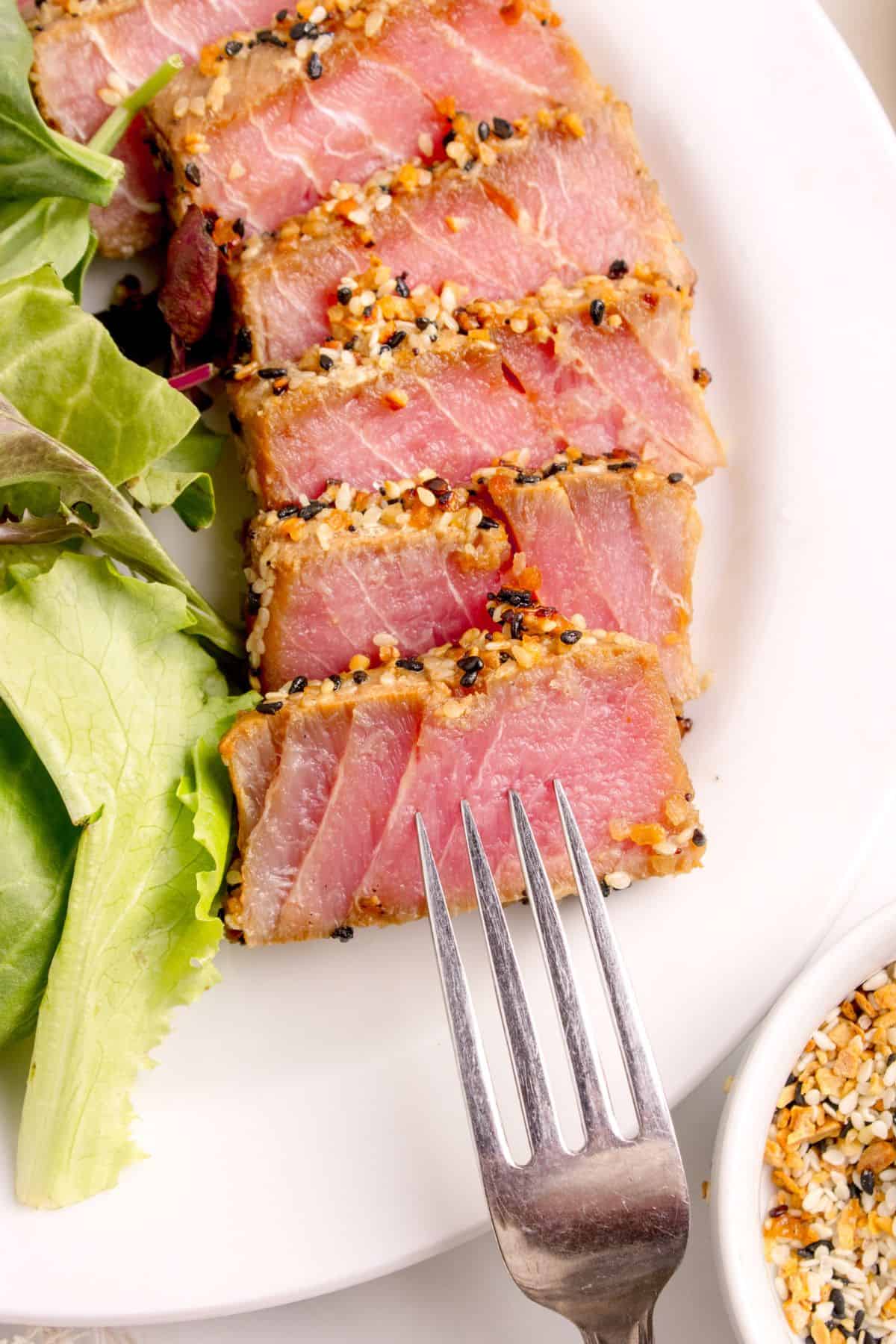
 Freshly seared frozen tuna, juicy inside with a crisp, seasoned exterior
Credit: www.reddit.com
Freshly seared frozen tuna, juicy inside with a crisp, seasoned exterior
Credit: www.reddit.com
How to Select and Store Frozen Tuna for Best Results
Not all frozen tuna is created equal, and proper storage is key to getting the best results when cooking without thawing.
Tuna Types That Work Best for Frozen Cooking
Stick to these cuts for the best texture and flavor:
- Yellowfin tuna: Firm, mild flesh that holds up well to all high-heat cooking methods like searing and grilling.
- Bigeye tuna: Rich, buttery texture ideal for quick sears that keep the center tender and rare.
- Albacore tuna: Softer, milder flavor best for baking or air frying, where a more tender result is desired. Avoid skipjack for steak cuts, as its small size makes it better suited for flaked dishes like tuna salad or casseroles.
Storage Tips to Preserve Quality
Keep your freezer at a constant 0°F (-18°C) or below, per NOAA’s seafood storage best practices, to prevent freezer burn and preserve flavor. Store tuna in the back of the freezer, not in the door where temperature fluctuates with regular opening and closing. Look for vacuum-sealed packaging to reduce exposure to air, and avoid packages with excessive ice or frost inside — that’s a sign the tuna was thawed and refrozen, which damages texture and increases bacterial risk. Label packages with the date you froze them, and use within 3–6 months for peak quality.
How to Check Quality Without Thawing
You don’t need to fully thaw tuna to check if it’s still good. Press the flesh through the packaging: it should feel firm, not soft or mushy. Look for bright, consistent color (deep red for yellowfin, pale pink for albacore) with no discolored spots. If you’re unsure of quality, a quick smell after cooking will confirm freshness: tuna should have a clean, ocean-like aroma, not a sour or ammonia-like odor.
Essential Food Safety Guidelines for Frozen Tuna
Cooking frozen tuna is completely safe when you follow basic, evidence-based rules. First, always cook to a minimum internal temperature of 145°F (63°C), as recommended by the USDA’s safe food handling guidelines for all fish and seafood. Use a food-grade thermometer inserted into the thickest part of the steak to get an accurate reading — visual cues like opaque flesh can be misleading, especially with frozen cuts.
Second, never thaw frozen tuna at room temperature, as this leaves it in the bacterial danger zone for too long, allowing harmful bacteria to multiply rapidly. Cooking directly from frozen eliminates this risk entirely. Third, avoid cross-contamination: keep raw frozen tuna separate from ready-to-eat foods in your kitchen, and wash your hands, utensils, and surfaces with hot, soapy water after handling raw fish. Finally, store cooked leftover tuna in an airtight container in the fridge for up to 3 days, or in the freezer for up to 2 months. Never refreeze raw tuna that has been thawed, as this degrades texture and increases bacterial risk. For households with young children, store frozen tuna on a lower shelf or in a locked cabinet to avoid accidental exposure — our no-drill cabinet locks make it easy to keep raw ingredients out of reach without damaging your cabinetry.
Best Cooking Methods for Frozen Tuna
All the methods below work for 1 to 1.5-inch thick frozen tuna steaks, the most common cut for home cooking. Adjust cooking times by 1–2 minutes per side for thicker or thinner cuts, and always let the tuna rest for 2–3 minutes after cooking to let juices redistribute.
Pan-Seared Frozen Tuna (Crispy, Restaurant-Quality in 15 Minutes)
Pan-searing is the best method if you want a crispy, seasoned crust and a tender, juicy interior, perfect for both weeknight dinners and elevated meals.
- Preheat a cast-iron or stainless steel skillet (non-stick pans can’t get hot enough for a good sear) over medium-high heat for 2–3 minutes, until a drop of water sizzles and evaporates immediately.
- Pat the frozen tuna steak completely dry with paper towels — excess moisture will steam the fish instead of searing it, leading to a soggy crust.
- Brush both sides of the steak with a high-smoke-point oil (avocado, grapeseed, or canola work best) to prevent sticking and encourage browning.
- Season generously with salt, pepper, and optional spices like garlic powder, smoked paprika, or dried thyme. Frozen tuna absorbs seasoning well as it cooks, so don’t be shy with flavor.
- Place the steak in the hot pan, and do not move it for 4–5 minutes. This lets a crust form without the steak sticking or tearing.
- Flip carefully with a wide spatula, and cook for another 3–5 minutes, depending on desired doneness. For medium-rare (sushi-grade tuna only), the center will be bright pink and the internal temp will reach 130°F (54°C) after resting. For well-done, the center will be opaque and flake easily with a fork, with an internal temp of 145°F (63°C).
- Let the tuna rest for 2–3 minutes before slicing, to lock in juices.
Oven-Baked Frozen Tuna (Hands-Off, Moist Results)
Baking is ideal if you’re cooking multiple steaks at once, or prefer a more tender, less charred result.
- Preheat your oven to 425°F (220°C). A hot oven is key to cooking the frozen tuna evenly without drying it out.
- Line a baking sheet with parchment paper or aluminum foil for easy cleanup, and place a wire rack on top if you want a crispier exterior (the rack lets air circulate around the steak).
- Pat the frozen tuna dry, brush with oil, and season as desired. For extra moisture, add a splash of lemon juice, a drizzle of olive oil, and a few slices of garlic or fresh thyme on top of the steak.
- Bake for 12–15 minutes for 1-inch thick steaks, or 18–20 minutes for 1.5-inch thick cuts. Flip halfway through cooking for even doneness.
- Check the internal temperature with a thermometer, and let rest for 2 minutes before serving. Pro tip: Wrapping the tuna in foil with aromatics creates a steamed, tender result, while leaving it unwrapped on a rack gives a crispy crust.
Grilled Frozen Tuna (Smoky, Charred Flavor for Outdoor Cooking)
Grilling frozen tuna gives you that signature smoky, charred flavor that’s hard to replicate with other methods.
- Preheat your grill to medium-high heat (450–500°F / 230–260°C). Make sure the grates are clean and lightly oiled to prevent sticking.
- Pat the frozen tuna dry, brush with oil, and season with salt, pepper, and optional spices like cumin or chili powder. Avoid heavy marinades, as they can drip onto the heat source and cause flare-ups.
- Place the steak on the grill at a 45-degree angle to the grates. Cook undisturbed for 4–5 minutes, until the bottom has a deep sear and releases easily from the grates.
- Flip the steak 90 degrees (to get crosshatch grill marks) and cook for another 3–4 minutes for medium-rare, or 5–6 minutes for well-done.
- Let rest for 2–3 minutes before slicing. In practice, many home cooks move the steak too early, leading to torn flesh and uneven sear — wait until the steak releases naturally from the grates before flipping. After cooking, scrub your grill grates with a heavy-duty kitchen scrub brush to remove stuck-on residue without damaging the surface.
 Crosshatch grill marks on frozen tuna steak, achieved by rotating the steak mid-cook
Credit: www.everydayfamilycooking.com
Crosshatch grill marks on frozen tuna steak, achieved by rotating the steak mid-cook
Credit: www.everydayfamilycooking.com
Air Fryer Frozen Tuna (Fastest Method for Busy Cookers)
Air frying is the newest, most low-effort way to cook frozen tuna without thawing, perfect for when you want a crispy crust and tender interior in under 15 minutes total.
- Preheat your air fryer to 400°F (200°C).
- Pat the frozen tuna steak dry, brush with oil, and season generously.
- Place the steak in the air fryer basket in a single layer — overcrowding will lead to steamed, soggy tuna instead of a crispy sear.
- Cook for 8 minutes, flip, and cook for an additional 4–6 minutes, depending on thickness and desired doneness.
- Let rest for 2 minutes before serving. This method works best for 1-inch thick steaks; thicker cuts may have a frozen core if you don’t adjust cooking time. For extra crispiness, spritz the steak with a little oil halfway through cooking.
Microwave Frozen Tuna (For Quick Flaked Tuna or Last-Minute Meals)
Microwaving is the fastest option, but it’s best for flaked tuna (for salads, poke bowls, or tuna melts) rather than whole steaks, as it can lead to a rubbery texture if overcooked.
- Cut the frozen tuna into 1-inch uniform pieces for even cooking.
- Place the pieces in a microwave-safe dish, cover with a microwave-safe lid or plastic wrap to trap moisture.
- Cook on 50% power for 3 minutes, stir, then cook in 1-minute increments until the tuna flakes easily with a fork and reaches 145°F (63°C) internal temperature.
- Let rest for 1 minute before seasoning or using in your recipe. Pro tip: Add a tablespoon of water or broth to the dish to prevent the tuna from drying out during cooking.
Common Mistakes to Avoid
Even experienced home cooks run into issues when cooking frozen tuna without thawing. Avoid these common pitfalls for perfect results every time:
- Cooking at too low a temperature: Low heat will steam the tuna instead of searing it, leading to a rubbery, bland texture. Always preheat your pan, grill, or air fryer fully before adding the tuna.
- Not patting the tuna dry: Excess ice or moisture on the surface of the tuna will prevent a crust from forming, leading to soggy, unappealing fish. Pat it thoroughly with paper towels before seasoning and cooking.
- Moving the tuna too early: Whether you’re pan-searing, grilling, or air frying, let the tuna cook undisturbed for the first few minutes to let a crust form. Moving it too soon will cause it to stick and tear.
- Overcooking: Frozen tuna takes 20–30% longer to cook than thawed tuna, but many cooks pull it too early, leading to a frozen core. Use a food thermometer to check the internal temperature, and remember that the tuna will continue cooking for 2–3 minutes after being removed from heat.
- Skipping the rest period: Letting the tuna rest for 2–3 minutes after cooking lets the juices redistribute, leading to a juicier, more flavorful result. Slicing it immediately will cause all the juices to run out onto your plate.
- Using a non-stick pan for searing: Non-stick pans can’t reach the high temperatures needed for a good sear, leading to steamed tuna. Use cast iron or stainless steel for the best crust.
Serving and Pairing Ideas
Cooked frozen tuna is just as versatile as fresh tuna, and pairs well with a huge range of sides, sauces, and garnishes.
Side Dish Pairings
- For quick weeknights: Pair pan-seared tuna with steamed asparagus and a side of quinoa.
- For keto or low-carb meals: Serve grilled tuna with roasted cauliflower rice and a drizzle of wasabi mayo.
- For family-friendly dinners: Serve baked tuna with sweet potato fries and a side of steamed broccoli.
Sauces and Garnishes
- Bright, acidic options: Fresh lemon juice, lime wedges, or a quick vinaigrette cut through the rich flavor of tuna.
- Umami-rich options: Soy sauce, tamari, or a 2-minute wasabi mayo (mix ¼ cup mayo, 1 tsp wasabi, 1 tsp soy sauce, 1 tsp lime juice) add depth of flavor.
- Fresh garnishes: Toasted sesame seeds, sliced green onions, cilantro, or pickled ginger add a pop of freshness and texture.
Presentation Tips
For a polished, restaurant-quality presentation, slice the tuna against the grain into ½-inch thick strips, and arrange on a custom engraved cutting board for a special touch. For a dinner party spread, pair your tuna with a homemade charcuterie board — our guide to cutting round cheese for charcuterie boards makes prepping the perfect cheese and cured meat spread effortless. For quick cleanup after your meal, scrub your plates and pans with a kitchen cleaning brush set to cut down on dishwashing time.
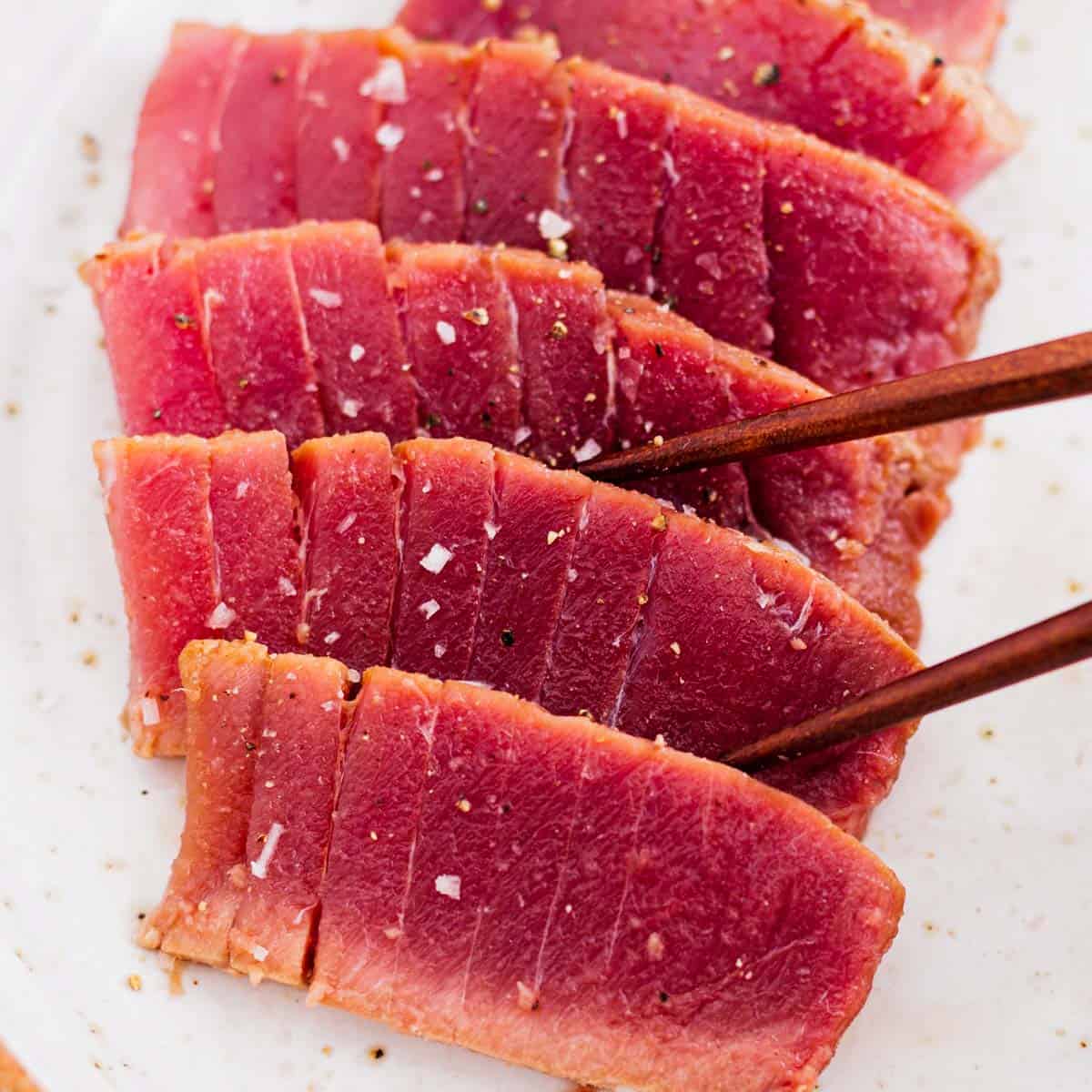 Air fryer frozen tuna steak, cooked in under 15 minutes with no pre-thawing needed
Credit: theyummybowl.com
Air fryer frozen tuna steak, cooked in under 15 minutes with no pre-thawing needed
Credit: theyummybowl.com
Frequently Asked Questions
Can you cook frozen tuna without thawing it first?
Yes, all the methods outlined in this guide work for frozen tuna, with small adjustments to cooking time and temperature. Cooking from frozen saves time, reduces food waste, and often yields a juicier result than thawed tuna.
What cooking methods work best for frozen tuna?
Pan-searing, grilling, baking, and air frying are the best methods for frozen tuna steaks, as they cook quickly at high heat to sear the exterior before the interior thaws. Microwaving works best for flaked tuna, not whole steaks.
How long does it take to cook frozen tuna?
Cooking time varies by method and thickness: pan-searing takes 7–10 minutes total, baking takes 12–20 minutes, grilling takes 7–9 minutes, air frying takes 12–14 minutes, and microwaving takes 3–5 minutes for flaked pieces. Always add 20–30% more time than you would for fresh, thawed tuna.
Is cooking frozen tuna safe to eat?
Yes, as long as you cook it to an internal temperature of 145°F (63°C) per USDA guidelines. Cooking directly from frozen eliminates the risk of bacterial growth from improper thawing.
Can I cook frozen tuna for sushi or poke bowls?
Only if the tuna is labeled sushi-grade and previously frozen to kill parasites (per FDA requirements). Even then, cook it to 145°F if you are unsure of its handling history, or if you are serving vulnerable populations like young children, pregnant people, or immunocompromised individuals.
What if my frozen tuna has ice crystals on it?
Light surface ice is normal and will melt during cooking. Large ice crystals or freezer burn (discolored, dry, leathery patches) indicate the tuna was thawed and refrozen, which damages texture and flavor. Trim off affected areas, or use the tuna in flaked dishes like tuna salad instead of whole steaks.
Final Tips for Perfect Frozen Tuna Every Time
Cooking frozen tuna without thawing is a game-changer for busy home cooks who want a high-protein, delicious meal without the hassle of planning ahead. Remember these key tips for success: always pat the tuna dry before cooking to get a crispy crust, use a food thermometer to check for doneness rather than relying on visual cues alone, let the tuna rest for 2–3 minutes after cooking to lock in juices, and season generously — frozen tuna can handle more flavor than you might expect. Store leftover cooked tuna in an airtight container in the fridge for up to 3 days for quick lunches or dinners. For more quick, no-fuss weeknight meal hacks and kitchen organization tips, explore our guides to make cooking and cleanup even easier.

I’m Abby Lu, a passionate home cook who loves simplifying everyday meals. At PlugChef.com, I share product reviews and cooking guides to help you find the best tools for your kitchen.
Related posts:
 What Oil to Use on Cutting Board: Best Options Revealed
 Is Teak Wood Good for Cooking Utensils: Discover Benefits
 How to Cut Skirt Board for Stair: Expert Tips & Techniques
 Can I Put Wood Cutting Board in Dishwasher? Essential Tips
 First Aid Kit Supplies Refills: Essential Items You Must Restock
 10 Person First Aid Kit: Essential Gear for Emergencies

