
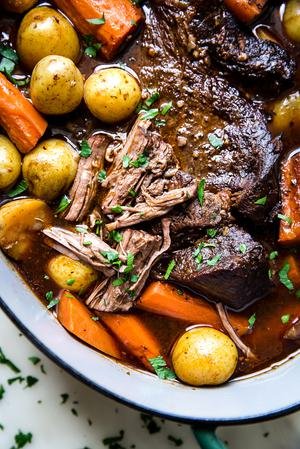
Pot roast is the ultimate cold-weather comfort food: tender, juicy meat piled high with veggies, all soaked in rich, savory gravy. But if you’ve ever pulled a pot roast out of the oven only to find it chewy, dry, or stringy, the problem almost certainly wasn’t your cooking technique – it was the cut of meat you chose. The best pot roast cuts come from hardworking muscles with just the right balance of intramuscular fat and connective tissue, which break down into silky gelatin during low, slow cooking to create that signature fall-apart texture. In this guide, we’ll break down the top cuts for pot roast, their unique flavor profiles, and pro tips to get perfect results every time, plus common mistakes to avoid. For even more tested comfort food recipes and kitchen hacks, browse our full cooking archive for inspiration for your next meal.
Why Your Cut Choice Makes or Breaks Pot Roast
Pot roast relies on a cooking method called braising: cooking meat partially submerged in liquid at low temperatures for 2 to 4 hours, depending on the cut. The key to successful braising is choosing a cut with two non-negotiable traits:
- Sufficient connective tissue (collagen): Found in muscles that get regular use, like the shoulder or chest, collagen is the tough, chewy component most home cooks try to avoid. But when cooked low and slow, collagen melts into gelatin, which adds moisture, richness, and that signature tender, melt-in-your-mouth texture.
- Intramuscular fat (marbling): Fat running through muscle fibers bastes the meat from the inside as it cooks, keeping it juicy even after hours of heat. Cuts with little to no marbling will dry out quickly, no matter how long you cook them.
Lean cuts from the loin or tenderloin, which have almost no connective tissue, are designed for quick, high-heat cooking like grilling or pan-searing. Cooking them low and slow will just dry them out, as there’s no collagen to break down into moist gelatin. A common mistake home cooks make is grabbing a lean "pot roast" labeled cut from the round, expecting fall-apart results – it will almost always turn out chewy unless sliced extremely thin against the grain.
Top 5 Best Meats for Pot Roast
Each of these cuts has the ideal balance of connective tissue and marbling for slow braising, with unique flavor profiles and price points to suit every budget and meal.
1. Chuck Roast
The undisputed gold standard for pot roast, chuck roast is cut from the cow’s hardworking shoulder area, between the neck and rib primal. It has a generous marbling of fat and a thick layer of connective tissue, making it extremely forgiving for beginners and delivering a rich, beefy flavor that stands up to bold seasonings and long cook times. As of 2026, chuck roast averages $4 to $7 per pound at most US grocery stores, making it a budget-friendly option for family meals.
Pro tip: Ask your butcher for a chuck eye roast if you want a slightly more tender, leaner version, or a cross-rib roast for extra marbling and depth of flavor. Leave a 1/4-inch fat cap on the roast when cooking to baste the meat as it braises, adding extra juiciness.
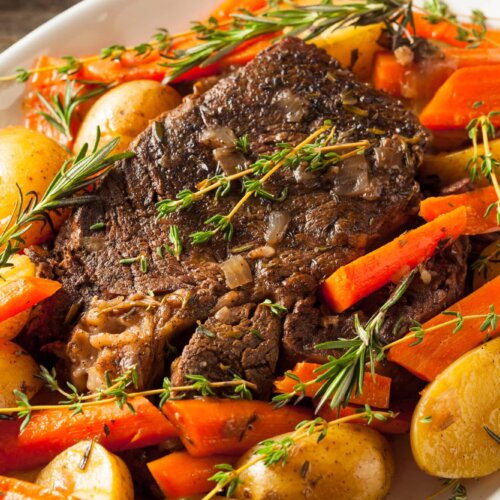 This cut’s high collagen content breaks down into rich gelatin during slow cooking for ultra-tender results.
Credit: www.mychicagosteak.com
This cut’s high collagen content breaks down into rich gelatin during slow cooking for ultra-tender results.
Credit: www.mychicagosteak.com
2. Beef Brisket
Cut from the cow’s lower chest, brisket is a tough, well-marbled cut that delivers an unbeatable deep, smoky, beefy flavor when cooked low and slow. It comes in two subtypes: the flat cut, which is leaner, more uniform, and ideal for slicing, and the point cut, which is fattier, more heavily marbled, and perfect for shredding. Brisket averages $5 to $9 per pound as of 2026, making it a great choice for special occasion pot roasts.
Brisket requires a slightly longer cook time than chuck (3 to 4 hours, depending on size) to fully break down its dense connective tissue. Pro tip: Trim excess hard fat to 1/8 inch to avoid a greasy final dish, but leave enough fat to render down and add flavor to your braising liquid. For extra depth, smoke the brisket for 2 hours at 225°F before transferring it to the oven to braise.
3. Round Roast (Top or Bottom)
Cut from the cow’s hindquarter, round roast is an extremely lean, affordable option for pot roast, averaging $2.50 to $5 per pound in 2026. It has a mild, subtle beef flavor that takes on braising liquids, herbs, and seasonings extremely well, making it a great canvas for bold flavor profiles. Top round is slightly leaner and more uniform, while bottom round has small amounts of marbling that help keep it moist during cooking.
Round roast is less forgiving than chuck or brisket, as its low fat and collagen content means it can dry out quickly if overcooked. Pro tip: Sear the roast extremely well on all sides to lock in moisture, and cook it only to an internal temperature of 195°F (not higher) to avoid toughness. Always slice it paper-thin against the grain for the best texture.
4. Short Ribs (Bone-In or Boneless)
For a rich, indulgent pot roast that feels like a special occasion, short ribs are the perfect pick. Cut from the chuck or plate primal, short ribs are packed with connective tissue and fat, delivering an ultra-tender, fall-apart texture and deep, beefy flavor after 3 to 4 hours of braising. Bone-in short ribs add extra collagen to the braising liquid, creating a richer, more velvety gravy. Short ribs average $8 to $12 per pound, making them a premium option for weekend meals.
Pro tip: If you’re short on time, you can pressure cook short ribs for 45 minutes to achieve the same tender results in a fraction of the time.
5. Bonus Non-Beef Pot Roast Cuts
While beef is the most popular choice for pot roast, the same slow-braising principle works beautifully for other meats with high connective tissue and marbling:
- Pork shoulder (Boston butt): Cut from the pig’s shoulder, it has generous marbling and connective tissue, delivering juicy, pull-apart pork perfect for sandwiches or tacos. Average price $3-$6 per pound.
- Lamb shoulder: Rich, gamey, and tender when braised, it pairs perfectly with Mediterranean herbs like rosemary and garlic. Average price $6-$10 per pound.
- Venison shoulder: Leaner than beef, but with enough connective tissue to become tender when braised, ideal for game meat lovers. Average price $7-$12 per pound.
Pro Tips to Maximize Tenderness and Flavor
The right cut is only half the battle – these tested, expert tips will take your pot roast from good to great.
Prep Steps That Make a Difference
Start by patting your roast completely dry with paper towels before searing: a dry surface will develop a deep, golden-brown crust from the Maillard reaction, which adds 80% of the savory, complex flavor associated with pot roast. Always start by trimming excess hard fat on a properly sanitized cutting board to avoid cross-contamination, then leave a thin fat cap on to render down during cooking. Use a heavy, rust-free cookware option like a Dutch oven or heavy-bottomed pot for even heat distribution, which prevents hot spots that can burn the meat before it’s tender.
Braising Liquid and Seasoning
Don’t just use water for your braising liquid – a mix of beef broth, a splash of red wine or apple cider vinegar (the acid helps break down collagen faster), and aromatics like onion, garlic, carrots, and celery will add layers of flavor. Add herbs like thyme, rosemary, and bay leaves for earthy depth, plus umami boosters like Worcestershire sauce, soy sauce, or a tablespoon of tomato paste to round out the flavor. The liquid should come 1/3 to 1/2 way up the side of the roast, not fully cover it, so it braises instead of boiling, which would toughen the muscle fibers.
Cooking Time and Temperature
Low and slow is non-negotiable for tender pot roast. Cook at an oven temperature of 275°F to 325°F, or on the low setting of a slow cooker (200°F to 250°F). Cook the roast until it reaches an internal temperature of 190°F to 205°F, per FDA safe cooking guidelines for beef cuts. Carryover cooking will raise the internal temperature by 5 to 10 degrees after you pull the roast out of the oven, so remove it slightly before it hits your target temp. Let the roast rest for 15 to 20 minutes before slicing to let the juices redistribute throughout the meat.
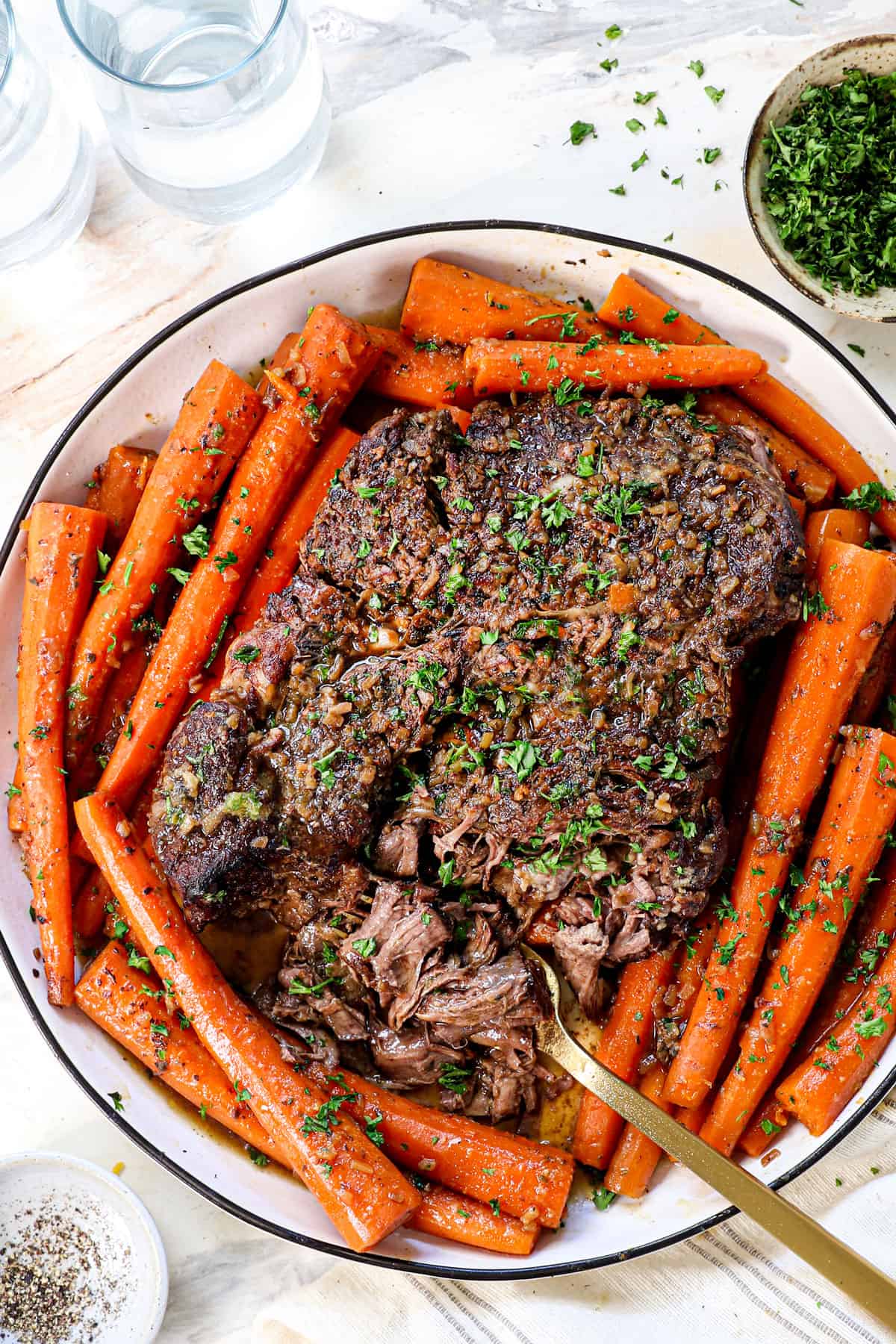 Low, steady heat (275°F to 325°F) ensures connective tissue melts without drying out the meat.
Credit: carlsbadcravings.com
Low, steady heat (275°F to 325°F) ensures connective tissue melts without drying out the meat.
Credit: carlsbadcravings.com
Slicing and Serving
Always slice your pot roast against the grain, which shortens the tough muscle fibers and makes every bite far more tender. For cuts like chuck or bottom round that you plan to slice, identify the direction of the muscle fibers and cut perpendicular to them. For shredding cuts like brisket or short ribs, use two forks to pull the meat apart, discarding any excess fat or connective tissue that didn’t break down during cooking. Slice your rested meat on a well-maintained cutting board for clean, even slices.
Common Pot Roast Mistakes to Avoid
Even experienced cooks run into these pitfalls – avoid them to guarantee tender, flavorful results every time.
Choosing overly lean cuts
Lean cuts like sirloin, tenderloin, or plain top round have almost no connective tissue or marbling, so they have nothing to break down into gelatin during cooking. No matter how long you cook them, they will turn out dry and chewy. Stick to cuts from the shoulder, chest, or hindquarter with visible marbling for the best results.
Cooking on too high heat
Cooking your pot roast at temperatures above 350°F will cause the muscle fibers to seize up and toughen, rather than slowly breaking down. It will also cause the liquid to boil rapidly, drying out the meat. Stick to 275°F to 325°F for oven braising, or the low setting on a slow cooker.
Skipping the sear
While searing isn’t strictly required for tenderness, skipping it will leave you with a bland, gray-colored roast with none of the deep, savory flavor you expect from pot roast. Take 5 minutes to sear the roast on all sides in a hot, oiled Dutch oven before adding your liquid and aromatics. This process, confirmed in USDA beef cut guidance, is a core step for building deep, complex flavor in braised dishes.
Not resting the meat
Cutting into your roast immediately after taking it out of the oven will let all the accumulated juices run out onto your cutting board, leaving the meat dry. Always let it rest for at least 15 minutes, tented loosely with foil, to let the juices redistribute throughout the meat.
Overcooking the roast
While pot roast needs a long cook time, cooking it for too long will cause the muscle fibers to break down completely, leaving you with mushy, stringy meat that falls apart too easily. Use a meat thermometer to monitor doneness, and pull the roast as soon as it hits 190°F to 205°F.
Pairing, Storage, and Serving Tips
A great pot roast is only half the meal – these tips will help you round out your spread and avoid food waste.
Side Dish Pairings
Pot roast’s rich, savory flavor pairs perfectly with starchy, comforting sides: creamy mashed potatoes, buttered egg noodles, roasted root vegetables (carrots, parsnips, potatoes), or crusty sourdough bread to soak up extra gravy. For a quick, flavorful side, pair your roast with easy roasted side dishes like these spicy roasted peppers for a bright, slightly spicy contrast.
Storage and Reheating
Leftover pot roast keeps in an airtight container in the refrigerator for 3 to 4 days, or in the freezer for up to 3 months. To reheat, avoid the microwave if possible, as it will dry out the meat. Instead, reheat gently on the stovetop over low heat with a splash of beef broth, or in a 325°F oven covered with foil for 15 to 20 minutes.
Frequently Asked Questions
What cuts of meat are best for pot roast?
The most popular, reliable cuts for pot roast are chuck roast, brisket, bottom round roast, and short ribs. All have high levels of connective tissue and marbling that break down into gelatin during slow cooking, creating tender, juicy results. For beginners, chuck roast is the most forgiving option, as it has a wide window of doneness and delivers consistent results even with minor cooking variations.
How does marbling affect pot roast quality?
Marbling is the intramuscular fat running through the meat’s muscle fibers. As the roast cooks, this fat melts and bastes the meat from the inside, keeping it moist and adding rich, buttery flavor. Cuts with more marbling will always be juicier and more flavorful than lean cuts, even when cooked for the same amount of time.
Can you use brisket for pot roast?
Yes, brisket is an excellent choice for pot roast, especially if you want a rich, deeply flavored dish. Its high connective tissue content breaks down beautifully during braising, creating ultra-tender, flavorful meat. Brisket works best for pot roast when cooked for 3 to 4 hours, and is ideal for slicing or shredding depending on the cut you buy.
Is chuck roast better than round roast for pot roast?
For most home cooks, yes: chuck roast is more forgiving, has more marbling, and delivers a richer, juicier final dish with less risk of drying out. Round roast is a great lean, budget-friendly alternative, but it has a narrower window of doneness and requires more careful monitoring to avoid toughness.
Can I make pot roast in a slow cooker instead of the oven?
Absolutely! Brown the roast first on the stovetop to develop flavor, then transfer it to a slow cooker with your braising liquid, aromatics, and vegetables. Cook on low for 8 to 10 hours, or on high for 4 to 6 hours. Note that slow cookers run at lower temperatures than ovens, so adjust cook times accordingly, and avoid lifting the lid during cooking, as it releases heat and extends the cook time.
Why is my pot roast tough even after cooking for 6 hours?
The most common causes are using a lean cut with little connective tissue, cooking on too high heat (which sears the muscle fibers instead of breaking them down), or not cooking it long enough to reach 190°F internal temperature. Tougher cuts like brisket or round may need up to 8 hours of braising to become tender.
Final Thoughts
The cut of meat you choose is the single most important factor in making a perfect pot roast. For beginners, chuck roast is the most reliable, forgiving option that delivers consistent, flavorful results. If you’re cooking for a special occasion, brisket or short ribs add extra richness and indulgence, while round roast is a great lean, budget-friendly pick for everyday meals.
No matter which cut you choose, remember to cook low and slow, sear the meat first for extra flavor, and let it rest before slicing to keep it juicy. For more easy, tested comfort food recipes to round out your meal, check out our full cooking archive for ideas for appetizers, sides, and desserts to pair with your pot roast.
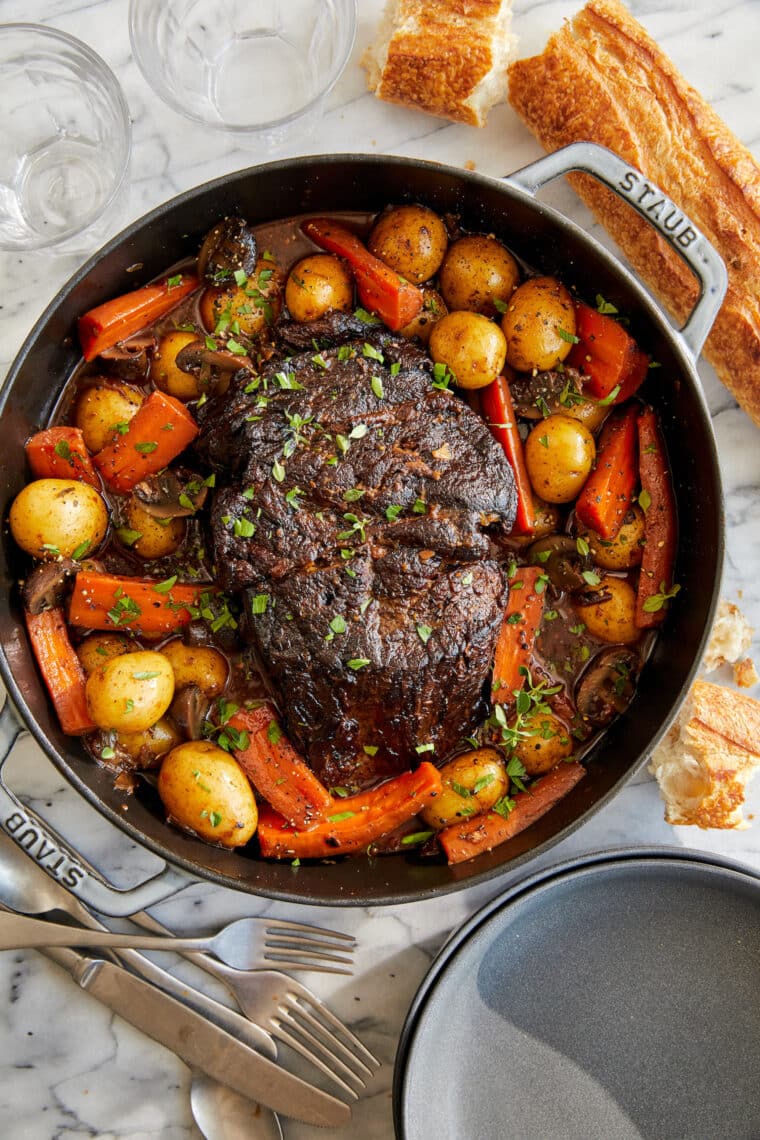 Always slice against the grain to shorten muscle fibers for a more tender bite.
Credit: damndelicious.net For more kitchen tips and foolproof recipes to simplify your cooking routine, browse our collection of kitchen guides for trusted, easy-to-follow advice for every meal.
Always slice against the grain to shorten muscle fibers for a more tender bite.
Credit: damndelicious.net For more kitchen tips and foolproof recipes to simplify your cooking routine, browse our collection of kitchen guides for trusted, easy-to-follow advice for every meal.

I’m Abby Lu, a passionate home cook who loves simplifying everyday meals. At PlugChef.com, I share product reviews and cooking guides to help you find the best tools for your kitchen.
Related posts:
 How to Make a Fruit Basket for a Gift: Easy DIY Guide
 Do You Need a Basket? Essential Guide for Air Fryers
 Small Kitchens With Black Appliances: Maximizing Style
 Allied Blenders And Distillers IPO: Investment Insights
 Whirlpool 4 Piece Kitchen Appliance Package: Ultimate Upgrade
 Kitchen Sink Cleaning: Ultimate Tips for a Sparkling Shine

