
There’s nothing quite like a whole sweet potato pulled hot off the grill: smoky, caramelized, and tender enough to melt in your mouth, with a crispy, blistered skin that adds just the right amount of crunch. Unlike baked or roasted sweet potatoes, grilling infuses them with a deep, woodsy flavor that makes them the perfect summer side dish for cookouts, weeknight dinners, or even meal prep.
You don’t need fancy equipment or complicated recipes to pull this off, either. Even first-time grillers can get consistently perfect results with a few simple, tested tips. This guide covers everything from picking the right varieties to troubleshooting common mishaps, so you can serve restaurant-quality grilled sweet potatoes every time.
Choosing the Best Sweet Potatoes for Grilling
Picking the right sweet potato is the first step to perfect results. Different varieties vary in moisture content, sweetness, and density, which impacts how they hold up to high grill heat and how their flavor develops.
Top Varieties for Grill Success
While most sweet potatoes work on the grill, some varieties perform far better than others:
- Beauregard: The most common grocery store variety, with bright orange flesh, medium sweetness, and a dense texture that holds its shape well during long cooks.
- Garnet: Deep orange, extra-sweet flesh with a creamy texture, perfect for serving as a standalone side or loading with toppings.
- Japanese (Satsumaimo): Drier, nuttier, and firmer than other varieties, with pale yellow flesh. It holds its structure extremely well, making it ideal if you prefer a less mushy texture.
- Hannah: A heirloom variety with pale yellow, mildly sweet flesh and an earthy, nutty flavor that pairs well with savory seasonings.
Common grocery store varieties like Beauregard and Garnet are widely studied for their flavor and texture profiles by the USDA Agricultural Research Service.
Size and Freshness Guidelines
Stick to medium-sized sweet potatoes, 6 to 8 ounces each, for the most consistent cooking. Large potatoes over 12 ounces can take 75 minutes or longer to cook through, while small potatoes under 4 ounces often dry out before the flesh is tender.
When selecting sweet potatoes, look for firm, unblemished skin with no soft spots, cracks, or sprouts. Avoid any with visible mold or a shriveled appearance, as these will have lost moisture and flavor during storage. You do not need to peel sweet potatoes before grilling: the skin protects the flesh during cooking, becomes crispy and edible on the grill, and is packed with fiber and nutrients.
Prep Work for Perfect Grilled Sweet Potatoes
Proper prep ensures even cooking and maximizes the natural sweetness of the potato. These steps take less than 10 minutes and make a huge difference in your final result.
Washing and Prepping the Skin
Rinse sweet potatoes under cool running water, then scrub the skin thoroughly with a stiff vegetable brush to remove dirt, debris, and any waxy coating applied during commercial shipping. Pat the potatoes completely dry with a clean kitchen towel before moving on — excess moisture on the skin will create steam that prevents crispy charring.
Before preheating, scrub your grill grates clean with a heavy-duty scrub brush to remove leftover food debris that could stick to sweet potato skin.
Piercing, Oiling, and Seasoning
Use a fork to poke 4 to 6 deep holes all over each sweet potato, covering the top, bottom, and sides. This lets steam escape during cooking to prevent the potato from bursting, and helps heat reach the center faster for more even cooking.
Brush each potato lightly with a high-smoke-point oil (avocado, grapeseed, or canola work best) to prevent the skin from drying out and help seasoning stick. For a simple, flavorful base, sprinkle with kosher salt and freshly ground black pepper. For extra depth, try a rub made with smoked paprika, garlic powder, a pinch of brown sugar, and a dash of cayenne.
Foil Wrapping vs. Unwrapped Grilling
You can grill sweet potatoes either wrapped in foil or unwrapped, depending on your texture preference:
- Foil-wrapped: Wrap each potato tightly in heavy-duty aluminum foil, adding a pat of butter or a drizzle of maple syrup inside for extra sweetness. This method produces super tender, almost candied flesh and prevents the skin from charring, perfect for serving to kids or anyone who dislikes crispy skin.
- Unwrapped: Leave the potatoes bare for a crispy, smoky skin and firmer flesh. Turn them more frequently to avoid burning, and keep grill temperatures on the lower end of the recommended range.
If you prep sweet potatoes up to 24 hours in advance, store them in an airtight container in the fridge, and let them come to room temperature for 20 minutes before grilling for more even cooking.
 Credit: kitchenlaughter.com
Foil wrapping locks in moisture for tender, evenly cooked flesh, even on high-heat grills.
Credit: kitchenlaughter.com
Foil wrapping locks in moisture for tender, evenly cooked flesh, even on high-heat grills.
Grill Setup and Temperature Control
Grill setup is the make-or-break step for avoiding burnt exteriors and raw centers. A common mistake new grillers make is cranking the heat to high, thinking it will speed up cooking, but this almost always leads to a ruined potato.
Direct vs. Indirect Heat: Which to Use
- Direct heat: Place the sweet potato directly over the flame or hot coals. This creates a fast, intense char on the skin, but requires turning the potato every 2 to 3 minutes to avoid burning. It’s best for small sweet potatoes or if you only want a light smoky flavor.
- Indirect heat: Place the potato on the cooler side of the grill, away from direct flames or coals. This is the foolproof method for most home grillers, as it cooks the potato slowly and evenly without risking burnt skin. In practice, 90% of grilled sweet potato failures come from using direct heat on medium or large potatoes.
For gas grills, preheat all burners to medium for 10 minutes, then turn off one burner to create an indirect heat zone. For charcoal grills, pile all coals on one side of the grill, leaving the other side empty for indirect heat.
For evidence-based guidance on safe grilling temperatures and produce handling, consult the University of Minnesota Extension's grilling safety resources.
Optimal Temperature for Even Cooking
Aim for a steady grill temperature between 375°F and 400°F for the best results. This range is hot enough to caramelize the natural sugars in the sweet potato for deep, sweet flavor, but low enough to cook the flesh through without burning the exterior.
Use a leave-in grill thermometer to monitor temperature accurately, as most built-in grill thermometers are notoriously unreliable. If your grill runs hot, lower the temperature by 25°F and extend cooking time slightly to avoid burning.
Step-by-Step Grilling Process
Once your grill is preheated and your sweet potatoes are prepped, the actual grilling process is low-effort, but requires a little patience to get right.
Placing and Positioning on the Grill
Place sweet potatoes directly on the grill grates over indirect heat, leaving 2 inches of space between each potato for air circulation. If you wrapped them in foil, you can place them closer together. For extra smoke flavor, add a small handful of soaked apple or cherry wood chips to the coals (for charcoal grills) or a smoker box (for gas grills) at the start of cooking. Avoid hickory wood, as its strong, bitter flavor will overpower the sweet potato’s natural sweetness.
Cooking Time by Size
Cook time varies based on the size of your sweet potatoes and your grill’s temperature consistency:
- 4–6 oz (small): 35–45 minutes
- 6–8 oz (medium): 45–55 minutes
- 10–12 oz (large): 60–70 minutes
- Over 12 oz (extra-large): 75–90 minutes
Keep the grill lid closed for the entire cook time, only opening it to turn the potatoes every 15 to 20 minutes. Opening the lid releases heat and can extend cook time by 10 minutes or more.
Testing for Perfect Doneness
The only way to know for sure your sweet potato is fully cooked is to test the internal temperature: insert an instant-read thermometer into the thickest part of the potato, and look for a reading of 205°F. This is the optimal temperature for tender, fluffy, maximally sweet flesh.
If you don’t have a thermometer, insert a fork or skewer into the thickest part of the potato. It should slide in with zero resistance, like it’s piercing soft butter. If the skin is getting overly charred before the potato reaches 205°F, wrap it loosely in foil for the final 10 to 15 minutes of cooking to protect the exterior.
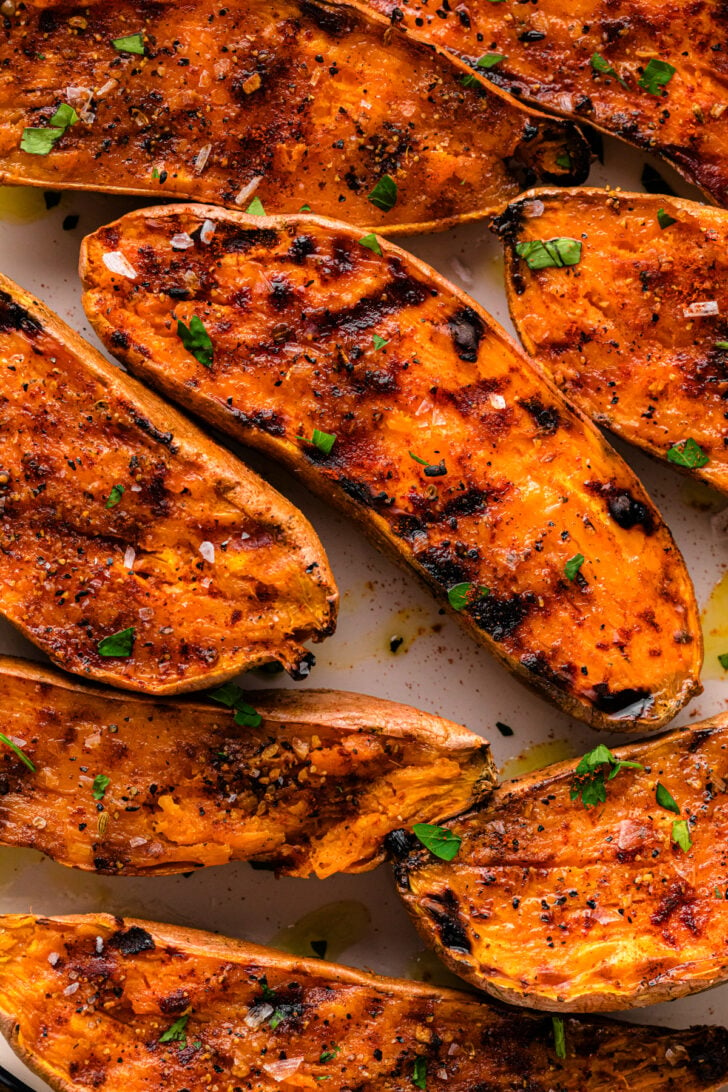 Credit: www.asouthernsoul.com
A perfectly grilled sweet potato has tender, caramelized flesh and a slightly crisp, smoky skin.
Credit: www.asouthernsoul.com
A perfectly grilled sweet potato has tender, caramelized flesh and a slightly crisp, smoky skin.
Flavor Boosters and Serving Ideas
Grilled sweet potatoes are delicious on their own, but a few simple additions can take them from good to unforgettable.
Savory and Sweet Rubs and Glazes
For a flavor boost, apply rubs or glazes during the last 10 minutes of grilling so they don’t burn:
- Savory smoked rub: Mix 1 tablespoon smoked paprika, 1 teaspoon garlic powder, 1 teaspoon kosher salt, 1/2 teaspoon cumin, and 1/4 teaspoon cayenne. Rub all over the potato before grilling for a crispy, spicy crust.
- Maple-chipotle glaze: Whisk together 2 tablespoons maple syrup, 1 tablespoon melted butter, 1 teaspoon chipotle powder, and a pinch of salt. Brush over the potato during the last 5 minutes of cooking for a sweet, smoky, slightly spicy finish.
You can also marinate whole sweet potatoes for up to 4 hours in the fridge before grilling: a mix of olive oil, lime juice, honey, and rosemary works beautifully for a bright, herbaceous flavor.
Toppings and Pairing Ideas
Once grilled, split the sweet potatoes open and fluff the flesh with a fork before adding toppings:
- For a quick weeknight side: top with a pat of butter, a sprinkle of cinnamon, and a dash of brown sugar.
- For a savory main: load with black beans, corn, diced avocado, and a squeeze of lime for a hearty, vegetarian bowl.
- For a fancy appetizer: top with crumbled goat cheese, toasted pecans, and a drizzle of balsamic glaze.
- For a summer dessert: add mini marshmallows and a sprinkle of sea salt, then place back on the grill for 1 minute to melt the marshmallows.
When splitting open cooked sweet potatoes to add toppings, use a sturdy cutting board to protect your countertops from heat and crumbs.
For a full backyard barbecue spread, pair grilled sweet potatoes with a homemade charcuterie board featuring cured meats, cheese, and fresh fruit.
 Credit: lingeralittle.com
Grilled sweet potato rounds make a versatile appetizer, salad topper, or side dish when finished with fresh toppings.
Credit: lingeralittle.com
Grilled sweet potato rounds make a versatile appetizer, salad topper, or side dish when finished with fresh toppings.
Troubleshooting Common Grilling Issues
Even experienced grillers run into issues with sweet potatoes sometimes. Here’s how to fix the most common problems:
Fixing Burnt Skin
Burnt skin is almost always caused by grill temperatures that are too high, or placing the potato directly over open flames. To fix it mid-cook: wrap the potato loosely in foil and move it to the coolest part of the grill for the remaining cook time. To avoid it entirely, keep grill temperatures below 400°F, and stick to indirect heat for medium and large potatoes.
Resolving Undercooked Centers
If the potato’s exterior is perfectly charred but the center is still firm, lower the grill temperature to 350°F, wrap the potato in foil, and cook for another 15 to 20 minutes. Never crank the heat higher to speed up cooking, as this will burn the outside before the inside is tender.
Avoiding Mushy, Watery Flesh
Mushy, watery flesh usually comes from two sources: using a freshly harvested, uncured sweet potato (which has higher water content than cured grocery store varieties), or piercing the potato too many times, which lets excess moisture escape. Stick to cured sweet potatoes from the grocery store, and only pierce 4 to 6 times with a fork before grilling.
After cooking, clean your grill grates and kitchen surfaces with a versatile cleaning brush to dissolve stuck-on grease and seasoning residue.
Keep a dedicated grill brush set stored near your grill for fast, easy cleanup after every cookout.
Frequently Asked Questions
How long does it take to grill a whole sweet potato?
Cook time varies by size: small 4–6 oz sweet potatoes take 35–45 minutes, medium 6–8 oz take 45–55 minutes, and large 10–12 oz take 60–70 minutes. Always test for doneness with a thermometer or fork rather than relying solely on time.
Should I wrap sweet potatoes in foil before grilling?
Foil wrapping is optional, and depends on your texture preference. Wrapping produces tender, almost steamed flesh and prevents the skin from charring, while unwrapped grilling gives a crispy, smoky skin. Both methods produce delicious results.
What is the best grill temperature for sweet potatoes?
Aim for a steady 375°F to 400°F for even cooking without burning. Use a leave-in thermometer to monitor temperature, as most built-in grill thermometers are inaccurate.
Can I grill sweet potatoes without a grill?
Yes! To replicate grilled flavor in an oven, place sweet potatoes on a baking sheet under the broiler for 5–7 minutes per side to char the skin, then finish baking at 400°F for 45–60 minutes until tender. Add a dash of smoked paprika or a few drops of liquid smoke to your seasoning rub for a smoky flavor without a grill.
How do I know when a grilled sweet potato is done?
Insert an instant-read thermometer into the thickest part of the potato — it should read 205°F for perfect, tender flesh. If you don’t have a thermometer, a fork or skewer should slide in with zero resistance.
Final Tips for Grilled Sweet Potato Success
Grilling a whole sweet potato is one of the easiest, most flavorful ways to prepare this versatile vegetable. By picking the right variety, prepping properly, using indirect heat, and testing for doneness, you’ll avoid common mishaps and get perfect results every time.
Grilled sweet potatoes work as a healthy summer side, a vegetarian main, or even a dessert when topped with sweet garnishes. Experiment with different seasonings, woods, and toppings to find your favorite combination — the possibilities are endless.
If you found this guide helpful, explore our collection of easy grill recipes and kitchen tool reviews to make your next cookout stress-free and delicious.

I’m Abby Lu, a passionate home cook who loves simplifying everyday meals. At PlugChef.com, I share product reviews and cooking guides to help you find the best tools for your kitchen.
Related posts:
 Yogurt Instead of Sour Cream: Healthy Swaps You’ll Love
 Real Jamaican Rum Punch Recipe: Authentic, Refreshing & Easy
 How to Gift Wrap Cookies: Creative Ideas for Perfect Presents
Side Dishes for Beef Tenderloin: Perfect Pairings to Impress
How to Gift Wrap Cookies: Creative Ideas for Perfect Presents
Side Dishes for Beef Tenderloin: Perfect Pairings to Impress
 Whipping Cream With Hand Mixer: Easy Steps for Perfect Peaks
 True Jamaican Rum Punch Recipe: Authentic & Refreshing Delight

