
A clean knife is safer, more hygienic, and stays sharper longer. Washing a knife correctly is about more than soap and water — it’s about protecting the edge, preventing rust, and avoiding accidents. This guide gives precise, practical steps and troubleshooting for every common knife type, plus the tools and routines pros use to keep blades spotless and serviceable.
 Credit: www.onegoodthingbyjillee.com
Quick overview: What you need and why it matters
- Tools: soft sponge, narrow cleaning brush, mild dish soap, clean dry towel.
- Avoid: steel wool, abrasive pads, dishwashers (for most quality knives).
- Key moments: wash right after use for sticky or acidic foods; sanitize after raw meat or poultry contact.
- Routine: wipe-dry immediately, store where edges don’t touch other utensils.
If you handle food, follow general food-safety guidance from public health authorities like the CDC for minimizing cross-contamination when cleaning kitchen tools.
Tools and materials: what to use — and what to avoid
Choose tools that remove residue without harming the edge or finish.
What to use
- Soft cellulose or microfiber sponge (non-abrasive surface).
- Narrow cleaning brush for serrations, bolsters, and rivets — a good option is a narrow cleaning brush.
- Mild liquid dish soap (look for non-corrosive options; see this guide to mild dish soap).
- A lint-free towel for immediate drying — see tips about the clean kitchen towel.
What to avoid
- Steel wool, metal scouring pads, and coarse powders — they scratch and dull.
- Highly alkaline or chlorinated cleaners directly on high-carbon steel.
- Long soaking, especially for wooden handles or carbon steel blades.
Common mistake (in practice): using a bulky abrasive sponge on a narrow blade. It removes grime but also micro-serrations and finish.
 Credit: www.reddit.com
Safe, step-by-step washing process
Follow these steps every time for safety and blade care.
Clear and organize the sink area
- Remove stacked dishes and glassware to avoid accidental cuts.
- If a garbage disposal or drain trap is nearby, keep the nozzle off while working (see drain care tips at drain care tips).
Rinse off loose debris
- Run warm (not scalding) water over the blade to remove loose food. Warm water is enough to help soap work and is gentler on handle adhesives.
Apply soap to the sponge — never your hand
- Lather a small amount of mild soap on the sponge or cloth. Gently scrub from the spine toward the edge (base to tip) — moving the abrasive away from the edge minimizes the chance of pushing grit into the edge.
Clean serrations and handle areas
- Use a narrow cleaning brush to work into serrations, the bolster, rivets, or where the blade meets the handle.
Rinse thoroughly
- Remove all soap residue under running water. Residual soap can make handles slippery.
Dry immediately
- Wipe blade and handle dry right away with a clean towel to prevent spotting or rust.
Store appropriately
- Only store once fully dry (see storage options below).
Pro tip: hold the knife by the handle with the blade facing away from you; use the non-cutting face of the sponge rather than trying to push a sponge edge along the sharp edge. A common mistake is cleaning with a loose cloth in the opposite direction, which increases cut risk.
Credit: www.victorinox.com
Sanitizing vs. washing: when you need both
Washing removes visible dirt and food residue; sanitizing reduces bacteria counts on surfaces. Use sanitizing after contact with raw meat, seafood, or when preparing for immunocompromised people.
- For routine washing: warm water + soap + immediate drying is sufficient.
- For sanitizing: after washing, you can use a food-safe sanitizer solution (follow product directions). Public-health guidance suggests extra caution when raw animal products are involved — consult resources like the USDA for safe food handling steps.
Note: Avoid bleach directly on decorative or carbon-steel finishes — it can pit or discolor metal. If you must sanitize with household bleach, dilute and rinse thoroughly, then dry immediately.
Special blade and handle types: tailored care
Serrated blades
- Brush between teeth with a narrow brush; avoid hard scrubbing that flattens teeth.
- Dry carefully and don’t store serrated edges rubbing against other metal.
Carbon-steel blades
- Carbon steel is more reactive: dry immediately and lightly oil after cleaning if storing long-term (food-grade mineral oil is safe — see how to apply mineral oil).
- Avoid acidic soak (lemon, vinegar) for long periods; acids accelerate patina/rust on carbon steel.
Stainless steel
- More resistant to rust but still benefits from immediate drying. If water spots appear, polish gently with a soft cloth.
Wood-handled knives
- Never soak. Wipe handle with damp cloth and dry fully. Periodically treat wooden handles the way you would a board: apply mineral oil.
Pocket and outdoor knives
- Clean grit and sap promptly. Lubricate pivot points after cleaning and avoid household dishwashers which can trap moisture.
Drying and storage: protect the edge and protect people
Drying technique
- Pat or wipe the blade from spine to edge — keep your fingers away from the cutting edge.
- Air-dry only if the knife is positioned so water drains away and the edge won’t contact surfaces.
Storage options
- Knife block — keep blades separate and upright (see a typical knife block).
- Magnetic strip — mounted high and away from heavy traffic; ensure a safe, strong magnetic hold.
- Drawer insert or blade guards — ideal when space is limited; blade guards protect edges and hands.
Avoid tossing knives in a mixed drawer — it dulls edges and creates hazards.
Dishwasher: why you usually shouldn’t
Dishwashers expose knives to high heat, strong jets, and harsh detergents — all factors that can dull, pit, or loosen handles. For most forged or good-quality stamped knives, hand-washing is the recommended approach. If you must use a dishwasher (low-quality utility knives), place knives blade-down in a secured rack and remove them immediately to dry.
Troubleshooting common problems
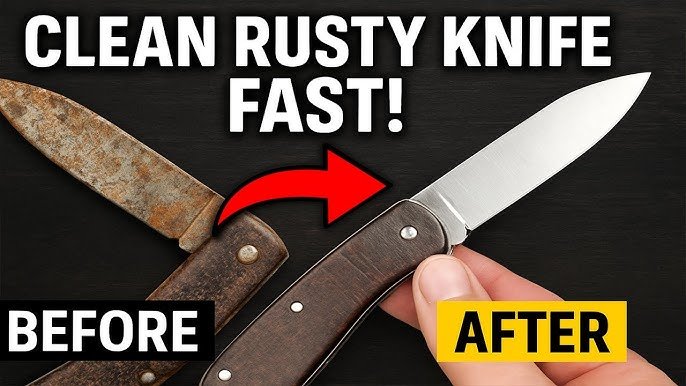
Rust or tiny brown spots
- Clean with a paste of baking soda and water; rub gently with a soft cloth following the blade grain.
- For stubborn rust on stainless blades, use a non-abrasive metal polish per manufacturer guidance.
Sticky residues (sap, sugar, cheese)
- Soak a soft cloth in warm water and cover the affected area for a few minutes, then wipe; avoid soaking the full knife if it has a wooden handle.
Dull edge after repeated hand-washing
- Frequent mishandling or contact with ceramic or bones dulls edges. Re-hone regularly and sharpen when necessary using a proper sharpening system or stones (see stone grit).
Handle loosening
- Tighten rivets or screws if present; for full-tang knives, periodic maintenance helps. If a handle is damaged, stop using the knife until repaired.
Prevent clogs and smells in your sink drains by routinely following sink-care steps at sink & disposal.
Maintenance schedule: daily to annual checklist
Daily
- Rinse, wash, dry after use; hone briefly before or after use if you cut a lot.
Weekly
- Inspect edges and handles; remove spots and oil wooden handles if needed.
Monthly
- Test sharpness; sharpen or send to a pro if edges roll or are noticeably dull.
Annually
- Full service for high-use knives: professional sharpening or re-profile as needed. For at-home sharpening, consider quality sharpening tools that match your knife type.
In practice, a simple habit — wash, dry, hone — prevents most issues and keeps knives performing well.
Frequently asked questions
Q: Is it OK to wash knives immediately after cutting raw meat? A: Yes — wash with warm soapy water, rinse, and dry immediately. After washing, sanitize cutting boards and other surfaces per CDC food safety practices (CDC). Avoid moving the knife around crowded sinks while soapy.
Q: Can I use a dishwasher-safe knife in the dishwasher? A: Even if a knife is labeled dishwasher-safe, hand-washing extends life and preserves handles. Dishwashers can dull edges and loosen handles over time.
Q: How should I clean my serrated bread knife? A: Use a narrow brush and sponge, working between serrations. Dry carefully and store where it won’t rub against other tools.
Q: How do I remove rust without damaging the edge? A: Use a baking soda paste and a soft cloth, rubbing gently along the grain. If rust persists, consult a professional or use a mild metal polish according to manufacturer instructions.
Q: What’s the difference between honing and sharpening? A: Honing realigns the edge and is done often with a honing rod. Sharpening removes metal to form a new edge and is done less frequently with stones or professional tools — see our sharpening system suggestions and stone grit guide.
Conclusion
Washing a knife safely and effectively is a small habit that pays big dividends: less risk of injury, fewer bacteria, and longer blade life. Use non-abrasive tools, wash and dry promptly, sanitize when needed, and adopt a simple maintenance routine (hone often; sharpen selectively). These steps keep your knives performing reliably for years.
Bookmark this guide and test these steps on your next clean — your knives (and fingers) will thank you.

Hi, I’m Daniel Brooks—a food lover and kitchen gear enthusiast. I enjoy testing cookware, utensils, and gadgets to see what really works in everyday cooking. At PlugChef.com, I share honest reviews, comparisons, and simple guides to help you choose the best tools for a safer, smarter, and more enjoyable kitchen.
Related posts:
 How to Make a Fruit Basket for a Gift: Easy DIY Guide
 Do You Need a Basket? Essential Guide for Air Fryers
 What Blenders Do Tropical Smoothie Use: Expert Insights
Stainless Steel Vs White Kitchen Appliances: Ultimate Showdown
What Blenders Do Tropical Smoothie Use: Expert Insights
Stainless Steel Vs White Kitchen Appliances: Ultimate Showdown
 Kitchen Appliances for Wedding Registry: Must-Have Essentials
 Top 10 Best Non-Toxic Cooking Utensils – Safe & Durable Choices for Healthy Homes

