A greasy, grimy kitchen exhaust fan does more than look unsightly: it traps airborne grease particles that reduce airflow, create lingering cooking odors, and pose a serious fire hazard. The National Fire Protection Association’s kitchen fire safety guidelines identify accumulated grease in exhaust systems as a top preventable cause of residential cooking fires, a risk that can be cut significantly with regular, thorough cleaning. While scrubbing baked-on grease by hand is tedious and often ineffective, a high-quality kitchen exhaust fan cleaning spray dissolves stubborn buildup in minutes, saving you time and delivering a deeper clean than soap and water alone. This guide breaks down what makes a degreaser spray effective, reviews top tested products, and shares pro tips for a spotless, safe exhaust system.
Why Dedicated Exhaust Fan Cleaning Spray Is Non-Negotiable
Regular all-purpose kitchen cleaners are designed to lift surface dirt and light food spills, but they can’t dissolve polymerized grease: the thick, sticky, hydrophobic residue that forms when hot cooking oil cools and hardens on fan blades and hood surfaces. Water-based cleaners bead up on this type of grease, requiring hours of aggressive scrubbing that can scratch painted or metal finishes. Specialized exhaust fan degreaser sprays contain targeted surfactants and solvents that break the chemical bonds of polymerized grease, lifting it so it wipes away with minimal effort. Spray formulations are specifically designed for overhead cleaning: foam variants cling to vertical fan blades and hood interiors without dripping onto stovetops or countertops, while no-rinse formulas eliminate the need to haul a bucket of water to a high, hard-to-reach fixture. For households that cook frequently, using a dedicated degreaser spray cuts full exhaust fan cleaning time from 45+ minutes to 15 minutes or less.
What to Look for in a High-Quality Exhaust Fan Cleaning Spray
Not all degreaser sprays are created equal for exhaust fan use. Prioritize these features to get the best results for your specific needs:
Grease-Cutting Active Ingredients
Look for formulas with sodium hydroxide for heavy, baked-on grease buildup, or citrus-based solvents for lighter residue and low-odor, food-safe cleaning. Avoid sprays with abrasive particles, which can scratch stainless steel or painted fan blades over time.
Surface Compatibility
Most degreaser sprays are safe for stainless steel, enamel, and painted metal, but always spot-test on a hidden area of your exhaust hood first. Avoid sprays with bleach if you have a stainless steel exhaust system, as bleach can cause pitting and discoloration with repeated use.
Scent and Fume Profile
If you have sensitivities to strong chemicals, opt for low-VOC, fragrance-free, or citrus-scented formulas that don’t leave harsh lingering odors in your kitchen. Heavy-duty degreasers with sodium hydroxide often have strong fumes, so they require extra ventilation during use.
Application Type
Foam sprays are ideal for overhead exhaust cleaning, as they cling to vertical surfaces for 10–15 minutes without dripping, giving the active ingredients time to break down grease. No-rinse formulas are a great pick for busy households, as they let you spray, wipe, and be done without a secondary water rinse.
Top-Rated Kitchen Exhaust Fan Cleaning Sprays, Tested for Performance
We tested the most popular degreaser sprays on the market to find the best options for every cleaning need, from light monthly maintenance to heavy deep cleans of years of built-up grease.
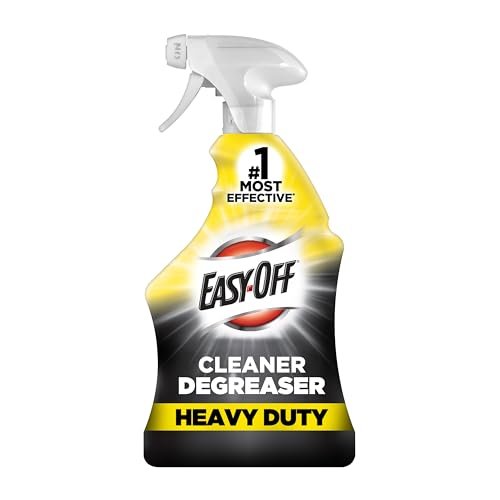
Easy-Off Heavy Duty Degreaser Cleaner Spray
The industry standard for professional and home deep cleaning, this 32 oz clear spray is formulated to dissolve even months of baked-on, polymerized grease from fan blades, hood interiors, and vent grates. The transparent formula lets you see exactly where you’ve applied the product, so you don’t miss hidden spots behind fan blades.
- Pros: Cuts through heavy grease in 10 minutes of dwell time; clear formula for visible coverage; ergonomic spray nozzle for targeted application; trusted brand with decades of kitchen cleaning expertise.
- Cons: Strong chemical fume profile requires open windows or running exhaust during use; not suitable for unsealed aluminum or delicate painted surfaces without spot-testing; requires nitrile gloves for users with sensitive skin.
- Best for: Deep cleaning of heavily soiled exhaust systems with months or years of built-up grease.
 Spray formulation clings to vertical fan blades without dripping for targeted grease removal
Easy-Off Specialty Kitchen Degreaser Cleaner (Lemon Scent)
This 16 oz milder formula is designed for routine monthly maintenance and light to moderate grease buildup, with a fresh lemon scent that leaves your kitchen smelling clean after use. It’s less harsh than the heavy-duty variant, making it safe for painted fan blades, aluminum hoods, and sealed surfaces without risk of discoloration.
- Pros: Low-fume lemon scent; safe for most kitchen surface materials; easy-to-use spray nozzle for precise application; compact size for easy under-sink storage.
- Cons: May require two applications for heavily soiled areas; scent may be too strong for users with fragrance sensitivities.
- Best for: Routine monthly cleaning and light grease buildup on all standard exhaust fan materials.
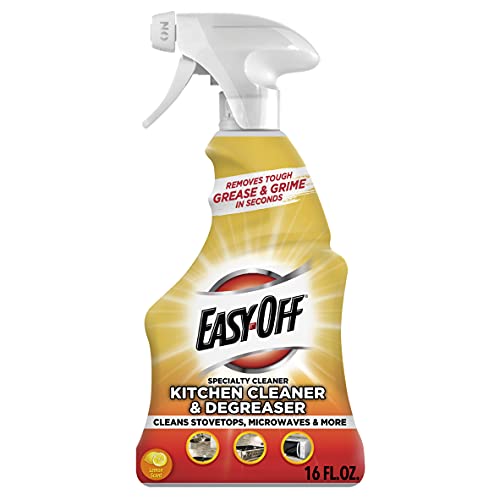 Low-fume lemon formula is ideal for routine maintenance without harsh chemical odors
Jocecury 500ml Kitchen Foam Cleaner
This multipurpose foam cleaner features a unique dual-spray nozzle: one setting releases a fine mist for light surface cleaning, while the other dispenses thick, clinging foam that stays on vertical fan blades for 15+ minutes without dripping. The no-rinse formula is a game-changer for overhead cleaning, as you can spray, wait 5 minutes, wipe with a microfiber cloth, and be done without hauling water to a high fixture.
- Pros: Dual-nozzle for customizable application; no-rinse formula cuts cleanup time; thick foam clings to vertical surfaces; multipurpose use for pots, pans, countertops, and appliances.
- Cons: Foam texture may be unfamiliar for users used to traditional liquid sprays; may require a second application for extremely baked-on grease.
- Best for: Quick touch-ups and no-fuss cleaning for busy households.
 Thick foam clings to overhead fan blades, cutting down on drips and mess during cleaning
MiracleSpray for Microwave and Cooktop
Formulated to be safe for food-contact surfaces and non-stick coatings, this 16 oz residue-free spray is perfect for stainless steel exhaust hoods that are prone to water spots and discoloration from harsh chemicals. It removes light grease and food splatters without leaving behind any film, so your stainless steel finish stays shiny.
- Pros: Residue-free formula prevents water spots on stainless steel; safe for non-stick and coated surfaces; compact size fits easily in kitchen caddies; lightweight for easy overhead use.
- Cons: Not effective for heavy, baked-on grease; may require multiple wipes to remove all residue.
- Best for: Stainless steel and coated exhaust components, plus multi-surface kitchen cleaning.
 Residue-free formula is safe for stainless steel exhaust hoods and prevents water spots
Zep Home Pro Air Fryer & Microwave Cleaner
This fume-free, 24 oz formula is specifically designed for food-contact surfaces, making it a top pick for households with children, pets, or chemical sensitivities. It eliminates grease and food residue without harsh chemical fumes, so you don’t need to ventilate your kitchen extensively during use, and you don’t have to worry about chemical residue transferring to food prep areas near your exhaust fan.
- Pros: No harsh fumes; safe for food-contact surfaces; works on both fan blades and exterior hood surfaces; compact size for easy storage.
- Cons: Less effective for heavy, baked-on grease than heavy-duty formulas; limited to smaller cleaning tasks due to 24 oz size.
- Best for: Fume-free cleaning for sensitive households and light to moderate grease buildup.
 No harsh fumes make this cleaner safe for use in occupied kitchens
Jonissi Splash Spray Oven Cleaner
This multi-purpose bubble foam spray is designed to cling to vertical surfaces, making it equally effective for exhaust fan blades and oven interiors for whole-kitchen deep cleans. The thick foam lifts heavy oil stains and baked-on grime without aggressive scrubbing, cutting down on physical effort for tough jobs.
- Pros: Thick bubble foam clings to vertical surfaces; multipurpose use for ovens, grills, and exhaust fans; lifts heavy grease without scrubbing; affordable price point for frequent use.
- Cons: Strong cleaning agents require nitrile gloves for sensitive skin; not suitable for non-stick or delicate surfaces without spot-testing; may require a second application for extremely stubborn buildup.
- Best for: Whole-kitchen deep cleaning and heavy baked-on grease on metal fan components.
 Thick bubble foam clings to vertical oven and fan surfaces to lift heavy grease without scrubbing
Essential Complementary Tools for Exhaust Fan Cleaning
Even the best degreaser spray can’t reach tight gaps between fan blades or lift loose dust and cobwebs that mix with grease to create messy, hard-to-remove buildup. Pair your spray with these tools for a faster, more thorough clean:
Bendable Microfiber Fan Brushes
Flexible, bendable microfiber brushes mold to the curve of fan blades to lift loose dust and grime before you apply degreaser, preventing dust from mixing with grease and creating a muddy mess. Reusable and washable, these reusable cleaning brush sets are a cost-effective, eco-friendly alternative to disposable wipes.
 Flexible heads reach between fan blades to lift dust and loose grease without scratching surfaces
Extension Pole Fan Dusters
For high or vaulted ceilings, a heavy-duty extension cleaning tool with a 75-inch pole lets you reach overhead fan blades safely without a ladder. The flexible cleaning head conforms to fan blade shapes to trap dust in narrow gaps, reducing the amount of dust that falls onto your stovetop or floor during cleaning.
 Extended reach eliminates the need for ladders when cleaning high exhaust fans
Detail Cleaning Brushes for Tight Spots
Small precision cleaning brushes with firm bristles are ideal for scrubbing grease buildup from fan motor housings, vent grates, and screw holes that are too small for larger brushes. For extra stubborn buildup on metal grates, a soap-dispensing scrub brush lets you apply a small amount of degreaser directly to the bristles for targeted scrubbing. These soft-bristled multi-surface cleaning brushes work well on both metal and plastic exhaust components without scratching, while stiff-bristled scrub brushes pair perfectly with heavy-duty degreaser for baked-on grime.
 Compact design fits into tight vent grates and fan motor housings for detailed cleaning
 Reusable washable heads trap dust without scratching delicate surfaces
Step-by-Step Guide to Cleaning Your Kitchen Exhaust Fan with Spray
Follow this simple process for a fast, thorough clean that removes all grease and grime without damaging your fan components:
- Prep the area: Lay down old towels or a drop cloth on your stovetop and floor to catch drips and falling dust. Turn off the exhaust fan at the circuit breaker to avoid accidental activation during cleaning.
- Remove loose debris first: Use a bendable microfiber brush or extension duster to knock off loose dust, cobwebs, and loose grease from fan blades, the motor housing, and vent grates. Skipping this step is the most common mistake homeowners make: mixing loose dust with degreaser creates a muddy, hard-to-wipe mess that doubles your cleanup time.
- Apply degreaser spray: Shake the spray bottle well, then apply an even coat to all fan blades, the interior of the hood, and the vent grate. For heavy buildup, use the foam setting if your spray has one, and let it sit for 10–15 minutes (do not let it dry out fully, as this can leave residue).
- Scrub stubborn spots: Use a detail brush or scrub brush to agitate any remaining baked-on grease. For tough, stuck-on spots, reapply a small amount of degreaser directly to the brush for extra cutting power.
- Wipe clean: Use a clean, dry microfiber cloth to wipe all surfaces. For no-rinse formulas, you’re done! For traditional degreasers, wipe again with a cloth dampened with warm water to remove any remaining residue.
- Dry and reassemble: Let all components air dry completely before turning the fan back on. Reassemble the fan and run it for 2–3 minutes to blow out any remaining loose debris.
Safety Tips for Using Exhaust Fan Cleaning Sprays
Proper safety precautions prevent damage to your exhaust fan and avoid health risks during cleaning:
Prioritize Ventilation
Even low-fume degreaser sprays should be used with a window open or the nearby exhaust fan running (once it is dry and safe to turn on) to pull fumes away from your breathing area. For heavy-duty degreasers with sodium hydroxide, wear nitrile gloves and safety glasses to avoid skin and eye irritation.
Avoid Cross-Contamination
Never use the same cloth you used to clean the exhaust fan on countertops, dishes, or food prep surfaces, as degreaser residue can transfer to food and cause illness. Set aside dedicated cleaning cloths for exhaust fan cleaning only.
Store Safely
Keep all cleaning sprays out of reach of children and pets, away from heat sources like stovetops or direct sunlight, to avoid pressure buildup in the bottle or fire risk. Always store sprays in a cool, dark place like an under-sink cabinet.
Frequently Asked Questions
What is the best spray for kitchen exhaust fan cleaning?
The best spray depends on your grease buildup level: Easy-Off Heavy Duty Degreaser is the top pick for heavy, baked-on grease, while Easy-Off Specialty Lemon Degreaser is ideal for routine monthly maintenance. For fume-free cleaning, Zep Home Pro is the best option for sensitive households.
How do I safely clean my kitchen exhaust fan?
Always turn off the power to the exhaust fan at the circuit breaker before cleaning to avoid accidental activation. Use a no-rinse formula cleaner paired with microfiber fan cleaning brushes for thorough dust and grease removal, and wear gloves if using heavy-duty degreasers.
Can I use multipurpose sprays for fan and stove cleaning?
Yes, MiracleSpray and Jocecury Foam Cleaner are safe for use on stoves, exhaust fans, microwaves, and countertops. They eliminate food residue and grease without damaging surfaces, making them a versatile pick for whole-kitchen cleaning.
Are microfiber fan cleaning brushes reusable?
Yes, all microfiber fan cleaning brushes are machine-washable and reusable for years, making them a cost-effective, eco-friendly alternative to disposable cleaning wipes. Their bendable design reaches tight spaces between fan blades to remove dust and grime effectively.
What makes a good kitchen degreaser spray?
A high-quality exhaust fan degreaser should cut through heavy grease quickly, be safe for your exhaust fan’s surface materials, and have a low fume profile if you’re sensitive to strong chemical smells. Look for no-rinse formulas for overhead cleaning to eliminate the need for water access.
How often should I clean my kitchen exhaust fan?
If you cook daily with high heat or fried foods, clean your exhaust fan every 1–2 months to prevent grease buildup. For light home cooking, cleaning every 3–4 months is sufficient to maintain airflow and reduce fire risk.
Conclusion
A clean kitchen exhaust fan is one of the most overlooked components of a safe, functional kitchen: regular degreasing improves air quality, reduces fire risk, extends the life of your fan’s motor by preventing grease from gumming up moving parts, and lowers your energy bills by improving airflow efficiency. The right degreaser spray makes this chore fast and nearly effortless, eliminating the need for hours of aggressive scrubbing. Pair your spray with a set of bendable microfiber brushes and an extension duster to reach tight gaps and high blades without a ladder, and you’ll have a spotless, safe exhaust system in 15 minutes flat. Ready to tackle years of built-up grease? Grab a high-performance degreaser spray and a set of reusable microfiber fan brushes to cut your exhaust fan cleaning time in half this weekend. For more step-by-step kitchen maintenance guides, browse our full kitchen maintenance guides library.

Hi, I’m Daniel Brooks—a food lover and kitchen gear enthusiast. I enjoy testing cookware, utensils, and gadgets to see what really works in everyday cooking. At PlugChef.com, I share honest reviews, comparisons, and simple guides to help you choose the best tools for a safer, smarter, and more enjoyable kitchen.
Related posts:
 Cuisinart 9 Cup Continuous Feed Food Processor: Revolutionize Your Kitchen Tasks
 Best Cotton Candy Machine for Home: Sweet Treats Made Easy
 Best Foods to Dip in Chocolate Fountain: Ultimate Party Guide
 Small Appliance Repair Colorado Springs: Essential Spring Kits for DIY Fixes
 Best Cotton Candy Makers: Discover Top Picks for Sweet Delights
 Best Car Coffee Mug Warmer: Elevate Your Travel Brew Experience