
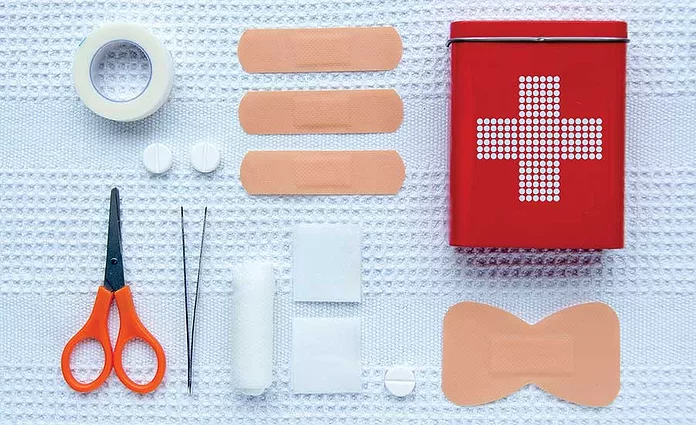
A worker in a small warehouse nicks their finger on a metal shelf, reaches for the first aid kit, and finds it missing sterile gauze and stocked with expired antiseptic wipes. A minor, treatable injury turns into a preventable infection, a lost workday, and a costly OSHA fine. The ANSI ISEA Z308.1 first aid kit standard eliminates these gaps by setting clear, uniform requirements for first aid supply contents, accessibility, and maintenance across all workplace types.
Developed by the American National Standards Institute (ANSI) and the International Safety Equipment Association (ISEA), this standard is recognized by OSHA as an acceptable benchmark for meeting federal first aid requirements, making it the gold standard for safety managers, small business owners, and even home workers. Whether you run a construction site, a retail store, a home bakery, or a remote freelance business, a compliant ANSI ISEA Z308.1 kit ensures you have the right supplies on hand to respond to emergencies quickly, reduce injury severity, and stay on the right side of regulations.
In this guide, we’ll break down exactly what the standard requires, how to choose the right kit for your specific workplace, maintenance best practices for 2026, and how to train your team to use supplies effectively when seconds count.
What Is the ANSI ISEA Z308.1 Standard?
Purpose and Regulatory Alignment
The core purpose of the ANSI ISEA Z308.1 standard is to eliminate guesswork around first aid kit contents by setting minimum, evidence-based requirements for supplies that address the most common workplace injuries: cuts, lacerations, burns, and eye irritations. Unlike generic first aid kits that may skimp on critical supplies, compliant kits are tested to ensure all items are functional, sterile, and appropriate for the intended use case.
While OSHA’s general industry standard (29 CFR 1910.151) only requires employers to provide "adequate first aid supplies" for employee injuries, the agency explicitly recognizes ANSI ISEA Z308.1 as a compliant way to meet that requirement. Using a certified kit simplifies inspections, removes ambiguity around what counts as "adequate," and ensures your workplace is prepared for both minor and urgent injuries. The standard applies to all general industry workplaces, with additional requirements for high-risk sectors like construction, manufacturing, and food service.
Core Compliance Requirements
The standard divides kits into two tiers based on workplace risk level:
| Requirement | Type A (Low-Risk Workplaces: Offices, Retail, Schools) | Type B (High-Risk Workplaces: Construction, Manufacturing, Food Service) |
|---|---|---|
| Minimum Employee Coverage | 10+ employees | Any number of employees |
| Adhesive Bandages | 16 assorted sizes | 32 assorted sizes |
| Sterile Gauze Pads | 4 4×4" pads | 8 4×4" pads |
| Antiseptic Wipes | 1 individually sealed packet | 2 individually sealed packets |
| Nitrile Gloves | 2 pairs (medium) | 4 pairs (assorted sizes) |
| Burn Dressing | 1 sterile 4×4" dressing | 2 sterile 4×4" dressings + 1 burn gel packet |
| Eye Wash Solution | 1 1oz packet | 2 2oz packets |
| CPR Face Shield | 1 with one-way valve | 1 with one-way valve |
| Additional Required Tools | Scissors, tweezers, first aid instruction card | Trauma pads, hemostatic gauze, elastic bandage |
All compliant kits must also meet physical requirements: they must be stored in waterproof, impact-resistant cases, clearly labeled with a white cross on a green background, and accessible within 3 seconds of an emergency. Kits cannot be stored in locked cabinets unless a break-glass seal is used, and employees are trained on how to access the kit quickly.
What’s Inside a Compliant ANSI ISEA Z308.1 First Aid Kit?
Wound Care Essentials
The core of any compliant kit is wound care supplies designed to treat minor cuts, scrapes, and lacerations quickly to prevent infection. All kits include adhesive bandages in a range of sizes (from small finger bandages to large 4×4” adhesive pads), sterile non-adherent gauze pads for deeper wounds, hypoallergenic adhesive tape, individually sealed alcohol-free antiseptic wipes (safe for sensitive skin and children), and single-use antibiotic ointment packets.
A common mistake employers make is purchasing kits that only include small bandages, with no large gauze pads. For lacerations on the arms, legs, or torso, large gauze pads are critical for applying pressure to stop bleeding, and omitting them leaves workers unprotected for more severe injuries. All wound care supplies are individually sealed to maintain sterility until use.
Burn and Eye Injury Treatment
Burns and eye injuries require fast, specialized care to prevent permanent damage, so compliant kits include dedicated supplies for both. All kits include sterile, non-adherent burn dressings that cool the burn and create a barrier against bacteria, while Type B high-risk kits also include burn gel packets for minor thermal or chemical burns.
For eye injuries, kits include sterile eye wash solution (1oz per packet for Type A, 2oz for Type B) to flush out dust, chemical splashes, or debris. For workplaces with high chemical hazard risks, OSHA requires additional permanent eyewash stations, but the kit’s eye wash is designed for immediate on-site response before a worker can reach a full station.
Personal Protective Equipment for First Responders
Every compliant kit includes nitrile, powder-free gloves to protect the person administering aid from bloodborne pathogens like HIV or hepatitis, eliminating the hesitation many people feel when helping an injured coworker. All kits also include a CPR face shield with a one-way valve, which allows for safe mouth-to-mouth resuscitation without direct contact with the patient’s saliva or vomit.
Most kits also include small tools like blunt-tip scissors for cutting clothing or bandages, splinter tweezers, and a waterproof first aid instruction card with step-by-step guidance for treating common injuries, which is critical for workplaces with no formally trained first aid responders.
Workplace-Specific Benefits of Using a Certified Kit
Reduced Injury Severity and Downtime
Prompt first aid for minor injuries drastically reduces the risk of infection and prevents small issues from becoming serious, medical emergencies. For high-risk workplaces like construction sites, a compliant kit allows workers to apply pressure to a bleeding laceration within seconds, which can eliminate the need for stitches or emergency room visits. This reduces employee absenteeism and avoids costly project delays from lost work hours.
A common mistake employers make is assuming minor cuts and scrapes don’t require immediate care, but untreated small wounds are the leading cause of preventable workplace infections that lead to extended time off.
Regulatory Compliance and Penalty Avoidance
OSHA fines for non-compliant first aid supplies start at $15,625 per serious violation as of 2026, with willful or repeat violations carrying penalties of up to $156,259 per incident. Using an ANSI ISEA Z308.1 compliant kit eliminates this risk, as the standard is explicitly recognized as meeting OSHA’s requirements. During inspections, having a current inspection log for your kit (with dates, replacement records, and sign-offs) will streamline the process and avoid costly penalties.
 A properly mounted ANSI-compliant kit is accessible within 3 seconds of an emergency
Image source: www.ishn.com
A properly mounted ANSI-compliant kit is accessible within 3 seconds of an emergency
Image source: www.ishn.com
Improved Employee Morale and Safety Culture
Visible, well-stocked first aid kits signal to employees that their employer prioritizes their health and safety, which boosts morale and encourages workers to report hazards before they cause injuries. Conversely, a kit that is outdated, missing supplies, or stored in an inaccessible location sends the message that safety is not a priority, which can lead to higher turnover and lower productivity.
For low-risk office spaces, mount the kit in a clearly visible break room or near main exits, paired with labeled multi-compartment storage for employee personal items to reduce clutter and ensure the kit is never blocked.
How to Choose the Right ANSI ISEA Z308.1 Kit for Your Space
Match the Kit to Your Workplace Risk Level
Start by classifying your workplace as low-risk (offices, retail, schools, home-based businesses with no heavy machinery or chemical hazards) or high-risk (construction, manufacturing, food service, warehouses, landscaping). Low-risk workplaces only need a Type A kit, while high-risk workplaces require a Type B kit with additional supplies for severe injuries.
If your workplace has specific hazards, you can supplement the base kit with extra supplies as needed: for example, food service workplaces may add extra burn gel and latex-free gloves, while construction sites may add snake bite kits or cold packs for outdoor work. Never remove required ANSI supplies to make space for custom items.
Solo workers or home-based business owners can store a compact kit on a workbench or near a large bulk storage unit for quick access without taking up high-traffic floor space.
Consider Kit Size and Portability
Compliant kits come in four standard sizes for fixed workplaces:
- Small: 10–25 employees
- Medium: 25–50 employees
- Large: 50–100 employees
- Extra-large: 100+ employees
For remote workers, job sites, or vehicle storage, portable travel-sized ANSI kits are also available, designed to fit in a car trunk, backpack, or desk drawer. For multi-site businesses, each location needs its own compliant kit — a single shared kit between multiple sites does not meet accessibility requirements.
In food preparation or metal fabrication spaces with high burn risk, mount the kit away from stoves or welding stations, and store extra burn supplies in a heat-resistant storage container to prevent heat damage to the kit’s contents.
Verify Compliance and Durability
Only purchase kits explicitly labeled as ANSI ISEA Z308.1 compliant — generic "first aid kits" sold at discount stores rarely meet the standard’s requirements. Look for kits with waterproof, impact-resistant cases, a contents list printed on the inside of the lid with expiration dates for perishable items, and a mounting bracket for wall or vehicle installation.
For small teams or remote workers, a travel-sized ANSI kit can be stored in a desk drawer alongside small portion containers for personal medications, with clear labeling to avoid confusion during emergencies.
Maintenance and Inspection Best Practices
Monthly Inspection Checklist
The ANSI standard requires monthly inspections of all first aid kits, but many workplaces skip this step, leading to expired or missing supplies when emergencies strike. Use this simple checklist for every inspection:
- Check all perishable items (antiseptic wipes, ointment, eye wash) for expiration dates, and replace any expired stock
- Verify all required items are present and individually sealed
- Inspect the kit case for cracks, broken latches, or water damage
- Update the inspection log with the date, inspector name, and any replacements made
For multi-site businesses, digital inspection apps can automate reminders and centralize log records to simplify compliance tracking.
Restocking and Replacement Rules
Perishable supplies have shelf lives of 1–3 years, and must be replaced immediately when expired. Non-perishable items (bandages, gauze, scissors) should be replaced if their packaging is torn, damp, or contaminated. Many certified kit suppliers offer auto-restock services that ship replacement supplies on a scheduled basis, eliminating the need for manual inventory counts.
Pet-friendly offices may add styptic powder for minor animal nail cuts, stored separately from pet food bulk bins to avoid cross-contamination and keep supplies sanitary.
Accessibility and Placement Rules
Kits must be accessible within 3 seconds of an emergency, so avoid storing them in locked cabinets, closets, or rooms that require a key or code to enter. If a locked cabinet is required for security reasons, use a break-glass seal and train all employees on how to open it quickly.
Mount kits at eye level in well-lit, high-traffic areas: near main exits, break rooms, machinery, and chemical storage areas. For multi-floor workplaces, each floor needs at least one kit, and high-risk areas need supplemental kits within 30 seconds of the hazard.
Employee Training and Emergency Drills
First Aid Training for All Staff
While compliant kits include an instruction card, formal first aid and CPR training for at least one employee per shift is required for high-risk workplaces, and strongly recommended for low-risk ones. Local fire departments and community organizations often offer free or low-cost first aid classes for businesses, which cover how to use kit supplies including burn dressings, hemostatic gauze, and CPR face shields.
Training should also include guidance on when to call 911 versus treating an injury on-site, to avoid delaying emergency care for serious injuries.
Regular Emergency Drills
Conduct quarterly first aid drills to test kit accessibility and employee response time. Simulate common injuries like a laceration from a machine or a chemical splash in the eye, and time how long it takes employees to locate the kit and apply basic first aid. Drills also help identify accessibility issues, such as a kit blocked by furniture or stored in a location that’s hard to reach during an emergency.
2026 Updates to the ANSI ISEA Z308.1 Standard
2024 Revision Highlights
The most recent revision to the standard (published in 2024, effective for all new kits sold in 2025 and 2026) added several key updates to improve safety and accessibility:
- Mandatory latex-free gloves and alcohol-free antiseptic wipes to accommodate employees with latex allergies or sensitive skin
- Required hemostatic gauze in all Type B high-risk kits to stop severe bleeding faster
- Mandatory QR codes on all kits linking to digital first aid instructions, available in multiple languages for diverse workforces
- Clearer color-coding for burn and eye care supplies to reduce response time during emergencies
Emerging Trends in Workplace First Aid
Future revisions to the standard are expected to include smart kit features, such as Bluetooth sensors that alert managers when supplies are low or expired, and integration with workplace emergency alert systems. Eco-friendly, biodegradable supplies are also becoming more common, reducing waste from single-use items. For specialized industries, customizable kits are now available with industry-specific supplies, such as epinephrine auto-injectors for workplaces with employees who have severe allergies, or snake bite kits for outdoor construction sites.
Reducing laceration risks starts with proper cutting tool upkeep, which complements your first aid kit’s ability to treat minor injuries quickly before they worsen.
 Compliant kits include labeled, individually sealed supplies to prevent contamination
Image source: www.amazon.com
Compliant kits include labeled, individually sealed supplies to prevent contamination
Image source: www.amazon.com
Frequently Asked Questions
What is the ANSI ISEA Z308.1 first aid kit standard?
The ANSI ISEA Z308.1 standard is a voluntary consensus standard developed by ANSI and ISEA that sets minimum content, quality, and performance requirements for workplace first aid kits. While not a federal law, it is explicitly recognized by OSHA as a compliant way to meet the agency’s requirement for "adequate first aid supplies" in general industry workplaces.
What supplies are included in an ANSI ISEA Z308.1 kit?
Contents vary by kit type (Type A for low-risk, Type B for high-risk) but always include wound care supplies (adhesive bandages, gauze, antiseptic wipes), burn treatment (sterile burn dressings), eye wash solution, nitrile gloves, a CPR face shield, and basic tools like scissors and tweezers. Type B kits for high-risk environments include additional supplies like trauma pads, hemostatic gauze, and burn gel.
Who needs an ANSI ISEA Z308.1 first aid kit?
All low-risk workplaces with 10 or more employees, and all high-risk workplaces regardless of employee count, are required by OSHA to have adequate first aid supplies, and ANSI ISEA Z308.1 kits are the easiest way to meet that requirement. This includes offices, retail stores, construction sites, manufacturing facilities, food service operations, and home-based businesses. The kits are also highly recommended for home use, especially in homes with workshops, pools, or young children.
How often should ANSI ISEA Z308.1 kits be checked?
The standard requires monthly inspections of all kits. During inspections, check for expired supplies, replace used items, verify the case is undamaged, and update the inspection log. For high-risk workplaces with frequent minor injuries, weekly inspections are recommended.
Can I customize an ANSI ISEA Z308.1 kit?
Yes, as long as the base kit meets all minimum ANSI requirements. You can add supplies specific to your workplace’s hazards, such as epinephrine auto-injectors for workplaces with employees who have severe allergies, cold packs for sports facilities, or snake bite kits for outdoor work sites. Do not remove required items to make space for custom supplies.
 Compact, durable cases are designed for use in industrial, outdoor, or remote workspaces
Image source: www.amazon.com
Compact, durable cases are designed for use in industrial, outdoor, or remote workspaces
Image source: www.amazon.com
Conclusion
The ANSI ISEA Z308.1 first aid kit is more than just a box of supplies — it’s a critical tool for protecting employee health, reducing injury severity, and staying compliant with federal safety regulations. For most workplaces, a compliant kit costs less than $100, a small investment that can prevent costly fines, lost workdays, and serious harm to your team.
If your workplace hasn’t updated its first aid kits in the last year, schedule an inspection this week to verify compliance and restock any expired supplies. For small business owners, remote workers, or home-based businesses, a compact Type A ANSI kit is a low-cost, high-impact addition to any safety plan, with supplies that can treat 90% of common minor injuries. Pair your kit with regular employee training and quarterly drills to ensure your team is ready to respond confidently when emergencies strike.

I’m Abby Lu, a passionate home cook who loves simplifying everyday meals. At PlugChef.com, I share product reviews and cooking guides to help you find the best tools for your kitchen.
Related posts:
 Cheesy Potatoes on the Grill: Irresistible Summer Side Dish
Recipe for Navy Bean Soup: Easy, Hearty, and Delicious Guide
Cheesy Potatoes on the Grill: Irresistible Summer Side Dish
Recipe for Navy Bean Soup: Easy, Hearty, and Delicious Guide
 Dolly Parton Kitchenware Dollar General: Must-Have Deals Revealed
 Sweet Sour Shrimp Stir Fry: Quick, Delicious, and Easy Recipe
 How to Oil Cutting Board Bamboo: Ultimate Guide for Lasting Care
 How to Cut Gouda for a Charcuterie Board: Expert Tips & Tricks

