
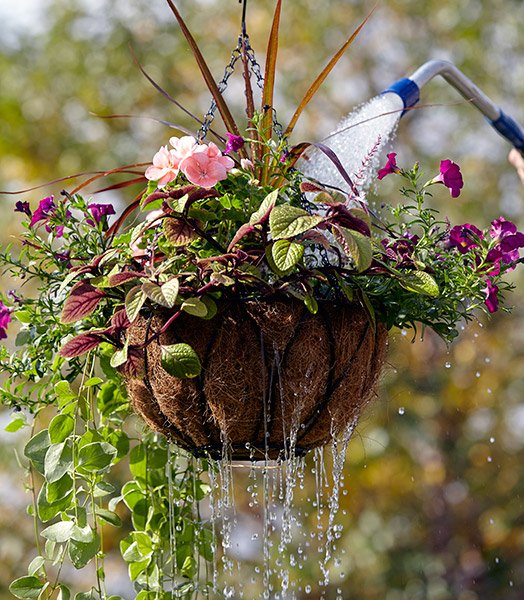
Hanging baskets are an instant lift for porches, balconies and garden rooms — but because they’re exposed and shallow, water management is the single most important thing that determines whether they dazzle or decline. This guide gives clear, practical, experience‑based instructions for watering hanging baskets so yours stay full, flowering and healthy all season.
Credit: www.gardengatemagazine.com
Quick checklist: what successful watering looks like
- Water deeply and evenly until water drains from the pot’s drainage holes.
- Check moisture daily in hot weather; every few days in mild weather.
- Use a good, free‑draining but moisture‑retentive potting mix.
- Avoid wet foliage at night to reduce disease risk.
- Weigh your basket or use a moisture meter to be precise.
How often should you water hanging baskets?
There is no single interval that fits all baskets — frequency depends on basket size, plant type, exposure and weather. Use these practical guidelines:
- Hot, sunny, windy conditions: check and usually water daily (often every morning).
- Warm but calm days: every 1–2 days.
- Cool, cloudy weather: every 3–7 days.
- Indoors or shaded locations: once a week or when the top 1–2 in (2.5–5 cm) of soil feels dry.
In practice, a 10–12 inch (25–30 cm) basket with flowering annuals in full sun will often need water once per day in summer; a larger 16–18 inch basket or one in shade will last longer between waterings.
For authoritative gardening guidance on moisture and plant water needs, university extension services offer region‑specific advice — see general guidance from your local extension arm such as the University of Minnesota Extension.
How to tell when a basket needs water (simple tests)
- Finger test: press 1–2 inches into the potting mix. Dry = water.
- Weight test: lift the basket. A dry basket feels significantly lighter. Keep a mental weight for “wet” vs “dry.”
- Moisture meter: quick, repeatable readings at several points in the root zone.
- Plant signals: drooping, dull leaves or brown leaf edges are signs of underwatering (but can also indicate heat stress).
A common mistake is relying on topsoil appearance alone: the surface can dry while roots still have moisture. Always test a little deeper.
How to water hanging baskets — step‑by‑step
- Water slowly and evenly: pour until water runs out of the drainage holes. This flushes salts and wets the entire root ball.
- Soak thoroughly: if the soil repels water (hydrophobic), pre‑wet the surface in short bursts to let water penetrate, then resume deeper watering.
- Let excess drain: do not let baskets sit in a saucer of water for prolonged periods.
- Check again in the afternoon if temperatures are high — you may need to top up.
- Feed after watering: if using liquid fertilizer, apply it to moist soil for best uptake.
Typical volumes: “until it drains” is more accurate than a fixed quantity, but as a rough guide expect 0.5–2 liters (about 1–4 cups) depending on basket size and soil. The goal is to wet the full root ball.
Best potting mixes and water‑retention tricks
Use a premium, lightweight container mix that balances drainage and moisture retention. Key ingredients:
- Coco coir or peat substitute — holds water while improving structure.
- Perlite or pumice — improves drainage and aeration.
- Compost or slow‑release fertilizer — supplies nutrients.
Additives and techniques that help:
- Water‑retaining crystals or gels: mix according to product directions into the planting mix to extend wetness between waterings.
- Mulch: a thin (1 cm) top layer of fine bark or coconut coir reduces surface evaporation.
- Layering: place a thin layer of crocks or mesh at the base only if the potting mix is light and drains well; avoid creating a perched water table.
For region‑specific soil and mulching recommendations, national agencies such as the USDA provide general best practices on conserving soil moisture and mulching.

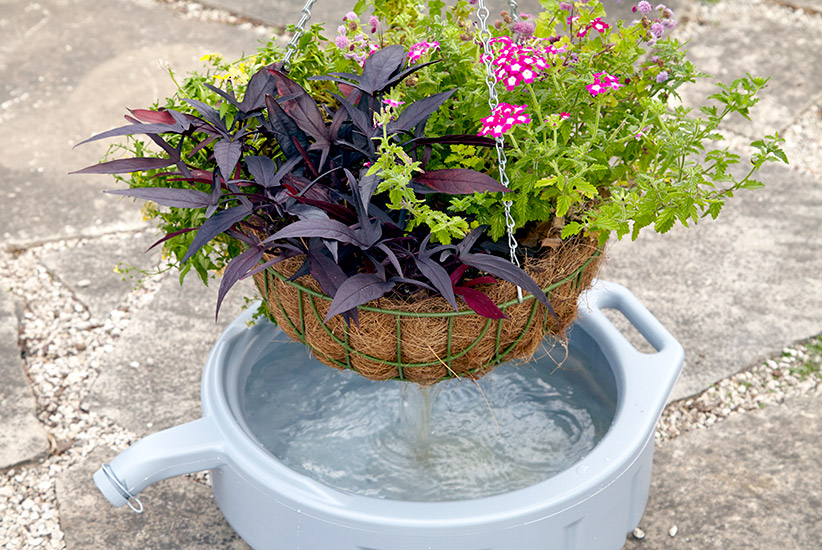
Credit: www.westcoastgardens.ca
Watering evenly until drainage shows the root zone is saturated.
Tools and systems that make watering easier
- Long‑spout watering can: precise, low‑stress pour for hanging baskets.
- Lightweight hose with a gentle spray or flow regulator: good for many baskets at once.
- Moisture meter: removes guesswork.
- Self‑watering inserts or reservoirs: provide reserve water for several days; especially useful for travel or very hot spells.
- Drip or micro‑irrigation for balconies: set timers to deliver measured water; use pressure regulators and emitters sized for pot volumes.
In practice, self‑watering systems reduce weekly labor and buffer against hot snaps, but they require correct sizing and occasional flushing to avoid salt build‑up.
Signs of overwatering vs underwatering (and how to fix each)
Overwatering signs
- Yellowing lower leaves, limp growth, slow growth despite wet soil.
- Soggy soil and black, mushy roots (check by feel).
Fixes: stop watering until the top inch dries, improve drainage, and repot into fresh mix if root rot is present.
Underwatering signs
- Wilting, brown crispy leaf edges, flowers dropping.
Fixes: water thoroughly until drains, consider adding water‑retainers, increase watering frequency, and move to a more sheltered spot if wind/heat are the cause.
A common real‑world error: switching straight from daily summer watering to a “weekly” schedule in fall without checking moisture — always base changes on soil and plant response.
Seasonal care: adjusting your routine
- Spring: plants are actively growing — keep evenly moist and begin a regular feeding schedule.
- Summer: increase checks to daily in heat; use mulches, self‑watering inserts, or morning/light watering to reduce stress.
- Autumn: taper watering as temperatures cool; reduce feeding.
- Winter: for frost‑sensitive plants, bring baskets indoors or cut water back to only maintain slightly moist mix.
If you’re away, a self‑watering reservoir or neighbor check is better than automated systems left unmonitored; systems can fail or emitters clog.
Maintenance beyond watering (to keep baskets thriving)
- Fertilize: liquid fertilizer every 7–14 days during peak growth, or incorporate a slow‑release granule at planting.
- Deadhead and trim: remove spent blooms and leggy shoots to encourage more flowers.
- Pest checks: inspect leaves weekly and treat early with soap spray or biological controls.
- Refresh mid‑season: for tired displays, replace the top few inches of soil or replant with new annuals.
Small, regular interventions keep watering needs predictable and plants vigorous.
Troubleshooting common problems
- Soil dries out too fast: repot with a mix higher in coir or add a reservoir.
- Water won’t penetrate surface crust: gently agitate surface and pre‑wet in short bursts.
- Uneven drying in large baskets: water from multiple points around the rim, or divide plantings into smaller baskets.
In practice, weighing and comparing “wet” vs “dry” baskets is one of the most reliable diagnostics gardeners use.
FAQ
Q: Can you water hanging baskets too much?
A: Yes. Overwatering causes root rot and nutrient lock‑out. Always check the top inch of soil and feel the root zone rather than following a strict calendar.
Q: How much water should I put in a hanging basket?
A: Water until it drains from the bottom — that ensures the entire root ball is wet. Typical volumes vary by size but expect roughly 0.5–2 liters per watering for common baskets; adjust by size and soil.
Q: What is the best time of day to water hanging baskets?
A: Morning is best (plants can use water during the day and foliage dries), with late‑afternoon as an acceptable second option in very hot regions. Avoid soaking foliage at night where disease pressure is high.
Q: How can I keep water from running straight through my basket?
A: Use a good potting mix with moisture‑holding components, add a thin mulch layer, or use a self‑watering insert — these hold water while still allowing excess to drain.
Conclusion — keep it simple, observe, and adapt
The most reliable watering strategy for hanging baskets is observational: test soil, weigh or meter, water until it drains, and adjust for weather and exposure. Good potting mix, a bit of mulch or a reservoir, and routine checks will prevent most problems. In practice, small daily observations beat rigid schedules.
Try this next step: install a moisture meter and two self‑watering inserts for one or two of your baskets this season — you’ll save time and keep blooms fuller through heatwaves. Happy gardening!

I’m Abby Lu, a passionate home cook who loves simplifying everyday meals. At PlugChef.com, I share product reviews and cooking guides to help you find the best tools for your kitchen.
Related posts:
 How to Make a Fruit Basket for a Gift: Easy DIY Guide
 Do You Need a Basket? Essential Guide for Air Fryers
 How to Choose Kitchen Appliances: Expert Tips Revealed
 Kitchen Cabinets With Black Stainless Steel Appliances: Modern Elegance
 White Kitchen Cabinets Stainless Steel Appliances: Timeless Elegance
 Top 10 Best Non-Toxic Cooking Utensils – Safe & Durable Choices for Healthy Homes

