BPA-free food storage containers are the foundation of safe, efficient meal prep, eliminating the risk of harmful chemical leaching while keeping food fresh, organized, and ready to eat. As of 2026, most mainstream brands have phased out bisphenol A (BPA) from their product lines, but not all BPA-free containers are created equal: material quality, seal design, and heat resistance vary widely, impacting both safety and longevity. This guide breaks down exactly what to look for in high-quality BPA-free storage, reviews top sets for every use case, and shares practical care tips to get the most out of your investment, so you can meal prep with confidence.
What Is BPA, and Why Does Going BPA-Free Matter?
Bisphenol A (BPA) is an industrial chemical historically used to harden polycarbonate plastics and line food cans. It can leach into food when containers are heated, exposed to acidic or fatty ingredients, or scratched with age, and long-term exposure has been linked to hormonal disruption, developmental issues in children, and increased risk of certain chronic conditions, per ongoing FDA monitoring FDA BPA Guidance. As of 2026, all food storage containers sold in the U.S. that carry a BPA-free label meet federal safety standards, though some replacement chemicals like BPS and BPF are still under study for similar long-term effects. For the lowest risk, prioritize containers explicitly labeled free of all bisphenols, and avoid any #7 recycling code plastics that do not have a clear BPA-free designation.
Key Features to Prioritize When Shopping for BPA-Free Containers
Not all BPA-free containers deliver on safety or performance. Focus on these core features to find a set that fits your needs:
Airtight, Leak-Proof Seals
Silicone gaskets create a tighter, longer-lasting seal than hard plastic rims, and a simple test confirms effectiveness: place a small piece of paper inside the closed container, then try to pull it out. If the paper resists, the seal is secure. Leak-proof lids are non-negotiable for transporting dressings, soups, or saucy meals, and airtight seals also keep dry goods fresh by blocking moisture and air.
Heat Resistance and Safety Ratings
Look for explicit labeling that a container is microwave, freezer, and dishwasher safe, rather than vague "heat resistant" claims. Most BPA-free plastics are safe up to 220°F (104°C) in the microwave, but high-fat or high-sugar foods can exceed this temperature quickly, so opt for glass containers with BPA-free silicone lids for reheating cheesy or caramelized dishes. Avoid using plastic containers in ovens, on stovetops, for boiling water.
Material Durability and Chemical Safety
High-quality BPA-free containers are made from Tritan plastic, a shatter-resistant, stain-resistant material that does not retain odors. Glass options with BPA-free silicone lids are ideal for long-term storage of acidic or fatty foods, as glass is non-porous and does not degrade with exposure to these ingredients. Replace any container that becomes scratched, cloudy, or cracked, as damaged surfaces harbor bacteria and increase chemical leaching risk.
Space-Saving Design
Nesting containers that fit inside one another and stackable sets with interlocking lids maximize cabinet and pantry space, a critical feature for small kitchens. Look for sets with uniform lid sizes to reduce the number of loose parts you need to store.
Portability Features
Locking clips on lids prevent spills during transport, and lightweight materials make containers easy to pack in lunchboxes, gym bags, or work bags. For kids' lunches, look for BPA-free containers that are drop-resistant to avoid breakage at school.
| Set | Piece Count | Ideal Use Case | Key Perk | Best For |
|---|---|---|---|---|
| Rubbermaid Brilliance | 5 | Single-serve meals, leftovers | Stain-resistant airtight seals | Individuals, couples |
| Rubbermaid 16-Piece Vented | 16 | Family meal prep, reheating | Vented mess-free microwave lids | Small families, frequent reheaters |
| Joseph Joseph Nest Lock | 10 | Small-space storage, organized prep | Space-saving nesting design | Apartment dwellers, organization-focused users |
| Bentgo 20-Piece | 20 | On-the-go meals, kids' lunches | Ultra-lightweight 1-compartment design | Students, professionals, parents |
| Canfanni 40-Piece | 40 | Weekly meal prep, waste reduction | Included date-tracking labels | Meal prep enthusiasts, large households |
| Vtopmart 24-Piece | 24 | Pantry dry goods storage | Airtight pest and moisture-resistant seals | Bulk grocery shoppers, pantry organizers |
| PRAKI 24-Piece | 24 | Mixed fridge and pantry storage | BPA/PVC-free, waterproof labels | Users with plastic sensitivities |
| RockBerry 50-Piece | 50 | Large batch cooking, big families | Wide size range up to 12 cups | Large families, batch cooks |
Common Mistakes to Avoid When Using BPA-Free Containers
Even high-quality BPA-free containers can pose risks if used incorrectly. Avoid these common errors to extend their lifespan and keep your food safe:
- Storing hot food directly in cold plastic: Let cooked food cool to room temperature before sealing it in a plastic container to prevent warping and increased chemical leaching.
- Using abrasive cleaning tools: Steel wool, bleach, and harsh scrubbers scratch plastic surfaces, creating hiding spots for bacteria and increasing leaching risk. Use a soft sponge and mild soap, and a soft-bristled sturdy scrub brush to clean lid gaskets and hard-to-reach corners.
- Long-term storage of acidic or fatty foods in plastic: Tomato sauce, citrus, vinegar, and oily dressings can break down plastic over time. Use glass containers for these ingredients, and reserve plastic for short-term storage of neutral foods like grains, proteins, and snacks.
- Exceeding heat limits: Never heat plastic containers above the manufacturer’s recommended temperature, even if they are labeled microwave safe. High heat can warp plastic and release unwanted chemicals.
- Keeping damaged containers: Replace any container that is cracked, scratched, or cloudy, as these signs of wear indicate the material is breaking down and may leach chemicals or harbor harmful bacteria.
Top BPA-Free Food Storage Container Sets for Every Need
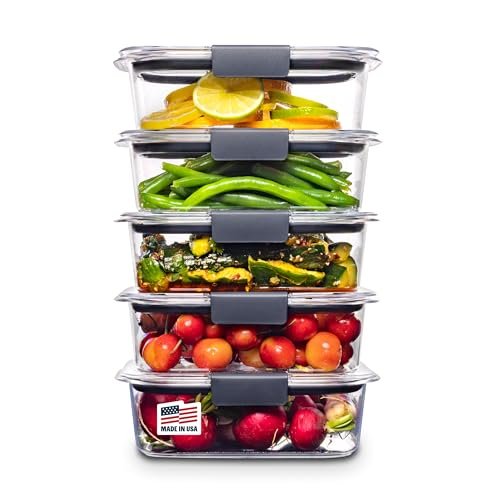
Rubbermaid Brilliance 5-Piece Set (3.2 Cup)
 Set of 5 Rubbermaid Brilliance containers, ideal for single-serve meals and leftovers
This set is a top pick for individuals and couples who prioritize simplicity and reliability. The 3.2-cup size is perfect for single-serve salads, leftover pasta, or prepped protein portions, and the Tritan plastic is stain-resistant, so turmeric, tomato sauce, and other vibrant foods won’t leave permanent marks if cleaned promptly. The airtight seals are tested to hold liquid dressings without leaking, making them ideal for packing work lunches.
Set of 5 Rubbermaid Brilliance containers, ideal for single-serve meals and leftovers
This set is a top pick for individuals and couples who prioritize simplicity and reliability. The 3.2-cup size is perfect for single-serve salads, leftover pasta, or prepped protein portions, and the Tritan plastic is stain-resistant, so turmeric, tomato sauce, and other vibrant foods won’t leave permanent marks if cleaned promptly. The airtight seals are tested to hold liquid dressings without leaking, making them ideal for packing work lunches.
- Pros: BPA-free, leak-proof airtight seal, stain-resistant, microwave/freezer/dishwasher safe, stackable
- Cons: Bulky lids take up extra cabinet space, plastic can cloud with repeated high-heat dishwasher cycles
- Ideal for: Singles, couples, people who pack 1-2 meals per day
Rubbermaid 16-Piece BPA-Free Set with Vented Lids
 16-piece Rubbermaid set with vented lids for mess-free microwave reheating
This versatile set includes 4 each of 1-cup, 2-cup, 4-cup, and 8-cup containers, making it perfect for small families or individuals who prep a variety of portions. The standout feature is the vented lids: simply pop the vent open while microwaving soups, steamed veggies, or rice to let steam escape, eliminating splatters and messy cleanup. If you’re prepping meals for households with young children, pair your storage system with no-drill drawer locks to keep cleaning supplies and sharp utensils out of reach while you work.
16-piece Rubbermaid set with vented lids for mess-free microwave reheating
This versatile set includes 4 each of 1-cup, 2-cup, 4-cup, and 8-cup containers, making it perfect for small families or individuals who prep a variety of portions. The standout feature is the vented lids: simply pop the vent open while microwaving soups, steamed veggies, or rice to let steam escape, eliminating splatters and messy cleanup. If you’re prepping meals for households with young children, pair your storage system with no-drill drawer locks to keep cleaning supplies and sharp utensils out of reach while you work.
- Pros: BPA-free, vented microwave-safe lids, multiple sizes for varied portions, dishwasher safe
- Cons: Red plastic fades with prolonged direct sunlight, lids are not interchangeable with other Rubbermaid sets
- Ideal for: Small families, people who reheat meals regularly, basic meal prep beginners
Joseph Joseph Nest Lock 10-Piece Set
 Color-coded Joseph Joseph set that nests to save cabinet space
Designed for small kitchens and organization-focused users, this set’s signature nesting design fits all 10 containers into a single 1-quart vessel when stored, cutting cabinet storage needs by up to 70% compared to standard non-nesting sets. The color-coded lids (blue, green, orange, red, purple) make it easy to sort contents by meal type or ingredient, and the locking clips create a water-tight seal that holds liquid dressings and soups without leaks. Pairing organized food storage with childproof cabinet latches helps create a safer space for curious toddlers while you prep meals.
Color-coded Joseph Joseph set that nests to save cabinet space
Designed for small kitchens and organization-focused users, this set’s signature nesting design fits all 10 containers into a single 1-quart vessel when stored, cutting cabinet storage needs by up to 70% compared to standard non-nesting sets. The color-coded lids (blue, green, orange, red, purple) make it easy to sort contents by meal type or ingredient, and the locking clips create a water-tight seal that holds liquid dressings and soups without leaks. Pairing organized food storage with childproof cabinet latches helps create a safer space for curious toddlers while you prep meals.
- Pros: Space-saving nesting design, color-coded lids, leak-proof locking clips, BPA-free
- Cons: 10-piece set is too small for large families, plastic is more prone to cracking if dropped from height
- Ideal for: Apartment dwellers, people with limited cabinet space, organized meal preppers
Bentgo 20-Piece 1-Compartment Container Set
 Lightweight Bentgo containers, perfect for on-the-go lunches and gym meals
Each 1-cup container in this set weighs just 2.3 ounces, making them ultra-portable for kids’ lunchboxes, gym bags, or travel. The 1-compartment design is ideal for uniform meal prep, like prepped bento boxes, portioned snacks (nuts, fruit, cheese), or single-serve leftovers. They are freezer safe down to -20°F (-29°C), so you can store prepped meals for up to 3 months without freezer burn, and they are dishwasher safe for easy cleanup.
Lightweight Bentgo containers, perfect for on-the-go lunches and gym meals
Each 1-cup container in this set weighs just 2.3 ounces, making them ultra-portable for kids’ lunchboxes, gym bags, or travel. The 1-compartment design is ideal for uniform meal prep, like prepped bento boxes, portioned snacks (nuts, fruit, cheese), or single-serve leftovers. They are freezer safe down to -20°F (-29°C), so you can store prepped meals for up to 3 months without freezer burn, and they are dishwasher safe for easy cleanup.
- Pros: Ultra-lightweight, durable, BPA-free, microwave/freezer/dishwasher safe
- Cons: Single compartment cannot separate wet and dry foods, mint color stains with dark foods like soy sauce or berries
- Ideal for: Students, busy professionals, parents packing kids’ lunches, gym-goers
Canfanni 40-Piece Set with Labels and Pen
 40-piece Canfanni set includes wipe-off labels for tracking food dates
This comprehensive set includes 10 sizes ranging from 0.5-cup to 5-cup, so you can store everything from single-serve condiments to family-sized casseroles. The included 24 wipe-off labels and marker make it easy to mark contents and prep dates, cutting down on food waste by helping you track how long items have been in the fridge. The containers are leak-proof for light liquids like salad dressing, and stack neatly in standard fridge shelves and cabinet spaces.
40-piece Canfanni set includes wipe-off labels for tracking food dates
This comprehensive set includes 10 sizes ranging from 0.5-cup to 5-cup, so you can store everything from single-serve condiments to family-sized casseroles. The included 24 wipe-off labels and marker make it easy to mark contents and prep dates, cutting down on food waste by helping you track how long items have been in the fridge. The containers are leak-proof for light liquids like salad dressing, and stack neatly in standard fridge shelves and cabinet spaces.
- Pros: BPA-free, leak-proof, included date-tracking labels, wide size range, stackable
- Cons: Not safe for temperatures above 250°F (121°C), 0.5-cup containers are too small for most meal prep portions
- Ideal for: Meal prep enthusiasts, people looking to reduce food waste, large households
Vtopmart 24-Piece Airtight Pantry Canister Set
 Airtight Vtopmart canisters keep cereal, flour, and sugar fresh longer
Designed specifically for dry goods storage, this set includes 6 each of 1-quart, 2-quart, and 4-quart canisters, perfect for storing cereal, flour, sugar, pasta, rice, and snacks. The airtight seals lock out moisture, air, and pests, keeping dry goods fresh significantly longer than their original packaging. The matte black finish resists fingerprints, so the set stays looking clean even with heavy use, and the included 24 labels make pantry organization effortless.
Airtight Vtopmart canisters keep cereal, flour, and sugar fresh longer
Designed specifically for dry goods storage, this set includes 6 each of 1-quart, 2-quart, and 4-quart canisters, perfect for storing cereal, flour, sugar, pasta, rice, and snacks. The airtight seals lock out moisture, air, and pests, keeping dry goods fresh significantly longer than their original packaging. The matte black finish resists fingerprints, so the set stays looking clean even with heavy use, and the included 24 labels make pantry organization effortless.
- Pros: BPA-free, airtight pest and moisture-resistant seal, included labels, stackable
- Cons: Lids require firm twisting (difficult for people with arthritis), not microwave safe
- Ideal for: Bulk grocery shoppers, pantry organizers, people who store staples in large quantities
PRAKI 24-Piece Airtight Container Set
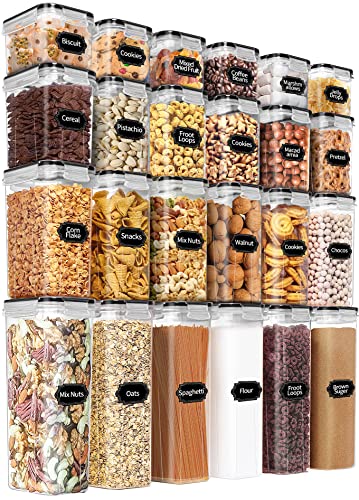 PRAKI set with waterproof labels for organizing dry goods and leftovers
This versatile set is made from BPA and PVC-free plastic, making it a great pick for users with sensitivities to common plastic additives. The waterproof labels work in the fridge, freezer, and pantry, so you can track contents and dates no matter where you store the containers. The leak-proof design means you can use these for both dry pantry goods and wet leftovers like soup, sauce, or marinated meat.
PRAKI set with waterproof labels for organizing dry goods and leftovers
This versatile set is made from BPA and PVC-free plastic, making it a great pick for users with sensitivities to common plastic additives. The waterproof labels work in the fridge, freezer, and pantry, so you can track contents and dates no matter where you store the containers. The leak-proof design means you can use these for both dry pantry goods and wet leftovers like soup, sauce, or marinated meat.
- Pros: BPA/PVC-free, leak-proof, waterproof labels, versatile for fridge and pantry use
- Cons: Flexible plastic is prone to denting if stacked with heavy items, 4-quart size is too large for standard cabinet shelves
- Ideal for: Users with plastic sensitivities, households that store both dry and wet goods
40-Piece Airtight Stackable Meal Prep Set
 Stackable meal prep set with leak-proof lids for weekly meal planning
This affordable 20-container set (40 pieces total with lids) includes sizes ranging from 1-cup to 8-cup, making it perfect for weekly meal prep. The airtight, leak-proof lids hold liquids without spilling, and the containers are microwave and dishwasher safe for easy reheating and cleanup. The stackable design fits neatly in fridge shelves and cabinets, and the transparent plastic makes it easy to identify contents at a glance.
Stackable meal prep set with leak-proof lids for weekly meal planning
This affordable 20-container set (40 pieces total with lids) includes sizes ranging from 1-cup to 8-cup, making it perfect for weekly meal prep. The airtight, leak-proof lids hold liquids without spilling, and the containers are microwave and dishwasher safe for easy reheating and cleanup. The stackable design fits neatly in fridge shelves and cabinets, and the transparent plastic makes it easy to identify contents at a glance.
- Pros: BPA-free, airtight leak-proof seal, microwave/dishwasher safe, stackable, affordable
- Cons: Plastic is not rated for high heat, smaller containers are too small for full meal portions
- Ideal for: Budget shoppers, weekly meal prep beginners, small to medium households
KEMETHY 40-Piece BPA/PVC-Free Set with Labels
 KEMETHY set is free of both BPA and PVC for extra safety peace of mind
This set is explicitly formulated without BPA or PVC, making it a top pick for users looking to avoid all common plastic additives. The 20 containers come in 4 sizes (1-cup, 2-cup, 4-cup, 8-cup) and are microwave, freezer, and dishwasher safe. The included wipe-off labels make organization simple, and the leak-proof lids are secure enough to transport soup or dressing without spills.
KEMETHY set is free of both BPA and PVC for extra safety peace of mind
This set is explicitly formulated without BPA or PVC, making it a top pick for users looking to avoid all common plastic additives. The 20 containers come in 4 sizes (1-cup, 2-cup, 4-cup, 8-cup) and are microwave, freezer, and dishwasher safe. The included wipe-off labels make organization simple, and the leak-proof lids are secure enough to transport soup or dressing without spills.
- Pros: BPA/PVC-free, leak-proof, microwave/dishwasher safe, included labels
- Cons: Full set weighs over 4 pounds when stacked, 8-cup containers are too large for standard fridge shelves
- Ideal for: Users with chemical sensitivities, health-focused households, people who transport wet meals
RockBerry 50-Piece Large Capacity Set
 50-piece RockBerry set with sizes from 0.8-cup to 12-cup for all storage needs
The most comprehensive set on our list, the RockBerry 50-piece set includes 12 sizes ranging from 0.8-cup (perfect for condiments or snacks) to 12-cup (large enough for whole casseroles or batch soups). The shatter-resistant BPA-free plastic is safe for kids’ lunchboxes and high-traffic kitchens, and the stackable design saves 40% more cabinet space than standard non-stacking sets. If you’re prepping fresh produce to store, a long-handled produce brush makes scrubbing potatoes, carrots, and other root vegetables quick and easy before portioning into containers.
50-piece RockBerry set with sizes from 0.8-cup to 12-cup for all storage needs
The most comprehensive set on our list, the RockBerry 50-piece set includes 12 sizes ranging from 0.8-cup (perfect for condiments or snacks) to 12-cup (large enough for whole casseroles or batch soups). The shatter-resistant BPA-free plastic is safe for kids’ lunchboxes and high-traffic kitchens, and the stackable design saves 40% more cabinet space than standard non-stacking sets. If you’re prepping fresh produce to store, a long-handled produce brush makes scrubbing potatoes, carrots, and other root vegetables quick and easy before portioning into containers.
- Pros: BPA-free, shatter-resistant, widest size range of any set, stackable, microwave/freezer safe
- Cons: Full set is heavy to move, smaller containers are too small for full meal portions
- Ideal for: Large families, batch cooks, households with big pantries or storage needs
How to Care for BPA-Free Containers to Maximize Their Lifespan
With proper care, high-quality BPA-free containers last 2–3 years with regular use. Follow these simple steps to keep them in top condition:
- Hand wash lids with mild soap and a soft sponge to avoid scratching silicone gaskets, which maintain the airtight seal. A stiff-bristled brush works well for scrubbing trapped food particles out of gasket grooves.
- Avoid abrasive cleaners, bleach, and steel wool, which can degrade plastic and increase chemical leaching risk.
- Wash plastic containers on the top rack of the dishwasher on a gentle, low-heat cycle; high heat can warp plastic and fade colors over time. After prepping messy ingredients like tomato sauce or marinated meat, a heavy-duty kitchen brush makes quick work of scrubbing countertops and sinks before you store your containers.
- Inspect containers monthly for scratches, clouding, or cracks. Replace damaged containers immediately, as these signs of wear indicate the material is breaking down and may leach chemicals or harbor harmful bacteria.
- Store containers with lids slightly ajar in cool, dry cabinets to prevent moisture buildup and odor absorption.
Frequently Asked Questions
Are BPA-free food storage containers completely safe?
BPA-free containers are significantly safer than those containing bisphenol A, but no plastic is 100% risk-free. As of 2026, the FDA has approved all BPA-free plastics used in food storage for consumer use, but some replacement chemicals (like BPS and BPF) are still being studied for long-term health effects. To minimize risk, avoid heating plastic containers to temperatures above 220°F (104°C), don’t use them for long-term storage of acidic or fatty foods, and replace them if they become scratched or cloudy.
Can I use BPA-free containers in the microwave?
Most BPA-free plastic containers are microwave safe, but you must check the manufacturer’s guidelines first. Only microwave them on medium or low heat, and never leave them in the microwave for more than 3 minutes at a time. Avoid microwaving foods high in fat or sugar (like cheese or caramel) in plastic containers, as these can reach temperatures high enough to warp the plastic. Glass containers with BPA-free silicone lids are a safer option for high-heat reheating.
How do I know if a container is truly BPA-free?
Look for a clear "BPA-free" label on the product packaging or the container itself. Reputable brands will also list the type of plastic used: look for recycling codes #1, #2, #4, #5, or #7 with an explicit BPA-free designation. Avoid #7 plastics that are not explicitly labeled BPA-free, as some of these contain BPA or other unregulated bisphenols.
Are BPA-free containers dishwasher safe?
Most are, but again, check the manufacturer’s instructions. Plastic containers are generally safe on the top rack of the dishwasher on a gentle cycle, but high-heat cycles can warp the plastic and degrade the silicone gaskets on lids over time. Hand washing lids will extend their lifespan and maintain their airtight seal.
What’s the difference between BPA-free plastic and glass food storage containers?
BPA-free plastic containers are lightweight, shatter-resistant, and often more affordable, making them ideal for meal prep on the go, kids’ lunches, and travel. Glass containers are non-porous, don’t absorb odors or stains, and are safe for any heat level (oven, microwave, stovetop), but they’re heavier and more fragile. Many households use a mix of both: plastic for portable meals, glass for pantry and fridge storage.
Final Thoughts: Investing in Safe, Long-Lasting Food Storage
BPA-free food storage containers are a small investment that delivers big returns for your health, wallet, and kitchen efficiency. The right set depends on your household size, meal prep habits, and storage space: beginners and small households will do well with the versatile Rubbermaid 16-piece set, while large families or batch cooks will get the most value from the expansive RockBerry 50-piece set. Pair your containers with good kitchen organization and safety practices to make meal prep faster, safer, and less stressful. Ready to upgrade your kitchen routine? Browse our full range of kitchen organization and safety tools to build a safer, more efficient space today.

I’m Abby Lu, a passionate home cook who loves simplifying everyday meals. At PlugChef.com, I share product reviews and cooking guides to help you find the best tools for your kitchen.
Related posts:
 Best Kitchen Gadgets Under $20: Affordable Tools for Every Culinary Task
 Under Cabinet Hidden Kitchen Outlets: Revolutionize Your Space-Saving Solutions
 Shelf for Under Kitchen Sink: Maximize Space with Pull-Out Organizers
 Best Beeswax Wraps for Zero Waste Kitchen: Eco-Friendly Food Storage Solution
 Best Water Filter for Pod Coffee Maker: Enhance Your Coffee Experience
 Best Kitchen Counter Compost Bin: Top Picks for Odor-Free Recycling