
Bamboo cutting boards are durable, attractive, and a sustainable choice for home kitchens. But they need different care than plastic or end-grain hardwood boards. This guide gives practical, experience-based instructions you can follow right away: how to prep a new board, daily cleaning, reconditioning, stain and odor removal, and when to repair or replace. Read on for step-by-step routines, safe product choices, and common mistakes to avoid.
Quick overview: what this article covers
- Initial prep for new boards (cleaning, sanding, first oil)
- Daily cleaning and sanitizing after raw meat
- Oiling, conditioners, and a DIY beeswax paste
- Repairing gouges and reconditioning a worn board
- Storage, prevention, and replacement signals
- Short FAQ with one-line answers
Why bamboo needs specific care
Bamboo is typically produced as laminated strips glued together, which gives it hardness and a smooth finish. That construction makes it:
- Less porous than many hardwoods (helps resist stains), but
- Vulnerable to water damage if soaked or repeatedly exposed to high heat, and
- Prone to surface cuts that can accumulate bacteria if not maintained.
In practice, a well-oiled bamboo board resists cracking and warping and stays hygienic. Neglect—especially leaving the board wet, running it through a dishwasher, or skipping oiling—quickly shortens its useful life.
Before first use: initial treatment (step-by-step)
Treating a new bamboo board before first use improves moisture resistance and evens out the surface.
Inspect and wash:
- Rinse with warm water and a few drops of mild dish soap.
- Do not soak; rinse quickly and wipe dry with a clean towel.
Light sanding (optional):
- If the surface feels slightly rough, sand lightly with 220-grit paper along the grain.
- Wipe away dust with a damp cloth and dry.
Apply the first oil coats:
- Use a food-grade mineral oil or a board conditioner (see oil section below).
- Apply a thin, even coat across both faces and edges using a lint-free cloth.
- Let the oil penetrate for at least 1–2 hours, then wipe off excess. For best initial protection, repeat with a second coat and allow to sit overnight.
Final wipe:
- After the oil has soaked in, buff the board with a dry cloth to remove tackiness.
Doing these simple steps makes the board ready for daily use and reduces early warping and splitting.
Daily cleaning and quick-care routine
A short, consistent cleaning routine keeps your board hygienic and attractive.
Immediately after use:
- Scrape food scraps off with a spatula or bench scraper.
- Wash with warm water and mild dish soap; scrub with a nonabrasive sponge.
- Rinse and dry thoroughly with a towel, then stand the board upright to air-dry.
After raw meat, poultry, or fish:
- Wash as above, then sanitize using a safe method (see “Sanitizing” below).
- Avoid cross-contamination: if you prepare raw meat frequently, consider using a separate board for raw proteins.
Never:
- Put bamboo boards in the dishwasher (high heat and water will delaminate and warp them).
- Soak the board for long periods.
Sanitizing options (safe and practical)
For household sanitizing, use one of these approaches:
- White vinegar spray: spritz full-strength white vinegar, let sit a few minutes, then rinse and dry. Vinegar helps neutralize odors and many surface microbes.
- Commercial sanitizers: follow the product label for food-contact surfaces.
- For tougher disinfection needs, consult official guidance from health agencies such as the USDA or FDA for recommended dilutions and procedures for food-contact surfaces: see the USDA and the FDA for up-to-date recommendations.
(When in doubt after handling raw meat, sanitize and let the board fully dry before oiling.)
Oiling and conditioning: what to use and how often
Regular oiling keeps bamboo from drying, splitting, and absorbing smells.
Which finishes are safe and effective
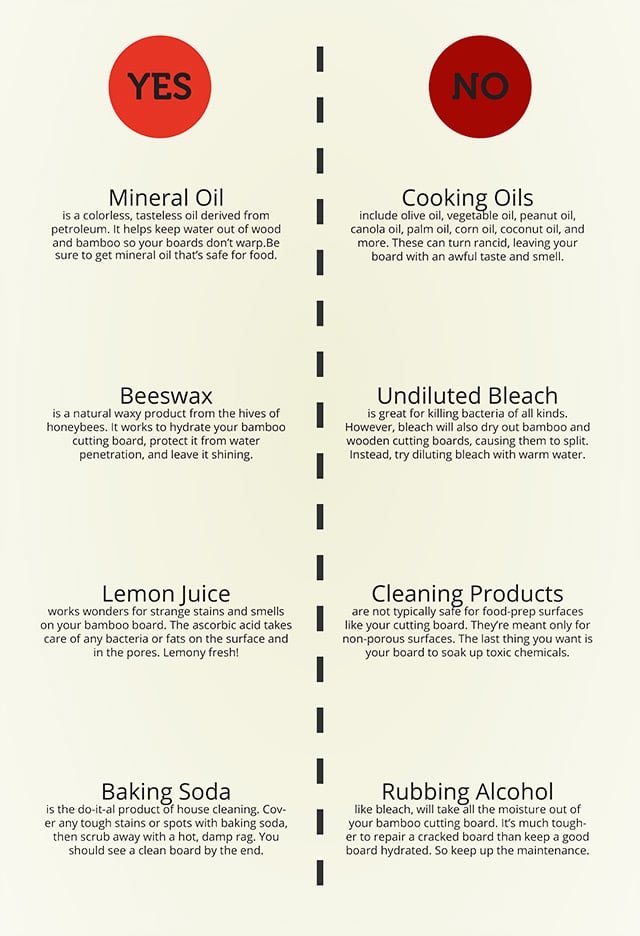
- Food-grade mineral oil (the most reliable choice): odorless, stable, and won’t go rancid.
- Beeswax/mineral oil blends: add a surface water-beading layer and a slight sheen.
- Fractionated (refined) coconut oil: stable and less likely to solidify; make sure it’s food-grade.
- Avoid culinary oils that can oxidize and go rancid (unrefined olive, vegetable, or nut oils).
Quick comparison
- Mineral oil — Pros: inexpensive, long shelf-life, penetrates well. Cons: no surface film unless mixed with wax.
- Beeswax + mineral oil — Pros: adds water resistance and a soft finish. Cons: slightly more effort to prepare/apply.
How often to oil
- General rule: oil when the board looks or feels dry, usually every 3–6 weeks with regular home use.
- For heavy-use boards (daily chopping), oil every 2–4 weeks.
- In dry climates or during winter heating, check and oil more frequently.
Step-by-step oiling method
- Clean and dry the board completely.
- Pour a small amount of oil (1–2 teaspoons for a small board; a tablespoon for a large board) onto the surface.
- Rub in evenly with a clean, lint-free cloth, covering both faces and all edges.
- Let the oil soak in for at least 1–4 hours; overnight is fine.
- Wipe away any excess oil; buff to a matte finish.
DIY beeswax conditioner (simple)
- Warm 4 parts food-grade mineral oil to 1 part grated beeswax until melted.
- Cool slightly and store in a sealed jar.
- Apply like oil; the wax will leave a light surface coating that beads water.

Freshly oiled bamboo board showing natural grain.
Credit: www.innoteck.co.uk
Removing stains, odors, and tough marks
Common household ingredients handle most problems.
- Light stains and odors:
- Rub the board with the cut side of a lemon or sprinkle baking soda, scrub, rinse, and dry.
- Grease or set-in stains:
- Make a paste of baking soda and water, rub gently, then rinse and dry.
- Persistent stains or light bleaching:
- A short exposure to direct sun can fade stains; avoid prolonged sun exposure that can dry the board.
- For persistent odors:
- Sprinkle baking soda, leave for 10–30 minutes, then scrub and rinse.
Use hydrogen peroxide sparingly for stubborn discoloration; test in a small area first.
Repairing, sanding and reconditioning a worn board
If your board has knife grooves or rough patches, you can often restore it.
When to sand and when to replace
- Sand if the surface has shallow grooves or feels rough.
- Replace if deep gouges trap food debris, split the board, or the board delaminates. A simple test: if the cut holds your fingernail or cannot be fully smoothed with sanding, consider replacement.
Sanding steps
- Clean and dry the board.
- Start with 120-grit sandpaper to flatten and remove gouges (sand with the grain).
- Progress to 220-grit for a smooth finish.
- Remove dust with a damp cloth and dry.
- Re-oil thoroughly (apply 2–3 coats, allowing soak time between coats).
If the board is glued or laminated and the layers separate, replacement is usually the safest option.
Preventing damage: storage and everyday habits
Good habits prevent most problems.
- Store upright to allow air circulation around the entire board.
- Keep away from direct heat sources and prolonged direct sunlight.
- Don’t use as a trivet for hot pans—extreme heat can damage glue joints.
- Use separate boards for raw proteins and produce when possible.
- After oiling, allow the board to cure before using for acidic foods; a well-buffed board is ready that same day.

Applying initial mineral oil coats to a new bamboo board.
Credit: www.deerandoak.co.uk
Common mistakes to avoid
- Putting bamboo in the dishwasher.
- Letting the board soak or sit in standing water.
- Using olive or vegetable oils as a finish (they can go rancid).
- Neglecting edges—moisture can enter through untreated edges.
- Waiting too long to sand out deep cuts that trap food.

Typical laminated bamboo cutting board with juice groove.
Credit: www.amazon.com
When to replace your bamboo cutting board
Consider replacement when:
- The board delaminates (layers separate).
- Knife cuts are deep and cannot be sanded smooth.
- Persistent odors remain after cleaning and treatment.
- Structural cracks or warping compromise safety.
Replacing a board is inexpensive compared with the food-safety risk of a compromised surface.
Frequently Asked Questions
Q: Is bamboo antibacterial? A: Bamboo is relatively hard and less porous than many woods, which helps reduce staining and moisture absorption, but no cutting board is inherently "antibacterial." Proper cleaning and maintenance are what keep boards safe.
Q: Can I use olive oil on my board? A: No—culinary oils like olive or vegetable oil can oxidize and become rancid. Use food-grade mineral oil or a beeswax/mineral oil conditioner.
Q: How long does a well-cared-for bamboo board last? A: With regular oiling and sensible use, many boards last several years. Heavy commercial use shortens lifespan; home use with maintenance commonly yields multiple years of service.
Q: How do I sanitize after raw meat? A: Wash with soap and hot water, then sanitize using a recommended method. Refer to USDA and FDA guidance for sanitizing food-contact surfaces if you need specific dilution ratios and procedures.
Conclusion — simple care, big payoff
Treating a bamboo cutting board well is low-effort and high-return: clean after each use, oil regularly, sand out small cuts, and avoid soaking or dishwashers. Those four habits keep the board hygienic, beautiful, and functional for years.
Start tonight: wipe your board dry, apply one thin mineral-oil coat, and let it soak. Your next meal will taste better on a well-cared-for surface.
Need a quick next step? Oil your board now—your kitchen will thank you.

Hi, I’m Daniel Brooks—a food lover and kitchen gear enthusiast. I enjoy testing cookware, utensils, and gadgets to see what really works in everyday cooking. At PlugChef.com, I share honest reviews, comparisons, and simple guides to help you choose the best tools for a safer, smarter, and more enjoyable kitchen.
Related posts:
 How to Make a Fruit Basket for a Gift: Easy DIY Guide
 Do You Need a Basket? Essential Guide for Air Fryers
 How to Choose Kitchen Appliances: Expert Tips Revealed
 Kitchen Cabinets With Black Stainless Steel Appliances: Modern Elegance
 White Kitchen Cabinets Stainless Steel Appliances: Timeless Elegance
 Top 10 Best Non-Toxic Cooking Utensils – Safe & Durable Choices for Healthy Homes

