
A well-maintained wooden cutting board is safe, durable and pleasant to use — but wood is porous and needs the right cleaning, sanitizing and upkeep to prevent cross-contamination and premature failure. This practical guide gives a simple daily routine, clear sanitizing choices with trade-offs, step-by-step deep-clean and repair instructions, and honest rules for when to retire a board. In practice, small habits (clean, sanitize when needed, dry and oil) prevent foodborne risk and extend a board’s life by years.
Quick checklist — what to do after every use
- Scrape off food scraps immediately with a bench scraper or spatula to avoid stains and stuck debris.
- Rinse briefly with hot water to remove loose particles.
- Wash both faces with hot, soapy water and a soft scrub brush or pad (30–60 seconds per face).
- Rinse thoroughly, then dry: wipe with a clean towel and stand upright to air-dry with both faces ventilated.
- If you cut raw meat, poultry or seafood: either use a separate board or sanitize after washing (see "Sanitizing after raw meat vs produce").
Why: microbial growth needs moisture and food residue; removing both plus drying is the single best routine to keep wood hygienic.
Daily cleaning — step‑by‑step (5 minutes)
- Scrape: remove solids and large food particles to prevent scratching and staining.
- Wash: apply dish soap and hot water; scrub along the grain to reach grooves. Avoid soaking — work the board in place, not submerged.
- Rinse: run hot water until soap and residue are gone.
- Optional daily sanitize: wipe with a solution of 3% hydrogen peroxide or undiluted white vinegar, then rinse and dry (see sanitizer trade-offs below).
- Dry: towel-dry both sides and stand the board upright so air circulates. Don’t leave it flat while damp.
Common mistake: placing a wet wooden board flat to dry or putting it in the dishwasher — both cause warping, cracking and finish loss.
Sanitizing after raw meat vs. produce — choose the right level
- Produce/ready-to-eat foods: thorough wash and drying is usually adequate. A light wipe with white vinegar or 3% hydrogen peroxide adds reassurance without damaging the wood.
- Raw meat/poultry/seafood: best practice is to use a dedicated, nonporous board (plastic or composite) for raw proteins. If you must use wood for raw meat, wash thoroughly, then sanitize with a label-approved sanitizer and rinse well, or heat-treat (hot water rinse + full dry). Because porous wood can trap juices in deep cuts, consider retiring wooden boards used frequently for raw meat.
For authoritative food-safety principles about cross-contamination and separation of raw proteins from ready-to-eat foods, consult guidance from the USDA and CDC.
Sanitizing options — what works, how to use them, and trade-offs
Choose a sanitizer based on risk, wood condition and frequency of use.
Bleach (sodium hypochlorite)
- Pros: broad-spectrum disinfectant when used correctly.
- Cons: can lighten or dry wood and degrade finishes with repeated use.
- Use: apply only to a cleaned surface, follow manufacturer label and CDC instructions, keep contact time short, rinse thoroughly and dry. Avoid frequent use on finished or delicate boards.
3% Hydrogen peroxide
- Pros: effective against bacteria and some viruses; breaks down to water and oxygen (no harmful residue).
- Cons: can lighten wood if pooled; use sparingly and wipe excess.
- Use: spray or pour lightly, allow a few minutes contact, then rinse and dry.
White vinegar (5–8% acetic acid)
- Pros: gentle, deodorizes and reduces many microbes; safe for frequent use.
- Cons: not EPA-registered as a broad-spectrum disinfectant for all pathogens; not the best sole method after high-risk contamination.
- Use: wipe or spray, let sit briefly, rinse and dry.
Isopropyl alcohol (70%)
- Pros: fast-acting and evaporates cleanly.
- Cons: flammable, can dry the wood over time; use in small amounts and in ventilated areas.
Commercial food-contact sanitizers (quaternary ammonium compounds, hydrogen peroxide blends)
- Pros: designed for food surfaces when used per label.
- Cons: must be used per manufacturer directions, including rinsing if required.
Practical rule: for everyday veggie prep, mild options (vinegar, hydrogen peroxide) are fine. For raw protein contamination, prioritize separation; if sanitizing is needed, use a label-appropriate disinfectant sparingly and follow rinsing and drying steps.
Deep cleaning & stain removal (occasional; 10–30 minutes)
Use one of these targeted methods depending on the problem.
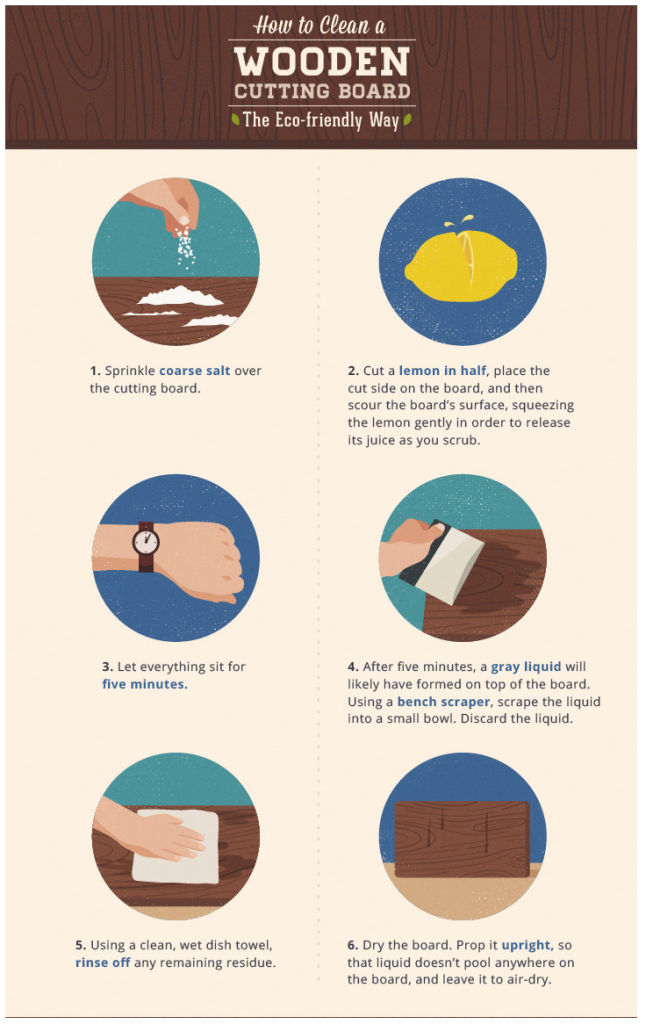
Salt + lemon — best for surface stains and odors
- Sprinkle coarse salt (kosher or sea salt) over the board.
- Rub vigorously with a halved lemon, pressing salt into stains and grain.
- Let sit 3–5 minutes, then rinse and dry.
This physically lifts stains and neutralizes onion/garlic odors.
Baking-soda paste — for greasy or colored stains
- Mix baking soda with a little water to a paste.
- Rub into the stain with a brush, let sit 5–10 minutes, then scrub, rinse and dry.
Vinegar + baking soda fizz — for extra lift on grime
- Sprinkle baking soda, then drizzle white vinegar to create fizz.
- Scrub after fizzing subsides, rinse and dry.
Sanding — for deep grooves, burn marks or embedded residue
- Start with 120–150 grit sandpaper along the grain to remove cuts.
- Finish with 180–220 grit for a smoother surface. Sand evenly across the face.
- Remove dust with a damp cloth, let dry, then recondition with oil or board cream.
Light sanding once or twice a year can restore older boards; deep sanding removes bacteria-harboring cuts that cleaning won’t reach.
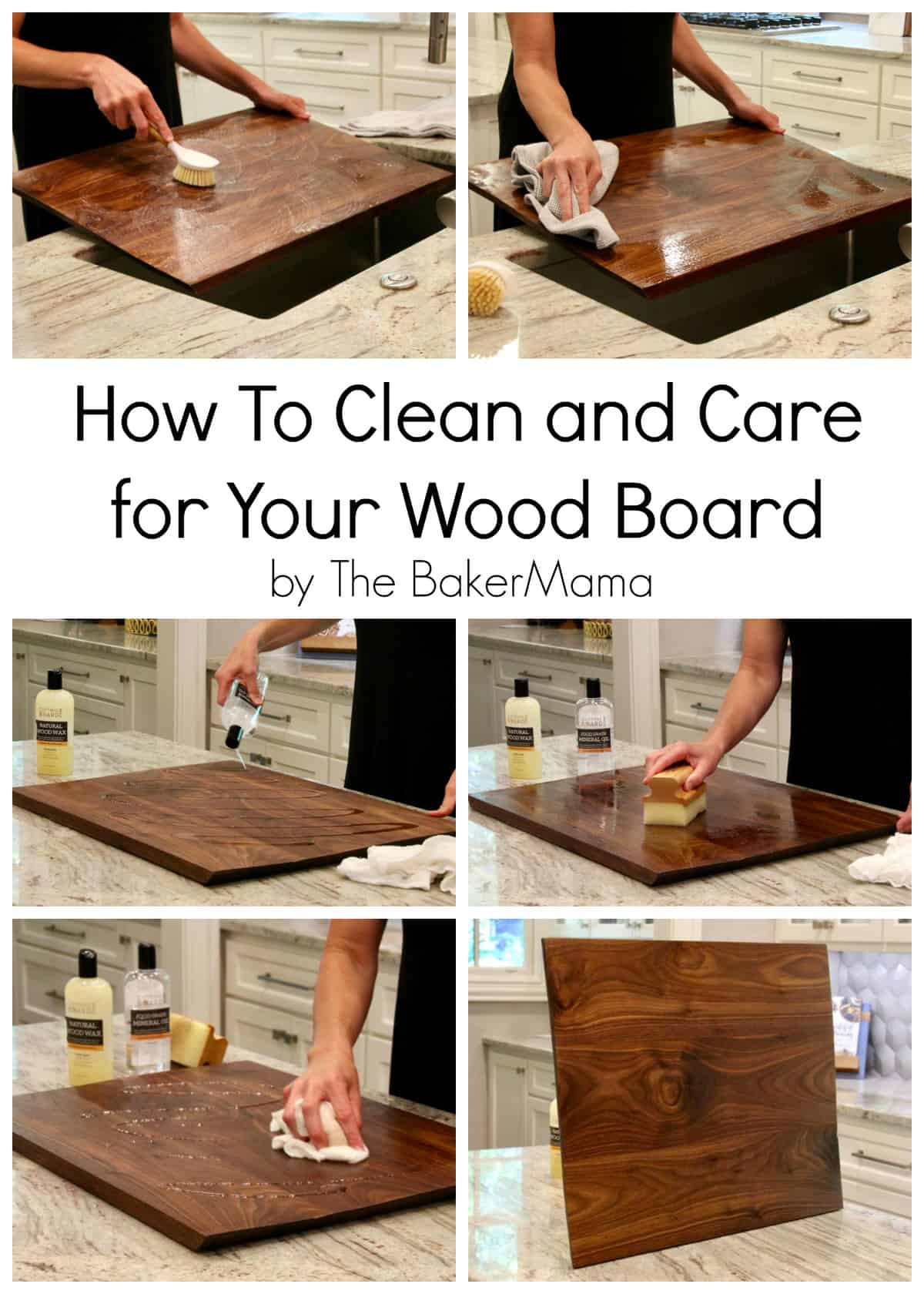
Salt and lemon scrub removing stains and odors
Credit: thebakermama.com
Conditioning and repairs — keep the wood healthy
- What to use: apply food-grade mineral oil or a purpose-made cutting-board oil. Avoid cooking oils (olive, canola) because they can go rancid. For extra protection, follow with a board cream or wax (beeswax + mineral oil blend).
- How often: monthly for boards in frequent use, or whenever the surface looks dry, pale or starts to absorb water rather than beading.
- How to oil: clean and fully dry the board. Pour a small puddle of mineral oil and rub along the grain with a cloth until the wood stops absorbing. Let it soak for several hours or overnight, then wipe off excess. Apply wax/cream last to create a water-resistant surface.
- Repairs: sand out small cuts as described. If the board splits, has loose laminate seams, splinters, or structural damage, replace it — repairs can hide contamination and compromise safety.
:max_bytes(150000):strip_icc()/clean-wooden-cutting-board-4772583_05-6782ac2cc4784073ab3769537ed1da34.jpg)
Clean, oiled wooden cutting board ready for use
Credit: www.thespruce.com
Drying and storage — stop microbial growth before it starts
- Dry completely within a few hours; moisture trapped against a surface promotes bacterial growth and odors.
- Store upright or on a slotted rack so air moves over both faces.
- Avoid stacking damp boards; keep them away from direct heat or sunlight that can dry and crack the wood.
- In practice, a strict habit of drying and ventilated storage is the most reliable prevention of odors and microbial buildup.
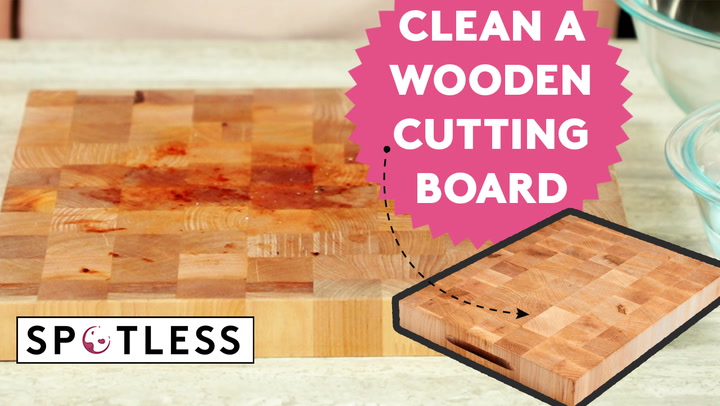
Inspecting boards for deep grooves and cracks
Credit: www.realsimple.com
When to repair versus replace
Repair (sanding and reconditioning) when:
- Shallow cuts and light grooves are present that sanding can remove.
- Finish is worn but the board remains structurally sound.
Replace when:
- Deep, permanent grooves or cracks trap residue and cannot be removed by sanding.
- Splintering or pieces are breaking off.
- Loose joints on laminated boards.
- Persistent, embedded odors after thorough cleaning.
A practical test: run a clean finger over the surface; if you can feel deep gouges that collect residue and sanding doesn’t restore a smooth face, replace the board.
Common mistakes and prevention tips
- Don’t rely on smell — bacteria can be present without odor.
- Never put a wooden board in the dishwasher.
- Don’t soak wood; repeated immersion causes warping and splitting.
- Don’t use metal scouring pads that gouge the grain.
- Color-code or label boards for raw protein vs. produce to reduce cross-contamination risk.
- Inspect boards regularly and sand small problem areas before they become permanent.
Quick troubleshooting
- Persistent odor after cleaning: deep-clean with salt + lemon or baking-soda paste, sand lightly, then condition.
- White bloom or mildew-looking spots: fully dry, sand a thin layer, then re-oil; if mold has penetrated deep, replace.
- Warping after heavy washing: stop using, dry flat in a controlled environment; severe warps mean replacement.
FAQ
Q: Can you put a wooden cutting board in the dishwasher?
A: No. Dishwasher heat and water will warp, crack and delaminate wood. Hand-wash, sanitize if needed, and dry upright.
Q: Is vinegar a disinfectant for cutting boards?
A: Vinegar reduces many microbes and neutralizes odors but is not an EPA-registered disinfectant for all pathogens. It’s fine for routine use on wood but for high-risk contamination rely on label-approved sanitizers or separation protocols and follow authoritative guidance from the CDC.
Q: How often should I oil my cutting board?
A: Monthly for boards used regularly, or whenever water no longer beads on the surface. More frequent oiling is fine; avoid vegetable cooking oils.
Q: Can I safely use bleach on wood?
A: Bleach works as a disinfectant but can damage and lighten wood with repeated use. If used, clean first, follow label/CDC guidance, use the correct dilution, rinse thoroughly and dry. Reserve bleach for occasional heavy-duty disinfection, not routine care.
Conclusion — simple habits, big payoff
Sanitizing wooden cutting boards is straightforward when you follow a consistent routine: scrape, wash, (sanitize when needed), dry upright, and condition regularly. Use gentler sanitizers for everyday produce, reserve stronger disinfectants for special cases and always rinse and dry wood afterward. Inspect and sand or replace boards when cuts and grooves become permanent. Small, consistent steps keep your board safe and extend its service life.
Start today: inspect one board, clean and dry it, and apply oil if it looks dry — a 10‑minute habit that prevents contamination and extends the board’s life.

Hi, I’m Daniel Brooks—a food lover and kitchen gear enthusiast. I enjoy testing cookware, utensils, and gadgets to see what really works in everyday cooking. At PlugChef.com, I share honest reviews, comparisons, and simple guides to help you choose the best tools for a safer, smarter, and more enjoyable kitchen.
Related posts:
 How to Make a Fruit Basket for a Gift: Easy DIY Guide
 Do You Need a Basket? Essential Guide for Air Fryers
 How to Choose Kitchen Appliances: Expert Tips Revealed
 Kitchen Cabinets With Black Stainless Steel Appliances: Modern Elegance
 White Kitchen Cabinets Stainless Steel Appliances: Timeless Elegance
 Top 10 Best Non-Toxic Cooking Utensils – Safe & Durable Choices for Healthy Homes

