
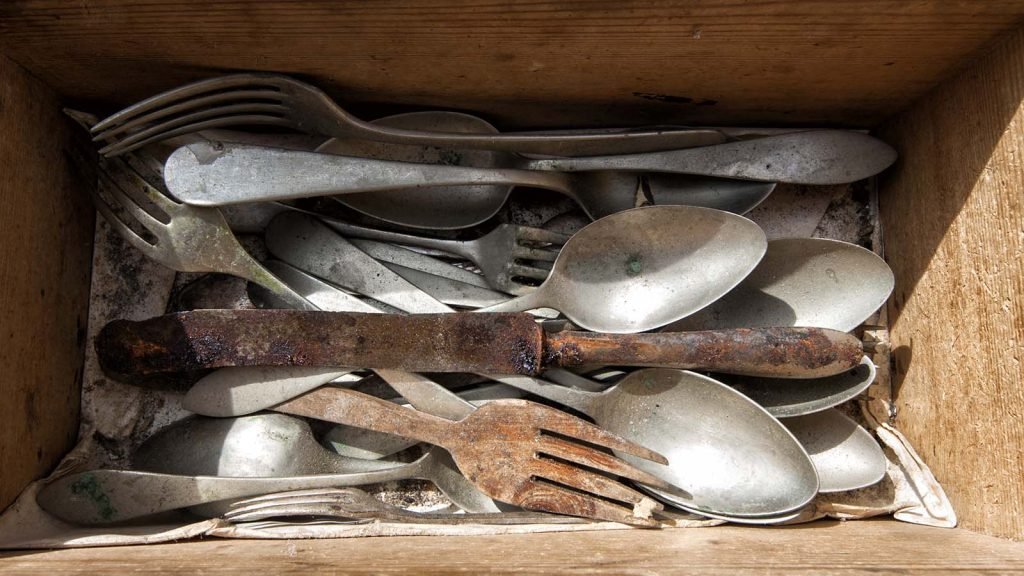
Rust on cookware and utensils is common, but in most cases it’s repairable. This guide shows how to identify the metal and rust severity, choose the safest and most effective removal method, restore finishes (especially cast iron), and prevent rust from coming back. Follow the step-by-step instructions, precautions, and aftercare to make your pots, pans, and cutlery food-safe again.
Quick summary — what to expect
- How to identify stainless, cast iron, carbon steel, plated, and aluminum items
- Material-by-material methods: baking soda, vinegar, lemon + salt, oxalic cleaners, mechanical abrasion, and electrolysis
- Detailed, safe step-by-step procedures with timings and tools
- How to restore and re-season cast iron properly
- Prevention tips and when to replace rather than repair
Safety and food-safety first
- Always wear gloves and eye protection when using acids or commercial rust removers.
- Work where fumes and hydrogen gas (electrolysis) can’t build up — outdoors or in a very well-ventilated area.
- Never mix cleaners (for example, bleach + vinegar); dangerous gases can form.
- After cleaning, rinse thoroughly and, when applicable, sanitize food-contact surfaces. For official food-safety guidance on sanitizing and cleaning food-contact surfaces, consult the U.S. Food and Drug Administration.
- If you receive a deep cut from a rusty object, seek medical advice and review wound and tetanus guidance from the Centers for Disease Control and Prevention.
Common practical safety mistakes: leaving acid soaks unattended (they can damage thin or plated items), using coarse steel wool on polished stainless (leaves permanent scratches), and failing to neutralize acid residues before cooking.
Identify the metal and assess rust severity
Begin by identifying the utensil material—this determines which methods are safe.
- Magnet test: If a magnet sticks firmly, the piece likely contains iron or low-grade stainless. Austenitic stainless (common kitchen grade 18/8 or 18/10) is weakly magnetic or non-magnetic; carbon steel and cast iron are strongly magnetic.
- Visual cues:
- Stainless steel: usually smooth, silvery; “rust” often appears as brown or reddish streaks or surface corrosion where the chromium oxide layer is damaged.
- Cast iron/carbon steel: orange-brown flaky rust; rough, grainy texture when rust is present.
- Chrome/nickel-plated: rust often appears at chips or cracks in the plating; the underlying steel is corroding.
- Aluminum: does not make red rust (iron oxide). It forms dull, white/gray aluminum oxide—treat differently.
- Severity categories:
- Surface discoloration/light spots: treatable with gentle methods.
- Flaking rust or pitting that exposes deep pits: still sometimes salvageable for cast iron, but expect more intensive work.
- Structural weakening, holes, or loose handles: replace the item.
If you’re unsure about plating damage or structural integrity, prioritize safety—replace items that compromise cooking performance or could shed metal into food.
Tools and supplies (what to have on hand)
- Abrasives: baking soda, non-gel powdered cleaners (oxalic-acid-based like some brands), coarse salt.
- Acids: white distilled vinegar (5% acetic acid), fresh lemon juice.
- Pads and brushes: nylon scrub pad, fine steel wool (0000 grade), brass-bristle brush (brass is softer than steel), toothbrush. Use steel wool only where scratching is acceptable (cast iron, carbon steel).
- Plastic scraper or wooden spatula for lifting loose flakes.
- Protective gear: nitrile or rubber gloves, safety glasses, apron.
- Rags, microfiber towels, and food-safe oil (vegetable oil, canola, or flaxseed for seasoning).
- Optional: electrolysis setup (battery charger, sacrificial anode, washing soda) — advanced and requires strict safety steps.
- Commercial rust removers: effective but follow label instructions and rinse thoroughly.
Surface rust on a stainless spoon — light, treatable spots.
Credit: www.reddit.com
Which method for which material — at-a-glance
- Cast iron / carbon steel: mechanical abrasion (wire brush/steel wool) + re-seasoning; vinegar for heavy rust (short soak).
- Stainless steel: baking soda paste, oxalic-acid powdered cleaners, nylon pads. Avoid coarse steel wool or wire brushes on polished areas.
- Chrome/nickel-plated: lemon + salt, mild paste cleaners; avoid aggressive wire brushing that removes plating.
- Aluminum: baking soda paste and mild abrasives; avoid strong acids and steel abrasives.
Use the gentlest effective method first and escalate only if needed.
Step-by-step methods
Baking-soda paste — gentle and food-safe (best first attempt)
Best for: stainless steel, chrome, mild surface rust.
Steps
- Mix a paste of 2–3 tablespoons baking soda with just enough water to make a spreadable paste.
- Apply to the rusted area and let sit 10–20 minutes. For stubborn spots, up to 30 minutes is OK.
- Scrub with a soft sponge or nylon pad in the direction of any grain. Avoid circular micro-scratches.
- Rinse in hot water and dry thoroughly. Repeat once if necessary.
Why it works: baking soda is mildly abrasive and neutralizes some acids; safe for food-contact surfaces when rinsed.
Pros/Cons
- Pros: inexpensive, non-toxic, low risk of damage.
- Cons: may not remove heavy pitting or thick flaking rust.
White-vinegar soak — for heavier but not plated pieces
Best for: removable parts, tools, cast iron in severe cases (but requires re-seasoning).
Steps
- Submerge the rusted portion in white vinegar (5%) for 1–8 hours depending on severity; check every 30–60 minutes. Thin metals and plated items can be damaged in longer soaks.
- Remove and scrub with a nylon pad, brass brush, or 0000 steel wool as appropriate.
- Rinse thoroughly. Neutralize residual acid by rinsing with a baking-soda solution (1 tbsp baking soda per quart of water), then rinse again and dry.
- For cast iron: immediately dry and re-season (see re-seasoning section).
Practical note: over-soaking can dull or etch thin stainless and damage plating. Always test on an inconspicuous area.
Lemon juice + salt — a natural mild abrasive
Best for: chrome-plated trim, decorative finishes, small spots.
Steps
- Sprinkle coarse salt over the rust spot.
- Squeeze lemon juice to soak the salt, and let sit 10–30 minutes.
- Scrub gently with a soft cloth or toothbrush.
- Rinse and dry.
This is low-risk and leaves a fresh smell; it’s good for delicate finishes but slower than commercial cleaners.
Oxalic-acid powdered cleaners — effective on stains
Best for: stubborn discoloration on stainless steel; follow label.
Steps
- Put on gloves and eye protection. Work in a ventilated area.
- Mix per manufacturer instructions to form paste or solution. Apply for the recommended dwell time (often minutes).
- Scrub, rinse thoroughly, and neutralize if the label recommends. Dry completely.
Safety: oxalic acid is effective but toxic if ingested. Never use on surfaces where you cannot completely rinse residue away without doubt.
Abrasive mechanical removal — for cast iron and heavy flaking
Best for: cast iron and tools with loose, thick rust.
Steps
- Remove loose flakes with a plastic scraper.
- Use a wire brush or 0000 steel wool to remove rust down to clean metal. Apply steady pressure, keep strokes even.
- Clean off debris with a stiff brush and warm water; dry immediately.
- Re-season cast iron (see next section).
Caution: do not use coarse steel wire or heavy abrasives on polished stainless or plated items—these will leave permanent damage.
Electrolysis (advanced) — for badly rusted salvageable parts
Best for: heavily corroded iron/steel pieces where mechanical abrasion would remove too much metal.
Overview and safety
- Electrolysis reduces iron oxide back to metal on the cathode using a sacrificial anode and an alkaline electrolyte (washing soda/sodium carbonate). It produces hydrogen gas—work outdoors, ventilated area, keep sparks and flames away, and wear eye protection. Do not attempt electrolysis near open electrical circuits, and never use stainless steel as the anode (it can contaminate the bath).
- If you are inexperienced, consult professional restoration sources or experienced hobbyists before attempting this. A reliable electricity source and rigid safety practices are mandatory.
Basic steps (summary only — seek a detailed step-by-step guide before attempting)
- Prepare an electrolyte with washing soda in water in a non-metal container.
- Suspend the rusted item as the cathode (negative) and a sacrificial steel as the anode (positive).
- Connect a low-voltage DC source (battery charger) and submerge until rust lifts. Monitor closely and limit current per item size.
- Rinse and neutralize after treatment, then dry and protect the metal.
Because of complexity and risk, electrolysis is considered an advanced method.
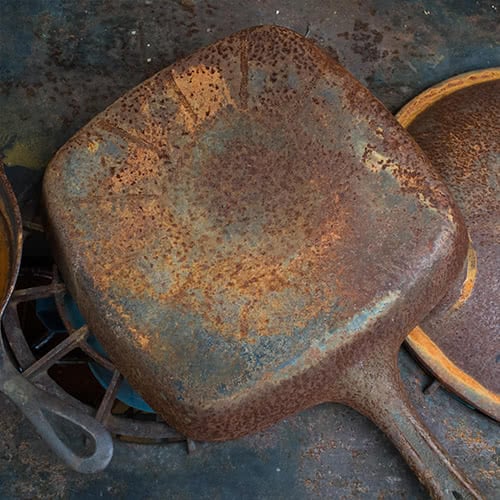
Heavy pan rust — needs mechanical removal and re-seasoning.
Credit: www.webstaurantstore.com
Restore and re-season cast iron correctly
If you remove rust from cast iron, re-season promptly—this rebuilds the protective polymerized oil layer that prevents rust.
Steps
- Remove rust to clean metal using 0000 steel wool or a wire brush.
- Wash with warm water. A small amount of mild soap is acceptable if you need to remove grit; rinse well.
- Dry thoroughly: towel dry, then heat briefly on the stove or in the oven to evaporate all moisture.
- Apply a very thin, even coat of oil (vegetable oil, canola, or flaxseed). Wipe off excess—thin is better than thick.
- Place upside down in the oven at 200–250°C (400–475°F) for 1 hour. Put foil or a tray beneath to catch drips. Cool in the oven.
- Repeat seasoning 1–2 more times for a durable layer after a major restoration.
Maintenance tips: lightly oil after use if the pan looks dry, and avoid long soaking in water. In practice, many rust returns because owners skip fast drying and oiling; do both immediately.
Aftercare and storage to prevent rust returning
- Dry thoroughly after washing: towel dry and heat briefly if possible.
- Lightly oil cast iron and carbon steel after drying. Wipe a thin film—excess oil can become sticky.
- For stainless cookware and knives, dry and store in a dry location; silica gel packets in drawers are useful in humid climates.
- Avoid storing salty or acidic residues on metal surfaces. Rinse cooktops and utensils promptly after contact with saltwater or marinades.
- For long-term storage, consider a dehumidifier in very humid areas or rust inhibitors safe for food-contact tools.
When to repair vs replace
Repair when:
- Rust is surface-level and the metal is structurally sound.
- The item can be reconditioned with reasonable time and effort (e.g., re-seasoning cast iron).
- Replacement parts (handles, screws) can be safely replaced.
Replace when:
- There is deep pitting, holes, or structural weakness.
- Plating is gone in areas critical to food contact and cannot be retouched safely.
- Wood or composite handles are split or the rust has loosened joints.
A practical rule: if restoring an item requires repeated intensive work after every single use, replacing it is often more economical and safer.

Typical powdered rust remover — always follow manufacturer instructions.
Credit: www.amazon.com
Practical FAQs
Q: Is rust on cookware dangerous?
A: Light surface rust (small flakes) is unlikely to cause poisoning, but it can discolor food and create off-flavors. Heavy pitting that sheds flakes into food, or rust that has compromised structural integrity, is a safety and quality risk. When in doubt, replace the item.
Q: Can I use bleach to remove rust?
A: No. Bleach does not remove iron oxide effectively and can react dangerously with acids or other cleaners. Avoid using bleach for rust removal.
Q: Is Bar Keepers Friend or oxalic-acid cleaner safe for cookware?
A: Many powdered cleaners are marketed for stainless and tough stains. If you use them, follow label instructions, rinse thoroughly, and ensure no residue remains. For any surface contacting food, complete rinsing and drying are essential.
Q: Will the dishwasher remove rust?
A: Dishwashers can worsen rust on susceptible metals (cast iron, low-grade steel) because of prolonged moisture and salts. For very light discoloration on high-quality stainless, the dishwasher may help, but manual targeted cleaning is more reliable.
Q: How often should I re-season cast iron?
A: After a major restoration season 1–3 times. For everyday maintenance, a light oiling and brief heating as needed prevents dryness and rust.
Conclusion and next step
Removing rust from cooking utensils is straightforward when you match the method to the metal and severity. Start with the gentlest options (baking-soda paste, lemon + salt), escalate to vinegar or commercial cleaners only as needed, and use mechanical or electrolysis methods for heavy corrosion. Always rinse and sanitize food-contact surfaces and re-season cast iron immediately after restoration. If the metal is deeply pitted, weakened, or the handles are compromised, replace the item.
Try the baking-soda paste on one small item today — it’s cheap, safe, and often restores light rust quickly.

Hi, I’m Daniel Brooks—a food lover and kitchen gear enthusiast. I enjoy testing cookware, utensils, and gadgets to see what really works in everyday cooking. At PlugChef.com, I share honest reviews, comparisons, and simple guides to help you choose the best tools for a safer, smarter, and more enjoyable kitchen.
Related posts:
 How to Make a Fruit Basket for a Gift: Easy DIY Guide
 Do You Need a Basket? Essential Guide for Air Fryers
 How to Choose Kitchen Appliances: Expert Tips Revealed
 Kitchen Cabinets With Black Stainless Steel Appliances: Modern Elegance
 White Kitchen Cabinets Stainless Steel Appliances: Timeless Elegance
 Top 10 Best Non-Toxic Cooking Utensils – Safe & Durable Choices for Healthy Homes

