Knife sheaths are far more than simple blade covers—they are critical safety tools that preserve your knife’s edge, prevent accidental lacerations, and extend the lifespan of even high-end cutlery. Whether you store chef’s knives in a kitchen drawer, carry a multitool on weekend hikes, or transport professional blades to culinary gigs, the right sheath protects both you and your investment. A common mistake among home cooks and outdoor enthusiasts alike is skipping edge protection, leading to dulled blades, rust on carbon steel knives, and preventable cuts when reaching into storage or gear. This guide breaks down every major type of knife sheath, their materials, ideal use cases, and how to choose the best option for your needs, with practical, up-to-date guidance for 2026.
Why Knife Sheaths Matter
Uncovered blades are a leading cause of kitchen and outdoor lacerations, per OSHA's hand tool safety guidelines. Beyond safety, sheaths protect the delicate edge of your knife from contact with other utensils, hard surfaces, and moisture that causes rust. For high-carbon steel knives, which are prone to corrosion if left exposed, a sheath creates a barrier against humidity and food residue that can degrade the blade over time. Consistent sheath use also reduces unnecessary contact with hard surfaces that dull edges, cutting down on frequent sharpening and replacement costs over the life of your knife. For chefs, hunters, and everyday carry (EDC) users, a secure sheath also prevents accidental loss of knives during transport or activity. The American Knife & Tool Institute further recommends inspecting sheaths for wear before each use to ensure blades remain fully covered and secure.
Core Materials Used in Knife Sheaths
The performance and longevity of a knife sheath depend entirely on its construction material. Each material offers unique trade-offs for durability, maintenance, and use case suitability. Below are the most common materials you’ll encounter when shopping for a sheath:
Leather
A classic choice for both kitchen and outdoor knives, full-grain leather sheaths mold to the shape of your blade over time, creating a custom, secure fit that prevents movement during carry. Leather is naturally abrasion-resistant and adds a premium aesthetic to high-end cutlery. The trade-off is maintenance: leather sheaths require occasional conditioning with leather oil to prevent cracking, and they are not fully water-resistant, so they are not ideal for wet outdoor environments or storing damp knives.
Nylon
Reinforced nylon is the most popular material for tactical, hunting, and EDC sheaths. It is lightweight, abrasion-resistant, and often water-repellent, making it suitable for all-weather outdoor use. Most nylon sheaths feature belt loops or MOLLE attachment points for hands-free carry, and many are machine washable for easy cleaning. Lower-quality nylon can fray over time with heavy use, so look for 1000D nylon for maximum durability.
Plastic (ABS / Polypropylene)
Food-safe, BPA-free plastic sheaths are the go-to choice for kitchen drawer storage. They are fully waterproof, preventing rust on carbon steel blades, and are easy to wipe clean after use. Plastic guards are also the most affordable option, making them ideal for home cooks with large knife sets. The downside is that low-quality plastic can crack if dropped or exposed to extreme cold, and they offer less impact protection than nylon or leather.
Felt-Lined
Felt linings are almost always paired with a plastic, leather, or nylon shell to add a soft, non-abrasive barrier between the blade and the sheath. Felt prevents scratching and dulling of precision edges, making felt-lined guards the best choice for high-end Japanese steel knives and carbon steel blades that are prone to rust. The only drawback is that felt can retain moisture if stored damp, so always air dry felt-lined sheaths before storing.
Kydex
A rigid, impact-resistant thermoplastic, kydex is the top choice for custom EDC and tactical sheaths. It holds its shape permanently, is fully waterproof, and can be heat-molded to fit a specific blade exactly for zero movement during draw. Kydex is also low-maintenance, requiring only a wipe-down to clean. The trade-offs are that it can be noisy when drawing a knife, and it is less comfortable against the skin for belt carry than padded nylon or leather.
Common Types of Knife Sheaths by Use Case
While material is a key consideration, the best sheath for your needs depends on how and where you use your knife. Below are the most common types organized by use case, with examples of popular options for each:
Drawer Edge Guards for Kitchen Storage
For home cooks who store knives in kitchen drawers, edge guards are the simplest, most affordable protection option. These flexible or rigid covers slip over the blade to prevent nicks to the edge, scratches on other utensils, and accidental cuts when reaching into the drawer. Most universal edge guards fit a range of blade lengths, from 3-inch paring knives to 10-inch chef’s knives, and are made from BPA-free plastic for food safety.
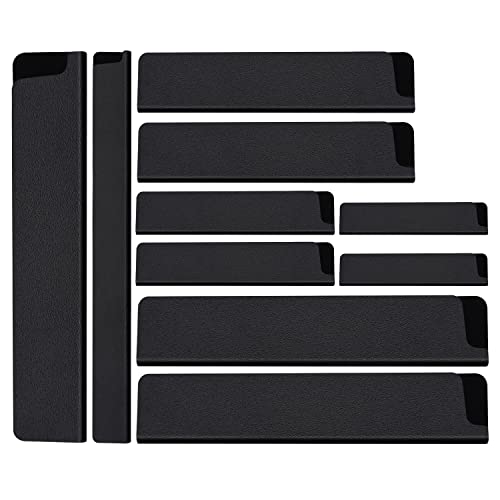 Set of 10 non-BPA edge guards for protecting multiple kitchen knives in drawers
For multi-knife households, the 10pcs Universal Knife Edge Guards Set offers a cost-effective solution, with 10 guards sized to fit most standard kitchen blades. You can find this set here for a budget-friendly multi-knife option. For high-end carbon steel knives, the WELLSTAR Knife Edge Guards Set adds a non-scratch felt lining to prevent corrosion and dulling. For smaller paring knives, the PATIKIL PP Safety Knife Cover Sleeves offer a snug, non-slip fit for 3.5-inch blades, available here.
 Universal felt-lined guards that fit most standard kitchen knife sizes
Pairing these guards with a kitchen countertop organizer with drawers keeps frequently used blades accessible while protecting them from damage. If you’re building out a full kitchen storage system, our pots and pans cabinet organization tips include step-by-step guidance for creating dedicated knife compartments that pair seamlessly with edge guards.
Portable Knife Covers for Transport
If you carry knives to culinary classes, catering gigs, or outdoor cooking events, portable knife covers offer lightweight, slip-resistant protection for travel. These covers are typically made from waterproof plastic or padded nylon, with snap or velcro closures to keep the blade secure in a bag or suitcase. Many are sized for specific blade lengths, so measure your knife before purchasing to ensure a snug fit.
 Waterproof plastic sleeves ideal for transporting knives to culinary classes or picnics
The 2 Pcs Knife Covers or Sleeves set is a popular pick for chefs on the go, with a waterproof plastic construction that prevents rust if the cover gets wet during transport, available here. For everyday carry of multitools and folding knives, the Timsec Nylon Pocket Knife Sheath features a dual horizontal/vertical belt loop and snap closure for secure, hands-free carry, available here.
 Dual carry option sheath with snap closure for everyday carry of small tools
Belt Carry Sheaths for Outdoor & Tactical Use
For hunters, hikers, military personnel, and EDC users, belt carry sheaths provide hands-free, secure access to knives during activity. These sheaths almost always feature a belt loop or MOLLE attachment, and are built from durable nylon, leather, or kydex for impact resistance. Many tactical sheaths also include a retention strap to prevent accidental loss during rigorous movement.
 Durable tactical nylon sheath with secure blade retention for field use
The Rothco G.I. Type Enhanced Nylon Knife Sheath is a trusted budget option for outdoor use, with a lightweight, abrasion-resistant build and secure blade retention, available here. For a low-profile tactical option, the Rothco G.I. Type Enhanced Nylon Sheath in OD Green blends seamlessly with natural surroundings and gear, available here.
Tactical nylon sheath with MOLLE-compatible attachment points for outdoor carry
Custom-Fit Guards for Specialty Knives
High-end knives, such as Japanese steel santoku knives, custom carbon steel blades, or large cleavers, require custom-fit sheaths to avoid movement that can dull the edge or expose the tip. These sheaths are typically made from leather or kydex, molded precisely to the blade’s shape for a tight, secure fit.
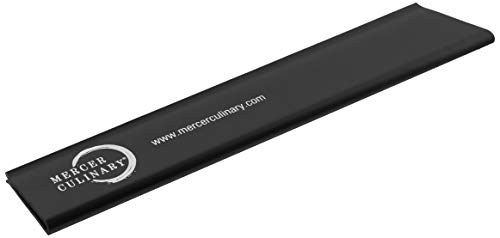 Slim polymer guard sized for standard 8-inch chef's knives
For standard 8-inch chef’s knives, the Mercer Culinary Knife Guard offers a slim, affordable fit with a durable polymer build, available here. For larger 10-inch blades, the Mercer Culinary Felt Lined Knife Guard adds a soft lining to protect high-end edges, available here.
 Soft felt lining prevents dulling and scratching of high-carbon steel knives
The Matsato Premium Leather Sheath is custom-sized for original Japanese steel knives, with a soft leather interior that won’t scratch the blade’s polished finish, available here.
 Premium leather sheath that molds to the blade for a secure, scratch-free fit
How to Choose the Right Knife Sheath
With dozens of options on the market, narrowing down the right sheath comes down to four key factors:
- Match the sheath to your knife’s dimensions: Measure your blade’s length, width, and thickness before purchasing. Universal sheaths are labeled for blade length (e.g., 8-inch, 10-inch) and will accommodate blades within 0.5 inches of that size. For uniquely shaped blades (like wide santoku knives or serrated bread knives), opt for a custom-fit sheath to avoid gaps that expose the edge.
- Prioritize material for your use case: For drawer storage, opt for BPA-free plastic or felt-lined guards. For outdoor carry, choose reinforced nylon or kydex for water and impact resistance. For high-end kitchen knives, leather or felt-lined guards provide the gentlest protection for precision edges.
- Look for safety features: Ensure the sheath fully covers the blade from tip to handle, with a secure closure (snap, velcro, or molded fit) to prevent accidental opening. Belt carry sheaths should have a retention strap to keep the knife from falling out during movement.
- Consider maintenance requirements: Leather sheaths need conditioning every 3-6 months to prevent cracking, while nylon and plastic sheaths only require a wipe-down with a damp cloth. Felt-lined sheaths should be air-dried thoroughly before storage to avoid mold growth.
For home cooks with limited kitchen space, our small kitchen organization guide offers space-saving tips for storing knife sheaths and other cooking essentials without a dedicated pantry. If you prefer open display storage for frequently used knives, our decorative wall basket ideas include mounted solutions that keep blades visible yet safely out of reach of children.
Care and Maintenance Tips for Knife Sheaths
Proper care will extend the life of your sheath and keep your knives protected for years:
- Wipe down plastic and nylon sheaths with a damp cloth after each use, especially if they come into contact with food residue or dirt. Air dry fully before storing to prevent mold and rust on stored blades.
- Condition leather sheaths every 3-6 months with a leather-specific oil to keep the material supple and prevent cracking. Avoid soaking leather sheaths in water, as this can warp the shape and damage the finish.
- Spot clean felt-lined sheaths with a mild soap and damp cloth; do not machine wash, as agitation can mat the felt and reduce its protective cushioning.
- Inspect sheaths regularly for cracks, tears, or worn lining that could expose the blade. Replace damaged sheaths immediately to avoid accidental cuts or blade damage.
- Store sheaths in a cool, dry place away from direct sunlight, which can degrade plastic, fade leather, and dry out felt over time.
A common mistake many users make is storing knives in sheaths while the blade is still damp from washing, which leads to rust on carbon steel blades and mold growth on fabric linings. Always dry your knife thoroughly before sliding it into a sheath for storage. If you store extra knife sheaths in your pantry, a pantry can organizer keeps small accessories secure and easy to find. For prep areas near your sink, an over-sink drying station provides a secure, dry spot to air-dry sheaths after cleaning.
Frequently Asked Questions
What materials are most durable for heavy-duty outdoor knife sheaths?
For outdoor and tactical use, kydex and 1000D reinforced nylon are the most durable options. Kydex is impact-resistant, waterproof, and holds its shape in extreme temperatures, making it ideal for hunting, military, or backcountry hiking. Reinforced nylon resists tears and abrasion, and is lightweight for all-day carry. Leather can also work for outdoor use, but requires regular conditioning to prevent cracking from moisture and sun exposure.
Do felt-lined knife guards work for carbon steel kitchen knives?
Yes, felt-lined guards are ideal for carbon steel knives, which are prone to rust and scratching. The soft, non-abrasive felt lining creates a barrier between the blade and other utensils or moisture, preventing corrosion and edge dulling. Many high-end kitchen knife brands include felt-lined guards as standard accessories for this reason. Avoid storing carbon steel knives in unlined plastic guards, as trapped moisture can lead to rapid rust.
Can I use a knife sheath for serrated blades?
Yes, but choose a sheath with full edge coverage that wraps around the serrations to prevent them from catching on fabric or other gear. Universal edge guards work for most serrated bread knives and utility knives, while custom-fit leather or kydex sheaths are better for high-end serrated blades to avoid movement that could dull the teeth.
How do I know if a universal knife sheath fits my blade?
Measure your knife’s blade length, width, and thickness before purchasing a universal sheath. Most universal edge guards are labeled for blade lengths (e.g., 8-inch, 10-inch) and will accommodate blades within 0.5 inches of that size. For uniquely shaped blades (like santoku knives with a wide, flat edge), opt for a custom-fit sheath to avoid gaps that could expose the edge.
Are plastic knife sheaths safe for food contact?
Most food-safe knife sheaths are made from BPA-free plastic (ABS or polypropylene) that is non-toxic and safe for contact with food. Avoid sheaths made from low-quality PVC, which can leach chemicals when exposed to heat or acidic foods. Look for products labeled "food-safe" or "BPA-free" if you plan to store knives with food residue on the blades.
Conclusion
Choosing the right knife sheath is a small investment that delivers big returns in safety, blade longevity, and convenience. Whether you need a cheap plastic edge guard for drawer storage, a rugged nylon sheath for weekend hikes, or a custom leather guard for a high-end Japanese chef’s knife, there’s an option tailored to your specific needs and use case. By matching the sheath material and type to your knife and how you use it, you’ll avoid common pitfalls like rust, dull edges, and accidental cuts for years to come.
If you’re looking to organize your full kitchen space to keep your knives and other cooking tools safe and accessible, our deep pantry organization guide includes tips for storing small kitchen accessories alongside dry goods, while our over-sink dish rack guide offers solutions for air-drying sheaths and other kitchen tools near your prep area.

I’m Abby Lu, a passionate home cook who loves simplifying everyday meals. At PlugChef.com, I share product reviews and cooking guides to help you find the best tools for your kitchen.
Related posts:
 French Food Posters Vintage: Timeless Culinary Art for Kitchen Decor
 Safety 1St Appliance Lock: Secure Your Home with Easy Childproofing
 Pancake Sheath for Fixed Blade Knife: Durable Leather Carry Solution
 Buck Knife Sheath 110: Durable Leather Holsters for Ultimate Protection
 Child Safety Locks for Cabinets: Easy, Secure Baby Proofing Solutions
 Safety Latches for Cabinets: Secure Your Home with Easy No-Drill Locks