
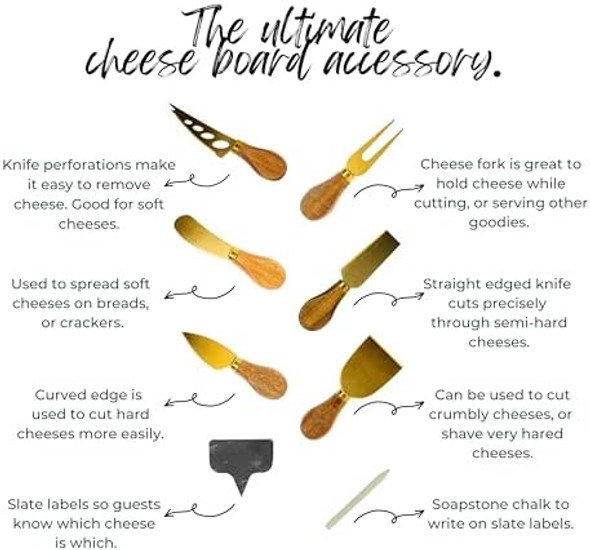
Few things ruin a perfectly curated cheese board faster than torn, crumbled, or unevenly cut cheese. A $40 wheel of aged gouda deserves clean, uniform slices that showcase its crystalline texture, while a delicate brie should be cut without tearing its soft rind. Mastering how to use cheese tools isn’t just about presentation—it preserves cheese flavor, prevents waste, and makes serving a breeze, whether you’re prepping for a small gathering or building a professional charcuterie spread. This guide breaks down exactly which tool to use for every cheese type, step-by-step usage instructions, and pro tips to get perfect cuts every time, no prior experience required.
Why the Right Cheese Tools Make All the Difference
Using the correct cheese tool does more than make your board look polished. The right cut preserves a cheese’s unique texture: a serrated cheese knife will shatter a hard, aged parmesan, while a standard chef’s knife will crush soft, creamy brie and leave sticky residue on the blade. Proper tools also reduce waste by letting you portion cheese evenly, and they minimize food safety risks by preventing cross-contamination with dirty or dull blades. In practice, the difference between a store-bought pre-sliced cheese and a freshly cut piece is night and day—fresh cuts release more aroma and flavor, making every bite taste better.
 Credit: www.boska.com
This set includes a cheese knife, wire slicer, and plane for cutting a variety of cheese textures.
Credit: www.boska.com
This set includes a cheese knife, wire slicer, and plane for cutting a variety of cheese textures.
Essential Cheese Tools and Their Ideal Uses
The first rule of perfect cheese cuts is matching your tool to the cheese’s texture. Below are the most common cheese tools and their best use cases:
Cheese Knives
Cheese knives are the most versatile tool in your kit, designed with specific features for different cheese textures:
- Hard cheese knives: Thick, serrated blades with forked tips that saw through dense, aged cheeses like parmesan, manchego, and aged cheddar without shattering them. The forked tip lets you lift slices cleanly off the board.
- Soft cheese knives: Thin, offset, non-serrated blades that slide through creamy cheeses like brie, camembert, and triple-cream cheese without tearing the rind or sticking to the blade.
- Cheese cleavers: Heavy, flat blades designed for cutting large wheels of semi-hard cheese into wedges with a single firm press.
Cheese Slicers and Planes
Cheese slicers create thin, uniform slices ideal for sandwiches, burgers, and charcuterie boards:
- Wire slicers: Feature a taut steel wire stretched between two handles, with optional spacers to adjust slice thickness. They work best for semi-hard and semi-soft cheeses, and the thin wire creates minimal drag so cheese doesn’t stick.
- Handheld cheese planes: Similar to a wood plane, these have a thin slot that shaves off thin slices of semi-soft cheese like provolone or swiss with even pressure. They’re ideal for getting consistent thickness for layering in sandwiches.
Cheese Graters
Cheese graters break cheese into small shreds or fine dust for cooking, topping, or mixing:
- Microplane graters: Create ultra-fine cheese dust perfect for topping pasta, soups, or salads. They work best for hard, aged cheeses like parmesan and pecorino.
- Box graters: Have multiple sides with different hole sizes for coarse, medium, or fine shreds, ideal for melting cheese into casseroles or topping pizza.
- Rotary graters: Hand-cranked tools that shred cheese evenly with minimal effort, great for large batches of shredded cheese for cooking.
Cheese Wire Cutters
Often confused with wire slicers, cheese wire cutters have two handles and a single taut wire designed specifically for cutting soft, sticky cheeses like camembert, goat cheese, and fresh mozzarella into clean wedges without tearing or leaving residue on the blade. The wire is thin enough to cut through the cheese without compressing it, preserving its delicate texture.
Use this quick reference table to match any cheese type to the right tool:
| Cheese Type | Recommended Tool | Pro Tip |
|---|---|---|
| Hard (parmesan, aged gouda, manchego) | Serrated hard cheese knife, microplane grater | Use a rocking motion with the knife to avoid shattering the cheese. |
| Semi-Hard (cheddar, asiago, swiss) | Wire slicer, cheese cleaver, box grater | Adjust the wire slicer spacer for consistent thickness for sandwiches. |
| Semi-Soft (provolone, havarti, fontina) | Cheese plane, offset soft cheese knife | Chill the cheese for 30 minutes before slicing to reduce stickiness. |
| Soft-Ripened (brie, camembert) | Cheese wire cutter, soft cheese knife | Cut while the cheese is slightly chilled to avoid smearing the rind. |
| Fresh/Crumbly (goat cheese, feta, blue cheese) | Cheese wire cutter, crumble by hand | Use a wire cutter for clean wedges, or crumble by hand for salads. |
Step-by-Step Guides for Using Common Cheese Tools
Each cheese tool requires a slightly different technique to get clean, consistent cuts without damaging the cheese or injuring yourself.
How to Use a Cheese Knife Safely and Effectively
- Secure your cheese on a stable, well-maintained cutting surface to avoid slipping.
- For hard cheese, hold the knife by the handle with a firm grip, and use a gentle rocking motion with the heel of the blade to saw through the cheese. Avoid pressing straight down, which can shatter the cheese.
- For soft cheese, use a thin offset blade, and slide it through the cheese in a single smooth motion to avoid tearing the rind.
- Use the forked tip of the knife to lift slices away from the board once cut. Common mistake: Using a dull cheese knife, which crushes cheese instead of cutting it cleanly and increases the risk of slipping. Sharpen your cheese knives every 2-3 months with a honing steel to keep the edge sharp.
How to Use a Wire Cheese Slicer for Even Cuts
Wire slicers are the easiest tool for getting perfectly uniform slices of semi-hard cheese:
- Adjust the spacer on the slicer to your desired slice thickness (most models range from 1/8 inch to 1/4 inch).
- Place the cheese block firmly on a non-slip cutting board, and pull the wire taut by squeezing the handles.
- Hold the slicer at a 45-degree angle to the cheese, and pull it smoothly across the block in a single motion. Don’t saw back and forth, which can cause uneven slices.
- Lift the sliced cheese off the board with the forked tip of a cheese knife or your fingers. Common mistake: Pulling the wire too quickly, which causes the cheese to crumble or stick to the wire. Slow, even pressure produces the cleanest cuts.
How to Use a Cheese Grater Without Nicks or Waste
Grating cheese can be messy and prone to minor cuts if done incorrectly:
- Place the box grater on a stable surface, or hold a microplane grater at a 45-degree angle over your mixing bowl or cutting board.
- For hard cheese, rub the cheese against the grater in long, even strokes, moving from the top of the grater to the bottom. Rotate the cheese block as you go to use the full surface and avoid wasting cheese.
- For a rotary grater, crank the handle smoothly while pressing the cheese against the grating drum. The built-in collection chamber catches shreds as you work, reducing mess. Common mistake: Grating cheese too close to your fingers, which leads to minor cuts. Keep your fingertips curled inward as you hold the cheese block.
How to Use a Cheese Plane for Thin, Uniform Slices
Cheese planes are ideal for getting paper-thin slices for sandwiches or melting:
- Place the semi-soft cheese block firmly on a cutting board, and hold the plane with both hands.
- Rest the front edge of the plane’s slot against the cheese, and pull it back toward you in a smooth, even motion. Apply consistent pressure—don’t press too hard, which can cause the cheese to stick to the plane.
- Repeat the motion, shifting the cheese slightly each time to get even slices across the full block. Common mistake: Using a cheese plane for hard cheese, which will dull the blade quickly and cause the cheese to crumble. Reserve planes for semi-soft varieties only.
 Credit: www.youtube.com
A taut wire cutter glides through soft cheese without tearing the delicate rind.
Credit: www.youtube.com
A taut wire cutter glides through soft cheese without tearing the delicate rind.
Pro Tips for Maintaining Your Cheese Tools
Dull, dirty cheese tools will ruin your cuts and increase food safety risks. Follow these maintenance tips to keep your kit in top shape:
- Clean after every use: Hand wash all cheese tools with warm, soapy water immediately after use, and dry thoroughly to prevent rust. Avoid putting cheese knives with wooden handles in the dishwasher, as high heat can warp the wood.
- Sanitize regularly: After each use, sanitize your tools and work area using the same proper surface sanitation steps you would use for raw meat prep to avoid cross-contamination with other foods. To keep cut cheese safe for serving, follow USDA dairy handling guidelines, which recommend storing cut cheese at 40°F (4°C) or below for up to 2 weeks.
- Sharpen knives regularly: Hone your cheese knives with a honing steel every 2-3 months, and have them professionally sharpened once a year to keep the edge crisp.
- Store safely: Keep sharp cheese knives in a knife block, on a magnetic strip, or with protective safe knife storage options to prevent accidental cuts and keep blades from getting dull. Store wire slicers and graters in a dry drawer to avoid rust on the metal components.
- Replace frayed parts: If the wire on your cheese slicer or cutter becomes frayed or bent, replace it immediately to avoid breaking mid-cut and causing injury.
Frequently Asked Questions
What are the main types of cheese tools?
The core cheese tools include cheese knives (for hard, soft, and cleaving tasks), wire slicers and cheese planes (for thin, even slices), graters (for shreds and dust), and wire cutters (for soft, delicate cheeses). Specialty tools like cheese curlers and cheese scoops also exist for specific serving needs.
How do I choose the right cheese tool?
Match your tool to the cheese’s texture: use serrated knives for hard, dense cheeses, offset blades for soft cheeses, wire slicers for semi-hard varieties, and wire cutters for soft-ripened or fresh cheeses. If you’re unsure, a basic cheese knife and wire slicer will cover 90% of common use cases.
Can cheese tools improve cheese serving?
Absolutely. Clean, uniform cuts make cheese look more appetizing on a board, and proper portions make it easier for guests to sample multiple varieties without waste. For perfectly portioned cheese to serve on a board, reference our guide to perfect charcuterie cheese portions.
How do I use a cheese wire cutter properly?
Hold the two handles firmly in one hand, pull the wire taut, and saw it smoothly through the cheese in a single motion. Don’t twist the wire, as this can cause it to break. Use this tool for soft cheeses like brie and goat cheese to avoid tearing the delicate rind.
Can I use a regular kitchen knife to cut cheese?
You can for hard cheeses, but dedicated cheese knives have thinner, sharper blades and features like forked tips that make cutting cleaner and safer, especially for soft varieties that stick to standard, thicker blades. A regular chef’s knife will also crush soft cheeses, ruining their texture.
How do I cut a large wheel of cheese without it crumbling?
For large wheels of hard or semi-hard cheese, use a cheese cleaver and press firmly straight down to split the wheel into wedges, rather than sawing with a knife which can cause crumbling. Chill the cheese for 30 minutes before cutting to firm up the texture.
Final Tips for Perfect Cheese Cuts Every Time
Mastering cheese cuts comes down to three simple rules: match your tool to the cheese texture, use a stable cutting surface, and keep your tools sharp and clean. With a small set of basic tools and a little practice, you can cut any cheese type like a pro, whether you’re prepping for a party or just slicing a snack for yourself. For short-term storage of cut cheese, use airtight storage containers to prevent drying out and absorb fridge odors, so your cuts stay fresh for up to 2 weeks.
Ready to test your new skills? Start with a semi-hard cheddar and a basic wire slicer to build confidence before moving to more delicate varieties like brie, or try your hand at cutting asiago for a charcuterie spread using our dedicated guide.
Conclusion
Learning how to use cheese tools is a small, low-effort skill that drastically improves your cooking and entertaining results. The right tools preserve the unique texture and flavor of every cheese variety, reduce food waste, and make serving feel intentional and polished. Start with a basic kit, practice the step-by-step techniques outlined above, and you’ll never have to deal with a crumbled cheese block or torn soft cheese rind again.

I’m Abby Lu, a passionate home cook who loves simplifying everyday meals. At PlugChef.com, I share product reviews and cooking guides to help you find the best tools for your kitchen.
Related posts:
 How to Make a Fruit Basket for a Gift: Easy DIY Guide
 Do You Need a Basket? Essential Guide for Air Fryers
 How to Adjust Syrup Dispenser Pressure: Expert Tips
 Kitchen Cabinets With Black Appliances: Trendy Design Tips
 White Kitchen And Stainless Steel Appliances: A Perfect Duo
 Kitchen Colors With White Cabinets And White Appliances: Vibrant Ideas

