
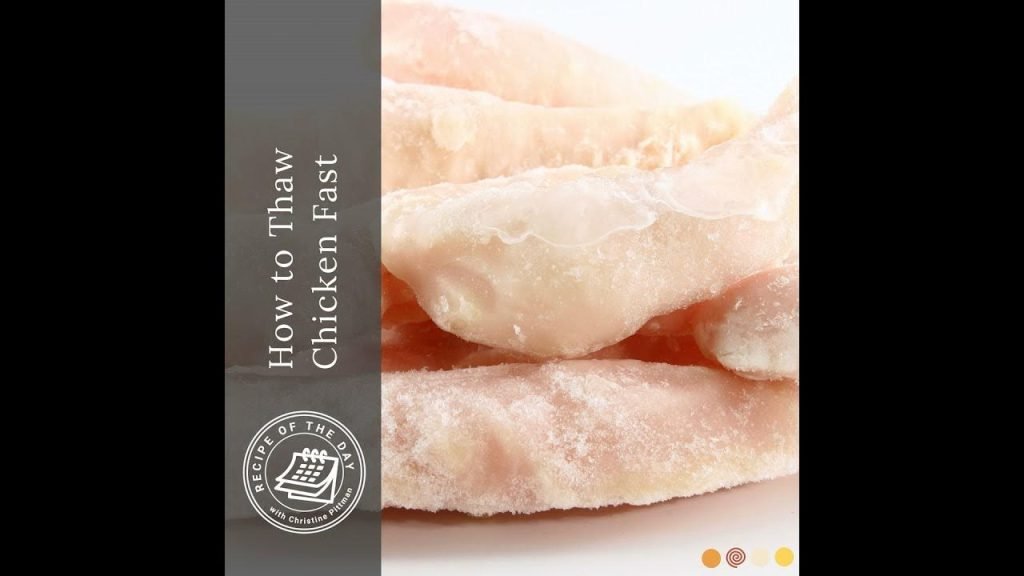
Thawing chicken quickly is a common kitchen challenge—but doing it fast doesn’t have to be unsafe. This guide lays out practical, tested methods to defrost chicken faster while minimizing bacterial risk and preserving texture. You’ll get step-by-step instructions, realistic time estimates, a side-by-side comparison of methods, troubleshooting tips, and what to do if you must cook from frozen.
 Credit: sweetpeaskitchen.com
Why correct thawing matters (safety + quality)
- Food-safety: Raw poultry can carry pathogens such as Salmonella and Campylobacter. Allowing the surface to sit in the "danger zone" (roughly 40–140°F / 4–60°C) lets bacteria multiply quickly. Current U.S. food-safety guidance emphasizes keeping food out of that range during thawing—refrigerator thawing and cold-water methods are recommended alternatives to room-temperature or hot-water techniques. See general guidance from the USDA for safe handling of meat and poultry: USDA food safety guidance.
- Texture and flavor: Rapid uneven heating (for example, using hot water) can denature proteins at the surface and leave the interior still frozen, producing dry, stringy breast meat after cooking.
- Cross-contamination: Thawing incorrectly increases the chance of juices contaminating counters, utensils, and other foods.
In practice, people most often sacrifice safety for speed. The following sections show safe fast options and their trade-offs.
Quick summary: Best safe fast methods
- Refrigerator thawing: Safest, best texture, slowest (plan ahead).
- Cold-water thawing (submerged, changed every 30 minutes): Faster and safe when done correctly.
- Microwave defrosting: Fastest for small cuts; must cook immediately after.
- Cooking from frozen: Viable for many recipes—adjust cooking time and use a thermometer.
Read on for step-by-step instructions, tips, and a quick comparison table.
Refrigerator thawing — safest and most forgiving
Refrigerator thawing is the go-to when you can plan ahead.
How to
- Keep chicken in its original sealed packaging or put it in a leak-proof container or zip-top bag to catch drips.
- Place on the lowest shelf or in a tray to avoid juices dripping onto other foods.
- Allow time: small pieces (breasts, thighs) usually thaw within 12–24 hours; a whole chicken can take 24–48 hours or longer depending on size.
Storage window after thawing in fridge
- Raw chicken thawed in the refrigerator can be kept refrigerated 1–2 days before cooking safely.
- You may refreeze raw chicken thawed in the refrigerator without cooking it first (although texture may decline).
Why use it
- Minimizes bacterial growth.
- Best for preserving texture and for complex recipes (roasting, brining, marinating).
- No need to cook immediately.
When not to use it
- If you need chicken today and haven’t planned ahead.
Cold-water thawing — fast and safe when done correctly
Cold-water thawing is the fastest reliable method for same-day thawing without using a microwave.
Step-by-step
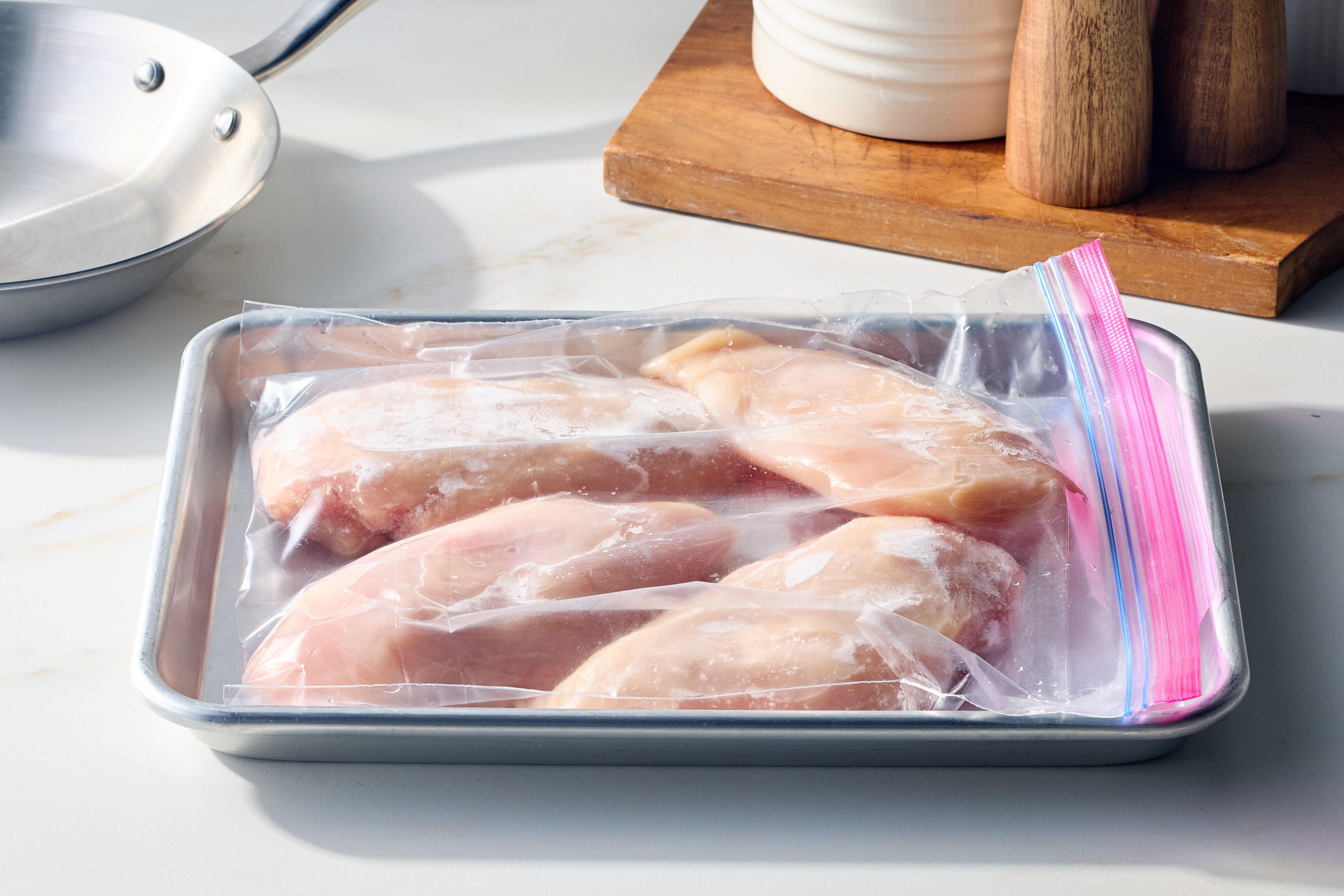
- Keep the chicken sealed in a leak-proof plastic bag (squeeze out excess air and seal tightly).
- Submerge the bagged chicken completely in a large bowl or clean sink filled with cold tap water.
- Change the water every 30 minutes to maintain a cold temperature.
- When pliable and free of visible ice crystals, remove and cook immediately.
Estimated times (practical guide)
- Boneless breasts (1 lb / 450 g): 30–60 minutes
- 2–3 lb (0.9–1.4 kg) packages: 1–2 hours
- Whole chicken (4–6 lb / 1.8–2.7 kg): ~2–3 hours (packaging and size vary)
Safety notes
- Use only cold water—warm or hot water increases surface temperature into the danger zone.
- Cook immediately after thawing; do not return to the refrigerator for long storage or refreeze raw chicken thawed by cold water unless cooked first.
Common mistakes to avoid
- Using thin bags that leak—this introduces waterborne contamination.
- Skipping water changes—stagnant water warms and reduces safety.
Microwave thawing — when every minute counts
Microwave defrosting is the fastest single-piece option but needs attention to avoid partial cooking.
How to microwave-defrost correctly
- Remove excess packaging; place chicken on a microwave-safe plate.
- Use the microwave’s defrost setting or 30% power. Enter weight if prompted.
- Pause every 1–2 minutes to rotate, flip, and check for hot spots (which indicate partial cooking).
- Stop when the chicken is pliable and no large ice chunks remain.
- Cook immediately—do not store or refreeze raw chicken thawed in the microwave.
When it’s appropriate
- Small cuts (thin breasts, cutlets, or strips) that you will cook right away (pan-sear, stir-fry).
- Emergency thawing when other methods aren’t possible.
Watch-outs
- Microwaves vary—practice and short intervals prevent accidental cooking.
- Microwave thawing increases the risk of bacterial growth if you delay cooking the meat.
Cooking from frozen — realistic when you can’t wait
You can cook many cuts from frozen safely; adjust time and method.
General guidance
- Increase cooking time by about 50% compared with thawed chicken (this is a practical rule of thumb; actual times vary by oven or stovetop).
- Use recipes that apply moist or even heat: soups, stews, casseroles, Instant Pot/pressure cooker, and oven-baked dishes covered with foil.
Temperature target
- Always confirm doneness with an instant-read thermometer: safe internal temperature is 165°F (74°C) at the thickest part.
Examples
- Frozen boneless breasts: bake at 375°F (190°C) ~ 28–40 minutes depending on thickness.
- Frozen bone-in pieces: may take 45–60+ minutes in oven; check internal temperature and juices.
- Whole frozen chicken: practical but long—consider thawing first for even roast results.
Pro tip: If cooking from frozen in a pan, start covered on low heat to thaw interior and finish uncovered to brown.
Quick method comparison (cheat sheet)
| Method | Typical time | Pros | Cons | When to use |
|---|---|---|---|---|
| Refrigerator | 12–48+ hours | Safest, best texture, can refreeze | Slow | Planned meals |
| Cold water | 30 min–3 hrs | Fast, preserves texture if bagged | Requires monitoring/water changes | Same-day thawing |
| Microwave | 5–15 min | Fastest single-piece | Risk of partial cooking; cook immediately | Emergency/thin cuts |
| Cook from frozen | +50% cook time | No thawing step, safe if cooked fully | Texture/appearance may differ | Rush dinners, soups, stews |
How to tell chicken is fully thawed
Signs the chicken is ready to cook
- No visible ice crystals in the cavity or between pieces.
- Meat is flexible and yields to gentle pressure with no hard icy core.
- For thick pieces, probe with an instant-read thermometer—if the probe slides in without resistance and the interior is not icy, it’s thawed.
If in doubt, cut into the thickest area to check for ice. Do not rely on cooking time alone if you suspect frozen spots.
Cross-contamination and handling tips
- Always thaw on a tray or in a bowl to catch juices.
- Wash hands with soap for 20 seconds after handling raw poultry.
- Clean cutting boards, counters, and utensils with hot, soapy water or a disinfecting solution after contact.
- Use dedicated cutting boards for raw meat where possible.
For up-to-date, authoritative food-safety recommendations consult official resources such as the U.S. Food and Drug Administration food safety information.
Tools that make thawing easier
- Instant-read thermometer — indispensable for checking doneness and probing thick pieces.
- Leak-proof freezer bags — double-bag for cold-water thawing.
- Large basin or sink — dedicated for thawing to prevent cross-contamination.
- Vacuum sealer — reduces drip and freezer burn, speeds thawing marginally.
A common mistake is relying on appearance alone—an instant-read probe guides you reliably.
Frequently asked questions
Q: Can I refreeze chicken after thawing?
A: Yes, but only if it was thawed in the refrigerator. Raw chicken thawed in cold water or microwave should be cooked before refreezing. Cooked chicken can be refrozen if it was handled safely.
Q: Is it safe to thaw chicken on the counter?
A: No. Thawing at room temperature risks allowing the surface to enter the bacterial danger zone and is not recommended.
Q: How long can thawed chicken sit before cooking?
A: If thawed in the refrigerator, keep it 1–2 days before cooking. If thawed by cold water or microwave, cook immediately.
Q: Can I use warm water to speed up cold-water thawing?
A: No. Warm water raises the surface temperature and increases bacterial growth risk—always use cold tap water.
Q: What internal temperature indicates the chicken is safely cooked?
A: Use an instant-read thermometer; chicken is safe when it reaches 165°F (74°C) at the thickest part.
Practical troubleshooting
- Still icy after expected time with cold water: check bag for leaks; restart with a fresh sealed bag and replace water more frequently.
- Surface seems partially cooked after microwave thaw: trim cooked edges or use them immediately in a dish that finishes cooking evenly.
- Excess liquid in thawed meat: pat dry before searing to get better browning.
Final checklist before cooking
- Thawed by fridge? You have 1–2 days to cook or may refreeze.
- Thawed by cold water or microwave? Cook immediately.
- Use an instant-read thermometer to confirm 165°F (74°C).
- Avoid cross-contamination by cleaning surfaces and utensils.
Bookmark this guide to skip dinner delays and keep meals safe.
 Credit: sweetpeaskitchen.com
 Credit: www.pulselive.co.ke
Conclusion
Thawing chicken faster is simple when you pick the right method for your timeline. Refrigerator thawing is the safest and best for texture; cold-water thawing is the fastest safe same-day option; microwaving works in a pinch but requires immediate cooking. If you must cook from frozen, use moist-heat recipes and always verify doneness with a thermometer. For authoritative food-safety practices, consult official resources such as the USDA and FDA cited above.

Hi, I’m Daniel Brooks—a food lover and kitchen gear enthusiast. I enjoy testing cookware, utensils, and gadgets to see what really works in everyday cooking. At PlugChef.com, I share honest reviews, comparisons, and simple guides to help you choose the best tools for a safer, smarter, and more enjoyable kitchen.
Related posts:
 How to Make a Fruit Basket for a Gift: Easy DIY Guide
 Do You Need a Basket? Essential Guide for Air Fryers
 What Blenders Do Tropical Smoothie Use: Expert Insights
Stainless Steel Vs White Kitchen Appliances: Ultimate Showdown
What Blenders Do Tropical Smoothie Use: Expert Insights
Stainless Steel Vs White Kitchen Appliances: Ultimate Showdown
 Kitchen Appliances for Wedding Registry: Must-Have Essentials
 Top 10 Best Non-Toxic Cooking Utensils – Safe & Durable Choices for Healthy Homes

