
Cutting boards are the workhorses of every kitchen, used daily to chop produce, carve meat, and prep ingredients for everything from weeknight dinners to charcuterie spreads prepping citrus for charcuterie. Over time, even the most well-cared-for boards develop stubborn stains from deeply pigmented foods like tomato sauce, turmeric, beet juice, and red wine. While these marks are often just an eyesore, deep-set stains on porous boards can also harbor harmful bacteria even after washing, making stain removal as much a food safety task as an aesthetic one. The good news? You don’t need harsh chemicals to restore your board—most stains lift with simple, food-safe household staples, and the right prevention routine will keep them from coming back.
Why Cutting Boards Stain (and When Stains Pose a Risk)
Cutting board stains fall into two categories, based on the board’s material. Porous materials like wood and bamboo absorb pigmented compounds from deeply colored foods directly into their grain, leading to permanent-looking discoloration if left untreated. Non-porous materials like plastic and epoxy composite boards resist absorption, but knife scratches create tiny grooves that trap food particles and stains over time.
Common stain culprits include turmeric, annatto, tomato sauce, pomegranate juice, raw beet juice, red wine, soy sauce, and coffee. Surface-level stains are purely cosmetic, but deep, set-in stains in porous boards can trap bacteria even after thorough washing, creating a food safety hazard. If stains won’t lift with the methods below, or if your board has deep, unremovable grooves, it’s time to replace it for safe food prep. For material-specific cleaning guidance, check our plastic board cleaning basics for non-wood options.
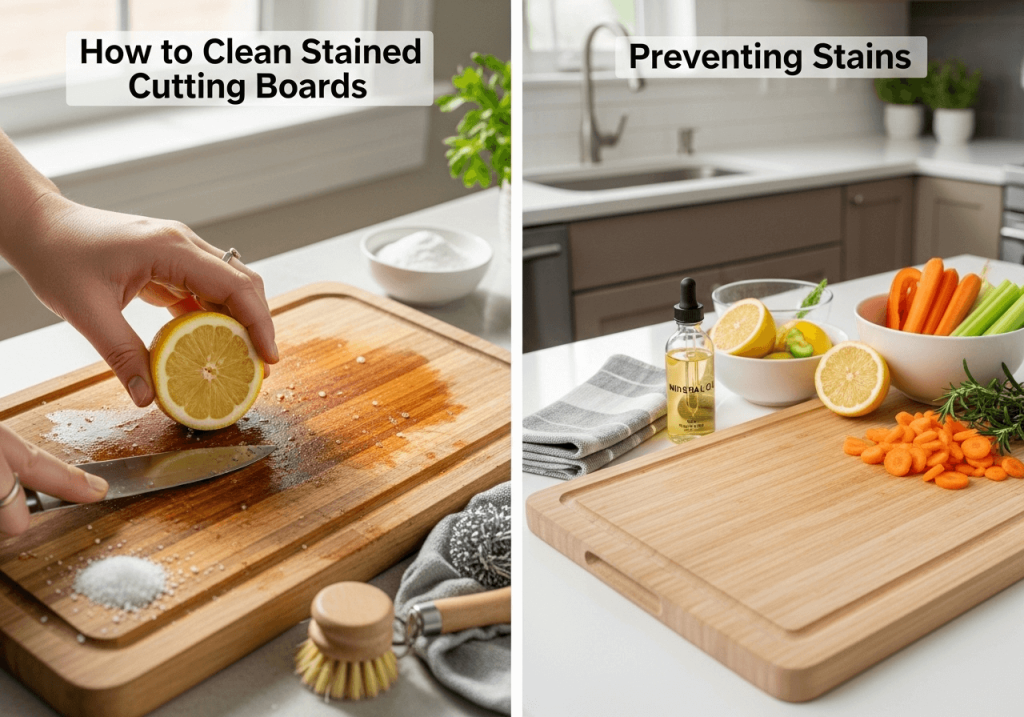
 Left: a well-maintained wooden cutting board; right: a board with deep tomato and beet stains
What You’ll Need (All Household Staples)
All the supplies listed here are food-safe, affordable, and likely already in your kitchen. They also work for other household messes, like removing greasy countertop buildup, so you won’t need to buy specialty cleaning products for this task.
Natural Cleaners (Food-Safe)
- White distilled vinegar (5% acidity, standard household variety)
- Fresh lemon juice (avoid bottled varieties, which contain preservatives that leave sticky residue)
- Baking soda (sodium bicarbonate, not baking powder)
- Coarse kosher salt (fine table salt dissolves too quickly to work as an abrasive)
- 3% hydrogen peroxide (the brown bottle variety sold at pharmacies, for tough stains only)
Optional Tools
- Food-grade mineral oil (for conditioning wood and bamboo boards after cleaning)
- Non-abrasive scrub sponge (avoid steel wool, which scratches surfaces)
- 220-grit fine sandpaper (for extremely stubborn stains on wood boards only)
What to Avoid
Steer clear of undiluted bleach, abrasive scouring pads, and harsh all-purpose cleaners, as these can leave toxic residues on food-contact surfaces or damage the board’s finish. Fresh lemon juice is also a versatile natural cleaner for clogged bathroom drains if you’re looking to expand your non-toxic cleaning routine.
 Common household staples like baking soda, lemon, and vinegar remove most cutting board stains without harsh chemicals
Step-by-Step Stain Removal for Every Cutting Board Type
These methods work for all common cutting board materials, including solid wood, bamboo, plastic, and custom DIY butcher block boards. Always test any cleaner in an inconspicuous corner of the board first to avoid discoloration.
Wood & Bamboo Cutting Boards
These porous materials absorb stains most easily, so work quickly to remove them before they set into the grain.
- For surface stains, mix 2 parts baking soda with 1 part warm water to form a thick paste. Spread the paste over the stained area, let sit for 10-15 minutes.
- For deeper, set-in stains, sprinkle a thick layer of coarse kosher salt over the stain, then rub the cut side of a fresh lemon half over the salt in circular motions. The citric acid breaks down organic pigments, while the salt acts as a gentle abrasive. Let the mixture sit for 10 minutes.
- Scrub the entire board with a warm, soapy non-abrasive sponge, then rinse thoroughly with warm water.
- Dry immediately with a clean, lint-free towel, then condition the board with a thin coat of food-grade mineral oil to fill the pores and prevent future staining. For a full routine to keep your bamboo board in top shape, see our guide to bamboo board maintenance.
Note: For extremely stubborn stains, dab a small amount of 3% hydrogen peroxide on the spot, let sit for 5 minutes, then rinse and condition. Always test hydrogen peroxide in an inconspicuous area first, as it can lighten the wood’s natural tone.
A common mistake is soaking wood or bamboo boards in water to remove stains: this causes the material to swell, warp, split, and develop mildew, leading to permanent discoloration. Wipe these boards down with a damp cloth instead of submerging them. For new wooden boards, learn how to season a new wooden board before first use to create a protective barrier that prevents stains from setting in the first place.
Plastic Cutting Boards
Plastic is non-porous, but knife scratches create tiny grooves that trap stains and bacteria. The FDA recommends replacing plastic cutting boards once they develop deep, unremovable grooves, as these can harbor harmful bacteria even after thorough cleaning according to FDA food safety guidance.
- Wash the board with hot, soapy water to remove any surface food debris.
- For most stains, spread a baking soda and water paste over the affected area, let sit for 15 minutes, then scrub and rinse.
- For tougher, etched stains, spray the board with undiluted white distilled vinegar, let sit for 10 minutes, then scrub with a non-abrasive sponge.
- For stains that still remain, soak the board in a solution of 1 tablespoon 3% hydrogen peroxide per 1 cup of water for 30 minutes, then wash thoroughly with soap and water.
Composite & Epoxy Cutting Boards
These non-porous boards have a smooth, sealed finish that resists staining, but pigmented foods can still stick to the surface if left to sit for long periods.
- Wipe up spills immediately with a damp cloth to prevent stains from setting.
- For set-in stains, use the same baking soda paste or vinegar spray method as plastic boards, scrubbing gently with a non-abrasive sponge to avoid scratching the epoxy finish.
- Rinse thoroughly and dry with a clean towel. Note: Check the manufacturer’s guidelines before using hydrogen peroxide, as it can discolor some epoxy coatings.
 Scrubbing with coarse salt and a lemon half lifts set-in stains from porous wood boards
5 Pro Tips to Prevent Cutting Board Stains Long-Term
Prevention is far easier than stain removal, and these simple habits will keep your boards looking new for years:
- Use separate boards for different food types: Keep one board exclusively for raw meat, one for produce, and one for ready-to-eat foods like bread, cheese, or cooked leftovers. This reduces the amount of deeply pigmented food contact with your boards, and prevents cross-contamination. You can store these separate boards neatly with smart cabinet storage solutions to save counter space.
- Wipe spills immediately: If you spill tomato sauce, turmeric, or beet juice on your board while cooking, wipe it off right away with a damp cloth before it has time to set into the surface. Even a 5-minute delay can make a stain much harder to remove.
- Condition wood and bamboo boards monthly: Rub a thin coat of food-grade mineral oil into the board’s surface after cleaning, let sit for 10 minutes, then wipe off any excess. This fills the wood’s pores, creating a barrier that prevents stains from seeping in, and prevents the board from drying out and cracking. Pair this routine with energy-efficient kitchen appliances for a low-waste, easy-to-maintain kitchen.
- Avoid heat damage: Never set hot pans, baking sheets, or dishes directly on your cutting board, as high heat can warp the material and make it more porous, leading to easier staining. Use a countertop appliance slider to move hot cookware safely without damaging your board or countertop.
- Store boards properly: Avoid leaning boards flat against a wall or storing them in a damp cabinet, as trapped moisture can lead to mildew and staining. Prop boards vertically in a well-ventilated area, or store them in a dry cabinet with custom drawer organizers to keep them protected and out of the way.
Common Stain Removal Mistakes to Avoid
Even well-meaning cleaning habits can damage your cutting board or make stains worse. Avoid these common errors:
- Using steel wool or abrasive scouring pads: These scratch the surface of wood, plastic, and epoxy boards, creating more grooves that trap future stains and bacteria. Stick to non-abrasive sponges or soft-bristled brushes instead.
- Soaking wooden or bamboo boards in water: Prolonged water exposure causes the wood to swell, warp, split, and develop mildew, which causes permanent discoloration. Wipe these boards down with a damp cloth instead of submerging them.
- Using undiluted bleach: Both the FDA and USDA advise against using bleach on food-contact surfaces, as it can leave behind toxic residues that contaminate food. Bleach also discolors wood and plastic over time, and damages epoxy finishes.
- Skipping the conditioning step after cleaning wood or bamboo: Without a coat of mineral oil, the cleaned wood is left porous, so it will absorb stains much faster in the future.
- Using bottled lemon juice: Most bottled lemon juices contain preservatives and added sugars that leave sticky residues on your board, attracting dirt and bacteria. Always use fresh lemon juice for cleaning.
Frequently Asked Questions
How do I remove stubborn, set-in stains from a wooden cutting board?
For stubborn stains on wood or bamboo, start by sprinkling a thick layer of coarse kosher salt over the stain, then rub the cut side of a fresh lemon half over the salt in circular motions. Let the mixture sit for 10-15 minutes, then scrub with a warm, soapy non-abrasive sponge and rinse thoroughly. If stains remain, dab a small amount of 3% hydrogen peroxide on the spot, let sit for 5 minutes, then rinse and condition the board with food-grade mineral oil. Always test hydrogen peroxide in an inconspicuous area first, as it can lighten the wood’s natural tone. If the stain is still visible after these steps, the board may need to be sanded lightly with 220-grit sandpaper and re-oiled.
Can baking soda help clean a stained cutting board?
Yes, baking soda is one of the safest and most effective stain removers for all cutting board types. As a mild alkaline abrasive, it lifts pigmented food compounds without scratching surfaces, and it also neutralizes lingering odors from garlic, onions, and raw meat. For surface stains, mix 2 parts baking soda with 1 part warm water to form a thick paste, spread it over the stain, let sit for 10-15 minutes, then scrub and rinse. For tougher stains, add a drop of dish soap to the paste for extra cleaning power.
What natural ingredients whiten cutting board stains effectively?
The most effective natural whitening agents for cutting boards are fresh lemon juice, white distilled vinegar, and coarse kosher salt. Lemon juice contains citric acid that breaks down organic pigments from tomatoes, beets, and berries. White vinegar (5% acidity) dissolves mineral-based stains and kills odor-causing bacteria. Coarse salt acts as a gentle abrasive to lift set-in stains without damaging the board’s surface. For a powerful natural cleaner, mix equal parts lemon juice and vinegar, spray it on the stain, let sit for 10 minutes, then scrub and rinse.
Is it safe to use bleach on cutting boards?
We do not recommend using bleach on cutting boards for stain removal or regular cleaning. Both the FDA and USDA advise against using bleach on food-contact surfaces, as it can leave behind toxic residues that contaminate food, especially on porous surfaces like wood and bamboo. Bleach can also discolor plastic and wood over time, and damage the epoxy finish on composite boards. If you need to sanitize a board occasionally, use a solution of 1 tablespoon unscented household bleach per gallon of water, rinse thoroughly with hot water, and let air dry completely before use.
Conclusion
Stains on cutting boards are an inevitable part of regular kitchen use, but they don’t have to be permanent. With simple, food-safe household staples like baking soda, lemon, and vinegar, you can remove even set-in stains from wood, plastic, and composite boards without harsh chemicals. The best way to avoid stubborn stains is to practice regular maintenance: clean your board with soap and hot water after every use, wipe spills immediately, and condition wood or bamboo boards monthly with food-grade mineral oil. If your board has deep, unremovable stains or deep grooves that trap bacteria no matter how thoroughly you clean it, replace it for food safety. For more easy kitchen upkeep tips, check out our guide to top-rated non-toxic cleaning solutions to keep all your kitchen surfaces sparkling. If you notice persistent odors along with stains, check our guide to removing smells from wooden boards for extra tips.

Hi, I’m Daniel Brooks—a food lover and kitchen gear enthusiast. I enjoy testing cookware, utensils, and gadgets to see what really works in everyday cooking. At PlugChef.com, I share honest reviews, comparisons, and simple guides to help you choose the best tools for a safer, smarter, and more enjoyable kitchen.
Related posts:
 How to Restore a Cutting Board: Easy Steps for a Like‑New Look
 How to Finish Wood Cutting Board: Expert Tips for a Perfect Seal
 Best Way to Clean Plastic Cutting Boards: Easy Tips for Sparkling Results
 How to Get Smell Out of Wooden Cutting Board: Easy & Effective Tips
 High End Kitchen Appliance Brands: Elevate Your Culinary Space
 Dip With Hot Pepper Jelly: Irresistible Spicy Snack Ideas

