
Leftover sliced brisket can be as rewarding as the first-day plate — if you know how to warm it without drying it out. This guide gives clear, practical steps for the most common reheating methods, why brisket dries, exact temperatures and times, troubleshooting, and safe storage. Use the quick table to pick a method by time and equipment, then follow the step-by-step instructions for reliably tender, flavorful slices.
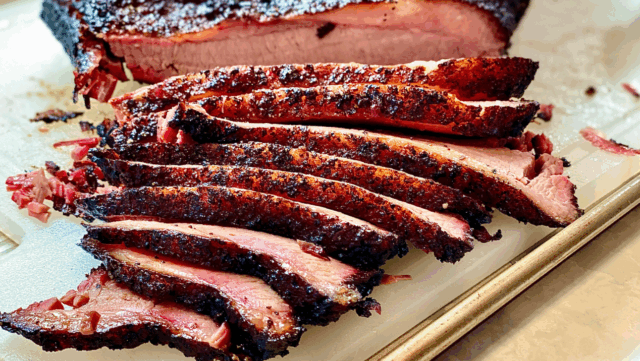
 Brisket slices resting before reheating, slightly chilled for even warming.
Credit: [www.reddit.com]
Quick reference: pick a method by time and result
- Oven (best balance): 250–300°F (120–150°C). 15–40 minutes depending on thickness — even heat, low risk of drying.
- Stovetop skillet with broth (fast and controlled): 3–10 minutes — good for single plates.
- Microwave (fastest, most risk): low power bursts, 1–3 minutes — use only when pressed for time.
- Slow cooker (hands-off, for large quantities): 1–2 hours on LOW — very forgiving for big batches.
- Grill/smoker (finish for texture): seconds to a minute per side after moist reheating — adds crust.
Safety baseline: reheat leftovers until steaming hot and verify the thickest slice reaches 165°F (74°C) with an instant-read thermometer. For authoritative guidance on safe handling and storage of leftovers, consult the USDA and food-preservation resources such as the National Center for Home Food Preservation (NCHFP) for up-to-date best practices (USDA, NCHFP).
Why sliced brisket dries out — and how to stop it
Brisket is a tough, collagen-rich muscle that becomes tender after low-and-slow cooking. After resting, the muscle fibers and rendered fat hold moisture. Rapid reheating or direct high heat causes muscle proteins to contract and squeeze out juices; thin slices have less thermal mass and heat through quickly, making them especially vulnerable.
Common mistakes that cause dryness:
- Heating at high temperature so the surface tightens before the center warms.
- Reheating thin slices uncovered, which allows steam to escape.
- Piling cold slices in a pan so inner pieces stay cold and outer pieces overcook.
- Reheating multiple times, which compounds moisture loss.
Simple principles that work in practice:
- Use low, even heat and add a little liquid to create steam.
- Reheat single layers or shallow stacks for even warming.
- Cover during reheating to trap humidity; uncover briefly only to finish texture.
- Verify internal temp with a thermometer rather than relying on time alone.
Prep: what to do before you reheat
- Temper slices: remove brisket from the refrigerator 15–20 minutes before reheating so cores aren’t fridge-cold. (Do not leave out longer than 2 hours.)
- Thawing frozen slices: thaw in the refrigerator 24 hours per 1–2 inches thickness. For faster thawing, keep vacuum-sealed meat in cold water and change the water every 30 minutes until thawed.
- Slice strategy: if your brisket is whole, slice against the grain into 1/4–1/2-inch pieces for reliable chew; very thin slices (1/8 inch) reheat fastest but dry easiest.
- Reserve juices: save cooking juices or fat when you first cooked the brisket — a tablespoon or two per serving restores flavor and mouthfeel.
- Quantity planning: reheat in portions that match your oven or skillet capacity to avoid overcrowding.
Tools you should have on hand
- Instant-read thermometer (tip: probe center of the thickest slice).
- Heavy-bottomed skillet or cast iron for stovetop.
- Oven-safe baking dish with tight-fitting foil.
- Slow cooker or sous vide setup for advanced methods.
- Microwave-safe, vented cover or damp paper towel for microwave reheating.
Where to measure temp: insert thermometer horizontally into the center of the thickest slice, avoiding bone or fat pockets. Aim for 165°F (74°C) for safety.
Reheating methods — step-by-step
Oven (best overall for texture and batch size)
Why choose it: Oven heat is gentle and even, allowing steam to rehydrate slices without charring.
Steps:
- Preheat oven to 250–300°F (120–150°C).
- Arrange slices in a shallow baking pan in a single layer or slightly overlapping. For a crowd, arrange in a single layer on multiple pans.
- Add 1–3 tablespoons of beef broth, pan juices, or diluted barbecue sauce per pound of brisket so the liquid lightly films the meat.
- Tightly cover with aluminum foil, sealing the edges.
- Reheat times (approximate): 1/4" slices: 15–25 minutes. 1/2" slices or small stacks: 25–40 minutes. Larger piles require more time — check earlier to avoid overcooking.
- Verify the thickest slice reaches 165°F (74°C). Remove foil and rest 3–5 minutes before serving.
In practice: set a timer at the lower end and check temperature; ovens vary and visual cues (steam inside foil) are helpful.
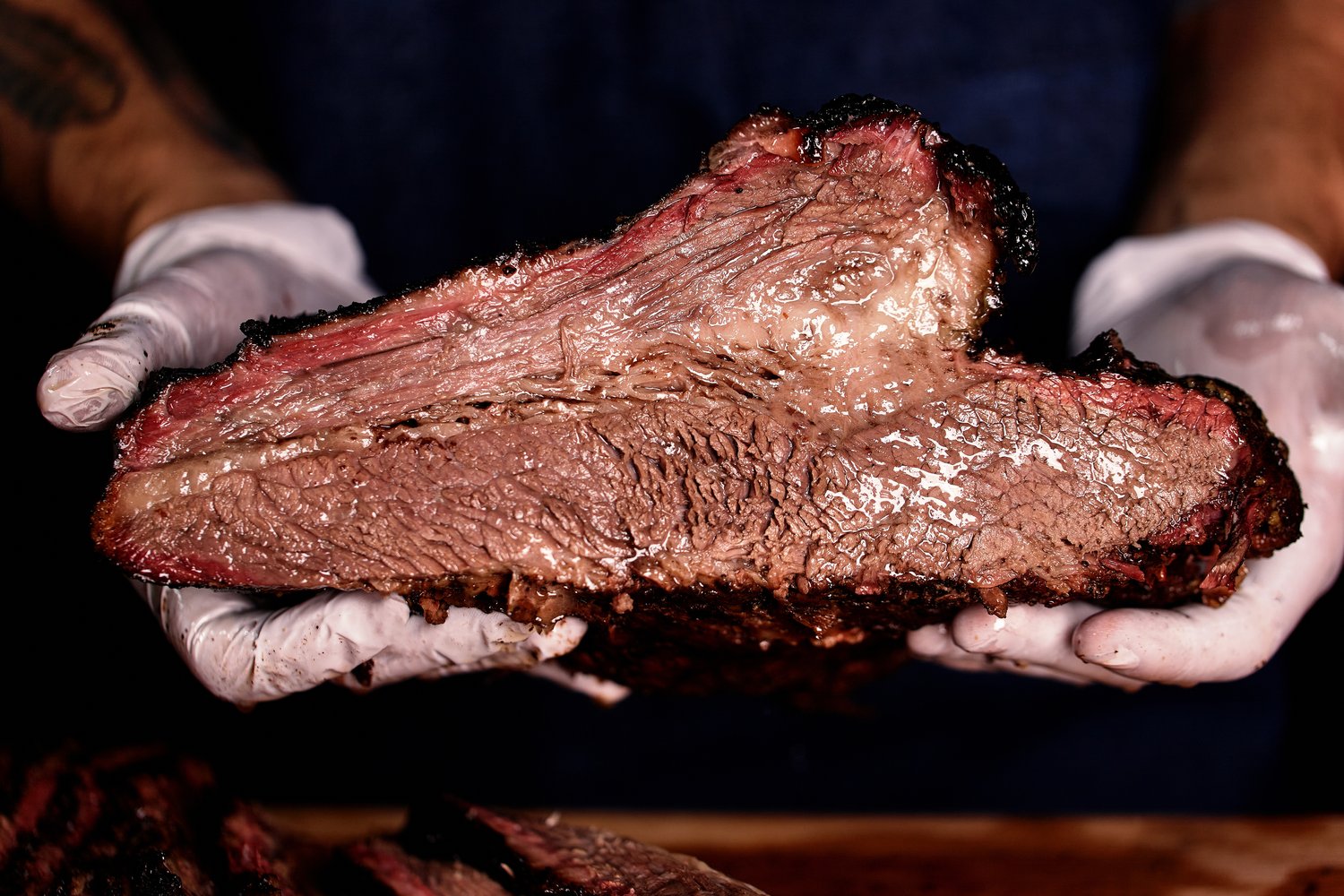 Foil-sealed pan traps steam to rehydrate slices.
Credit: [www.thegrillcoach.com]
Stovetop skillet — fast, controlled, great for plates
Why choose it: Quick and gives you control over texture.
Steps:
- Warm a heavy skillet over low heat. Add 1–2 tablespoons broth or pan juices for 2–3 servings; increase slightly for more.
- When liquid is steaming, add slices in a single layer. Cover immediately with a lid.
- Keep heat low — aim for a gentle steam, not a boil. Reheat 3–6 minutes, flipping once.
- Check temp; when 165°F, remove lid and finish uncovered over medium-high for 20–60 seconds per side if you want a little caramelization.
- Rest 2–3 minutes and serve with warmed juices.
Pro tip: cast iron retains heat; start with lower heat and add liquid as needed to prevent sticking.
Microwave — last-resort speed with technique
Why choose it: Fast but highest risk for hot spots and dryness.
Steps:
- Place slices in a microwave-safe dish in a single layer. Sprinkle 1–2 tablespoons broth per cup of meat.
- Cover with a vented microwave-safe lid or a damp paper towel.
- Heat at 50–70% power in 30–45 second bursts, turning slices between bursts.
- Total time typically 1–3 minutes for a plate-sized portion. Check temperature in the thickest slice.
- Rest 1–2 minutes under the cover to allow carryover heat to even out.
Common microwave error: full-power continuous heating — this quickly squeezes moisture from thin slices. Lower power and short intervals preserve texture.
Slow cooker — hands-off for large batches
Why choose it: Excellent when reheating many pounds without constant monitoring.
Steps:
- Arrange slices in the slow cooker in a single layer or shallow pile.
- Add enough broth to create a shallow pool (1/4–1/2 cup per 1–2 pounds).
- Set to LOW and heat 1–2 hours, checking after 60 minutes. The goal is uniform warmth and 165°F internal temp.
- Transfer to a warm platter and serve immediately; avoid leaving at serving temperature for long periods.
Trade-off: takes longer than oven but is more forgiving for bulk reheating.
Sous vide — professional-quality restoration (advanced)
Why choose it: Precisely controlled gentle heat keeps brisket tender and moist.
Steps:
- Vacuum-seal slices with 1 tablespoon broth per 2–3 slices.
- Rewarm at 140–150°F (60–65°C). Thin slices typically need 20–45 minutes to heat through; thicker pieces longer.
- Remove, pat dry, and optionally quick-sear to refresh crust.
Safety note: use validated pasteurization charts if you plan to hold at lower temperatures for extended times. If unsure, stick with oven/stovetop.
Grill or smoker — finishing touch, not primary reheating
Use: After moist reheating (oven/skillet), finish over hot grates for 20–60 seconds per side to add fresh crust and char. Always recheck internal temp after finishing.
Reheating frozen brisket — safe shortcuts
- Best: thaw overnight in the refrigerator. Then reheat with one of the methods above.
- If pressed: reheat from frozen in a low oven (250°F) but expect longer times — add 50% more warming time and be cautious of uneven heating.
- Do not thaw at room temperature. Cold-water thawing (sealed bag, changing water every 30 minutes) is safe for faster results.
How much liquid to add — quick dosing guide
- Single plate (1–2 servings): 1–2 tablespoons broth.
- Small roast (1–2 lb): 1/4 cup total.
- Party tray (3–5 lb): 1 cup or more, spread to create a shallow steam layer.
Aim to produce steam, not to poach; too much liquid dilutes flavor and makes slices mushy.
Troubleshooting — quick fixes for common problems
- Dry, stringy brisket: You reheated too hot or too fast. Rewarm next time at a lower temp with added steam. For current batch, serve with a sauce or warmed pan juices to restore mouthfeel.
- Cold center: Slices were overlapped too thickly. Split into smaller batches or use a probe thermometer earlier.
- Soggy exterior: You added too much liquid or left it covered after finishing. Drain excess and briefly sear or broil to restore texture.
- Rubbed flavor muted: Reheat with a concentrated drizzle of pan jus or a teaspoon of reduced barbecue sauce to intensify rub and smoke notes.
In practice, rescuing leftovers often comes down to adding concentrated juices and finishing quickly for texture.
Storage and safety checklist
- Refrigerate cooked brisket within 2 hours of cooking (1 hour if ambient temp >90°F).
- Store in airtight containers or vacuum-sealed bags; use refrigerated brisket within 3–4 days.
- Freeze for longer storage; vacuum sealing preserves quality best — use within 2–3 months for optimal taste.
- Always reheat to 165°F (74°C) and check the thickest slice.
- Limit reheating cycles — reheat once and serve immediately.
For current official storage and reheating recommendations consult the USDA and home preservation guidance at NCHFP (USDA, NCHFP).
Serving ideas after reheating
- Classic: sliced brisket with warmed pan juices and a side of pickles.
- Sandwich: pile slices on toasted rolls, add slaw, and spoon reserved jus.
- Reinvented: chopped brisket over baked potatoes or mac-and-cheese; finish briefly under a broiler for browned edges.
- Tex–Mex: thinly sliced brisket in tacos — briefly flash in a hot skillet to freshen before serving.
FAQs — practical answers
- Do I have to reach 165°F exactly? Yes — for safe reheating of leftovers, the USDA recommends heating to 165°F (74°C) to destroy bacteria that can multiply during storage. Use an instant-read thermometer to confirm.
- Can I reheat sliced brisket multiple times? Avoid repeated reheating. Each cycle increases food-safety risk and dries the meat. Reheat only what you will eat.
- What liquid gives the best flavor? Reserve pan juices or use low-sodium beef broth. A small amount of concentrated barbecue sauce or au jus also works well.
- Can I slice before freezing? Yes — slicing before freezing lets you thaw and reheat only what you need, reducing waste.
- Is sous vide overkill? Not if you want near-original texture and have the equipment. For most home cooks, oven or skillet methods hit the best balance of quality and simplicity.
Conclusion — the simplest reliable routine
For consistently juicy reheated sliced brisket: bring chilled slices near room temperature for 15–20 minutes, add a small amount of flavorful liquid, trap steam with a cover, reheat gently (oven at 250–300°F or a low covered skillet), and verify 165°F internal temperature. The oven method — foil-sealed with a few tablespoons of broth — is the best single technique to try first.
Try the oven technique tonight with a small test batch and compare it to your usual method — you’ll likely rescue both texture and flavor.

Hi, I’m Daniel Brooks—a food lover and kitchen gear enthusiast. I enjoy testing cookware, utensils, and gadgets to see what really works in everyday cooking. At PlugChef.com, I share honest reviews, comparisons, and simple guides to help you choose the best tools for a safer, smarter, and more enjoyable kitchen.
Related posts:
 How to Make a Fruit Basket for a Gift: Easy DIY Guide
 Do You Need a Basket? Essential Guide for Air Fryers
 What Blenders Do Tropical Smoothie Use: Expert Insights
Stainless Steel Vs White Kitchen Appliances: Ultimate Showdown
What Blenders Do Tropical Smoothie Use: Expert Insights
Stainless Steel Vs White Kitchen Appliances: Ultimate Showdown
 Kitchen Appliances for Wedding Registry: Must-Have Essentials
 Top 10 Best Non-Toxic Cooking Utensils – Safe & Durable Choices for Healthy Homes

