
Imagine this: you open a bottle of wine, savor a glass, and then life gets busy. Days pass, and that half-empty bottle still sits on your counter.
You wonder, “Is it still good? ” We’ve all been there, and it’s a common dilemma. Whether you’re a wine enthusiast or just someone who enjoys the occasional glass, knowing how long a bottle of wine can stay open and still taste great is crucial.
This question isn’t just about preserving flavor; it’s about making the most of your wine investment and ensuring every sip is delightful. You’re about to uncover tips and insights that will save you from pouring good wine down the drain. Discover how to keep your wine fresh longer and learn the signs that indicate it’s time to let go. Stay with us, because the answers might surprise you—and could change the way you enjoy your favorite wines forever.
Credit: www.goodpairdays.com
Factors Affecting Wine Freshness
Understanding how long an open bottle of wine stays fresh is key. Several factors influence wine freshness. These factors determine whether your wine remains enjoyable or becomes dull.
Type Of Wine
The type of wine plays a big role in its shelf life. Red wines often last longer than white wines. Sparkling wines go flat quickly once opened. Fortified wines, like port, stay fresh longer due to higher alcohol content.
Storage Conditions
Storage conditions significantly affect wine freshness. Keep opened wine in a cool, dark place. Refrigeration helps slow down spoilage. Always store wine bottles upright. This minimizes air exposure.
Exposure To Air
Air exposure can make or break wine freshness. Oxygen starts the oxidation process. This can spoil the wine’s taste. Use a vacuum pump to remove air from the bottle. Seal the bottle tightly after pouring.
Credit: www.independent.co.uk
Signs Of Wine Spoilage
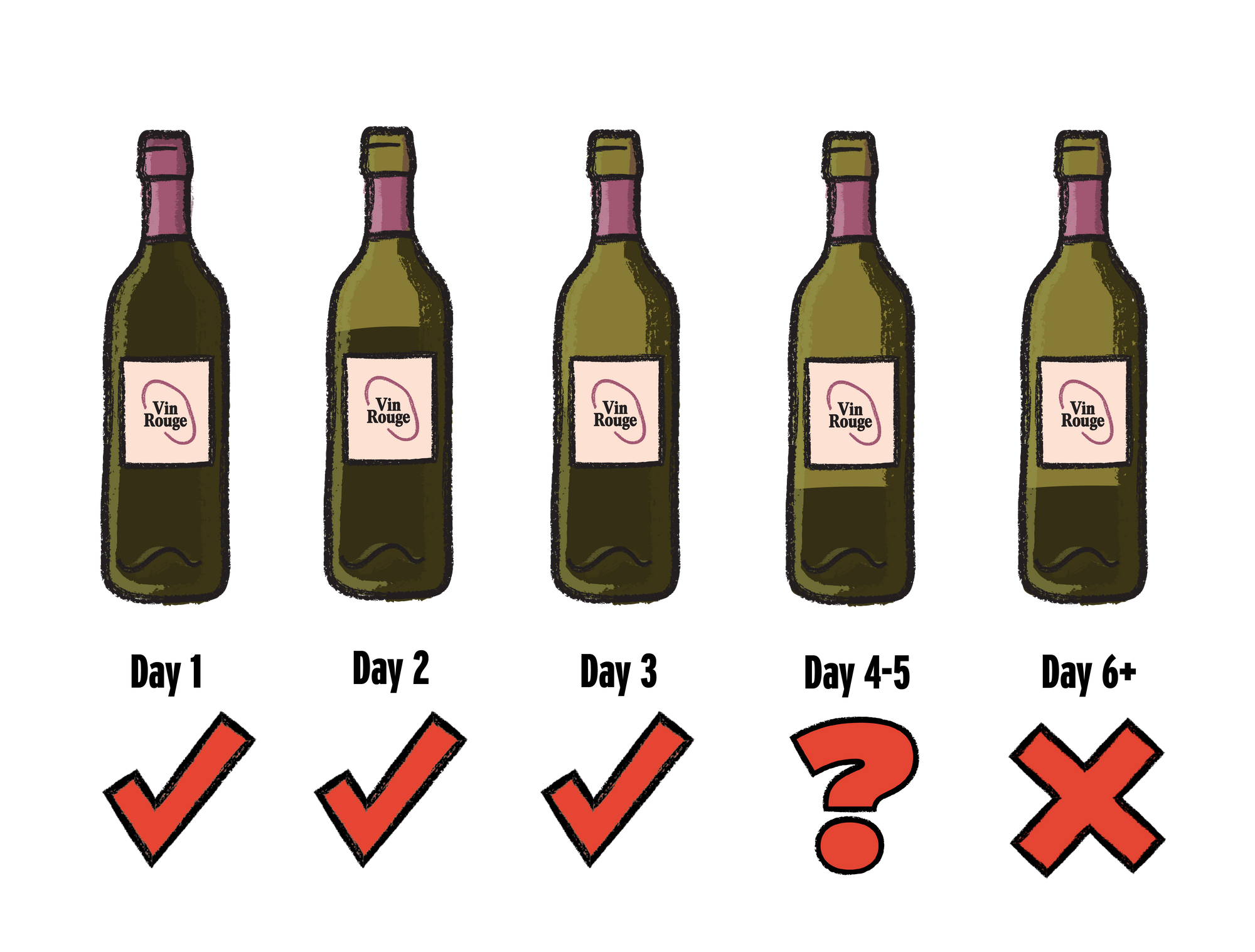
Wine spoilage signs include a vinegary smell, change in color, and off taste. An open bottle typically lasts 3-5 days.
Opening a bottle of wine is always an exciting moment, but once opened, how do you know if it’s still good to drink? Recognizing signs of wine spoilage is crucial to ensure your wine experience remains delightful. Imagine pouring a glass of your favorite vintage only to find that it’s lost its charm. Wouldn’t it be helpful to know what signs indicate your wine has gone bad? Let’s dive into some practical pointers to keep your wine experience top-notch.Changes In Aroma
Wine’s aroma can speak volumes. A fresh bottle might greet you with fruity or floral notes. But if your opened wine smells like vinegar or wet cardboard, it’s time to reconsider drinking it. This change in aroma is often a result of oxidation. Your nose is your best friend here; trust it to guide you. Have you ever noticed that musty smell in a wine that’s been open for too long? That’s a clear indicator of spoilage.Altered Taste
Taste is another tell-tale sign. A sip of spoiled wine may taste sharp or sour, unlike the expected balance of flavors. If your wine tastes flat or overly acidic, it’s likely past its prime. Your palate can quickly detect these changes, allowing you to make a choice before serving it to friends. Remember the last time you tasted wine that seemed off? That’s your taste buds giving you a heads up.Visual Indicators
The appearance of wine can reveal a lot about its condition. When inspecting your wine, look for changes in color or clarity. If a red wine appears brown or a white wine looks darker than usual, spoilage might be at play. Also, sediments or bubbles might indicate an unwanted fermentation process. Have you ever poured a glass and noticed a strange cloudiness? That’s a visual cue to proceed with caution. Understanding these signs can enhance your wine experience. Why risk an unpleasant sip when you can easily spot spoilage? Keep these pointers in mind, and you’ll ensure every glass of wine you enjoy is as delightful as the first sip.Preserving Wine Freshness
Preserving the freshness of an opened bottle of wine is crucial for enjoyment. A bottle of wine can be savored over several days if stored properly. Without proper techniques, wine loses its flavors and aromas quickly. Let’s explore how to keep your wine fresh with simple strategies.
Proper Resealing Techniques
Resealing an opened wine bottle effectively is essential. Use the original cork or a specialized wine stopper. This minimizes air exposure, which can spoil the wine. Ensure the bottle is sealed tightly to preserve its taste.
Refrigeration Benefits
Refrigerating wine slows the oxidation process. Cooler temperatures help maintain the wine’s quality longer. Store your opened bottle in the fridge to extend its freshness. Red or white, refrigeration is beneficial for both.
Wine Preservation Tools
Investing in wine preservation tools can be worthwhile. Vacuum pumps remove air from the bottle, reducing oxidation. Wine preservation systems inject inert gas, safeguarding the wine’s flavors. These tools offer a simple way to keep your wine delicious.
Recommended Consumption Timelines
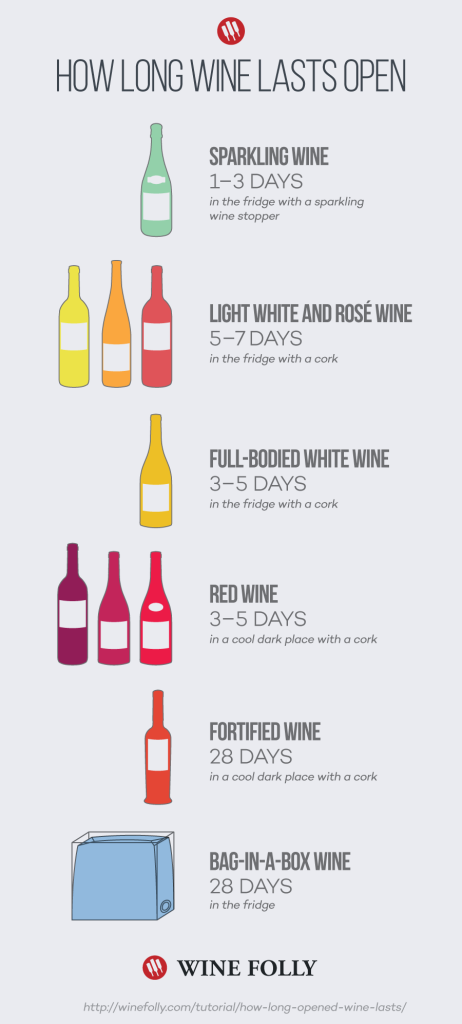
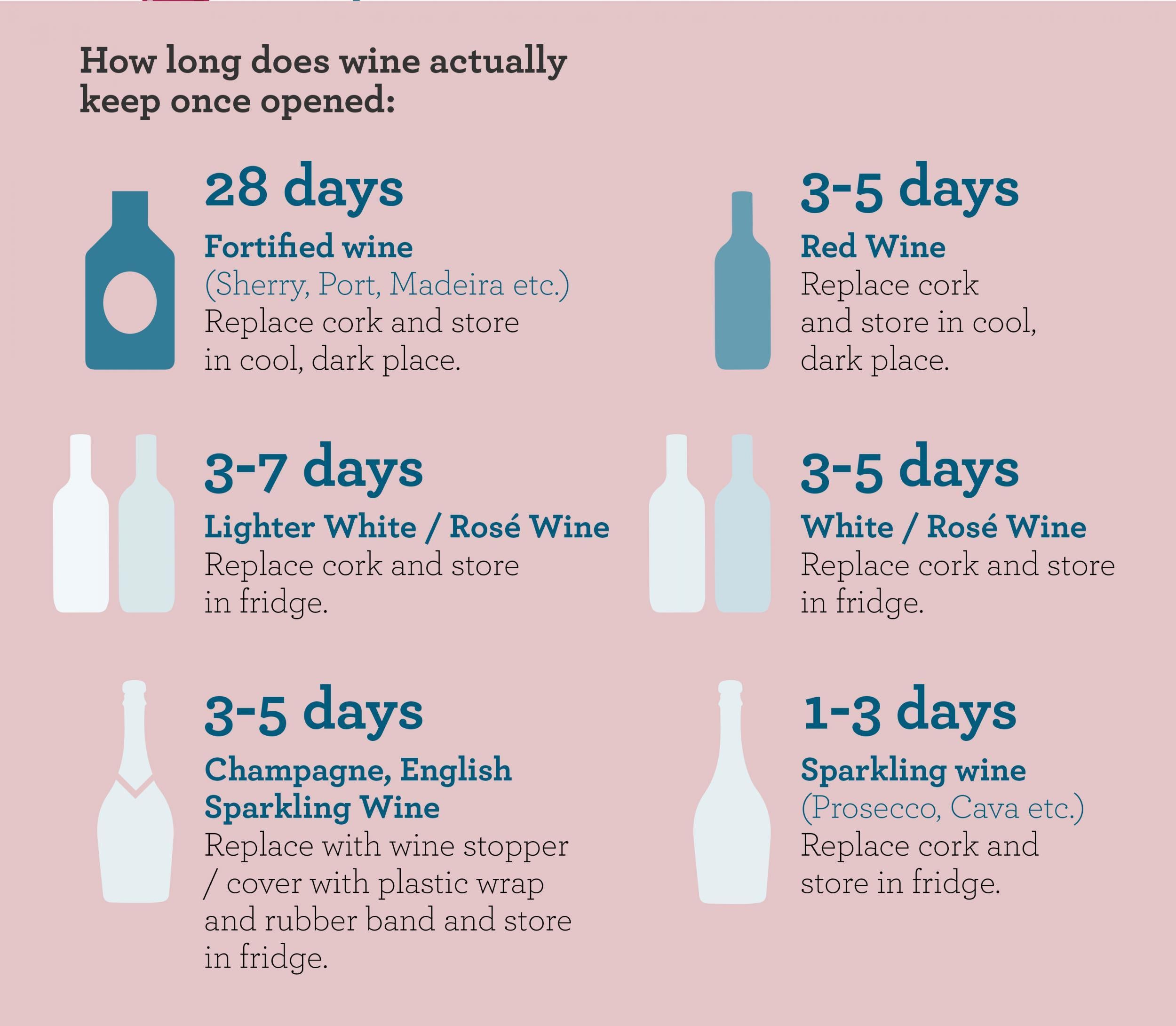
A bottle of wine, once opened, generally stays fresh for up to three to five days. Red wines last longer when stored in a cool, dark place with a cork. White wines need refrigeration to maintain their flavor and aroma.
When you pop open a bottle of wine, the clock starts ticking. Knowing how long you can keep that bottle open before it loses its charm is crucial. Whether you’re sipping a robust red, a crisp white, or a bubbly sparkling wine, each type has its own timeline for optimal freshness. Let’s dive into the recommended consumption timelines for different types of wine, ensuring you savor every drop at its best.Red Wines
Red wines, such as Cabernet Sauvignon or Merlot, can generally last up to 3 to 5 days once opened. Store them in a cool, dark place with the cork tightly in place to slow oxidation. A personal favorite, a well-aged Pinot Noir, tends to soften and evolve over a couple of days. But wait too long, and you may find its robust flavors fading. Ever found yourself wondering if that leftover glass from Monday night is still good by Friday? It might be worth a taste test. Just be ready for the possibility of it turning a bit vinegary.White Wines
White wines, like Chardonnay or Sauvignon Blanc, typically stay fresh for 3 to 5 days in the fridge. Use a wine stopper to keep air out and flavors intact. You might find that a chilled bottle of Riesling develops more complexity after a day or two, but don’t push it too far. Notice any change in aroma? It’s a sign that freshness is on its way out. Opening a bottle for a light lunch can be delightful, but do you have plans for the rest? Consider how you can incorporate it into another meal within the week.Sparkling Wines
Sparkling wines, including Champagne and Prosecco, are best enjoyed within 1 to 3 days after opening. They quickly lose their fizz, so a sparkling wine stopper is a wise investment. That celebratory bottle you opened for a toast may not hold its bubbles for long. Ever tried Prosecco pancakes the next morning? It’s a delicious way to savor those remaining bubbles. Have you ever noticed how the effervescence diminishes after just one day? That’s your cue to enjoy it sooner rather than later. By understanding these timelines, you ensure that each glass of wine is as delightful as the moment it was opened. So the next time you uncork a bottle, you’ll know just how long to savor its flavors. How do you plan to make the most of your open bottle?Innovative Wine Preservation Solutions
Ever opened a bottle of wine, savored a glass, and then wondered how to keep the rest fresh? You’re not alone. Wine enthusiasts often grapple with this dilemma. Luckily, innovative wine preservation solutions offer ways to extend the life of your opened bottle. These methods can help maintain flavor and aroma, so you can enjoy your wine even days later. Let’s explore some options that might surprise you.
Vacuum Sealers
Vacuum sealers are a popular choice among wine lovers. They work by removing air from the bottle, creating a vacuum seal. This prevents oxidation, which can spoil the wine. Have you ever noticed your wine tasting flat after a few days? Vacuum sealers aim to prevent this by keeping air out. They’re easy to use and affordable, making them a practical choice for everyday wine drinkers.
Inert Gas Systems
Inert gas systems provide a unique way to preserve wine. These systems replace the air in the bottle with gases like argon or nitrogen. Without oxygen, the wine stays fresh longer. Have you ever wondered why some wines taste better over time? Inert gases help preserve the delicate balance of flavors and aromas. They might be a bit pricier, but the investment could be worth it for those special bottles.
Wine Dispensers
Wine dispensers offer a stylish and functional preservation method. They not only store wine but also serve it at the perfect temperature. Imagine hosting a party where each glass pours perfectly chilled wine. These dispensers often use vacuum or gas systems to maintain wine quality. If you love entertaining, a wine dispenser could be a game-changer. Who doesn’t want to serve fresh, flavorful wine with ease?
As you explore these solutions, consider your wine habits. Do you prefer casual sipping or frequent entertaining? Each method offers unique benefits tailored to different needs. What works best for you? Share your thoughts and experiences below. Your insights could help others make the perfect choice for their wine preservation needs.

Credit: expertwinestorage.co.uk
Frequently Asked Questions
Can You Drink Wine Opened For 2 Weeks?
Wine opened for 2 weeks may taste flat or stale. Refrigeration can help preserve it longer. Red wines generally last longer than whites. Always check for off smells or flavors before consuming. Using a vacuum pump can extend its life.
Freshness diminishes over time, affecting quality and taste.
Does Wine Go Bad In An Open Bottle?
Yes, wine can go bad in an open bottle. Oxygen exposure causes it to spoil. Store it in the fridge and use within 3-5 days for best quality. Red wine lasts longer than white. Seal with a cork or stopper to slow down oxidation.
Can I Drink Wine 3 Months After Opening?
Wine loses its flavor and quality after 3 months of opening. Most wines should be consumed within a week. For best taste, store opened wine in the fridge with a tight seal. Always check for off odors or flavors before drinking.
Can I Drink A 10 Year Old Bottle Of Red Wine?
Yes, you can drink a 10-year-old bottle of red wine. Quality may vary based on storage conditions. Properly stored wines often improve with age, offering richer flavors. Check for spoilage signs like bad odor or taste. Always enjoy responsibly and consult a wine expert for valuable insights.
Conclusion
Understanding how long wine stays fresh after opening is vital. It helps you enjoy every drop at its best. Red wines last up to five days. Whites and rosés keep for three to five days. Sparkling wines are more delicate, lasting one to three days.
Store opened bottles properly. Use the fridge and a good stopper. This preserves the wine’s taste and aroma. Always check the wine before drinking. It ensures you savor it fresh. Enjoy your wine responsibly and wisely. Cheers to good times and delicious sips!

I’m Abby Lu, a passionate home cook who loves simplifying everyday meals. At PlugChef.com, I share product reviews and cooking guides to help you find the best tools for your kitchen.
Related posts:
 What Type of Cooking Utensils are Safe: Expert Picks
 What Innovations Could Blenders Make: Unleashing Future Tech
 Smart Strategies to Organize a Small Kitchen: Maximize Space
 How to Organize a Kitchen Cabinet: Expert Tips & Tricks
 How to Organize Kitchen Drawers: Expert Tips and Tricks
 How to Organize a Corner Kitchen Cupboard: Expert Tips

