
There’s nothing worse than pulling a batch of fried chicken wings out of the fryer only to find they’re greasy, soggy, or burnt on the outside with raw meat inside. The difference between mediocre takeout wings and restaurant-quality, shatteringly crispy homemade wings almost always comes down to one thing: precise temperature control. This guide breaks down exact oil temperatures, prep best practices, and pro techniques to help you nail perfect, juicy, crispy wings every single time, no guesswork required.
Why Temperature Control Is the #1 Factor for Perfect Wings
Oil temperature dictates every part of your wing’s final texture and safety. If oil is too cool (below 340°F), wings absorb excess oil before their crust sets, leading to heavy, soggy bites with no crunch. If oil is too hot (above 380°F), the exterior burns long before the thickest part of the wing reaches a safe internal temperature, putting you at risk for undercooked, unsafe poultry. Even a 10°F swing from your target range can make or break your results, so a reliable thermometer is non-negotiable for consistent success.
Essential Pre-Fry Prep: Set Your Wings Up for Success
Proper prep eliminates 90% of common wing frying failures before you even turn on the stove.
Fresh vs. Frozen Wings
Thaw frozen wings completely in the refrigerator overnight before frying, and pat them 2x drier than fresh wings. Ice crystals on frozen wings cause dangerous oil splatters and dramatic temperature drops when added to hot oil, leading to uneven cooking and greasy skin. Never fry wings straight from the freezer.
Drying & Seasoning
Moisture is the #1 enemy of crispiness: it creates steam that prevents the Maillard reaction (the browning process that builds flavor and crunchy crust). Pat each wing completely dry with paper towels, or leave them uncovered on a wire rack in the fridge for 1 hour to air-dry for extra crunch. Season immediately after drying, as salt draws out moisture over time, so seasoning too far ahead will leave you with soggy skin. Stick to salt, pepper, and your favorite dry spices for best results; wet marinades add excess moisture that will ruin your crust.
Breading vs. Naked Wings
For traditional crispy wings, use a light coating of all-purpose flour, or mix ¾ cup flour with ¼ cup cornstarch for an extra-shatter crisp, gluten-free crust. Rice flour or almond flour work well for gluten-free diets. For lighter, lower-carb "naked" wings, skip the breading entirely and season directly after drying. Shake off excess breading to avoid clumpy, uneven crusts. If you’re cooking in a busy household with little ones nearby, simple cabinet latches keep curious hands away from hot oil and raw poultry while you prep.
 Raw breaded wings prepped and ready to cook, with oil preheated to the optimal frying temperature.
Image source: theheartylife.org
Raw breaded wings prepped and ready to cook, with oil preheated to the optimal frying temperature.
Image source: theheartylife.org
Choosing the Right Frying Oil & Managing Smoke Points
Not all cooking oils are created equal for high-heat frying. The key metric to watch is an oil’s smoke point: the temperature at which it breaks down, produces smoke, and releases harmful compounds like aldehydes that create off-flavors and pose minor health risks.
| Oil Type | Smoke Point (°F) | Best Use Case |
|---|---|---|
| Peanut oil | 450 | Ideal for high-heat frying, neutral flavor, avoid for peanut allergies |
| Canola oil | 400 | Affordable, light taste, great for home cooks |
| Vegetable oil | 400 | Neutral blend, budget-friendly for frequent frying |
| High-oleic sunflower oil | 440 | Light flavor, allergy-friendly alternative to peanut oil |
Never heat oil above its smoke point, and avoid reusing oil more than 2-3 times for frying wings, as breading residue breaks down oil faster and lowers its smoke point over time. For official guidance on safe frying practices, the University of Minnesota Extension recommends never heating oil past its smoke point to avoid harmful fumes and off-flavors. After frying, cleaning greasy pots and fryers is far easier with a heavy-duty cleaning brush designed for non-stick and stainless steel surfaces.
Exact Frying Temperatures for Every Wing Style
The optimal oil temperature range for breaded or naked fried chicken wings is 350°F to 375°F (175°C to 190°C). This window balances fast crust formation to lock in moisture, and even cooking to avoid burnt exteriors.
- 350°F is the minimum target: it’s hot enough to crisp the crust immediately, preventing oil from seeping into the skin and making wings greasy.
- 375°F is the maximum target: any hotter will burn the coating before the thickest part of the wing cooks through.
Adjust your target temperature based on your setup and wing type:
- Stovetop pots: Heat edges are hotter than the center, so measure oil temperature in the middle of the pot, not near the sides or bottom, which will give false high readings.
- Deep fryers: Built-in thermostats are often off by 10-15°F, so calibrate with a separate digital thermometer before each use.
- Frozen (thawed) wings: Add these to oil preheated to 365-380°F to compensate for the 10-15°F temperature drop when cold wings hit the oil.
- Whole wings: Take 1-2 minutes longer to cook than separated drumettes and flats, so keep oil at the higher end of the range (360-375°F) to ensure the thickest part cooks through.
No matter your wing style, always verify doneness with a meat thermometer: per USDA food safety guidelines, all poultry must reach an internal temperature of 165°F (74°C) before consumption to kill harmful bacteria like salmonella.
Step-by-Step Frying Process for Consistent Results
- Preheat oil to your target temperature (350-375°F) using a calibrated thermometer, never rely on visual cues like shimmering oil, which are unreliable.
- Add wings to oil in small batches (no more than ⅓ of your pot’s volume) to avoid drastic temperature drops. Crowding the pan is the most common cause of soggy, greasy wings.
- Fry for 8-12 minutes, turning occasionally with tongs for even browning. Adjust time based on wing size: smaller flats cook faster than large drumettes.
- Check internal temperature by inserting a meat thermometer into the thickest part of the wing, avoiding the bone. It should read 165°F.
- Remove wings and drain on a wire rack, not paper towels, which trap steam and soften the crust. If you’re prepping extra wings ahead of time, cleaning up prep bowls is a breeze with a soap-dispensing scrub brush that lets you wash dishes without switching between soap and sponge.
Pro Techniques for Maximum Crispiness
Double Frying Method
Used by restaurants for extra-shatter crisp wings, this method takes 10 extra minutes but delivers unbeatable texture:
- First fry: Cook wings at 325°F (163°C) for 6-8 minutes, until cooked through but not yet crispy. Let them rest at room temperature for 5 minutes to let internal moisture redistribute.
- Second fry: Raise oil temperature to 375°F (190°C) and fry wings for 2-3 minutes, until golden brown and extra crispy. The first fry cooks the meat and removes internal moisture, while the second fry creates a crisp crust without overcooking the meat.
Resting & Saucing Tips
Always rest wings on a wire rack for 2-3 minutes after frying to let excess oil drain and the crust firm up. If you need to hold wings before serving, keep them in a 200°F oven on a wire rack, uncovered, to maintain crispiness. For sauced wings, toss them in sauce right before serving to avoid sogginess. For crispy sauced wings, toss them in sauce, then submerge them back in 375°F oil for 30 seconds to set the sauce, then drain on a rack.
Troubleshooting Common Wing Frying Issues
Even experienced cooks run into wing mishaps. Here’s how to fix the most common problems:
- Greasy, soggy wings: Caused by oil temperature dropping below 340°F, usually from overcrowding the pan or adding cold wings. Fix: use a thermometer, fry in small batches, and let oil recover to 350°F between batches. Don’t press wings down into the oil, as this increases oil absorption.
- Burnt exterior, raw interior: Caused by oil temperature above 380°F, or wings being too cold when added. Fix: lower oil temp, thaw wings completely before frying, and avoid adding too many wings at once.
- Crust falls off after frying: Caused by insufficiently dried wings, or thick, clumpy breading. Fix: pat wings extremely dry before breading, use a light, even coating of breading, and let breaded wings rest for 5 minutes before frying to let the coating adhere.
- Wings stick together: Caused by adding too many wings at once, or not turning them early enough. Fix: add wings one at a time, and turn them gently 1-2 minutes into frying to separate them before the crust sets. If you’re cleaning up splatters and grease after frying, a versatile brush set can handle scrubbing fryer baskets, stovetop splatters, and greasy countertops without scratching surfaces.
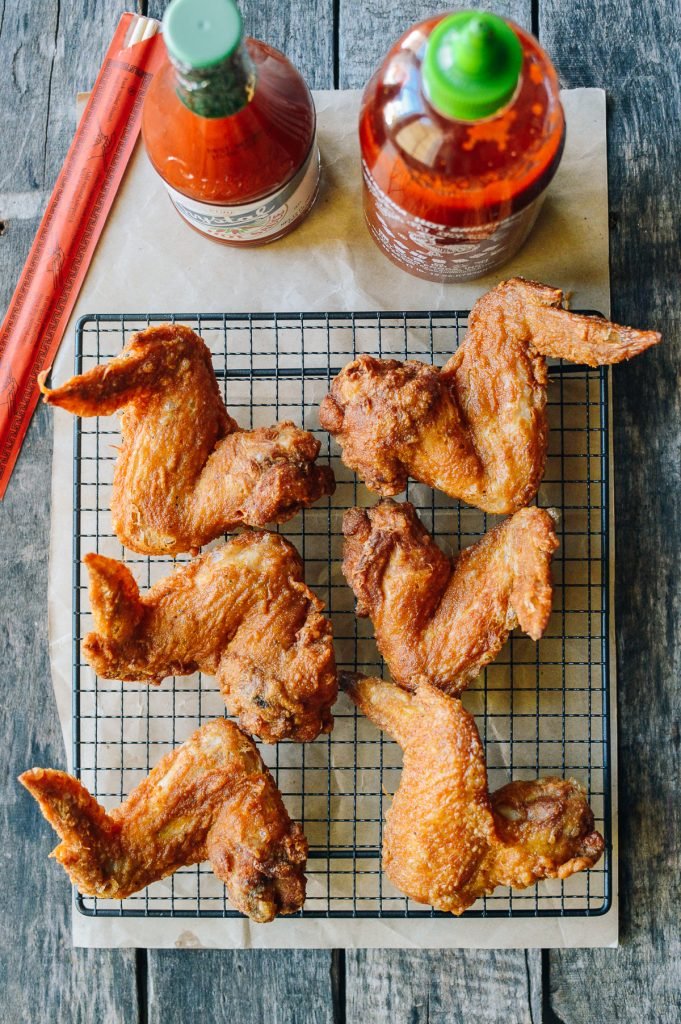
 Freshly fried golden wings resting on a wire rack to drain excess oil and maintain crispiness.
Image source: jehancancook.com
Freshly fried golden wings resting on a wire rack to drain excess oil and maintain crispiness.
Image source: jehancancook.com
Frequently Asked Questions
What is the ideal frying temperature for chicken wings?
The optimal range for breaded or naked wings is 350°F to 375°F (175°C to 190°C). This temperature ensures the crust crisps quickly while the internal meat cooks through evenly.
How long should wings be fried at 350°F?
Fry wings for 8-12 minutes at 350°F, depending on size, until the internal temperature reaches 165°F and the crust is golden brown.
Can I fry wings at a higher temperature?
No, frying above 375°F will burn the exterior before the internal meat cooks through, leading to dry, overcooked meat and a bitter, burnt crust.
How do I know when wings are fully cooked?
Use a meat thermometer to check the thickest part of the wing, avoiding the bone. It should read 165°F (74°C), per USDA food safety standards.
Can I reuse oil after frying wings?
Yes, strain used oil through a fine-mesh sieve to remove breading crumbs and debris, store it in an airtight container in a cool, dark place, and reuse it 2-3 times for frying wings. Discard oil if it smells rancid, looks dark, or smokes at a lower temperature than its standard smoke point.
What’s the difference between deep frying and air frying wings?
Deep frying delivers the crispiest, most evenly cooked wings, while air fryers work well for a lower-fat option: cook wings at 400°F for 20-25 minutes, flipping halfway, and spray with a small amount of oil for extra crispiness.
 Air-fried wings as a lower-fat alternative to deep-fried, cooked at 400°F for maximum crispiness.
Image source: www.wholesomeyum.com
Air-fried wings as a lower-fat alternative to deep-fried, cooked at 400°F for maximum crispiness.
Image source: www.wholesomeyum.com
Final Tips for Wing Success
Perfect fried chicken wings come down to three non-negotiable steps: precise oil temperature monitored with a calibrated thermometer, thorough drying of wings before prepping, and small-batch frying to avoid temperature drops. With these guidelines, you can skip the greasy takeout and make restaurant-quality wings at home for game days, parties, or weeknight dinners. For more kitchen tips and guides to elevate your cooking, check out our collection of home cooking resources to master every meal.

I’m Abby Lu, a passionate home cook who loves simplifying everyday meals. At PlugChef.com, I share product reviews and cooking guides to help you find the best tools for your kitchen.
Related posts:
 Oven Cleaner on a Grill: Ultimate Guide for Sparkling Results
 Honey Gold Sauce for Wings: Irresistible Sweet & Tangy Flavor
 Bourbon Cocktails With Egg White: Smooth, Frothy, and Irresistible
 Gruyere Cheese And Chicken Recipes: Deliciously Easy Dinner Ideas
 Origin of Pleased As Punch: Unveiling Its Surprising History
 Frozen Salmon Fillet in Oven: Easy, Juicy, and Perfect Every Time

