
There’s nothing worse than slicing into a spiral ham for your holiday dinner or family gathering only to find it dry, tough, or unevenly cooked. Unlike whole bone-in hams, spiral-cut hams are pre-sliced in a continuous spiral around the bone, creating a huge surface area exposed to heat that makes them far more prone to drying out if you miss your target internal temperature. Getting the internal temperature for spiral ham right isn’t just about avoiding a disappointing meal — it’s also critical for food safety, especially if you’re serving vulnerable guests like young kids or older adults. This guide breaks down exact temperature targets, monitoring tips, and common mistakes to avoid, so you can pull a juicy, flavorful, perfectly safe spiral ham every single time.
Why Spiral Ham Has Unique Temperature Requirements
Spiral hams differ from whole bone-in hams in two key ways that directly impact how you cook and monitor their temperature. First, the pre-sliced spiral cut exposes far more of the meat’s surface to heat, so these hams cook 15–20% faster than whole hams of the same weight, and are far less forgiving of overcooking. Even 5°F above your target temperature can turn a moist ham chewy and dry in minutes.
Second, nearly all spiral hams sold in stores are pre-cured and smoked, meaning they’ve already been cooked to a safe temperature during processing. This means you only need to reheat them to a safe serving temp, rather than cooking them from raw — a distinction many home cooks miss, leading to unnecessarily long cook times and ruined meat. If you do purchase a fresh, uncured spiral ham, it will be clearly labeled as such, and requires a slightly higher internal temperature to be safe to eat.
Exact Internal Temperature Targets for Safety and Juiciness
Hitting the right internal temperature is a balance between food safety and preserving moisture. These targets are aligned with current USDA guidance, updated for 2026 cooking practices.
USDA Safe Minimum Temperatures
Per USDA safe minimum cooking guidelines, pre-cooked, cured spiral ham only needs to reach an internal temperature of 140°F (60°C) to be safe to eat, as the curing and smoking process already eliminated harmful bacteria during production. For fresh, uncured spiral ham (sold unlabeled as pre-cooked), you must heat it to an internal temperature of 145°F (63°C) and let it rest for 3 minutes before serving to kill any remaining pathogens.
Temperature for Maximum Juiciness
For the juiciest results, pull pre-cooked spiral ham from the heat 2–3°F below your 140°F target. Spiral ham experiences carryover cooking, where residual heat continues to raise the internal temperature by 3–5°F while the meat rests. This small buffer prevents overcooking, which is the most common cause of dry spiral ham. For fresh uncured ham, pull it at 142°F (61°C) to hit the 145°F target after resting.
If you’re cooking with kids in the kitchen, secure lower cabinets and drawers with child proof drawer locks no screws to keep curious hands away from hot cookware and raw meat.
Step-by-Step Temperature Monitoring Guide
Accurate temperature readings are only possible with the right tools and technique. A false reading — from hitting bone, fat, or glaze instead of meat — can lead to undercooked, unsafe ham or dry, overcooked meat.
Best Thermometers for Spiral Ham
Not all meat thermometers are built for the unique structure of spiral ham:
- Digital instant-read thermometer: The best choice for most home cooks, as it gives an accurate reading in 2–3 seconds, minimizing the time you need to leave the oven or slow cooker lid open (which drops temperature and extends cook time). Look for a model with a probe long enough to reach the center of the ham without touching the bone.
- Dial oven-safe thermometer: A budget-friendly option if you prefer to leave the thermometer in the ham for the full cook time. These are less accurate than digital models, and can be difficult to read through the oven door.
- Wireless smart thermometer: Ideal for grilling or slow cooking, as it sends real-time temperature updates to your phone, so you never have to open the appliance to check progress.
How to Take an Accurate Reading
The most common temperature reading mistake is inserting the thermometer into the fatty outer layer, glaze, or the bone, all of which give inaccurate readings. To get a true measure of the meat’s internal temperature:
- Insert the probe into the thickest part of the ham, between two slices, avoiding the central bone and any thick fat cap.
- Wait for the reading to stabilize (2–3 seconds for digital models, 10–15 seconds for dial models) before noting the temperature.
- Wipe your thermometer down with a sanitized best kitchen cleaning brush before and after use to avoid cross-contamination between raw and cooked foods.
- Calibrate your thermometer every 3–6 months by submerging it in ice water (it should read 32°F / 0°C) to ensure accuracy, especially if it’s been dropped or exposed to extreme temperatures.
In practice, most home cooks pull their spiral ham 2–3°F below the target temperature, as carryover cooking will raise the internal temp by 3–5°F while it rests — a trick that prevents overcooking, which is the most common cause of dry spiral ham.
Cooking Methods and Target Temperatures
The cooking method you choose will impact cook time, texture, and flavor, but all methods share the same internal temperature targets for safety and juiciness. Below is a quick reference table for common 2026 cooking methods:
| Cooking Method | Oven/Appliance Temp | Estimated Cook Time (per pound) | Target Internal Temp |
|---|---|---|---|
| Oven Baking | 325°F (163°C) | 10–12 minutes | 140°F (60°C) (pre-cooked) / 145°F (63°C) (fresh, 3 min rest) |
| Slow Cooker | Low setting | 4–6 hours | 140°F (60°C) (pre-cooked) / 145°F (63°C) (fresh, 3 min rest) |
| Grill (indirect) | Medium heat (325–350°F / 163–177°C) | 12–15 minutes | 140°F (60°C) (pre-cooked) / 145°F (63°C) (fresh, 3 min rest) |
| Air Fryer | 325°F (163°C) | 8–10 minutes | 140°F (60°C) (pre-cooked) / 145°F (63°C) (fresh, 3 min rest) |
Oven Baking
The most popular method for holiday hams, oven baking delivers even heat and a crispy, caramelized glaze. Preheat your oven to 325°F (163°C), place the ham cut-side down in a roasting pan with ½ cup of water or broth to prevent burning, and cover loosely with aluminum foil. Bake until the internal temperature hits your target, basting with glaze every 20 minutes if desired. After baking, scrub any baked-on glaze from your roasting pan with a professional kitchen cleaning brush to avoid rust and extend the life of your cookware.
Slow Cooking
For hands-off cooking with ultra-tender results, use a slow cooker on low. Add ¼ cup of broth, apple juice, or cola to the bottom of the pot to keep the ham moist, then cook until it hits your target internal temperature. Slow cooking is ideal for larger hams (over 12 pounds), as it avoids the dry edges that can happen in the oven.
Grilling
Grilling adds a smoky, charred flavor that pairs perfectly with sweet or tangy glazes. Preheat your grill for indirect heat (turn off one burner, or build your coals on one side of the grill), wrap the ham loosely in foil to prevent drying, and place it on the cooler side of the grill. Close the lid and cook, turning occasionally, until it hits your target temperature.
Air Fryer
A popular 2026 cooking hack, air frying crisps the outer fat layer of the ham for a textured finish without drying out the meat. Preheat your air fryer to 325°F (163°C), place the ham in the basket, and cook for 8–10 minutes per pound, basting with glaze halfway through. Check the internal temperature frequently, as the high circulating air can cause the thin spiral slices to overcook quickly.
Resting and Serving for Best Results
Resting is just as important as hitting the correct internal temperature, especially for spiral ham. The pre-sliced structure means juices can escape even faster than with whole hams if you cut into the meat too soon.
Importance of Resting
After you pull the ham from the heat, let it rest loosely covered with aluminum foil for 10–15 minutes before carving. This pause allows the internal temperature to even out, and lets the juices that migrated to the center during cooking redistribute evenly through the meat. If you slice into the ham immediately, those juices will spill out onto your cutting board, leaving the meat dry and tough.
Serving Tips
Serve your spiral ham warm, at an internal temperature of 130–140°F (54–60°C). At this range, the fat is fully rendered for rich flavor, but the meat is still tender and juicy. If you need to hold the ham for more than 30 minutes before serving, keep it wrapped in foil in a 200°F (93°C) oven to avoid drying it out.
Pair your sliced ham with a charcuterie board for a stress-free appetizer, using precise cutting techniques to slice cheese and cured meats evenly. Wipe down countertops with a kitchen cleaning brush with handle before serving to ensure a clean, safe surface for food.
Common Temperature Mistakes That Ruin Spiral Ham
Even experienced cooks make these avoidable errors when cooking spiral ham:
- Overcooking to "be safe": Many cooks mistakenly heat pre-cooked spiral ham to 160°F (71°C), the safe temperature for whole raw pork. This will dry out the meat completely. Stick to the 140°F (60°C) target for pre-cooked hams.
- Checking temperature too often: Every time you open the oven, slow cooker, or grill lid, the internal temperature drops by 10–15°F, extending cook time and drying out the ham. Only check the temperature when you’re within 10 minutes of the estimated total cook time, or use a wireless thermometer to monitor without opening the appliance.
- Taking readings from the wrong spot: Inserting the thermometer into the glaze, fat cap, or bone will give a false reading. Always test the thickest part of the meat, between two slices, away from the central bone.
- Skipping the rest: Cutting into the ham immediately after cooking will cause all the juices to run out, leaving the meat dry even if you hit the perfect internal temperature.
Enhancing Flavor Without Affecting Temperature Accuracy
You don’t need to sacrifice juiciness for flavor. These tips add depth to your ham without impacting your internal temperature readings:
- Glaze at the right time: Apply glaze only when the ham’s internal temperature reaches 120°F (49°C). Applying it earlier will cause the sugars to burn before the ham is fully heated. Brush glaze on every 15–20 minutes for a caramelized, glossy finish.
- Season between the slices: Gently pull apart the spiral slices and sprinkle spices like black pepper, garlic powder, and paprika directly onto the meat, so every bite is flavorful, not just the outer surface.
- Add aromatics to the pan: Place onions, garlic, and herbs in the bottom of your roasting pan or slow cooker to infuse the ham with subtle flavor as it cooks, without adding extra sugar or salt that can burn.
Frequently Asked Questions
What is the ideal internal temperature for spiral ham?
For pre-cooked, cured spiral ham, the ideal internal temperature is 140°F (60°C). For fresh, uncured spiral ham, the safe target is 145°F (63°C) followed by a 3-minute rest. Always use a meat thermometer to check the thickest part of the meat, avoiding bone and glaze, for an accurate reading.
How long should I cook spiral ham to 140°F?
Cook time varies by method and ham weight: 10–12 minutes per pound in a 325°F oven, 4–6 hours on low in a slow cooker, 12–15 minutes per pound on an indirect grill, or 8–10 minutes per pound in an air fryer. Always rely on internal temperature rather than cook time alone, as oven temperatures and ham sizes can vary.
Can I eat spiral ham below 140°F?
No. Pre-cooked spiral ham that hasn’t reached 140°F (60°C) may still harbor harmful bacteria that can cause foodborne illness. If you’re unsure of the ham’s processing status, heat it to 145°F (63°C) and rest for 3 minutes to ensure safety.
How do I check the internal temperature accurately?
Insert an instant-read digital thermometer into the thickest part of the ham, between two slices, avoiding the central bone and any outer fat or glaze. Wait for the reading to stabilize (2–3 seconds) before noting the temperature. Calibrate your thermometer every 3–6 months to ensure accuracy.
Can I cook a frozen spiral ham without thawing?
Yes, but add 50% more cook time to the estimated total, and ensure the internal temperature reaches 140°F (60°C) for pre-cooked ham or 145°F (63°C) for fresh ham, with a 3-minute rest. Thawing the ham in the refrigerator first will yield a more evenly cooked, juicy result.
Do I need to glaze my spiral ham to hit a safe internal temperature?
No. Glaze is purely for flavor and texture, and does not impact the safety of the ham. You can cook a plain spiral ham to the correct internal temperature and add glaze after cooking if desired.
Store leftover ham in an airtight container in the refrigerator for up to 4 days, and use kitchen cabinet safety latches to keep the container out of reach of young children.
Conclusion
Mastering the internal temperature for spiral ham takes the guesswork out of a classic, crowd-pleasing meal, and with these tips, you’ll never have to serve dry, overcooked ham again. Remember to stick to the 140°F (60°C) target for pre-cooked hams and 145°F (63°C) for fresh hams, use a calibrated thermometer for accurate readings, and always let the meat rest before carving to lock in juices. For more stress-free holiday cooking guides and kitchen safety resources to keep your meal prep running smoothly, browse our full library of trusted cooking content.
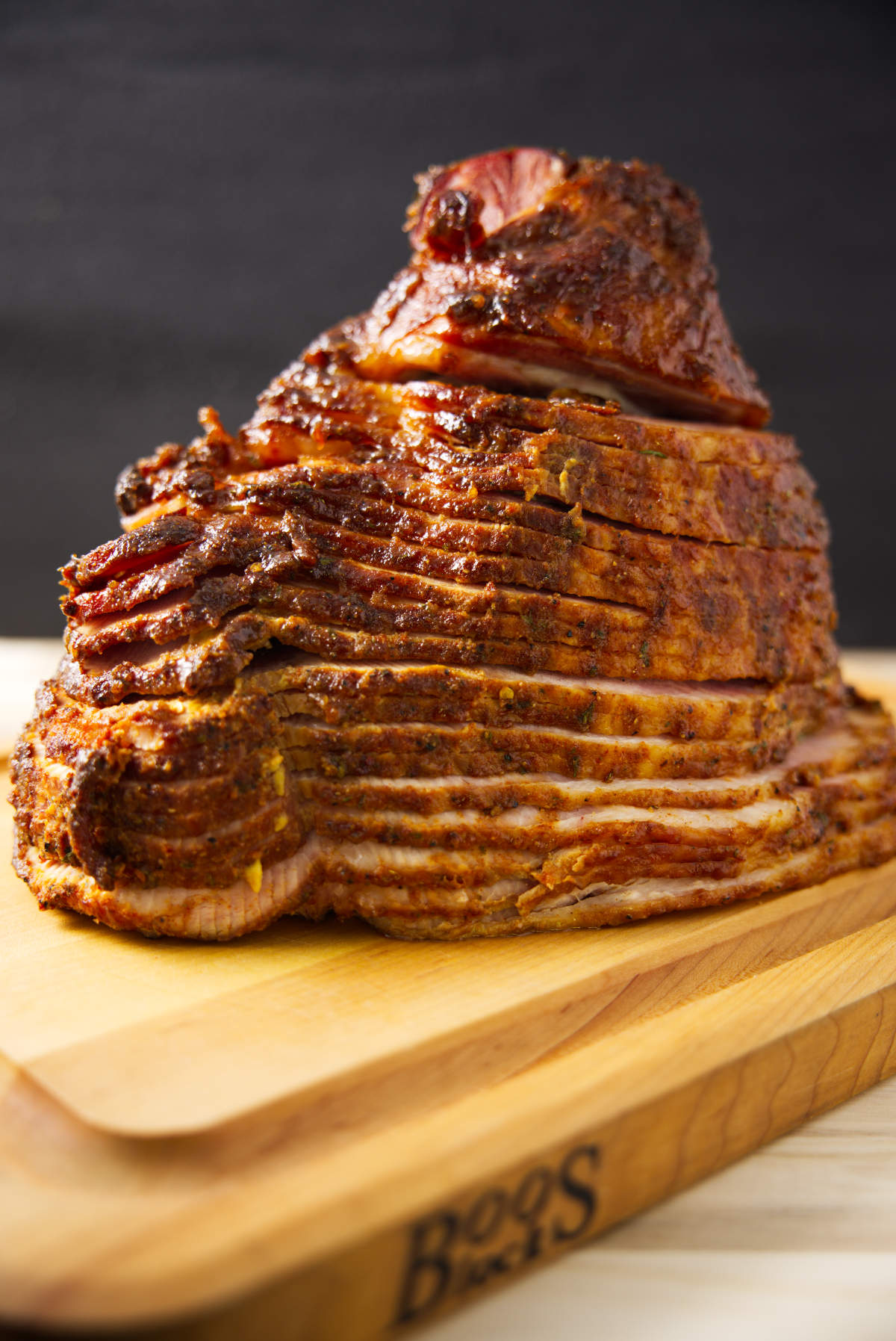 Credit: alicensetogrill.com
A perfectly cooked glazed spiral ham, resting before carving to lock in juices
Credit: alicensetogrill.com
A perfectly cooked glazed spiral ham, resting before carving to lock in juices
 Credit: www.raegunramblings.com
Slow cooking a spiral ham on low heat keeps the meat moist and tender over 4–6 hours
Credit: www.raegunramblings.com
Slow cooking a spiral ham on low heat keeps the meat moist and tender over 4–6 hours
 Credit: www.cbcrabcakes.com
Carved spiral ham arranged on a serving platter, ready for a holiday meal
Credit: www.cbcrabcakes.com
Carved spiral ham arranged on a serving platter, ready for a holiday meal
Frequently Asked Questions
What internal temperature do I need for a pre-cooked vs. fresh spiral ham?
Pre-cooked, cured spiral ham only needs to reach 140°F (60°C) internally to be safe to eat, as the smoking and curing process already eliminated harmful bacteria during manufacturing. Fresh, uncured spiral ham must reach 145°F (63°C) and rest for 3 minutes before serving to kill any remaining pathogens. Always confirm the ham’s processing status on the packaging label before cooking, as cooking a pre-cooked ham to the higher fresh ham temperature will result in dry, tough meat.
Can I cook a frozen spiral ham without thawing it first?
Yes, but expect to add 50% more cook time to the standard estimate for your chosen cooking method. Insert the thermometer into the thickest part of the ham, avoiding bone, to confirm it reaches 140°F (60°C) for pre-cooked hams or 145°F (63°C) for fresh hams before resting. Thawing the ham in the refrigerator for 2–3 days first will yield a more evenly cooked, juicier result, as frozen hams often cook unevenly around the edges.
Do I have to glaze my spiral ham for it to be safe?
No. Glaze is purely a flavor and texture addition, and has no impact on food safety. You can cook a plain spiral ham to the correct internal temperature and add glaze after cooking if you prefer a less sweet finish, or skip glaze entirely for a savory, smoky ham.
What happens if I overcook my spiral ham?
Overcooking causes the ham’s muscle fibers to tighten and squeeze out moisture, resulting in dry, chewy meat that is unappealing even if it is safe to eat. To avoid this, pull the ham from the heat 2–3°F below your target temperature, as carryover cooking will raise the internal temp by 3–5°F during the 10–15 minute resting period. If you do accidentally overcook your ham, you can salvage some moisture by brushing it with a little broth or melted butter and wrapping it tightly in foil for 10 minutes before serving.
Can I use a meat thermometer for other holiday dishes?
Absolutely. A calibrated instant-read thermometer is one of the most versatile tools in your holiday kitchen, useful for checking the doneness of turkey, roast beef, and even baked goods like bread. For more holiday cooking tips and kitchen safety guides to keep your meal prep on track, check out our full trusted cooking guides for tested, reliable recipes and advice.
Conclusion
Mastering the internal temperature for spiral ham eliminates the guesswork from one of the most iconic holiday and family meals, ensuring you serve juicy, flavorful, and safely cooked meat every time. Stick to the 140°F (60°C) target for pre-cooked cured hams and 145°F (63°C) for fresh uncured hams, use a calibrated thermometer to avoid false readings, and always let the ham rest before carving to lock in juices. For more kitchen safety resources, like keeping cooking tools out of reach of young children with kid-safe kitchen locks, and easy cleaning tips for post-meal cleanup, explore our full library of trusted kitchen guides.

I’m Abby Lu, a passionate home cook who loves simplifying everyday meals. At PlugChef.com, I share product reviews and cooking guides to help you find the best tools for your kitchen.
Related posts:
 Bourbon Drink With Egg White: Creamy, Classic Cocktail Recipe Guide
 Bacon Brown Sugar Brussel Sprouts: Irresistibly Sweet & Savory Delight
 Mini Watermelon Vs Regular Watermelon: Ultimate Taste & Health Showdown
 Can You Grill Pizza Frozen? Ultimate Guide for Perfect Crisp!
 Recipe for Lemon Fluff Dessert: Irresistibly Light & Zesty Treat
 Baked Salmon from Frozen Recipe: Easy, Delicious & Quick Guide

