

You’re searing a steak on high heat, and within minutes, your smoke alarm blares, grease splatters coat your cabinets, and that savory garlic butter smell lingers on your curtains for three days. If this sounds familiar, your kitchen likely lacks dedicated exhaust ventilation.
While many renters and homeowners in older properties assume opening a window is enough, the absence of a purpose-built exhaust fan (or equivalent vented range hood) creates far more risks than just lingering odors. In this 2026 guide, we’ll break down the full scope of health, structural, and financial risks of unvented kitchen air, walk through actionable solutions for every budget and living situation, and share expert, code-compliant tips to improve your kitchen’s air quality long-term.
Hidden Health Risks of Unvented Kitchen Air
Cooking releases fine particulate matter (PM2.5), volatile organic compounds (VOCs), nitrogen dioxide (NO₂), and acrolein (the chemical that gives fried food its sharp, irritating smell) into the air — pollutants that the U.S. Environmental Protection Agency (EPA) identifies as major contributors to poor indoor air quality from cooking activities. Without a dedicated exhaust route, these pollutants build up to levels far above outdoor air quality standards, creating immediate and long-term health hazards for everyone in your home.
Short-Term Irritation and Chronic Respiratory Risks
In practice, even 30 minutes of high-heat cooking without ventilation can raise indoor PM2.5 levels to 2-5 times the EPA’s 24-hour safety threshold. For people with asthma, allergies, or COPD, this triggers immediate symptoms: itchy eyes, scratchy throat, coughing, and wheezing.
Long-term, repeated exposure to cooking fumes is linked to increased risk of chronic bronchitis and reduced lung function, per EPA research. Children and elderly household members are particularly vulnerable, as their respiratory systems are more sensitive to airborne irritants.
Mold and Moisture-Related Health Hazards
Cooking generates 1-3 gallons of water vapor per week in an average home, per U.S. Department of Energy data. If that vapor has no dedicated exhaust route, it condenses on cool surfaces like windows, exterior walls, and the back of cabinets.
Within 2-4 weeks of consistent unvented cooking, you’ll start to see micro-droplets of moisture that encourage mold and mildew growth. Mold spores trigger allergic reactions, sinus infections, and in severe cases, toxic mold exposure that impacts cognitive function. A common mistake homeowners make is wiping down visible mold without addressing the underlying moisture source from cooking, which leads to recurring outbreaks.
Structural and Financial Damage from Poor Kitchen Ventilation
Lack of a kitchen exhaust fan doesn’t just impact your health — it causes gradual, costly damage to your home’s structure and finishes, and can even lower your property value over time.
Cosmetic and Material Damage
Grease particles and water vapor don’t just linger in the air — they settle on every surface in your kitchen. Over 6 months of unvented cooking, grease buildup will yellow painted walls, stain wood cabinets, and degrade the finish on stainless steel appliances.
Moisture trapped behind paint or wallpaper causes peeling, bubbling, and water staining that can cost $500-$2,000 to remediate, depending on the size of your kitchen. For homes with hardwood flooring near the kitchen, repeated exposure to cooking moisture can cause warping and cupping that requires full board replacement. If you have young children, secure lower cabinets with child-proof cabinet locks no drilling while addressing moisture damage to avoid exposure to cleaning chemicals.
Long-Term Home Value Impacts
In 2026, vented kitchen ventilation is a standard expectation for home buyers, and unvented kitchens often lead to lower offers or required repairs before closing. Appraisers also flag unvented kitchens as a health and safety risk, which can reduce your home’s appraised value by 1-3% in competitive markets.
Actionable Solutions for Kitchens Without Exhaust Fans
The right solution depends on your living situation, budget, and whether you can modify permanent kitchen fixtures. Below are the most effective options, ranked by performance and long-term value.
Vented Range Hoods (Best Long-Term Solution for Homeowners)
Vented hoods pull air through a duct and expel it directly outside, rather than recirculating it through a filter. This is the only solution that fully removes heat, humidity, grease, and harmful combustion byproducts from your kitchen.
For best performance, choose a hood with a CFM (cubic feet per minute) rating of at least 100 for every 10,000 BTU of your cooktop, or 1 CFM per square foot of kitchen space, whichever is higher. For gas stoves, bump that to 150 CFM per 10,000 BTU to remove dangerous nitrogen dioxide and trace carbon monoxide.
Placement tip: mount the bottom of the hood 24-30 inches above a standard cooktop, or 30-36 inches above a professional-style range. If you’re installing a new hood, opt for a 6-inch round rigid metal duct rather than flexible foil ducting, which restricts airflow by up to 30% and accumulates grease buildup faster. This is a high-ROI upgrade: vented range hoods add an average of 1-2% to home resale value, per industry estimates.
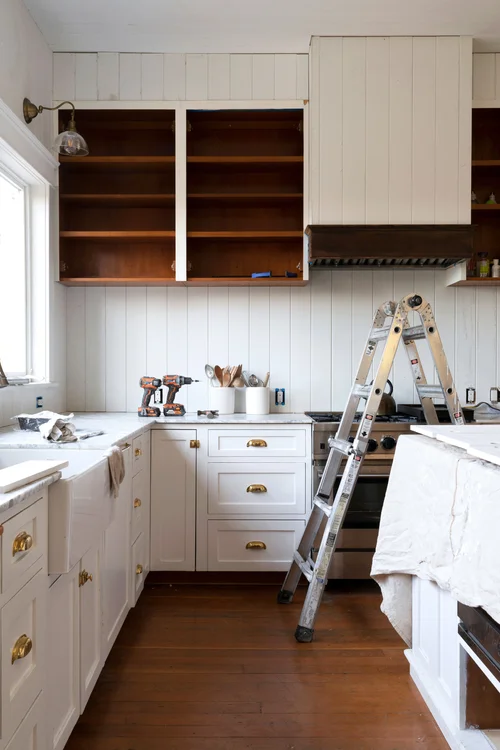 A properly sized vented range hood is the most effective long-term solution for kitchen exhaust, per EPA air quality guidelines.
Credit: www.thegritandpolish.com
A properly sized vented range hood is the most effective long-term solution for kitchen exhaust, per EPA air quality guidelines.
Credit: www.thegritandpolish.com
Solutions for Renters and No-Duct Kitchens
Renters and homeowners without existing ductwork can’t install permanent vented hoods, but these code-compliant, no-damage options still improve air quality significantly:
- Recirculating range hoods with activated carbon filters: These pull air through a dual-layer filter that captures grease and odors, then release cleaned air back into the kitchen. Replace the carbon filter every 3-6 months for optimal performance, and look for models with a minimum 200 CFM rating for small to medium kitchens.
- Window exhaust fans: These fit into a standard double-hung window frame with no installation required, and vent air directly outside. Look for models with an adjustable thermostat and reversible airflow direction to use in any season.
- Portable air purifiers with HEPA and activated carbon filters: For kitchens under 150 square feet, a purifier with a CADR (clean air delivery rate) of at least 100 for smoke will capture 99.97% of airborne particles from cooking. Run it on high for 15 minutes during and after cooking to clear residual fumes. Pair a HEPA air purifier with regular surface cleaning using a professional kitchen cleaning brush to remove settled grease particles from countertops and cabinet fronts.
- Cross-ventilation tricks: Open two windows on opposite sides of the kitchen to create a cross-breeze, and place a portable fan facing outward in one window to push stale air outside. This method works best for mild cooking, like boiling pasta or sautéing vegetables, but is less effective for high-heat searing or frying. If you use cross-ventilation regularly, keep windowsills clean with a kitchen wall cleaning brush to avoid dust and grease buildup that reduces airflow. For persistent grease stains on cabinets, use a bathroom and kitchen cleaning brush with a degreasing cleaner to avoid scratching finished surfaces.
Expert Installation and Maintenance Tips
Even the highest-quality exhaust fan will underperform if installed incorrectly or left unmaintained. Follow these code-compliant tips to get the most out of your ventilation system.
DIY vs. Professional Installation
If you’re comfortable with basic electrical work and carpentry, installing a simple plug-in recirculating hood or window exhaust fan is a 1-2 hour DIY project with no specialized tools. For vented hoods that require ductwork installation, electrical wiring, or roof/wall penetrations, hire a licensed contractor. In 2026, most local building codes require exhaust ducts to terminate at least 3 feet from any adjacent building, and to include a backdraft damper to prevent outside air from entering your home.
A common mistake DIYers make is using flexible foil ducting, which reduces airflow by up to 30% and accumulates grease that is a fire hazard; rigid metal ducting is the only code-compliant option for most vented hoods.
Maintenance Routines to Keep Ventilation Effective
Even the best exhaust fan fails if it’s not maintained. Follow this simple schedule to keep it running at peak performance:
- Clean grease filters monthly: Soak metal filters in hot, soapy water for 10 minutes, then scrub with a non-abrasive brush. For best results, use a kitchen cleaning brush set to get into crevices without damaging the filter.
- Replace carbon filters in recirculating hoods every 3-6 months, or more often if you cook with oil daily.
- Inspect ductwork annually for blockages, leaks, or bird nests (for roof-vented ducts). Seal any gaps with foil-backed duct tape, not standard duct tape, which degrades over time.
- Test your exhaust fan’s airflow by holding a strip of tissue paper 6 inches from the hood; if the tissue is pulled upward strongly, your airflow is adequate. If it barely moves, clean the filter or check for duct blockages.
- Replace worn fan motors or belts promptly to avoid complete system failure and costly repairs.
 Rigid metal ducting (left) is far more effective at expelling air than flexible foil ducting (right), which restricts airflow and accumulates grease.
Credit: www.reddit.com
Rigid metal ducting (left) is far more effective at expelling air than flexible foil ducting (right), which restricts airflow and accumulates grease.
Credit: www.reddit.com
Frequently Asked Questions
What are the immediate signs my kitchen needs better exhaust?
If you notice persistent grease stains on walls or cabinets, frequent fogged windows during cooking, lingering cooking smells for hours after you finish cooking, or increased allergy or asthma symptoms while in the kitchen, you have inadequate ventilation. You can also test your airflow by holding a lit incense stick 6 inches from your cooktop while the exhaust fan is on; if the smoke is pulled upward, your fan is working. If the smoke drifts into the rest of the kitchen, your fan is too small, clogged, or not vented properly.
Can I use a recirculating range hood instead of a vented one?
Yes, recirculating hoods are a valid option for renters or homes without existing ductwork. Look for models with both a grease mesh filter and an activated carbon filter, which captures VOCs and odors. Note that recirculating hoods do not remove heat, humidity, or combustion byproducts from gas stoves, so they are less effective at improving overall air quality than vented models. For gas stoves, a vented hood is strongly recommended by the EPA to remove dangerous nitrogen dioxide and trace carbon monoxide.
How often should I clean my kitchen exhaust fan or hood?
Clean the grease filter monthly if you cook daily, or every 2-3 months if you cook occasionally. For recirculating hoods, replace the activated carbon filter every 3-6 months, as it stops capturing odors once saturated. Inspect ductwork annually for blockages, leaks, or pest nests, and clean ducts every 2-3 years to remove accumulated grease that can become a fire hazard.
Will adding an exhaust fan increase my energy bills?
Modern ENERGY STAR-rated exhaust fans use as little as 15-30 watts on low speed, which adds less than $5 to your annual electricity bill if used for 1 hour per day. Variable-speed models let you run the fan on low for light cooking (like boiling water) and high only for high-heat cooking, minimizing energy use while maintaining air quality.
 Choosing the right exhaust solution depends on your kitchen size, cooking habits, and whether you can install permanent ductwork.
Credit: kaff.in
Choosing the right exhaust solution depends on your kitchen size, cooking habits, and whether you can install permanent ductwork.
Credit: kaff.in
Conclusion
A kitchen without dedicated exhaust ventilation creates far more problems than just lingering cooking smells. From short-term respiratory irritation and long-term chronic health risks to costly structural damage and reduced home value, the downsides of unvented kitchen air are well-documented by air quality experts.
The good news is that there are effective solutions for every living situation, whether you’re a renter who can’t modify permanent fixtures, a homeowner on a budget, or someone looking to invest in a high-ROI permanent upgrade.
If you’re not sure where to start, start with low-effort, no-cost habits: open windows during and after cooking, use a portable fan to push stale air outside, and run an air purifier with a HEPA filter during high-heat cooking. For long-term peace of mind, invest in a properly sized vented range hood if your home allows it — it’s the single most effective way to protect your family’s health and your home’s structure from cooking-related damage.
Ready to improve your kitchen’s air quality today? Start by assessing your current ventilation setup, and prioritize a solution that fits your budget and living situation. For more tips on keeping your kitchen clean, safe, and functional, explore our full library of kitchen maintenance guides.

I’m Abby Lu, a passionate home cook who loves simplifying everyday meals. At PlugChef.com, I share product reviews and cooking guides to help you find the best tools for your kitchen.
Related posts:
 Ground Sausage And Potato Recipes: Quick, Tasty Comfort Meals
 Pasta Recipes No Red Sauce: Delicious Alternatives to Try Today
 Oven Baked Chex Mix Recipe: Easy, Crunchy, Irresistible Snack
 Pizza With Arugula And Prosciutto: Irresistible Flavor Combo
 Can You Bake Pyrex Glass: Essential Tips for Safe Baking
 Brown Sugar Mustard Honey Glaze: Irresistible Flavor Boost for Meals

