
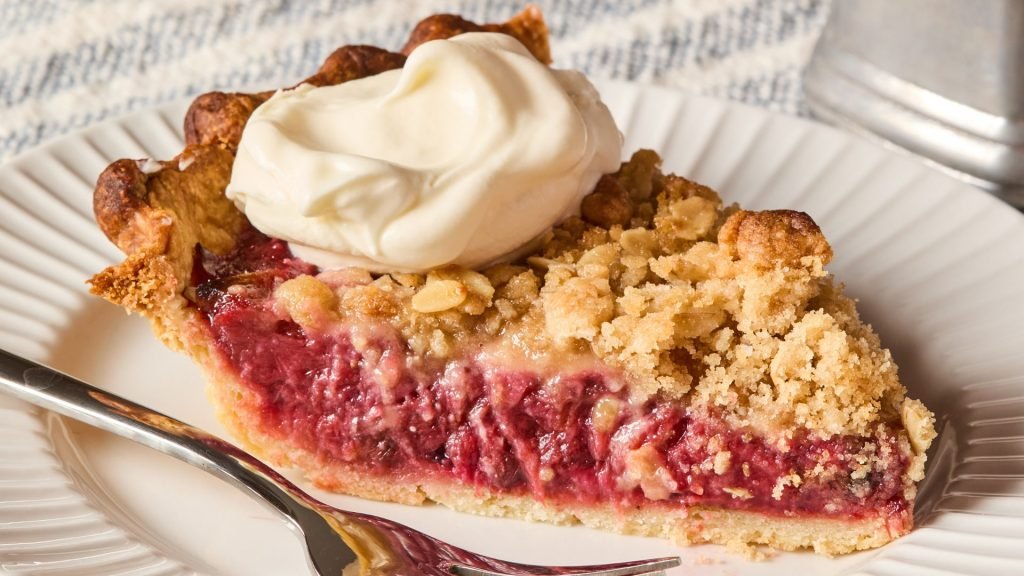
There’s nothing worse than biting into a slice of homemade rhubarb pie only to hit a soggy, bland topping that fails to balance the filling’s bright tartness. The crumble is the make-or-break element of this classic dessert: it should be shatteringly crunchy, deeply buttery, and just sweet enough to cut through rhubarb’s sharp tang. If you’ve struggled to nail that perfect texture and flavor balance, this guide shares tested, no-fail steps to build an irresistibly crunchy, sweet crumble topping that will have everyone asking for seconds.
 Freshly baked rhubarb crumble pie with a thick, crunchy golden topping
Credit: healthyelizabeth.com
Freshly baked rhubarb crumble pie with a thick, crunchy golden topping
Credit: healthyelizabeth.com
Core Ingredients for the Perfect Crunch
The foundation of a great crumble topping is simple, but small ingredient swaps can drastically change its texture, flavor, and how well it pairs with tart rhubarb. Below is a breakdown of every component you’ll need, plus trade-offs to match your taste and dietary needs. For more on this, see our guide on rhubarb pie from frozen rhubarb.
Flour Choices for Custom Crunch
All-purpose flour is the standard for a reason: it creates a light, crisp base that doesn’t overpower the rhubarb filling. For a nuttier, heartier crumble, swap 25% of the all-purpose flour for whole wheat flour—any more will make the topping dense and heavy. Gluten-free bakers can use a 1:1 gluten-free all-purpose flour blend with xanthan gum, or a mix of almond flour and certified gluten-free oat flour for extra chew. Note that oat flour adds a subtle, rustic texture but absorbs more moisture than wheat flour, so reduce added liquid sweeteners by 1 tablespoon if using it as your primary flour.
Sweeteners That Balance Tart Rhubarb
Brown sugar is the gold standard for rhubarb crumble: its molasses notes add caramel depth, and its higher moisture content keeps the topping tender rather than crumbly-dry. White granulated sugar creates a crispier, less sweet crumble that lets the rhubarb’s tartness shine. For natural sweeteners, maple syrup or honey work as 1:1 swaps for granulated sugar, but you’ll need to reduce the amount of cold butter in your recipe by 1 teaspoon per ¼ cup of liquid sweetener to avoid a soggy, dense topping. For more on this, see our guide on shrimp sweet and sour sauce.
Texture Boosters: Nuts, Oats, and Beyond
Rolled oats (not quick oats, which turn mushy when baked) add a pleasant chewy contrast to the crunchy base, while toasted nuts like pecans, walnuts, or hazelnuts add rich, savory crunch. Always toast nuts in a dry pan over medium heat for 3–5 minutes before adding them to the crumble: this releases their natural oils, intensifies their flavor, and prevents them from turning rancid during baking. For extra crunch, add 1 tablespoon of sunflower or pumpkin seeds to the mix. If you’re using a nut-heavy crumble, stir in 1 teaspoon of cornstarch with the dry ingredients to help bind the mixture so it doesn’t fall apart when baked.
Raw crumble mix with evenly distributed oats and toasted pecans
Credit: creators.yahoo.com
Balancing Sweetness and Tartness for Perfect Harmony
Rhubarb’s signature sharp tang is what makes it such a popular pie filling, but it can easily overwhelm a crumble topping that’s too sweet, too bland, or too spiced. Nailing this balance is the key to a dessert that feels cohesive, not conflicting. For more on this, see our guide on apple pie using frozen crust.
Adjusting Sugar for Your Rhubarb's Tartness
Rhubarb tartness varies drastically by harvest time: early spring stalks are far more pungent than late summer stalks, according to the University of Illinois Extension’s rhubarb growing resources University of Illinois Extension Rhubarb Guide. Taste a small piece of raw rhubarb before baking: if it makes you pucker noticeably, add 2 extra tablespoons of brown sugar to your crumble mix. For mild, late-season rhubarb, reduce the total sugar in the topping by 1 tablespoon to avoid an overly sweet dessert that masks the fruit’s flavor. Mixing equal parts brown and white sugar gives you the best of both worlds: caramel depth from the brown sugar, and crispness from the white.
Spices and Flavor Boosters That Don’t Overpower
Cinnamon is the classic pairing for rhubarb, but cardamom adds a bright, floral note that works beautifully for people who find cinnamon too heavy. A pinch of fine sea salt is non-negotiable: it sharpens the sweetness of the sugar and amplifies the rhubarb’s natural fruit flavor without making the crumble taste salty. For extra depth, stir 1 teaspoon of vanilla extract or ¼ teaspoon of almond extract into the dry ingredients. If you want a bright, fresh contrast to the rich buttery crumble, add 1 teaspoon of lemon zest to cut through the sweetness and highlight the rhubarb’s tang. Avoid sprinkling spices on top of the assembled pie, as they will burn before the crumble is fully golden. For more on this, see our guide on pecan pie cake upside down.
Foolproof Techniques for Crunchy, Golden Crumble
Even with perfect ingredients, bad technique can lead to a dense, doughy topping, or one that burns before the rhubarb filling is cooked through. These step-by-step tips eliminate common mistakes for consistent results every time.
Mixing for the Ideal Texture
The #1 mistake home bakers make when making crumble topping is overmixing, which develops gluten in the flour and leads to a dense, cookie-like texture instead of a loose, crunchy crumb. Use ice-cold, cubed butter (straight from the fridge, cut into ½-inch pieces) and rub it into the dry ingredients with your fingertips until the mixture forms coarse, pea-sized crumbs. If the butter starts to melt before you’re done mixing, pop the mixing bowl in the freezer for 5 minutes to chill it back down. When sprinkling the crumble over the rhubarb filling, leave small clumps of mixture intact—these create big, crunchy pockets in the finished topping, rather than a flat, uniform layer.
Baking Settings to Avoid Burning or Sogginess
The ideal oven temperature for rhubarb pie with crumble topping is 375°F (190°C): this is hot enough to crisp the crumble quickly, but not so hot that it burns before the thick rhubarb filling bubbles and sets. Place the pie on the middle rack for even heat circulation; if your oven has a convection setting, use it to reduce baking time by 10 minutes and promote even browning. If the crumble starts to darken too quickly before the filling bubbles, loosely cover the top of the pie with aluminum foil to prevent burning. The USDA recommends baking fruit pies to a minimum internal temperature of 165°F (74°C) to ensure the filling is fully cooked and safe to serve USDA Safe Pie Baking Guidelines.
Testing for Doneness
Visual cues are far more reliable than baking timers, since oven temperatures vary widely. A perfectly baked crumble will be a deep, even golden brown across the entire top, with a crisp texture when you gently press a corner with a spoon. The rhubarb filling should bubble thickly around the edges of the pie crust, not just in the center. If the crumble is still pale after the filling bubbles, bake for 3–5 more minutes. Let the pie rest for at least 30 minutes after taking it out of the oven before slicing: this lets the thick filling set, so it doesn’t run out when you cut a slice, and prevents steam from soaking into the crumble and making it soggy.
Custom Variations for Every Diet
The classic crumble topping is incredibly versatile, and small swaps let you adapt it to gluten-free, vegan, or low-sugar diets without losing that signature crunch.
Gluten-Free Crumble That Doesn’t Fall Apart
For a gluten-free crumble that holds its texture, use a 1:1 gluten-free all-purpose flour blend with added xanthan gum, or a 50/50 mix of almond flour and certified gluten-free oat flour. Stir 1 tablespoon of cornstarch into the dry ingredients to help bind the mixture, since gluten-free flours lack the elastic protein that holds traditional crumble together. Avoid coconut flour as a 1:1 swap for regular flour: it absorbs far more moisture, so you’ll only need ¼ cup of coconut flour for every 1 cup of all-purpose flour, and you should add 1 extra tablespoon of melted butter to keep the topping tender.
Vegan and Dairy-Free Swaps
To make a vegan crumble, use cold, cubed vegan butter or solid, un-melted coconut oil in place of dairy butter for the same flaky, crumbly texture. Maple syrup or agave nectar works as a 1:1 swap for granulated sugar, but reduce any other added liquid in your recipe by 1 tablespoon to avoid sogginess. A flax egg (1 tablespoon ground flaxseed mixed with 3 tablespoons of water, left to thicken for 5 minutes) is optional but helps bind the crumble if it’s too crumbly. Top with toasted pumpkin seeds or chopped pecans for extra crunch and nutty flavor.
Low-Sugar and Low-Carb Options
For a low-sugar crumble, use a 1:1 swap of monk fruit or erythritol for granulated sugar, and add ¼ teaspoon of liquid stevia if you prefer extra sweetness. Use almond flour as your base, and add ½ cup of chopped pecans for rich, buttery crunch. Note that low-sugar crumbles brown far faster than sugar-based ones, so check it 5 minutes earlier than your standard baking time to avoid burning.
Serving and Storage Tips to Keep Crunch Intact
How you serve and store your rhubarb crumble pie will make or break its texture. Follow these tips to keep the topping crisp and the filling flavorful for days.
Best Pairings for Rhubarb Crumble Pie
Vanilla ice cream is the classic pairing for a reason: its cool, creamy sweetness balances the warm, tart pie perfectly. For a more complex flavor profile, try salted caramel ice cream, which adds a rich, savory contrast that cuts through the rhubarb’s tang. If you find ice cream too heavy, top a slice with lightly sweetened whipped cream and a dash of cinnamon. For a boozy, adult-friendly twist, drizzle warm bourbon caramel sauce over each slice before serving.
Storing Leftover Crumble Pie
Store leftover pie in an airtight container in the refrigerator for up to 4 days. To re-crisp the crumble topping, pop individual slices in the air fryer at 350°F (175°C) for 2–3 minutes, or in the oven at 375°F (190°C) for 5 minutes. Never microwave leftover crumble pie: the steam will make the topping soggy within seconds. You can also make the crumble topping ahead of time: store it in an airtight container in the freezer for up to 3 months, and add 2 extra minutes to the baking time when using frozen crumble.
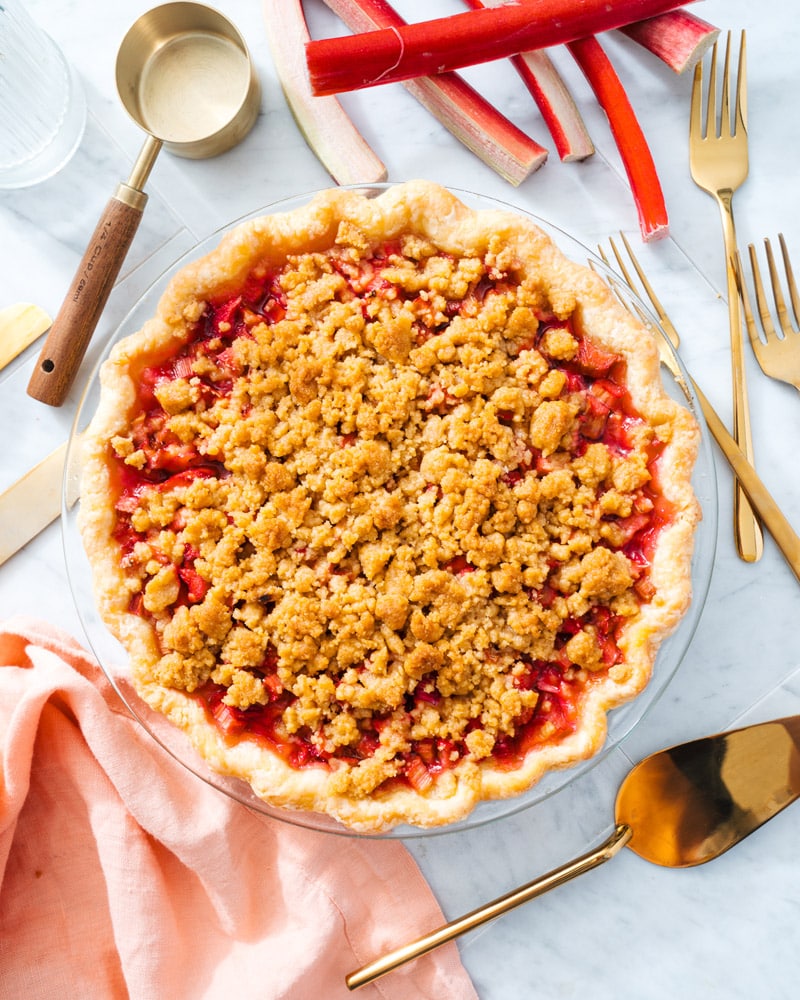 Warm rhubarb crumble pie paired with a scoop of vanilla ice cream
Credit: www.acouplecooks.com
Warm rhubarb crumble pie paired with a scoop of vanilla ice cream
Credit: www.acouplecooks.com
Frequently Asked Questions
What ingredients make the best crumble topping for rhubarb pie?
A classic crumble uses all-purpose flour, brown sugar, cold cubed butter, and rolled oats. Toasted nuts add extra crunch, and a pinch of salt amplifies the sweetness to balance the rhubarb’s tartness.
How do I achieve a crunchy crumble topping?
Use ice-cold butter, rub it into the dry ingredients until pea-sized crumbs form (don’t overmix), and bake at 375°F (190°C) until deep golden brown. Let the pie rest 30 minutes after baking before slicing to avoid steam softening the crumble.
Can I make crumble topping gluten-free for rhubarb pie?
Yes: use a 1:1 gluten-free all-purpose flour blend with xanthan gum, or a mix of almond flour and certified gluten-free oat flour. Add 1 teaspoon of cornstarch to the dry mix to help bind the crumble so it doesn’t fall apart.
How long should I bake rhubarb pie with crumble topping?
Bake for 45–55 minutes at 375°F (190°C), until the crumble is deep golden brown and the filling bubbles thickly around the edges. The filling should reach an internal temperature of 165°F (74°C) for food safety.
Why is my crumble topping soggy?
Soggy crumble is almost always caused by using melted or room-temperature butter, assembling the pie too far ahead of baking (which lets the crumble clump and steam the filling), or baking at too low a temperature. Fix this by using ice-cold butter, chilling the assembled pie for 15 minutes before baking, and setting your oven to at least 375°F (190°C).
Can I make crumble topping ahead of time?
Yes: mix the crumble, store it in an airtight container in the refrigerator for up to 3 days, or in the freezer for up to 3 months. If using frozen crumble, add 2 extra minutes to the baking time.
Conclusion
A great crumble topping transforms rhubarb pie from a simple fruit dessert into a memorable, texture-driven treat that balances tart, sweet, and buttery notes perfectly. The best part? It’s infinitely customizable: swap flours for dietary needs, adjust sweetness to match your rhubarb, and add spices or nuts to match your taste preferences. Once you master this base recipe, you can adapt it to nearly any fruit pie, from apple to peach. For more tested baking tutorials, kitchen tool reviews, and food safety tips to make your time in the kitchen easier, browse our full library of tested baking guides tested baking guides to make every dessert you make a hit.
For easy cleanup after mixing and baking, a heavy-duty scrub brush cuts through stuck-on butter and sugar in seconds, while childproof cabinet locks keep sharp bakeware out of reach of little ones if you’re baking with kids.

I’m Abby Lu, a passionate home cook who loves simplifying everyday meals. At PlugChef.com, I share product reviews and cooking guides to help you find the best tools for your kitchen.
Related posts:
 How to Make a Fruit Basket for a Gift: Easy DIY Guide
 Mesh Desk Organizer With Sliding Drawer: Maximize Efficiency
 Decorative Woven Baskets for Wall: Transform Your Space
 Rubbermaid Large Dish Drying Rack: Ultimate Kitchen Solution
 Gray Kitchen With Stainless Steel Appliances: Modern Elegance
 Appliance Play Food Kitchen Toys: Ignite Imaginative Play

