
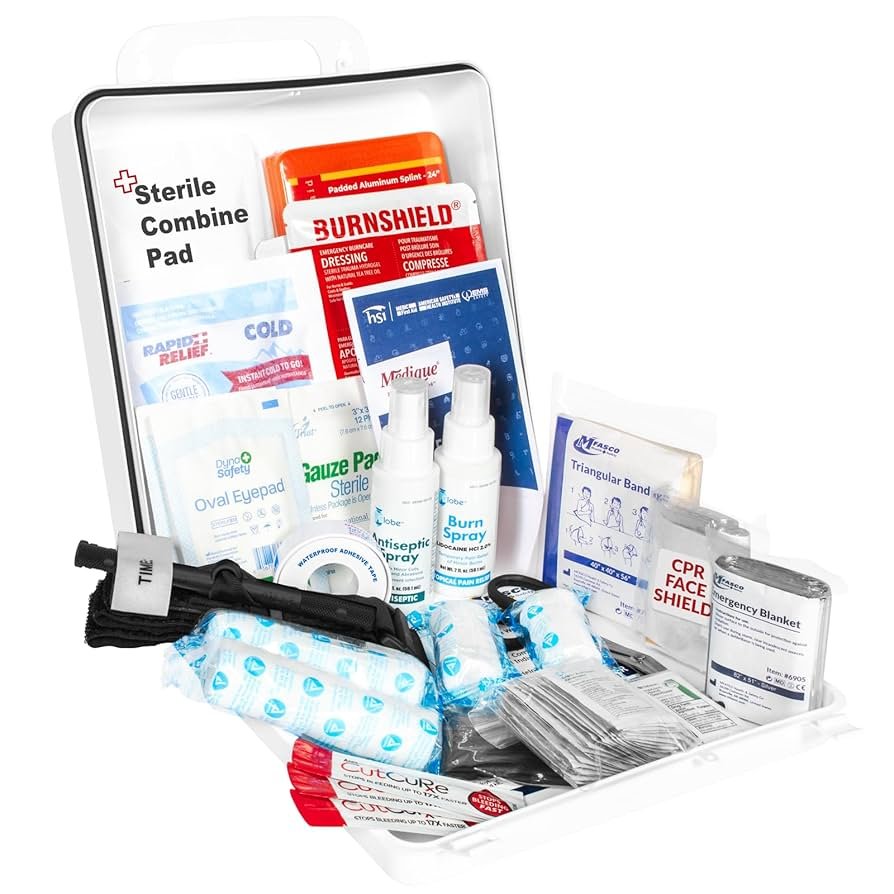
When it comes to workplace safety, an OSHA required first aid kit is not just a nice-to-have extra — it’s a legal mandate that can mean the difference between a minor injury and a life-altering medical event. Many employers assume a generic big-box kit checks the compliance box, but OSHA’s 2026 guidance makes clear that first aid supplies must be tailored to your site’s unique hazards, accessible to all employees at a moment’s notice, and maintained to a strict standard.
If you’ve ever wondered what qualifies as a compliant kit, how to customize it for your specific industry, or how to avoid common OSHA citations related to first aid, this guide breaks down every requirement, best practice, and practical step to keep your team safe and your business compliant.
What OSHA Actually Requires for Compliant First Aid Kits
Many business owners operate under the misconception that OSHA publishes a fixed, universal list of mandatory first aid kit items. In reality, the core regulatory standard, outlined in 29 CFR 1910.151, requires employers to provide first aid supplies that are appropriate for the specific hazards present in their workplace. This hazard-based approach means a kit for a construction site will look very different from one for a corporate office, but all must meet baseline accessibility and maintenance rules.
In practice, the most frequent OSHA first aid citation is not for missing supplies, but for inaccessible placement: many employers lock kits in supply closets or break room cabinets to prevent theft, which violates the "immediately accessible" requirement even if the kit is fully stocked. OSHA also mandates that kits be available to all employees, including remote and hybrid workers, within 3 to 4 minutes of any work area.
Accessibility and Placement Rules
To meet OSHA’s accessibility standard:
- Kits must be placed in clearly marked, visible locations, free of obstructions
- Large sites (over 100,000 square feet or spanning multiple buildings) require multiple kits to ensure no employee is more than 4 minutes from supplies
- Remote workers (field service technicians, landscaping crews, traveling sales staff) need portable travel first aid kits stored in their work vehicles
- Kits may only be locked if a trained first aid responder is on site at all times and has immediate access to the key
Mandatory and Recommended First Aid Kit Contents
While OSHA does not enforce a one-size-fits-all item list, all compliant kits must include core supplies to address the most common workplace injuries: cuts, abrasions, burns, and splinters. The table below outlines baseline required items, their purpose, and quantity guidance for sites with 25 or fewer employees:
| Basic Required Item | Purpose | Quantity Guidance |
|---|---|---|
| Nitrile disposable gloves (multiple sizes) | Protect responder from bloodborne pathogens | Minimum 1 pair per employee, restocked after each use |
| Adhesive bandages (various sizes) | Cover minor cuts and abrasions | Enough to address 10+ minor injuries per kit |
| Sterile gauze pads (2×2 and 4×4 inch) | Cover larger wounds and control bleeding | Minimum 10 pads per kit |
| Antiseptic wipes and alcohol prep pads | Clean wounds to prevent infection | 20+ wipes per kit |
| Adhesive medical tape | Secure gauze and dressings | 1 roll per kit |
| Sterile roller bandages | Wrap wounds and hold dressings in place | 2-3 rolls per kit |
| Burn gel or non-stick burn dressings | Treat minor to moderate thermal burns | Minimum 2 burn care supplies per kit |
| CPR mask with one-way valve | Enable safe CPR administration without direct contact | 1 per kit, replaced after each use |
| Scissors and tweezers | Cut dressings, remove splinters and debris | 1 set per kit |
| First aid instruction card | Guide untrained responders through basic care | 1 per kit, laminated for durability |
Industry-Specific Additions
Tailor your kit to your site’s unique hazards by adding these industry-specific supplies:
- High-hazard sites (construction, manufacturing): Trauma pads for severe bleeding, eye wash solution, elastic bandages for joint support, SAM splints for fractures, emergency blankets for hypothermia risk
- Food service and hospitality: Extra burn gel for hot oil/steam burns, liquid bandages for frequent small cuts, antiseptic mouthwash for oral injuries, epinephrine auto-injectors for employees with documented anaphylaxis risk
- Office and retail spaces: Hydrocortisone cream for insect bites and skin irritation, OTC pain relievers (compliant with workplace medication policies), hydrocortisone cream for skin irritation
- Lab and healthcare facilities: Chemical burn neutralizers, biohazard bags for contaminated waste, additional PPE (face shields, N95 masks) for exposure response
Customizing Kits for High-Risk Work Environments
A generic first aid kit will leave you underprepared for site-specific emergencies. Tailoring your supplies to your workplace’s unique risks reduces injury severity and ensures you meet OSHA’s hazard-matching requirement.
Construction and Trades Sites
Construction sites face risks of falls, heavy equipment accidents, and exposure to sharp materials like lumber and metal. Beyond basic supplies, add trauma pads for severe bleeding, eye wash solution for dust and debris exposure, cold packs for sprains and impact injuries, and splint materials for suspected fractures. For outdoor sites, include emergency blankets to address hypothermia risk in cold weather. Pairing these kits with properly stored tall narrow storage containers for small parts and tools keeps work areas clear of tripping hazards that cause falls.
 This heavy-duty kit includes trauma supplies and burn dressings for high-risk construction environments.
Credit: www.amazon.com
This heavy-duty kit includes trauma supplies and burn dressings for high-risk construction environments.
Credit: www.amazon.com
Office and Retail Spaces
While lower-risk, office and retail sites still see common injuries like paper cuts, coffee burns, and slip-and-fall sprains. Add burn gel for hot liquid and appliance burns, hydrocortisone cream for skin irritation, and allergy medication for employees with seasonal allergies. For shared office kitchen spaces, pairing first aid supplies with properly sealed sealed glass food storage helps prevent cross-contamination of food and reduces burn injury risk from hot spills. For teams that bring leftovers to work, using leak-proof small food storage prevents spills that can cause slip-and-fall injuries in break rooms.
 Compact office kits are designed for common minor injuries like paper cuts and coffee burns.
Credit: www.amazon.com
Compact office kits are designed for common minor injuries like paper cuts and coffee burns.
Credit: www.amazon.com
Manufacturing and Industrial Facilities
These sites have risks from machinery, chemicals, and heavy materials. Add chemical burn neutralizers specific to the chemicals used on-site, heavy-gauge trauma dressings for severe lacerations, respiratory masks for dust or fume exposure during first aid administration, and portable eye wash bottles for remote work areas. These sites also benefit from using heavy-duty bulk food storage to keep raw ingredients separated and reduce cross-contamination risks that could lead to illness requiring first aid.
Food Service and Hospitality
Food service workplaces have unique burn, cut, and slip risks from hot oil, sharp kitchen tools, and wet floors. Add extra non-stick burn dressings for steam and hot oil burns, liquid bandages for small, frequent cuts from food prep, and supplies for allergic reaction response. Workplaces with cutting tasks reduce laceration risks by keeping cutting tools in good condition; for kitchen teams, using the correct sharpening angle for kitchen knives cuts down on accidental cuts that require first aid.
Accessibility, Placement, and OSHA Compliance Rules
OSHA’s first aid requirements are built around the principle that supplies must be usable in the first critical minutes after an injury. A fully stocked kit locked in a supply closet does not meet compliance standards, no matter how comprehensive its contents are.
Placement Best Practices
- Mount kits on walls at waist height in common areas, away from hazards (e.g., do not place a kit next to a chemical storage area if that area is at risk of fire)
- Label kits with high-visibility, photo-laminated signs that include the universal first aid symbol and text in all languages spoken by your workforce
- For multi-story sites, place at least one kit on each floor, near high-traffic areas like break rooms and main hallways
- Clearly mark the location of kits in employee onboarding materials and safety signage
 Clearly marked, wall-mounted kits meet OSHA accessibility requirements for quick emergency access.
Credit: www.amazon.com
Clearly marked, wall-mounted kits meet OSHA accessibility requirements for quick emergency access.
Credit: www.amazon.com
Special Considerations for Remote and Hybrid Workers
For employees who work outside of a fixed office location, provide portable travel first aid kits that include trauma supplies, cold packs, splint materials, and a satellite phone or emergency locator beacon for sites with no cell service. Include instructions for how to access emergency medical services in remote areas, and require remote workers to complete a basic first aid training course before beginning field work.
Inspection, Restocking, and Maintenance Protocols
A first aid kit is only effective if its supplies are in good condition and ready for immediate use. Neglecting maintenance is one of the most common reasons for OSHA citations and failed safety audits.
Monthly Inspection Checklist
Assign a dedicated safety team member to conduct a full inspection of every kit at least once per month. Check for:
- Expired medications, ointments, and antiseptic wipes (discard and replace immediately)
- Damaged or contaminated supplies (e.g., opened gauze packages, torn gloves)
- Container damage (cracks, broken latches, water damage) that could expose supplies to dirt or moisture
- Missing items from the baseline required list
Immediate Restocking Requirements
Restock kits immediately after any item is used, rather than waiting for the next scheduled inspection. A common mistake is assuming a kit with one or two missing items is still functional; if multiple incidents occur in the same month, you may be left without critical supplies when you need them most.
Documentation for OSHA Audits
Keep a physical or digital log of all inspections, restocking activities, and employee training sessions. OSHA requires these records to be retained for at least 3 years, and they will be reviewed during any workplace safety audit. Building a strong safety culture goes beyond first aid compliance; small steps like providing properly labeled compartmentalized food storage for employee meals reduce frustration and prevent accidents in shared kitchen areas.
Employee Training and Safety Culture Integration
A first aid kit is only as useful as the people around it. OSHA requires that at least one employee per shift is trained in basic first aid and CPR for high-hazard sites, but all employees should receive basic training on kit location and use.
Core Training Requirements
All training should cover:
- The exact location of all first aid kits on site
- How to access the kit and use each core supply (bandages, gauze, antiseptics, burn gel)
- When to administer first aid vs. when to call 911 immediately
- How to document incidents for OSHA recordkeeping requirements
- How to respond to common site-specific hazards (e.g., chemical exposure, heat stroke, severe bleeding)
Drills and Refresher Sessions
Conduct short, 5-minute first aid drills quarterly to reinforce response steps and ensure employees know where kits are located. Update training whenever you add new hazards to the site (e.g., new machinery, new chemical processes) or restock the kit with new supplies.
A common training gap is only training safety managers and not front-line staff: if your safety officer is out of office during an emergency, untrained employees may waste critical time searching for the kit or fumbling with supplies.
Common OSHA First Aid Compliance Mistakes to Avoid
Even well-intentioned employers often make these avoidable errors that lead to citations or ineffective emergency response:
- Using a generic one-size-fits-all kit: A standard office kit will lack trauma supplies and burn dressings needed for a construction or food service site.
- Locking kits without a trained responder on site: Even if you lock kits to prevent theft, you must have a trained first aid responder present 24/7 who can access the kit immediately in an emergency.
- Ignoring remote and hybrid workers: Employees who work outside of your main office need portable travel first aid kits and training on how to use them in remote locations.
- Failing to update kits after workplace changes: If you add new machinery, chemicals, or processes to your site, update your first aid kit and training to address new risks.
- Not accommodating employee medical needs: If you have employees with severe allergies, diabetes, or other medical conditions, add relevant supplies (epinephrine auto-injectors, glucose gel) to your kit and train staff on how to use them.
For evidence-based first aid training protocols aligned with workplace safety best practices, the American Red Cross workplace safety guidelines offer free resources for employers of all sizes.
Frequently Asked Questions
What items are mandatory in an OSHA first aid kit?
OSHA does not publish a fixed, universal list of mandatory first aid kit items, per 29 CFR 1910.151. Instead, employers are required to provide supplies appropriate to the specific hazards of their workplace. All kits must include basic wound care supplies (bandages, gauze, antiseptics), protective equipment for responders (nitrile gloves, CPR masks), and tools for basic care (scissors, tweezers). High-hazard sites will need additional supplies tailored to their risks, such as trauma pads for construction sites or burn dressings for food service facilities.
How often should OSHA first aid kits be inspected?
OSHA recommends monthly inspections of all first aid kits to check for expired items, missing supplies, and container damage. Kits should also be restocked immediately after any item is used, rather than waiting for the next scheduled inspection. Large sites with multiple kits may need bi-weekly checks to ensure all units are fully stocked.
Who is responsible for maintaining OSHA first aid kits?
The employer is legally responsible for ensuring all first aid kits are accessible, fully stocked, and compliant with OSHA regulations. This includes assigning a dedicated team member to conduct inspections, restock supplies, and document all maintenance activities for OSHA audit purposes.
Are there special first aid kit requirements for different workplaces?
Yes, first aid kit requirements are tailored to the specific hazards of each work environment. For example, construction sites require trauma supplies and eye wash solution, food service facilities need extra burn care products, and remote field crews need travel kits with splint materials and cold packs. OSHA expects employers to conduct a formal hazard assessment to determine the appropriate supplies for their site.
Final Thoughts
An OSHA required first aid kit is one of the simplest, most cost-effective investments you can make in your workplace safety program. It protects your employees, reduces the severity of common injuries, and keeps your business in compliance with federal regulations that carry fines for non-compliance.
The key to a successful first aid program is tailoring your kit to your site’s specific hazards, placing it in an accessible location, inspecting it monthly, and training all employees on how to use its supplies. Don’t wait for an accident to reveal gaps in your preparedness — audit your current kit this week, restock any missing or expired items, and schedule a 15-minute refresher for your team to review first aid response steps. For full OSHA compliance guidance, visit the official OSHA first aid standards page to download your free hazard assessment checklist.

I’m Abby Lu, a passionate home cook who loves simplifying everyday meals. At PlugChef.com, I share product reviews and cooking guides to help you find the best tools for your kitchen.
Related posts:
 How Does a Certified Organic Kitchen Clean Dishware Efficiently?
 How to Decorate With Wire Baskets: Chic and Creative Ideas
 Kitchen Organization Tips for Meal Prep: Boost Efficiency
 Dollar Tree Kitchen Organization Hacks: Budget-Friendly Tips
 Slate Kitchen Appliances With White Cabinets: Style Upgrade
 Small Electrical Appliances: Maximize Your Home Efficiency

