
Are you feeling overwhelmed every time you open your pantry doors and see those deep, cluttered shelves? You’re not alone.
Deep pantry shelves can be both a blessing and a curse. They offer ample storage space, but without the right organization, they can quickly become a black hole for your kitchen essentials. Imagine reaching into your pantry and effortlessly finding exactly what you need without having to dig through layers of mismatched items.
Sounds like a dream, right? With the right strategies, you can transform your pantry into a neatly organized haven that not only saves you time but also makes cooking and meal prep a breeze. Ready to discover the secrets to mastering pantry organization for deep shelves? Let’s dive in and unlock the potential of your pantry space!
The Challenge Of Deep Shelves
Deep shelves in your pantry can feel like a blessing and a curse. On one hand, they offer ample storage space, but on the other, they can become a black hole for lost and forgotten items. Without strategic organization, you might find yourself digging through layers of chaos to find that one elusive can of beans. Let’s dive into the challenges these shelves present and how you can tackle them effectively.
The Problem Of Visibility
Deep shelves often mean items get pushed to the back and forgotten. You might buy duplicates simply because you can’t see what you already have. To combat this, consider using clear bins or baskets to group similar items together. Label them clearly, and keep a list on the front of each bin so you know exactly what’s inside.
Accessibility Issues
Reaching for items at the back can be a hassle, especially if they are heavy or awkwardly shaped. Think about installing sliding drawers or turntables to make accessing items easier. This way, you can effortlessly reach everything without playing pantry Jenga.
Efficient Use Of Space
Maximizing your space is crucial when dealing with deep shelves. Use stackable containers to make full use of vertical space. Consider adjustable shelving units that can be tailored to fit different sizes of items. This helps keep everything organized and prevents wasted space.
Regularly Review And Update
How often do you find expired items lurking at the back of your pantry? Regularly review the contents of your shelves and update your inventory. This not only prevents waste but also ensures you’re using your pantry efficiently. Schedule a monthly check-in and engage your family in the process to make it fun and collaborative.
Have you ever found yourself wondering why your pantry feels chaotic despite its size? Deep shelves might be the culprit. With these strategies, you can transform your pantry into a space that’s not just functional, but also a joy to use.
Assessing Pantry Needs
Deep pantry shelves need careful organization to maximize space. Group similar items together for easy access. Use bins and labels to keep everything visible and organized.
Organizing deep pantry shelves requires a thoughtful approach. Assessing pantry needs is the first step toward creating a functional space. Begin by evaluating what you have and what you need. This process helps in identifying items that are essential and those that are not. It also aids in determining the best way to arrange them for easy access. Proper assessment ensures efficient use of space, making your pantry a more practical part of your kitchen.Understanding Shelf Space
Deep shelves offer ample storage, but they can be tricky. Measure the depth and height of each shelf. This will help in selecting storage solutions that fit well. Consider how often you use certain items. Place frequently used items within reach. Less-used items can go toward the back.Grouping Similar Items
Categorize pantry items into groups. For example, store canned goods together. Keep baking supplies in one area. This makes finding items quicker and easier. Use clear containers to keep items visible. Label them for easy identification.Prioritizing Essentials
Decide which items are essential for daily cooking. Keep these items in front for easy access. Store bulk items or duplicates behind. This way, you won’t have to dig through everything to find what you need.Considering Future Purchases
Think about future purchases and storage needs. Leave some space for new items. This prevents overcrowding and keeps your pantry tidy. Regularly assess your pantry to ensure it meets your needs.Choosing The Right Containers
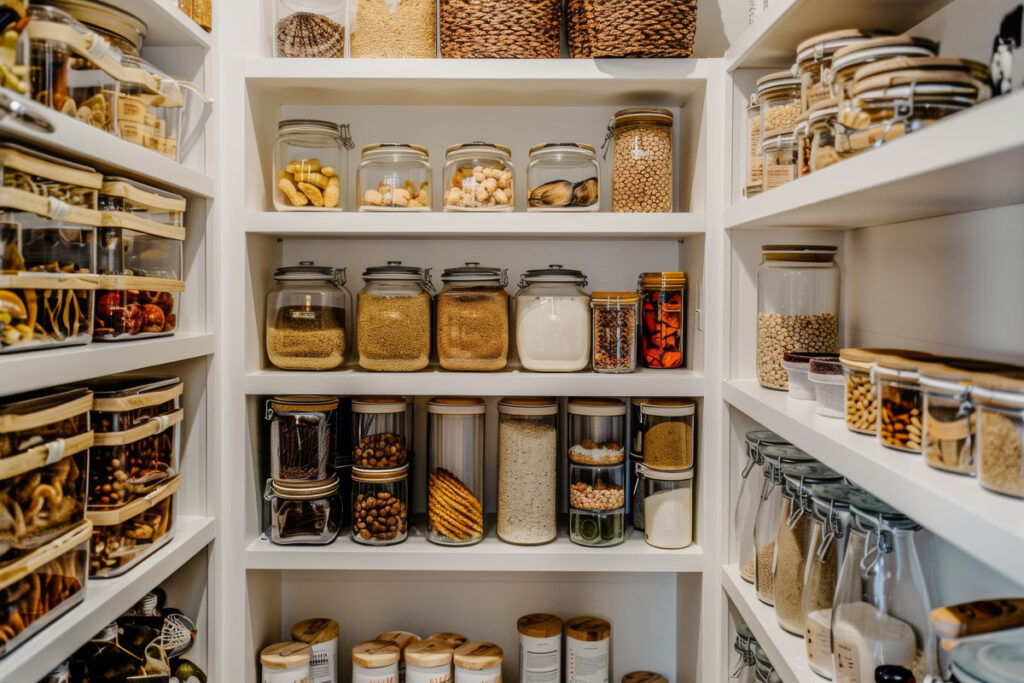
Choosing the right containers is key for deep shelves. Opt for clear, stackable bins to maximize visibility and space. Consider using labels to keep everything organized and easy to find.
Organizing deep pantry shelves can be a game-changer for your kitchen efficiency. However, the right containers can make all the difference. They help in maximizing space and keeping everything within reach. Let’s explore how to choose the best containers for your deep pantry shelves.Clear Vs. Opaque
When selecting containers, think about visibility. Clear containers allow you to see what you have at a glance, saving you time and preventing food waste. Imagine reaching for your favorite cereal and knowing exactly when it’s time to restock. On the other hand, opaque containers can add a sleek, uniform look to your pantry. They’re great if you want to hide clutter or protect contents from light. Consider labeling them to avoid playing a guessing game every time you cook.Stackable Options
Deep shelves can quickly become chaotic without a system. Stackable containers are a perfect solution to utilize vertical space. By stacking, you make the most out of your pantry’s depth and avoid the frustration of rummaging through piles of items. Choose containers with sturdy lids that support stacking without toppling over. Have you ever opened your pantry to an avalanche of containers? A solid stackable system can prevent such disasters.Airtight Seals
Keeping food fresh is essential, and airtight containers are your best allies here. They lock in freshness and keep moisture, pests, and odors out. If you’ve ever dealt with stale crackers or mysterious pantry odors, you know the importance of a good seal. Look for containers with easy-to-use lids that create a tight seal. It’s always a good idea to test the seal before committing to a large set—no one wants to find out their flour has gone bad because of a faulty lid. Choosing the right containers can transform your pantry from a cluttered mess into an organized haven. What changes will you make today to simplify your pantry space?Utilizing Vertical Space
Organizing deep pantry shelves can be challenging. Using vertical space can help. It maximizes storage without clutter. Let’s explore some effective methods.
Shelf Risers
Shelf risers are simple tools for vertical organization. They add an extra layer of storage. Place items on top and beneath. This method uses the full height of your shelves. Canned goods and jars fit perfectly. It keeps everything visible and easy to access.
Hanging Baskets
Hanging baskets are another smart choice. They attach under existing shelves. Perfect for smaller items like snacks and packets. This method frees up shelf space below. It’s a great way to make deep shelves more efficient.
Tiered Organizers
Tiered organizers create levels on your shelves. They make items at the back more visible. Ideal for spices, sauces, and canned goods. These organizers bring items to the forefront. No more digging through cluttered shelves.
Labeling For Efficiency
Labeling brings clarity to deep pantry shelves, enhancing efficiency in item location. It promotes easy access and organization, minimizing clutter and saving time during meal preparation.
Labeling for efficiency is the secret weapon for conquering deep pantry shelves. It transforms a chaotic space into a streamlined haven where every item is easy to find. Imagine opening your pantry and knowing exactly where everything is—pure bliss, right? Investing time in labeling not only saves you time in the long run but also reduces food waste. You’ll avoid buying duplicates and discover forgotten items before they expire. Let’s explore how you can achieve this level of organization in your pantry.Types Of Labels
Consider what materials suit your pantry best. Chalkboard labels are great for flexibility, allowing you to change names without waste. Use them on jars for spices or grains, and simply wipe clean when you need to update. Permanent labels, like those printed from a label maker, offer a sleek, uniform look. They’re ideal for items that rarely change, such as baking supplies or canned goods. You could even create a color-coded system: blue for breakfast items, green for snacks, and so on.Label Placement Tips
Placement is crucial to making your labeling system work. Ensure labels are visible at eye level or slightly below. This way, you won’t need to bend or stretch awkwardly to read them. If you’re dealing with deep shelves, position labels at the front edge of bins or baskets. This makes it easy to identify contents without pulling everything out. Use a clear, readable font size to ensure quick identification from a distance. Think about the future. As your pantry needs evolve, your labeling system should adapt. Regularly review and update labels to reflect any changes in your pantry inventory. Are your labels helping you maintain order, or could they use a refresh?
Credit: www.amazon.com
Rotating Stock Methods
Rotating stock methods enhance pantry organization on deep shelves by ensuring older items are used first. Arrange items in rows with newer purchases placed behind older ones to maintain freshness and accessibility. This simple technique helps prevent waste and keeps your pantry tidy.
Rotating stock methods are key for efficient pantry organization. Deep shelves can make it hard to see items at the back. Using smart strategies ensures nothing gets forgotten or wasted. These methods help keep your pantry neat and functional.First-in, First-out Strategy
This strategy means using older items first. Place new purchases behind older ones. This rotation keeps food fresh and reduces waste. Labeling items with purchase dates helps track what needs to be used soon. Clear storage containers can make it easier to see what’s inside.Seasonal Item Management
Some foods are better at certain times of the year. Organize your pantry for seasonal changes. Keep summer snacks handy in warmer months. Store canned soups and comfort foods at the front in winter. This makes it easy to find what you need when seasons change. Rotate items based on expiration dates, focusing on what should be used first.Incorporating Lazy Susans
Lazy Susans make deep pantry shelves more accessible. Spin to reach items in the back effortlessly. Maximize space while keeping everything organized.
Transforming your pantry into an organized haven is not just about tidiness; it’s about creating a space that makes meal prep and snack time a breeze. Deep shelves can be both a blessing and a curse, offering ample storage but often becoming a black hole where items get lost. Enter the game-changer: Lazy Susans. These rotating trays can turn those deep, hard-to-reach corners into accessible, efficient storage areas.Why Choose Lazy Susans?
Lazy Susans are your pantry’s best friend. They rotate, allowing you to see every item stored on them, which means no more forgotten cans or expired sauces. Imagine reaching for that elusive spice without knocking over half the shelf. Their design ensures nothing gets lost in the depths of your shelves.Choosing The Right Size
Size matters when it comes to Lazy Susans. Measure your shelf dimensions before purchasing. You want one that fits snugly without wasting space or being too tight to spin freely. Consider the height of the items you plan to store; you don’t want taller bottles toppling over as the tray rotates.Grouping Items Effectively
Think about how you use your pantry and group items accordingly. You might dedicate one Lazy Susan to baking essentials like vanilla extract, baking powder, and food coloring. Another could hold breakfast staples such as honey, peanut butter, and jam. This categorization makes it easy to grab everything you need in one swift motion.Maximizing Vertical Space
Take advantage of your pantry’s vertical space by stacking items thoughtfully. Lazy Susans can hold tiered organizers that further maximize storage. Place shorter items in front and taller ones at the back to maintain visibility. You’ll be amazed at how much more you can fit without creating clutter.Maintenance And Upkeep
Keeping your Lazy Susans tidy is simple. Regularly check for expired items and give the trays a quick wipe down to keep them clean. Encourage a habit of placing items back where they belong after each use. This small effort ensures your pantry remains organized and functional. By incorporating Lazy Susans, you can transform your deep pantry shelves from chaotic to convenient. What’s your favorite pantry hack? Share it in the comments below!Lighting Solutions For Deep Shelves
Lighting Solutions for Deep Shelves can transform your pantry’s functionality. Deep shelves often mean items get lost in the shadows. Proper lighting makes it easy to see and access everything. It also adds a touch of elegance to your pantry. Let’s explore some effective lighting options.
Led Strips
LED strips are popular for lighting deep shelves. They provide even illumination without taking up space. These strips come in various lengths and colors. You can cut them to fit your shelves perfectly. Installation is simple with adhesive backing. They consume less energy and last longer. LED strips are adjustable and can highlight specific areas. They are safe and do not emit heat.
Battery-powered Options
Battery-powered lights are convenient for deep shelves. They do not need wiring and are easy to install. These lights come in various shapes and sizes. Motion-sensor options are available for hands-free operation. They offer flexibility in placement. Battery lights are ideal for renters or temporary setups. They can be moved as needed. Regular batteries are easy to replace. They provide sufficient light to find items easily.
Regular Maintenance Tips
Keeping deep pantry shelves organized requires regular maintenance. This ensures everything stays neat and accessible. Regular checks and cleaning prevent clutter and expired items. With simple steps, your pantry remains a functional space. Here are some effective maintenance tips.
Routine Cleaning
Dust and crumbs accumulate quickly. Wipe shelves weekly with a damp cloth. Use mild soap for sticky spots. Ensure shelves are dry before restocking. Clean bins and containers too. This prevents odors and mold.
Periodic Inventory Checks
Review pantry items monthly. Discard expired or spoiled goods. Arrange items by expiration date. Place older items in front. This encourages use before they spoil. Make a list of needed replacements. This saves time during shopping.
Credit: www.afreshspace.com

Credit: www.thinkoutsidetheclosethouston.com
Frequently Asked Questions
How To Organize High Deep Pantry Shelves?
Use clear containers to see contents easily. Group similar items together for easy access. Place frequently used items at the front. Utilize stackable bins or baskets for vertical space. Consider installing pull-out shelves or lazy Susans to reach items at the back easily.
How To Use Deep Shelves For Storage?
Organize deep shelves using bins or baskets to maximize space. Label each container for easy identification. Store rarely used items at the back and frequently accessed ones in front. Utilize shelf dividers to create sections. Consider adjustable shelves for flexibility and adaptability in storage arrangements.
Keep it tidy for efficient access.
How Deep Can Pantry Shelves Be?
Pantry shelves typically range from 12 to 16 inches deep. This depth provides easy access and optimal storage. Custom shelves might be deeper, depending on your space and needs. Consider shelf depth based on the items you plan to store for maximum efficiency and convenience.
What To Do With Cabinets That Are Too Deep?
Install pull-out shelves or organizers to maximize space. Use bins or baskets for easy access. Adjust shelf heights for better storage. Place frequently used items at the front. Consider adding interior lighting for visibility.
Conclusion
Organizing deep shelves can transform your pantry space. Simple changes make a big impact. Use bins and labels for easy access. Store items by frequency of use. Keep your essentials within reach. Rearrange as needed for better efficiency. Regularly check expiration dates to avoid clutter.
Enjoy a neat and tidy pantry. A little effort goes a long way. Happy organizing!

I’m Abby Lu, a passionate home cook who loves simplifying everyday meals. At PlugChef.com, I share product reviews and cooking guides to help you find the best tools for your kitchen.
Related posts:
 What Type of Cooking Utensils are Safe: Expert Picks
 What Innovations Could Blenders Make: Unleashing Future Tech
 Smart Strategies to Organize a Small Kitchen: Maximize Space
 How to Organize a Kitchen Cabinet: Expert Tips & Tricks
 How to Organize Kitchen Drawers: Expert Tips and Tricks
 How to Organize a Corner Kitchen Cupboard: Expert Tips

