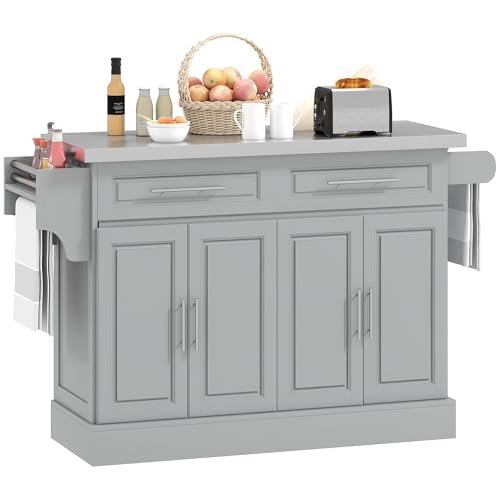
A cluttered countertop turns even the simplest meal into a juggling act. If you’ve ever balanced a cutting board on a stack of cookbooks while stirring a pot on the stove, you know the feeling. A kitchen cart with a stainless steel top solves that problem without a single renovation tool. Unlike a built-in island that demands expensive installation and permanent floor space, a rolling cart adds flexible prep area, concealed storage, and a sleek professional look to any kitchen—from a 6-foot galley to a sprawling family space. The stainless steel surface is the real workhorse: it resists heat up to 500°F, won’t stain from tomato sauce or turmeric, and wipes clean in seconds after raw meat prep. Home cooks who add one typically reclaim about a third of their countertop clutter and free up cabinet space for less-used items. Whether you rent, host frequently, or simply want a better workflow, the right cart integrates seamlessly into your daily routine.
Why a Stainless Steel Top Stands Above Wood and Laminate
Many kitchen carts come with wood, butcher block, or laminate tops. Each has its place, but stainless steel offers concrete advantages that matter in a busy home kitchen. You can also read our guide on kitchen cabinet safety latches.
Durability and heat resistance. Residential-grade stainless steel (typically 304 or 430) withstands temperatures up to 500°F. You can set a hot cast iron skillet or baking sheet directly on the surface without worrying about scorch marks or warping—something you cannot do with wood or laminate.
Hygiene and stain resistance. The non-porous surface doesn’t absorb liquids, so acidic foods like lemon juice, red wine, and tomato sauce bead up and wipe away. Bacteria have no place to hide, making it safer for raw meat prep than wood, which can harbor pathogens in knife cuts and grain. A quick wipe with warm, soapy water sanitizes the surface in seconds. You can also read our guide on kitchen cleaning brush set.
Mobility without compromise. A rolling cart can be tucked into a corner when not in use, rolled out as a buffet station for parties, or positioned next to the stove as a landing zone for hot pans. Renters can take it with them to the next apartment. The trade-off? Stainless steel shows fingerprints and water spots more than matte finishes, so you’ll need a microfiber cloth handy. Also, thinner 18-gauge steel can dent if you drop heavy cookware—one reason to choose a thicker gauge.
Key Features to Evaluate Before Buying
Not all carts are built the same. Focus on these specs to find a model that lasts.
Stainless Steel Gauge and Finish
Gauge is the thickness of the steel: lower numbers mean thicker, more durable material. 16-gauge is the standard for residential carts that see daily use—it resists dents from cast iron and heavy pots. 18-gauge is thinner and cheaper but dents more easily. For finish, brushed (satin) steel hides fingerprints and fine scratches far better than polished mirror finishes. All residential carts use food-grade 304 or 430 stainless steel, which meets FDA guidelines for safe food contact. You can prep directly on the surface without worry, though always use a cutting board to protect both the steel and your knives. You can also read our guide on child safety locks for cabinets.
Wheel Design and Locking Mechanism
A common mistake is overlooking the casters. Cheap plastic wheels scratch hardwood floors and stick on low-pile rugs. Look for 4 swivel casters with at least 2 locking brakes. Swivel casters let you navigate tight corners; locks keep the cart steady when chopping or rolling dough. Rubber-coated casters provide grip without marking floors. For high-pile carpet, choose wider heavy-duty casters that won’t sink in.
Storage Configuration
Match the cart’s storage to your actual cooking habits. If you bake often, seek adjustable shelves tall enough for a stand mixer or sheet pans, plus a dedicated spice rack. If you host frequently, an enclosed cabinet to hide serving dishes and a wine rack are useful extras. In a small kitchen, skip frills like wine racks you’ll never use—opt for open shelving and a deep drawer for utensils. A pitfall: buying a cart with many small fixed shelves that can’t fit large pots or a 12-inch skillet. You can also read our guide on child proof drawer locks no screws.
Weight Capacity
Check the total capacity before loading heavy items. Most residential carts support 150 to 250 lbs total, with 50 to 100 lbs per shelf. For heavy-duty use (cast iron, stand mixer, bulk pantry items), look for carts with welded steel frames rather than particleboard or softwood, which wobble or crack over time.
Top-Rated Kitchen Carts With Stainless Steel Tops (Real-World Picks)
Below are the highest-performing models, evaluated for durability, ease of use, and fit in different kitchens.
HOMCOM Rolling Kitchen Island Cart With Wheels

A 36-inch wide cart with full-extension drawers and built-in magnetic knife rack.
Best for home cooks who host often and need extra prep space for holiday baking or dinner parties. Features a 36-inch wide stainless steel top, two deep full-extension drawers, an adjustable lower shelf, and integrated magnetic knife, spice, and towel racks.
Pros: Stainless steel top wipes clean after raw meat or flour prep; rubber-coated swivel casters roll smoothly over tile and low-pile rugs; magnetic knife rack holds six chef’s knives securely.
Cons: 36-inch width is too large for galley kitchens under 10 feet; assembly takes 45–60 minutes—pre-sorting the hardware first saves 20 minutes.
HOMCOM Compact Rolling Kitchen Cart

A 24-inch narrow cart with a slotted middle shelf for airflow, ideal for small apartments.
Best for renters, small apartment dwellers, and light meal prep. This cart has a 24-inch width that fits tight corners, a slotted middle shelf for storing produce or cooling baked goods, and four rubber-coated swivel casters.
Pros: Lightweight 49.5 lb frame easy to move; slotted shelf prevents moisture buildup on produce; affordable price.
Cons: 150 lbs total capacity—can’t hold a heavy stand mixer on top; slott gaps are too wide for small spice jars.
Homestyles General Line Brown Kitchen Cart

A solid pine wood cart with 36-inch counter height and full-extension soft-close drawers.
Best for homeowners with traditional or farmhouse decor who want a stable, heavy-duty cart for daily use. 97 lb weight provides zero wobble even loaded with cast iron; 36-inch standard counter height feels like a natural extension of your existing counters. Bottom shelf holds up to 100 lbs.
Pros: Brown finish matches wood cabinetry; full-extension drawers give easy access to back items.
Cons: Assembly requires a drill; 44-inch length won’t fit narrow galley kitchens.
Yaheetech Kitchen Cart With Stainless Steel Top and Cabinet
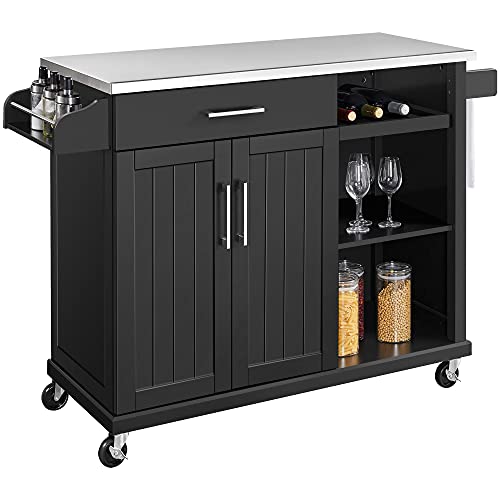
An all-in-one cart with enclosed cabinet, 6-bottle wine rack, and lockable casters.
Best for entertaining enthusiasts who want a prep-and-serve station. Enclosed cabinet hides clutter; two deep drawers for utensils; integrated 6-bottle wine rack; side spice rack holds 12 standard jars; four lockable casters.
Pros: Enclosed storage keeps serving dishes out of sight; lockable casters keep cart steady for rolling dough; black finish hides scratches.
Cons: 73.8 lb weight is hard to move on high-pile rugs; assembly instructions are poorly translated—sorting hardware by size first helps.
Yaheetech Rolling Kitchen Island With Stainless Steel Top

A 50.5-inch wide cart with room for two cutting boards side by side.
Best for large families or couples who cook together and need a wide surface. 50.5-inch wide stainless steel top; encluded cabinet with adjustable inner shelves; two full-extension drawers; four lockable casters.
Pros: Extra-wide surface perfect for holiday meal prep; adjustable shelves accommodate tall stock pots; lockable casters keep it steady.
Cons: 85.76 lbs requires two people to move safely; 50-inch width won’t fit kitchens under 12 feet.
Seville Classics Commercial Work Table Island Utility Cart

A 16-gauge stainless steel top rated for commercial use, supporting up to 500 lbs.
Best for home chefs doing heavy-duty prep (canning, butchering, batch cooking) or small food businesses. NSF-certified for strict public health standards (NSF International); 16-gauge top resists dents; open frame for easy cleaning.
Pros: Thick 16-gauge top won’t dent under clevvers; open frame lets you sweep under; 500 lb capacity.
Cons: 24-inch width too narrow for most home prep tasks; no encluded storage.
Homestyles Dolly Madison Black Mobile Kitchen Island Cart
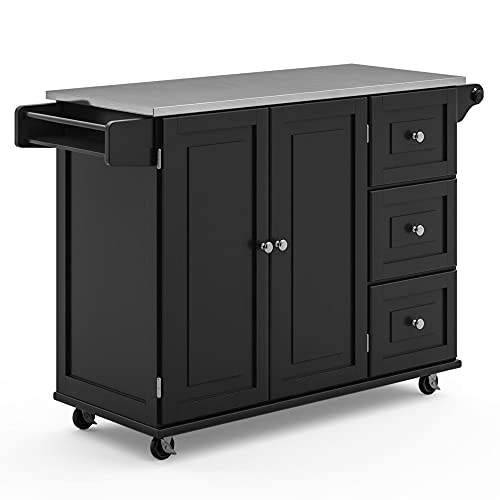
A sleek mid-century modern cart with soft-close drawers and lockable casters.
Best for modern or mid-century decor. Sleek black finish, stainless steel top, two soft-close drawers, bottom open shelf, four lockable casters.
Pros: Soft-close drawers don’t slam shut—great with kids; black finish matches stainless steel appliances; 36-inch standard height.
Cons: 60 lb weight hard to move on high-pile rugs; assembly needs a drillfor drawer slides.
Boraam Holland Kitchen Cart With Stainless Steel Top, Gray

A 20-inch wide cart that fits into tight kitchen aisles.
Best for galley kitchens and studio apartments. 20-inch width fits in 3-foot aisles; stainless steel top; two small drawers for utensils; open lower shelf; four swivel casters.
Pros: Fits in tight spaces; lightweight 40 lbs easy to move; affordable.
Cons: Limited storage—can’t fit large pots or stand mixer; drawers only fit small utensils.
Vevor Mophorn Stainless Steel Work Table

A commercial-grade 16-gauge work table with welded steel frame, supports up to 500 lbs.
Best for heavy-duty home prep, garage, or outdoor kitchen use. 16-gauge top, 36×24 inch surface, four heavy-duty casters (two locking), welded steel frame.
Pros: Supports 500 lbs; welded frame no wobble; thick top resists dents.
Cons: Casters don’t lock on some models—check before buying; no enclosed storage.
HOMCOM Kitchen Island On Wheels, Cream White

A soft cream cart with side spice rack and integrated towel holder.
Best for cottage, farmhouse, or minimalist decor. Cream white finish, stainless steel top, one deep drawer, integrated towel rack, side spice rack for 12 standard jars, four swivel casters.
Pros: Neutral finish matches most kitchens; spice rack keeps seasonings within reach; towel rack handy for quick wipe-ups.
Cons: Cream finish shows food stains and grease easily; 28-inch width too small for large prep tasks; spice rack not adjustable for larger jars.
How to Care for Your Stainless Steel Top Kitchen Cart
With proper maintenance, the top will stay pristine for 5–10 years of daily use.
- Wipe spills immediately. Acidic foods (citrus juice, tomato sauce, vinegar, wine) can etch the steel if left more than 10 minutes.
- Use mild soap and water daily. A microfiber cloth with warm water and a drop of dish soap is all you need. Never use abrasive scrubbers, steel wool, or chlorine-based cleaners—they scratch the protective finish and invite rust.
- Remove water spots with vinegar. Mix equal parts white vinegar and water. Wipe with the grain of a brushed finish, then dry immediately with a clean microfiber cloth to prevent streaks.
- Never cut directly on the surface. Use a wooden or plastic cutting board. Serrated knives leave permanent scratches.
- Brush the grain. For brushed finishes, always wipe along the grain to avoid creating fine scratches that trap dirt. A dedicated kitchen cleaning brush with handle helps remove stuck-on food around edges without scratching.
Frequently Asked Questions
What are the key benefits of a stainless steel top over wood or laminate?
Stainless steel is non-porous, so it doesn’t absorb stains or harbor bacteria. It resists heat up to 500°F, while wood can warp from moisture and laminate peels over time. In practice, a stainless steel top lasts 5–10 years with regular care; laminate carts often show wear after 2–3 years of heavy use.
Can a kitchen cart replace a full kitchen island?
Yes, for small to medium kitchens and for renters who can’t install permanent fixtures. A rolling cart gives you the same prep space and storage as a small island, with the freedom to move it. The trade-off: most carts are smaller than built-in islands, so large families may need two carts or a dedicated island with more storage—like the kitchen island cart with garbage bin for integrated waste.
How do I choose the right size?
Measure your kitchen aisle width. Leave at least 36 inches of clearance between the cart and other cabinets or appliances when the cart is fully pulled out. For galley kitchens under 10 feet wide, pick a cart 24–28 inches wide. For larger kitchens, 36–50 inches works well. Standard counter height is 36 inches—match it for a seamless extension of your counters. If you need extra countertop storage without a cart, IKEA-style counter storage shelves can supplement.
Are stainless steel tops safe for food preparation?
Yes, as long as the steel is food-grade (all residential carts use 304 or 430 stainless steel, which is non-toxic). Always wipe down with warm, soapy water before and after prepping raw meat to avoid cross-contamination. Use a cutting board to protect the surface and your knives. If young children are in the home, secure hazardous utensils and cleaning supplies with childproof locks.
Do I need to lock the wheels when using the cart?
Always lock at least two casters when chopping, rolling dough, or using sharp knives. Unlocked casters can cause the cart to roll unexpectedly—a real safety hazard. Most carts come with two locking casters, sufficient for tile, hardwood, and low-pile rugs. For high-pile carpet, look for a model with four heavy-duty locking casters.
Final Verdict: Is a Stainless Steel Top Kitchen Cart Worth It?
For the vast majority of home cooks, a kitchen cart with a stainless steel top delivers one of the highest returns on investment you can make without a renovation. It solves crowded countertops, lack of prep space, and disorganized cabinets—all in one movable piece. The durability and hygiene of the stainless steel top handle everything from raw meat prep to hot cast iron, while the storage flexibility adapts to your cooking style. The honest downsides: you’ll need to wipe fingerprints regularly, and heavier models (over 80 lbs) can be a hassle to move upstairs.
When shopping, stay focused on your actual cooking habits. Bake often? Prioritize adjustable shelves and a thick gauge top. Have a tiny kitchen? Go narrow with lockable casters. Host regularly? Choose a model with an enclosed cabinet and perhaps a rolling cart with trash can for easy clean-up. And if you already have a stainless steel cart, pair it with glass food storage containers with vented lids to keep leftovers organized and the cart clutter-free.
Ready to reclaim your counter space? Start by measuring your kitchen, then pick a cart that fits your workflow—your future self, chopping vegetables on a clean, spacious surface, will thank you.

I’m Abby Lu, a passionate home cook who loves simplifying everyday meals. At PlugChef.com, I share product reviews and cooking guides to help you find the best tools for your kitchen.
Related posts:
 Ge Monogram Kitchen Appliance Packages: Elevate Your Home’s Style Effortlessly
 Blenders Men’s Polarized Sunglasses: Elevate Your Style with Ultimate UV Protection
 Best Stainless Steel Coffee Makers: Top Picks for Flavorful Brews
 Best Travel Coffee Mug Warmer: Keep Your Brew Perfectly Hot Anywhere
 High End Kitchen Appliances Brands: Discover Premium Kitchen Essentials
 Best Electric Wok for Stir Fry: Top Picks for Delicious Meals