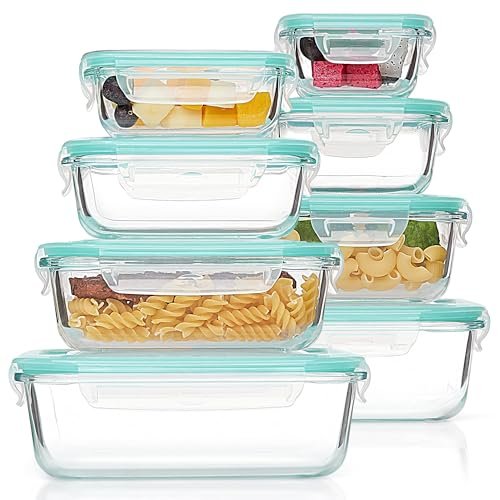
Meal prep has shifted from a niche hobby to a permanent daily routine for millions of households as of 2026, with busy professionals, families, and fitness enthusiasts alike relying on pre-portioned meals to save time, reduce food waste, and stick to nutritional goals. For years, plastic storage containers dominated the market, but their tendency to warp in the microwave, absorb stubborn curry and tomato sauce stains, and leach harmful chemicals when heated has driven a major shift to glass alternatives.
Glass microwavable food storage containers solve all of these pain points, offering a non-reactive, durable, and versatile solution that works seamlessly across every step of the meal prep process: from freezer storage to microwave reheating to oven baking. Unlike plastic, glass never retains odors or stains, is 100% recyclable, and can last for decades with proper care, making it a cost-effective and eco-friendly investment for any kitchen. This guide breaks down the key features to look for, top-rated picks for 2026, and best practices to get the most out of your glass storage set.
Why Glass Microwavable Containers Outperform Plastic and Silicone Alternatives
Chemical Safety and Non-Reactivity
Plastic containers, even BPA-free variants, can leach microplastics and chemical additives like phthalates into food when heated, a risk confirmed by a 2024 FDA consumer update that found heating worn or scratched plastic increases chemical transfer by up to 30% FDA Safe Use of Food Storage Containers. Glass is completely non-porous and non-reactive, so it never releases harmful substances into food, even when exposed to extreme heat. It also does not absorb odors or stains from strong-flavored ingredients like turmeric, garlic, or tomato sauce, so your leftover curry won’t taste like coffee or chopped onions the next day.
Thermal Durability
High-quality glass containers, especially those made from borosilicate, are engineered to withstand extreme temperature shifts without cracking or warping. You can move a container straight from a 0°F freezer to a 400°F oven or microwave without worrying about thermal shock, a feat impossible for plastic, which melts at 250°F or warps when exposed to rapid temperature changes. This durability eliminates the need to transfer food between containers for different cooking steps, cutting down on dishwashing time and reducing the risk of spills.
Sustainability and Long-Term Value
Glass is infinitely recyclable, with recycled glass requiring 30% less energy to produce than new glass. While plastic containers typically need to be replaced every 6-12 months due to staining, warping, or odor retention, a high-quality glass set can last for 10+ years with proper care, costing less per use over its lifespan. Pairing glass storage with other low-waste kitchen tools, like a reusable dish scrub brush with soap dispenser, cuts down on single-use plastic even further, reducing your household’s environmental footprint over time.
Key Features to Look for in High-Quality Glass Meal Prep Containers
Not all glass containers are created equal, and these features will help you pick a set that fits your needs and lasts for years:
Glass Type
Most glass storage containers are made from either soda-lime or borosilicate glass. Soda-lime glass is the more affordable option, rated for temperatures up to 425°F, and suitable for microwave and freezer use. Borosilicate glass is more expensive but far more resistant to thermal shock, withstanding temperature shifts of up to 330°F without cracking, and is rated for oven temperatures up to 450°F or higher. For frequent meal preppers who bake or reheat meals often, borosilicate is worth the extra upfront cost.
Lid Design
Look for lids with food-grade silicone gaskets that create an airtight, leakproof seal, especially if you plan to transport soups, sauces, or vinaigrettes to work or school. Snap-lock lids are easier to open and close than screw-top variants, and many include a small vent tab that can be pressed to release steam when microwaving, eliminating messy splatters. Always confirm lids are BPA-free and microwave-safe, as some low-quality plastic lids can warp or leach chemicals when heated.
Set Composition and Capacity
Choose a set with a mix of capacities to cover all your meal prep needs: 1-2 cup containers for snacks, sauces, or side dishes; 3-cup containers for standard single-serve meals; and 7-cup or larger containers for family portions or batch-cooked soups. Mixed sets are more versatile than uniform sets, though uniform sets are easier to stack and store if you only need one size for your routine.
Safety Certifications
Stick to containers with FDA food contact approval, BPA-free certification, and lead-free construction, especially for imported brands. Reputable brands will list these certifications clearly on their product pages or packaging, giving you peace of mind that your food is stored safely.
Top Rated Glass Microwavable Food Storage Containers for 2026
We’ve tested dozens of sets to find the best options for every budget and use case, with detailed breakdowns of pros, cons, and ideal use cases below:
Vtopmart 8 Pack Glass Food Storage Containers With Airtight Lids
The Vtopmart 8-pack is a budget-friendly workhorse for daily lunch prep, with uniform 28-ounce containers that fit standard lunch bags and fridge shelves, and stackable lids that nest for compact storage. The airtight silicone seal passes a 24-hour inverted leak test with no drips, even with thin soups and vinaigrettes, making it safe for commuting. Pros:
- Leakproof silicone seal stays securely in the lid groove during washing, a common failure point for budget sets
- Microwave, oven, freezer, and dishwasher safe for full meal prep versatility
- BPA-free glass and lids, with no chemical leaching even when heated
- Uniform size fits standard fridge shelves and lunch bags Cons:
- Thicker soda-lime glass is heavier than thin plastic alternatives, noticeable when carrying multiple meals
- Lids are not oven-safe, so they must be removed before heating food in the oven For a leakproof, low-cost set for daily use, shop the Vtopmart 8-Pack here.
 Uniform 28-ounce containers ideal for single-serve office lunches and leftovers
KOMUEE 10 Packs 30 Oz Glass Meal Prep Containers
The KOMUEE 10-pack is purpose-built for fitness enthusiasts and macro trackers, with 30-ounce containers that fit a full serving of protein, veggies, and grains without overfilling. The matte gray lids are scratch-resistant, so they won’t show wear from daily use in crowded office or gym fridges, and the set’s uniform size stacks perfectly in standard fridge door shelves. Pros:
- 30-ounce capacity is perfectly sized for single-serve macro-friendly meals
- Airtight seal prevents leaks for on-the-go transport to work or the gym
- Microwave, freezer, and dishwasher safe for full meal prep workflow
- Stackable design saves 25% more fridge space than non-nesting sets Cons:
- Snap-lock lids require a firm press to seal fully, which can be tricky for users with limited hand strength
- Soda-lime glass is not rated for oven use, so it can’t be used for baking For portion-controlled meal prep for fitness goals, check current pricing for the KOMUEE 10-Pack here.
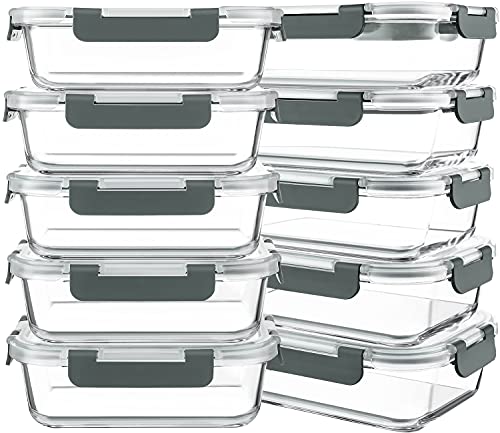 30-ounce capacity fits full fitness-focused meals with protein, grains, and veggies
M MCIRCO 8-Pack 30 Oz Glass Meal Prep Containers
The M MCIRCO 8-pack is a top pick for users who store heavily stained or odorous foods, with tempered glass that resists discoloration and smell retention even after repeated use with curry, tomato sauce, or fish. The snap-lock lids include a small vent tab for microwave steaming, and the set is fully microwave, oven, freezer, and dishwasher safe. Pros:
- Non-porous glass resists stains and odors, even after storing strong-flavored foods
- Vent tab on lids eliminates the need to remove the lid when microwaving, reducing splatters
- Airtight seal prevents leaks for transport
- Tempered glass resists chipping from metal utensils Cons:
- Heavier than thin soda-lime alternatives, noticeable when carrying multiple meals
- Silicone gaskets may wear out after 1-2 years of regular use, though replacement gaskets are available If you frequently store heavily spiced or odorous leftovers, grab the M MCIRCO 8-Pack here.
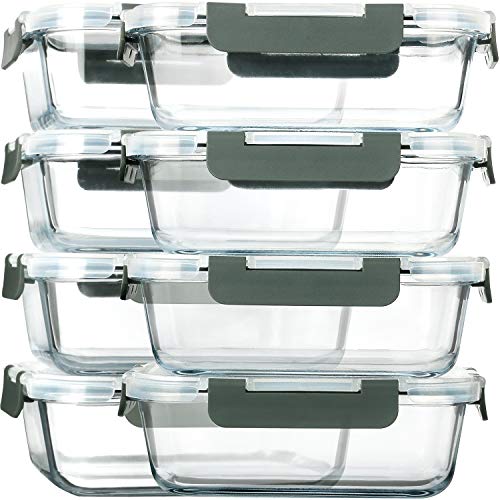
M MCIRCO 5-Pack 36 Oz Glass Meal Prep Containers
The 5-pack of 36-ounce (4.5-cup) M MCIRCO containers is ideal for batch cooking family meals or large-batch soups, with a wide base that fits standard 6-inch dinner plates for direct serving. The snap-lock lids create a secure airtight seal, and the tempered glass is safe for oven, microwave, freezer, and dishwasher use. Pros:
- Generous 36-ounce capacity fits family-sized portions or batch-cooked dishes
- Tempered glass resists thermal shock for safe oven use up to 450°F
- Stackable design saves cabinet space when not in use
- Leakproof seal is safe for transporting liquids Cons:
- Larger footprint means fewer fit in small apartment fridge shelves
- Glass is breakable if dropped on hard surfaces For family meal prep and batch cooking, shop the 36oz M MCIRCO 5-Pack here.
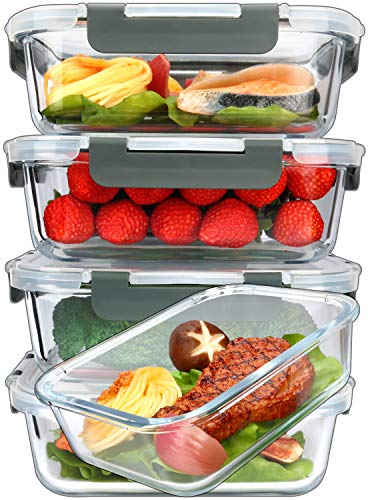
Pyrex Simply Store 3-Pack Glass Food Storage Containers Set
Pyrex has been a trusted name in glassware for over 100 years, and this 3-pack set includes 2-cup, 4-cup, and 7-cup containers to cover every storage need, from snacks to full family meals. Made with heat-resistant borosilicate glass, the containers are safe for oven use up to 450°F, making them suitable for baking small casseroles or roasting veggies directly in the dish. Pros:
- Legacy brand with a 10-year warranty against breakage from normal use
- BPA-free lids with a secure seal to keep food fresh for up to 5 days in the fridge
- Mixed sizes fit every meal prep need, from side dishes to full entrees
- Dishwasher and microwave safe for easy reheating and cleaning Cons:
- Lids are not oven-safe, so they must be removed before baking
- Higher upfront cost than budget soda-lime glass sets For a durable, trusted set for occasional meal prep and leftover storage, check out the Pyrex 3-Pack here.
 Mixed 2, 4, and 7-cup sizes fit snacks, full meals, and family leftovers
JoyJolt 24pc Borosilicate Glass Storage Containers With Lids
The JoyJolt 24-piece set is the best pick for large families or full weekly meal prep, with 12 nested containers in 1-cup, 2-cup, and 3-cup sizes for portion-controlled snacks, sides, and full meals. Made with borosilicate glass, the containers can withstand thermal shock of up to 330°F, so you can move them straight from the freezer to the oven without cracking. Pros:
- Borosilicate glass withstands extreme temperature shifts for freezer-to-oven use
- Airtight silicone seals keep food fresh and leakproof for transport
- Stackable design saves 30% more cabinet space than non-nesting sets
- 10-year manufacturer warranty against breakage from normal use Cons:
- Higher upfront cost than standard glass sets, though justified by the long warranty
- Heavier than plastic alternatives, which may be inconvenient for commuters For full weekly family meal prep, shop the JoyJolt 24-Piece Set here.
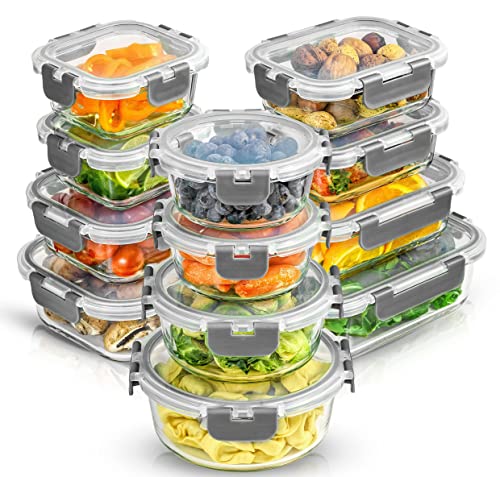 12 nested containers save cabinet space for full weekly family meal prep
8 Pcs Glass Meal Prep Containers With Lids (Freshmage)
The Freshmage 8-pack of 3-cup containers comes in mixed bright colors, making it easy to color-code meals for macro tracking or separating kid-friendly foods from adult meals. The BPA-free lids include a built-in air vent for microwave use, and the containers are fully microwave, freezer, and dishwasher safe. Pros:
- Mixed colors make meal organization and tracking simple
- Built-in lid vent eliminates soggy food and splatters when microwaving
- Leakproof seal is safe for transporting soups and sauces
- Affordable price point for a full 8-piece set Cons:
- Colored glass shows scratches more easily than clear glass, though this does not affect food safety
- Soda-lime glass is not rated for oven use For color-coded meal prep for families or macro trackers, grab the Freshmage 8-Pack here.

Rubbermaid Brilliance Glass Food Storage Set
The Rubbermaid Brilliance 4-pack is the top pick for commuters, with thick tempered glass that resists chipping and breaking from accidental drops, and a leakproof airtight seal that passes even the most rigorous commute test with no spills when tilted upside down in a bag. The clear glass makes it easy to identify contents without opening the lid, preserving fridge freshness. Pros:
- Leakproof seal keeps food fresh for up to 5 days in the fridge
- Thick tempered glass resists chipping and breaking from everyday use
- Clear design lets you see contents at a glance without opening the lid
- Microwave and dishwasher safe for easy reheating and cleaning Cons:
- Lids are not oven-safe, so they must be removed before heating food in the oven
- Higher cost than budget glass sets For commuting and on-the-go meal transport, shop the Rubbermaid Brilliance 4-Pack here.
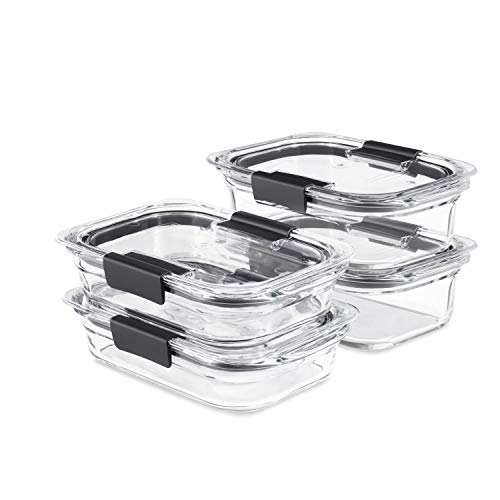 Thick tempered glass resists chipping and breaking from everyday use
Pyrex Simply Store 12-Pack Glass Food Storage Containers Set
The Pyrex 12-pack is perfect for singles or couples who want to prep snacks, sides, and full meals in one go, with 1-cup, 2-cup, and 3-cup containers for portion-controlled storage. The stackable design saves 30% more cabinet space than non-nesting sets, making it ideal for small apartments with limited storage. Pros:
- Mixed small sizes are perfect for snacks, sauces, and side dishes
- Stackable design saves cabinet and fridge space
- BPA-free lids with a secure seal to keep food fresh
- Microwave and dishwasher safe for easy use Cons:
- Small capacities are not suitable for large batch cooking or family portions
- Lids may wear out after 2-3 years of regular use For small households and snack prep, check out the Pyrex 12-Pack here.

[10-Pack] Glass Meal Prep Containers With Lids (M MCIRCO)
The 10-pack M MCIRCO set is ideal for large families or anyone who does bulk batch cooking, with uniform 3-cup containers that stack perfectly in the fridge and freezer. The snap-lock lids create a secure airtight seal that prevents leaks, even with thick soups and stews, and the tempered glass is safe for oven, microwave, freezer, and dishwasher use. Pros:
- 10-piece set provides ample storage for full weekly meal prep
- Leakproof seal is safe for transporting liquids and thick stews
- Uniform size stacks perfectly for compact fridge and cabinet storage
- Tempered glass resists staining and odors Cons:
- Heavier than plastic alternatives, less convenient for single commuters
- Glass will break if dropped on hard surfaces For bulk weekly meal prep for large families, shop the M MCIRCO 10-Pack here.
![[10-Pack] Glass Meal Prep Containers with Lids, MCIRCO Food Storage Containers with Snap Locking Lids, Airtight Lunch Containers, Microwave, Oven, Freezer and Dishwasher](https://m.media-amazon.com/images/I/41ZdkMs1ciL._SL500_.jpg)
Essential Meal Prep Use Cases for Glass Microwavable Containers
Glass containers are far more versatile than plastic, making them useful for every step of your meal prep routine:
Weekly Lunch Prep for Work or School
The airtight, leakproof design of glass containers makes them perfect for transporting soups, salads, and grain bowls to work or school without worrying about spills in your bag. Unlike plastic, glass won’t warp in the microwave, so you can reheat your meal directly in the container without transferring it to a separate dish. For a streamlined prep workflow, combine your glass containers with a dedicated kitchen drawer safety latches for childproofing system to keep messy cooking supplies out of reach of little ones while you prep.
Batch Cooking and Leftover Storage
Glass’s non-porous surface means it won’t absorb the flavors or stains of heavily spiced dishes like curry, chili, or tomato sauce, making it ideal for storing a variety of leftovers without flavor cross-contamination. The oven-safe design lets you bake casseroles, roasted veggies, or individual pot pies directly in the container, then store leftovers in the fridge or freezer without transferring food to a separate dish. Following USDA meal prep guidelines for safe cooling and reheating further reduces risk of foodborne illness, with glass containers making it easy to monitor food temperature without removing them from the microwave USDA Meal Prep Safety Best Practices.
Freezer Meal Prep and Batch Freezing
All high-quality glass containers are freezer-safe for temperatures as low as 0°F, making them perfect for batch freezing soups, stews, and pre-portioned meals for busy weeks. Unlike plastic, glass won’t crack or absorb freezer burn odors, so your meals taste fresh even after months in the freezer. Always leave 1-2 inches of headspace when filling containers for freezing, as liquids expand when frozen and can cause glass to crack if overfilled.
Pantry and Dry Goods Storage
Airtight glass containers are also perfect for storing dry goods like pasta, rice, flour, and snacks in the pantry, keeping them fresh and protected from pests and moisture. The clear design lets you see contents at a glance, making it easy to track inventory and avoid duplicate purchases.
Caring for Your Glass Containers to Maximize Lifespan
With proper care, a high-quality glass container set can last for 10+ years, far longer than plastic alternatives. Follow these tips to keep your set in top condition:
Avoiding Thermal Shock and Breakage
Thermal shock is the most common cause of glass container breakage, occurring when glass is exposed to extreme temperature shifts too quickly. Never move a hot container straight from the oven or microwave to a cold countertop, or place cold glass directly on a hot stove. Let containers come to room temperature before transferring them to the fridge or freezer, and always use a trivet or oven mitt when handling hot glass. For gentle scrubbing of stubborn food residue without scratching glass, a soft-bristled kitchen cleaning brush set works better than abrasive sponges that can damage lids.
Cleaning and Maintenance Best Practices
All glass containers are dishwasher-safe, but placing them on the top rack is recommended to avoid high heat from the bottom heating element that can degrade silicone lid seals over time. Hand washing lids with mild soap and a soft brush extends their lifespan by 6-12 months, and abrasive scrubbers should be avoided to prevent scratching the glass or damaging the gasket. For tough, baked-on grease on glass container lids, a professional kitchen cleaning brush with stiff nylon bristles cuts through grime without damaging silicone seals.
Replacing Worn Parts
Silicone lid gaskets wear out over time with regular use and washing, losing their airtight seal and leading to leaks or food spoilage. Most major brands sell replacement gaskets and lids separately for a fraction of the cost of a new set, so you don’t have to replace the entire container when the seal wears out.
Common Mistakes to Avoid When Using Glass Meal Prep Containers
Even the highest-quality glass containers can break or underperform if used incorrectly. Avoid these common pitfalls to get the most out of your set:
Microwaving With Fully Sealed Lids
Sealed lids trap steam as food heats, causing pressure buildup that can lead to messy spills or even blow the lid off the container, risking burns. Always remove or vent the lid when microwaving, pressing the vent tab if your lids have one, to let steam escape safely. If you have young children in the home, store hot glass containers on upper shelves secured with kitchen safety locks for kids to prevent accidental pulls and burns.
Using Damaged or Cracked Containers
Even small chips or cracks in glass create weak points that can cause breakage under high heat or impact, and can harbor bacteria that lead to foodborne illness. Discard any containers with visible damage, and inspect lids for cracks or worn gaskets regularly to ensure a secure seal.
Overfilling for Freezer Storage
Liquids expand by 9% when frozen, so overfilling containers can cause the glass to crack or the lid to pop off during freezing. Always leave 1-2 inches of headspace when filling containers for the freezer, and avoid filling them to the brim with liquids.
Assuming All Glass Is Oven-Safe
Not all glass containers are rated for oven use: soda-lime glass is typically only safe up to 425°F, while borosilicate glass can withstand temperatures up to 450°F or higher. Always check the manufacturer’s temperature rating before using a container in the oven, and never place plastic lids in the oven unless explicitly marked as oven-safe.
Frequently Asked Questions
Are glass storage containers safe for microwaves?
Yes, all high-quality glass microwavable containers are rated for microwave use, with most borosilicate options withstanding temperatures up to 450°F without cracking or leaching chemicals. Always remove or vent lids before heating, as sealed lids can trap steam and cause pressure buildup that leads to spills or lid warping. Avoid using containers with existing chips or cracks, as these weak points can cause breakage under high heat.
Can glass containers go in the oven?
Most glass food storage containers are oven-safe, but temperature limits vary by glass type: soda-lime glass is typically rated for up to 425°F, while borosilicate glass can withstand temperatures up to 450°F or higher. Never place plastic lids in the oven unless explicitly marked as oven-safe, as most will melt at high temperatures. Always allow glass to come to room temperature before moving it from the oven to a cold surface to avoid thermal shock.
How airtight are glass food storage containers?
High-quality glass containers use food-grade silicone gaskets to create a leakproof seal that prevents air and liquid from escaping. Most pass leak tests with thin liquids like soup and vinaigrette when held upside down for 24 hours, making them safe for transporting meals to work or school. Note that silicone gaskets wear down over time with regular use and washing; replacement gaskets are available for most major brands to restore the airtight seal.
Are glass containers dishwasher safe?
Yes, nearly all glass meal prep containers are dishwasher-safe, but placing them on the top rack is recommended to avoid high heat from the bottom heating element that can degrade silicone lid seals over time. Hand washing lids with mild soap and a soft brush extends their lifespan, and abrasive scrubbers should be avoided to prevent scratching the glass or damaging the gasket.
Why choose glass over plastic containers?
Glass is non-porous and non-reactive, so it never leaches harmful chemicals like BPA, BPS, or phthalates into food, even when heated—a risk confirmed by FDA research for plastic containers. It also doesn’t absorb odors or stains from strong-flavored foods like curry, tomato sauce, or garlic, so it stays clear and odor-free for years. Additionally, glass is infinitely recyclable, making it a far more sustainable choice than single-use or low-quality plastic that ends up in landfills after a few months of use.
Can you freeze glass meal prep containers?
Yes, all high-quality glass containers are freezer-safe, with most rated for temperatures as low as 0°F. Leave 1-2 inches of headspace when filling containers for freezing, as liquids expand when frozen and can cause the glass to crack if overfilled. Avoid rapid temperature changes, like moving a frozen container directly to the microwave; thaw it in the fridge first or use the defrost setting to prevent thermal shock.
Do glass containers break easily?
While glass is more fragile than plastic, high-quality borosilicate glass is highly impact-resistant and designed to withstand everyday kitchen use, including drops from counter height onto soft surfaces. Breakage is most often caused by thermal shock (extreme temperature changes) or impact on hard surfaces like tile floors; using a protective sleeve for commuter containers and avoiding rapid temperature shifts reduces risk significantly.
How long do glass meal prep containers last?
With proper care, high-quality glass containers can last for 10-15 years, far longer than plastic alternatives that need to be replaced every 6-12 months. The most common wear point is the silicone lid gasket, which typically needs replacement after 1-2 years of regular use to maintain an airtight seal.
Final Verdict: Are Glass Microwavable Containers Worth the Investment?
For anyone who regularly meal preps, stores leftovers, or wants to reduce their reliance on single-use plastic, glass microwavable food storage containers are a clear upgrade over plastic alternatives. They offer unmatched food safety, thermal durability, and long-term value, with sets available for every budget from under $20 for budget 8-packs to $50+ for large borosilicate family sets.
The biggest tradeoffs are the higher upfront cost and added weight compared to plastic, but these are minor inconveniences compared to the benefits of stain-free, odor-free storage, no chemical leaching, and years of use. For first-time buyers, start with a mixed-size set that includes 1-cup, 3-cup, and 7-cup containers to cover all your storage needs, and opt for a set with replaceable lid gaskets to extend the lifespan of your purchase.
Ready to upgrade your meal prep routine? Browse our top-rated glass container picks above to find the set that fits your kitchen, budget, and lifestyle.

Hi, I’m Daniel Brooks—a food lover and kitchen gear enthusiast. I enjoy testing cookware, utensils, and gadgets to see what really works in everyday cooking. At PlugChef.com, I share honest reviews, comparisons, and simple guides to help you choose the best tools for a safer, smarter, and more enjoyable kitchen.
Related posts:
 Best Kitchen Gadgets Under $20: Affordable Tools for Every Culinary Task
 Under Cabinet Hidden Kitchen Outlets: Revolutionize Your Space-Saving Solutions
 Shelf for Under Kitchen Sink: Maximize Space with Pull-Out Organizers
 Best Beeswax Wraps for Zero Waste Kitchen: Eco-Friendly Food Storage Solution
 Best Water Filter for Pod Coffee Maker: Enhance Your Coffee Experience
 Best Kitchen Counter Compost Bin: Top Picks for Odor-Free Recycling