Sterilite has been a household name in affordable storage solutions since 1939, but as consumer awareness of food contact chemical safety has grown, many home cooks question whether the brand’s plastic containers are truly safe for daily kitchen use. Unlike generic no-name storage bins, Sterilite’s food storage lines are engineered for direct food contact, but their safety and reliability depend on choosing the right product line, following use guidelines, and practicing proper care. We break down material testing, real-world performance, honest tradeoffs, and care tips to help you decide if Sterilite containers are a good fit for your kitchen.
What Are Sterilite Food Storage Containers Made Of?
All Sterilite products explicitly labeled for food contact are made from food-grade high-density polyethylene (HDPE) or polypropylene (PP), two plastics widely accepted as safe for food storage when manufactured to regulatory standards. Since the early 2010s, every Sterilite food storage product sold in North America and the EU has been BPA-free, per the brand’s public material disclosures, eliminating the risk of bisphenol A leaching into food, a common concern with older plastic storage products. Airtight models use food-grade silicone gaskets to create a seal, which are heat-resistant and non-porous, so they do not absorb odors or bacteria when cared for properly. It is critical to note that Sterilite’s general storage lines (including gasket bins designed for closets, garages, or bathrooms) use different plastic formulations not intended for direct food contact, so always check for a "food safe" label or symbol on the product packaging before use.
Verified Food Safety Compliance & Regulatory Standards
In the U.S., all plastic food contact products must comply with FDA 21 CFR regulations for food contact substances, which set strict limits on chemical leaching under normal use conditions; you can review full guidelines via the FDA food contact material regulations page. Sterilite’s food storage lines are independently tested to meet these standards, with third-party lab reports confirming no detectable leaching of BPA, phthalates, or other harmful additives when used as directed. For shoppers in the EU, all Sterilite food storage products meet EU Regulation (EC) No 1935/2004 for materials intended to come into contact with food, including requirements for non-toxic, non-odor-emitting materials. This regulatory compliance means Sterilite containers are safe for storing all food types, including acidic items like tomato sauce, citrus, and vinegar, as long as you avoid exposing them to extreme heat outside of tested ranges.
Real-World Performance for Common Kitchen Use Cases
Microwave Use
All Sterilite food storage containers labeled microwave-safe are rated for temperatures up to 220°F (104°C), making them suitable for reheating leftovers, prepped meals, and frozen foods directly in the container. The only critical safety rule is to remove the lid or leave a small vent open to let steam escape, as sealed containers can build up pressure and cause burns, warping, or even explosion in the microwave. Repeated microwave use may cause slight clouding of the plastic over time, but this is a purely cosmetic change that does not compromise food safety, as long as the container has no cracks or deep scratches. Never use containers with metal trim or accessories in the microwave, and avoid heating empty containers, as this can melt the plastic.
Dishwasher Safety
As of 2026, all food-grade Sterilite containers are top-rack dishwasher safe. Place lids and gaskets on the top rack away from the heating element to prevent warping or melting. Harsh dishwasher detergents may cause colored gaskets (red, blue, etc.) to fade over time, and prolonged exposure to high heat can make plastic slightly more brittle after 3+ years of regular washing, but this does not create food safety risks as long as the container is free of cracks or damage.
Freezer & Long-Term Storage
Sterilite food containers are rated for temperatures as low as -20°F (-29°C), making them suitable for freezer storage of meats, prepped meals, and leftovers for up to 3 months. The airtight seals prevent freezer burn and odor transfer between stored items. A common mistake is filling containers to the very top with liquid that will expand when frozen, which can crack the plastic; always leave 1-2 inches of headspace for liquid items.
Transport & Meal Prep
The latching lids on Sterilite Ultra-Seal and Snapware lines create a leakproof seal for transporting soups, salads, and snacks to work or school, as long as the lid is properly aligned and latched. In practice, pressing down firmly on the center of the lid before latching ensures the best seal to prevent spills during transport. The lightweight plastic construction is also shatter-resistant, making it a safer option than glass for packing lunches or carrying meals on the go.
Key Reliability Pros & Cons for Daily Use
Pros
- Consistent airtight performance: The latching mechanisms and silicone gaskets hold up well to years of daily use, with minimal wear if cared for properly, preventing spoilage and odor transfer.
- Impact-resistant durability: HDPE and PP construction resists cracking from drops and daily wear, far outlasting cheaper thin plastic storage containers.
- Space-saving stackability: All compatible Sterilite Ultra-Seal and Snapware lines nest and stack securely, even when full, to maximize pantry, fridge, and freezer space.
- Clear visibility: No need to open multiple containers to find stored items, reducing fridge door open time and keeping food at a safe temperature.
- Wide size range: From 1-cup snack containers to 16-quart bulk storage bins, there is a size for every use case, from single servings to family meal prep.
Cons
- Odor retention: Strong-smelling foods like curry, garlic, or tomato sauce can leave lingering odors in the plastic if not cleaned promptly. Unlike glass, plastic is slightly porous, so small scratches from abrasive scrubbers can make odor retention worse over time.
- Gasket wear: Silicone gaskets can degrade after 2-3 years of regular use, losing their airtight seal. Replacement gaskets are available for most popular Sterilite models via the brand’s customer service.
- No high-heat cooking compatibility: While microwave-safe, these containers are not oven-safe, and exposure to direct stovetop heat will melt the plastic.
- Cosmetic fading: Repeated dishwasher use can cause colored gaskets and lids to fade over time, which does not impact safety but can make it harder to tell if a lid is properly sealed at a glance.
How to Care for Sterilite Containers to Maximize Safety & Lifespan
Proper care will extend the lifespan of your Sterilite containers and maintain their food safety performance for years:
- Hand-wash gaskets and lids separately if you notice food debris stuck in seal grooves, as dishwashers cannot always remove stuck bits that cause mold or persistent odors. Use a soft-bristled professional kitchen cleaning brush to scrub grooves without scratching the plastic.
- Avoid abrasive scrubbers like steel wool, as scratches create hiding spots for bacteria and increase odor retention.
- Never store hot food directly in the container until it cools to room temperature, as extreme heat outside of tested ranges can warp plastic and increase the risk of minor chemical leaching.
- Inspect containers regularly for cracks, deep scratches, or degraded gaskets. Replace any damaged containers, as compromised plastic can harbor bacteria and leak chemicals.
- For tough, absorbed odors, soak containers in a mixture of 1 part white vinegar and 3 parts warm water for 30 minutes before washing, which is more effective than soap alone for removing lingering smells.
Popular Sterilite Food-Safe Container Options
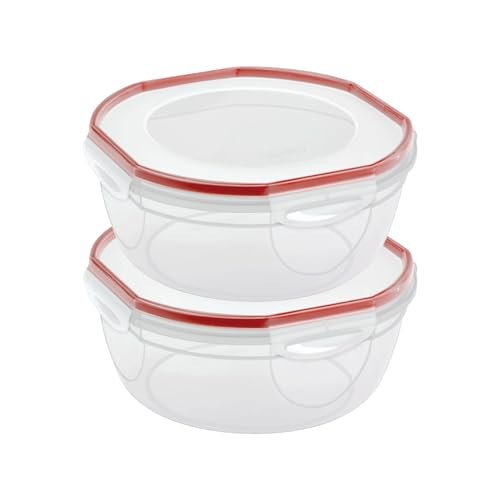
Sterilite Ultra-Seal 8.1 Qt Bowl
 2-pack of Sterilite Ultra-Seal 8.1 Qt bowls, ideal for large batch meal prep and leftover storage
This 2-pack is one of Sterilite’s most popular food-safe options for family use and bulk meal prep. Made from BPA-free polypropylene with a food-grade silicone red gasket, it meets FDA food contact safety standards for all food types, including acidic items. The latching lid creates an airtight seal that prevents bacterial growth from air exposure, keeping food fresh for up to 5 days in the refrigerator.
2-pack of Sterilite Ultra-Seal 8.1 Qt bowls, ideal for large batch meal prep and leftover storage
This 2-pack is one of Sterilite’s most popular food-safe options for family use and bulk meal prep. Made from BPA-free polypropylene with a food-grade silicone red gasket, it meets FDA food contact safety standards for all food types, including acidic items. The latching lid creates an airtight seal that prevents bacterial growth from air exposure, keeping food fresh for up to 5 days in the refrigerator.
Pros
- Airtight seal locks in freshness and prevents cross-contamination of odors
- Microwave-safe up to 220°F (104°C) for direct reheating
- Top-rack dishwasher safe for easy cleaning
- Clear construction for quick content identification
- 2-pack offers value for bulk meal prep
Cons
- 8.1 Qt capacity may be too large for small households or single servings
- Red gasket may show staining from dark or strongly colored foods over time
Reliability Notes
In practice, the latching mechanism holds up well to years of daily use, though users should avoid slamming the lid shut, as this can damage the gasket seal over time. The 12x12x5.63 inch dimensions fit most standard refrigerator shelves and microwave turntables.
Sterilite 4 Pack 16 Cup Snapware
 4-pack of Sterilite 16-cup Snapware containers, stackable for efficient pantry organization
This 4-pack of 16-cup Snapware containers is designed for everyday pantry and fridge storage, with a snap-tight lid that creates an airtight seal for dry goods, leftovers, and prepped ingredients. The BPA-free plastic construction is safe for all food types, and the stackable design saves vertical space in small kitchens.
4-pack of Sterilite 16-cup Snapware containers, stackable for efficient pantry organization
This 4-pack of 16-cup Snapware containers is designed for everyday pantry and fridge storage, with a snap-tight lid that creates an airtight seal for dry goods, leftovers, and prepped ingredients. The BPA-free plastic construction is safe for all food types, and the stackable design saves vertical space in small kitchens.
Pros
- Airtight seal prevents staleness and pest intrusion for dry pantry goods
- Stackable design maximizes storage space in cabinets and pantries
- Dishwasher and microwave safe for convenience
- Clear design for easy content identification
- 4-pack offers value for full pantry organization
Cons
- 16-cup size may be too large for single servings or small leftovers
- Snap-tight lid requires firm pressure to seal properly, which can be difficult for users with limited hand strength
Reliability Notes
The snap-tight mechanism is more prone to wear than latching lids over time, so inspect the seal regularly for gaps if you use the containers for long-term storage of dry goods.
Sterilite Ultra-Seal 16 Cup Rectangle
 Single 16-cup rectangular Sterilite container, perfect for storing soups, casseroles, and bulk grains
This single rectangular container is ideal for storing large batches of soups, casseroles, and grains, with a latching lid and blue silicone gasket that creates a leakproof, airtight seal. The rectangular shape fits efficiently in refrigerator door shelves and pantry cabinets, and the BPA-free construction is safe for all food types.
Single 16-cup rectangular Sterilite container, perfect for storing soups, casseroles, and bulk grains
This single rectangular container is ideal for storing large batches of soups, casseroles, and grains, with a latching lid and blue silicone gasket that creates a leakproof, airtight seal. The rectangular shape fits efficiently in refrigerator door shelves and pantry cabinets, and the BPA-free construction is safe for all food types.
Pros
- Airtight seal prevents leaks and spoilage for liquid and solid foods
- Rectangular shape maximizes storage space in fridges and cabinets
- Microwave and dishwasher safe for convenience
- Blue gasket is resistant to staining from dark foods
Cons
- Sold as a single unit, so multiple purchases are needed for full meal prep sets
- 16-cup size may be too large for small households
Reliability Notes
The latching mechanism is more secure than snap-tight lids, making this container a better choice for transporting liquid foods like soup or sauce.
Sterilite Ultra-Seal 2.5 Qt Bowl 4-Pack
 4-pack of 2.5 Qt Sterilite bowls, compact for individual portion storage and lunch packing
This 4-pack of small, 2.5 Qt bowls is perfect for individual meal prep, leftover storage, and packing lunches. The compact size fits easily in lunch bags and refrigerator door shelves, and the BPA-free construction with red silicone gasket meets FDA food safety standards.
4-pack of 2.5 Qt Sterilite bowls, compact for individual portion storage and lunch packing
This 4-pack of small, 2.5 Qt bowls is perfect for individual meal prep, leftover storage, and packing lunches. The compact size fits easily in lunch bags and refrigerator door shelves, and the BPA-free construction with red silicone gasket meets FDA food safety standards.
Pros
- Compact size ideal for single servings and lunch packing
- Airtight seal keeps food fresh for up to 5 days in the fridge
- Microwave and dishwasher safe for convenience
- Stackable design saves space in small kitchens
Cons
- 2.5 Qt size may be too small for family meal prep
- Red gasket may stain from dark foods over time
Reliability Notes
The smaller size makes these bowls more prone to cracking if dropped on hard surfaces, but the HDPE construction is still more durable than cheaper thin plastic alternatives.
Non-Food Sterilite Storage Lines
 Sterilite 6-pack gasket bins, designed for non-food storage of clothing, office supplies, and toiletries — not intended for food contact
The Sterilite 6-Pack Gasket Box is part of the brand’s general storage line, formulated for weather-resistant storage of non-food items like clothing, holiday decorations, office supplies, and toiletries. These bins are not tested or certified for direct food contact, so they should never be used to store edible items. They are, however, a reliable, durable option for organizing closets, bathrooms, garages, and office spaces.
Sterilite 6-pack gasket bins, designed for non-food storage of clothing, office supplies, and toiletries — not intended for food contact
The Sterilite 6-Pack Gasket Box is part of the brand’s general storage line, formulated for weather-resistant storage of non-food items like clothing, holiday decorations, office supplies, and toiletries. These bins are not tested or certified for direct food contact, so they should never be used to store edible items. They are, however, a reliable, durable option for organizing closets, bathrooms, garages, and office spaces.
Comparable BPA-Free Alternatives
If you are looking for larger capacity options than Sterilite’s standard lines, these BPA-free alternatives meet the same food safety standards:
Tribello 15.2 Cup 3-Pack
 Tribello 3-pack large capacity containers, a comparable BPA-free option for bulk meal prep
This 3-pack of 15.2-cup containers offers extra capacity for bulk meal prep, with an airtight lid and BPA-free construction that meets FDA food safety standards. They are microwave, dishwasher, and freezer safe, with a stackable design for space-efficient storage.
Tribello 3-pack large capacity containers, a comparable BPA-free option for bulk meal prep
This 3-pack of 15.2-cup containers offers extra capacity for bulk meal prep, with an airtight lid and BPA-free construction that meets FDA food safety standards. They are microwave, dishwasher, and freezer safe, with a stackable design for space-efficient storage.
Tribello 115 Oz 2-Pack
 Tribello 115-oz large containers, stackable for maximizing vertical pantry space
These 115-oz (over 14 cups) containers are ideal for storing large batches of grains, soups, or snacks, with a SnapTight lid that creates an airtight seal and a stackable design for pantry organization.
Tribello 115-oz large containers, stackable for maximizing vertical pantry space
These 115-oz (over 14 cups) containers are ideal for storing large batches of grains, soups, or snacks, with a SnapTight lid that creates an airtight seal and a stackable design for pantry organization.
Rubbermaid 7 Cup 3-Pack
 Rubbermaid 7-cup 3-pack, a compact alternative for small leftovers and pantry staples
This 3-pack of compact 7-cup containers is ideal for small households, with a stackable design, BPA-free construction, and microwave-safe rating for reheating small portions.
Rubbermaid 7-cup 3-pack, a compact alternative for small leftovers and pantry staples
This 3-pack of compact 7-cup containers is ideal for small households, with a stackable design, BPA-free construction, and microwave-safe rating for reheating small portions.
LocknLock Easy Essentials 6-Piece Set
 LocknLock Easy Essentials 6-piece set, with easy-align airtight lids for leakproof storage
This 6-piece set includes a range of sizes for meal prep and pantry storage, with easy-align airtight lids and BPA-free construction that meets food safety standards.
LocknLock Easy Essentials 6-piece set, with easy-align airtight lids for leakproof storage
This 6-piece set includes a range of sizes for meal prep and pantry storage, with easy-align airtight lids and BPA-free construction that meets food safety standards.
Sistema KLIP IT 5L Container
 Sistema KLIP IT 5L container, with secure clip-on lid for leakproof storage of dry and liquid foods
This 5L (over 5 quarts) container features a secure clip-on lid for leakproof storage of liquids and dry goods, with BPA-free construction and a stackable design for pantry organization.
Sistema KLIP IT 5L container, with secure clip-on lid for leakproof storage of dry and liquid foods
This 5L (over 5 quarts) container features a secure clip-on lid for leakproof storage of liquids and dry goods, with BPA-free construction and a stackable design for pantry organization.
Frequently Asked Questions
Are Sterilite Storage Containers Food Safe?
Yes, all Sterilite products marketed for direct food contact are made from BPA-free, food-grade plastic that meets FDA and EU food safety regulations for normal use. They are safe for storing cold, room-temperature, and microwaved foods, as long as you follow manufacturer guidelines for temperature limits and avoid exposing them to extreme heat outside of tested ranges. Non-food storage lines (like the gasket bins designed for closets or garages) are not intended for food contact, so always check for a "food safe" label before use.
Can Sterilite Containers Be Used In The Microwave?
Yes, all food-grade Sterilite containers labeled microwave-safe are approved for reheating food at standard microwave power levels. Always remove the lid or leave a small vent open to let steam escape, as sealed containers can build up pressure and cause burns or warping. Do not use containers with metal trim or accessories in the microwave, and avoid heating empty containers, as this can melt the plastic.
Are Sterilite Containers Dishwasher Safe?
All food-grade Sterilite containers are top-rack dishwasher safe as of 2026. Place lids and gaskets on the top rack away from the heating element to prevent warping or melting. Over time, harsh dishwasher detergents may cause colored gaskets to fade or plastic to become slightly brittle, but this does not compromise food safety as long as there are no cracks or deep scratches.
Do Sterilite Containers Prevent Food Odor Transfer?
The airtight seals prevent odor transfer between stored foods as long as the gasket is in good condition and the lid is properly latched. However, the plastic material itself can absorb strong odors from foods like curry, garlic, or tomato sauce over time if not cleaned promptly. Regularly washing containers and avoiding abrasive scrubbers that create scratches will minimize odor retention.
Are Tribello Containers BPA-Free?
Yes, all Tribello food storage containers are made from BPA-free, food-grade plastic that meets FDA food safety standards. They are safe for storing all types of food, including acidic items like tomato sauce or citrus, and are microwave, dishwasher, and freezer safe when used as directed.
Can I Stack Sterilite Containers?
Yes, all compatible Sterilite Ultra-Seal, Snapware, and Ultra-Seal lines are designed to stack securely, even when full, to save space in pantries, refrigerators, and freezers. Nesting lids fit inside the containers for even more compact storage. For the most stable stack, align the latches on adjacent containers to lock them in place.
Final Verdict
Sterilite food storage containers are a safe, reliable, and cost-effective option for most household kitchen use cases, as long as you choose products explicitly labeled for food contact and follow basic care guidelines. Their BPA-free, FDA-compliant construction, airtight seals, and wide range of sizes make them a practical choice for meal prep, leftover storage, freezer organization, and transporting meals. While they do have minor tradeoffs like potential odor retention and gasket wear over time, these are easily mitigated with proper care. For most home cooks, Sterilite containers offer better durability and value than cheaper thin plastic alternatives, and comparable performance to higher-priced glass options for users who prefer lightweight, shatter-resistant storage. For more ideas on streamlining your kitchen storage and reducing clutter, check out our general kitchen tips guide. If you have young children in your home, pairing secure food storage with kitchen safety latches for kids can help prevent access to hazardous cleaning supplies or sharp utensils stored near food prep areas. To keep heavy storage bins securely in place on high pantry shelves, consider using kitchen cabinet safety latches to prevent accidental falls. If you regularly meal prep, pairing your Sterilite containers with a durable cutting board can speed up prep time; learn how to engrave a cutting board to add custom labels for different meal prep containers. Ready to upgrade your kitchen storage? Explore our full range of kitchen organization and safety tools to create a safer, more efficient cooking space.

I’m Abby Lu, a passionate home cook who loves simplifying everyday meals. At PlugChef.com, I share product reviews and cooking guides to help you find the best tools for your kitchen.
Related posts:
 Kim’s Aunt Kitchen Cart: Transform Your Space with Style & Functionality
 Large Stainless Steel Food Storage Containers: Keep Your Meals Fresh Longer
 Kitchen Storage Shelves Nearby: Discover Versatile Solutions for Every Space
 Best Yogurt Makers Consumer Reports: Top Picks for Homemade Delights
 Scelerisque Indictum Non Consectetur Aerat Namin Turpis
 Best 9 Best 0 5 Cu Ft Microwave Reviews