
If you’ve invested in a high-quality set of kitchen knives, you’ve probably noticed how quickly a dull blade can turn cooking from a joy into a frustration. Between regular sharpening costs and the struggle to slice through delicate produce, a lot of home cooks and professional chefs alike are rethinking every part of their kitchen setup—including their cutting board. Titanium cutting boards have exploded in popularity in recent years, marketed as ultra-durable, scratch-resistant, and non-porous for better food safety. But there’s a lingering question that keeps buyers hesitant: do titanium cutting boards dull knives? In this guide, we’ll break down the science behind knife wear, compare titanium to other common board materials, debunk widespread myths, and give you actionable tips to protect your blades no matter what board you use.
What Are Titanium Cutting Boards?
Titanium cutting boards are often marketed as a premium, low-maintenance alternative to wood and plastic, but most consumer models are not made from solid titanium. The vast majority are constructed from a lightweight aluminum core coated in a thin layer of titanium nitride (TiN), a ceramic-like compound prized for its extreme hardness and scratch resistance. Solid titanium boards do exist, but they are rare, heavy, and prohibitively expensive for most home kitchens.
These boards are a common sight in commercial kitchens, outdoor cooking setups, and homes where cross-contamination from raw meat, poultry, or fish is a top priority. Their non-porous surface resists absorbing odors and stains, and they are almost always dishwasher safe, making them far easier to sanitize than porous wood or scratched plastic boards. But this same durability comes with a trade-off for knife owners, as we’ll explore below.
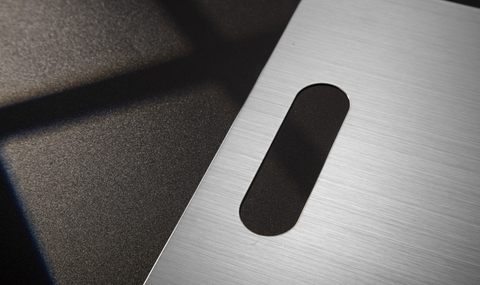
 Titanium cutting boards are popular for commercial and outdoor use due to their durability and non-porous surface.
Credit: wauffle.com
Titanium cutting boards are popular for commercial and outdoor use due to their durability and non-porous surface.
Credit: wauffle.com
The Science of Knife Dulling on Hard Surfaces
Knife dulling is not just about wear and tear from cutting food—it is directly tied to the relative hardness of your cutting surface. All knife blades have a thin, sharpened edge formed by a beveled angle; when you cut on a surface harder than the steel of your blade, microscopic chunks of metal are shaved off the edge with every stroke, leading to rapid dulling and micro-chipping that requires aggressive sharpening to fix.
To measure this, material scientists use the Mohs hardness scale, which ranks materials from 1 (softest, like talc) to 10 (hardest, like diamond). Standard kitchen knife steel (stainless or carbon) falls between 5.5 and 6.5 on this scale. Pure solid titanium ranks at ~6, roughly equivalent to mid-range knife steel, meaning it will cause slightly faster wear than softer surfaces. The TiN coating on most consumer titanium boards, however, ranks at ~9—nearly as hard as sapphire, and far harder than any kitchen knife blade.
In practice, this means even a titanium board that feels smooth to the touch will act as a mild abrasive on your knife edge with every cut. Home cooks who use TiN-coated titanium boards for daily meal prep report needing to sharpen their knives 2-3 times more often than when using wooden boards, per feedback from professional chef communities. Pushing down hard while cutting accelerates this wear, as increased friction creates more contact between the blade and the hard surface.
 Micro-chipping like this accumulates over time, leading to a noticeably duller blade.
Credit: www.reddit.com
Micro-chipping like this accumulates over time, leading to a noticeably duller blade.
Credit: www.reddit.com
Titanium vs. Other Common Cutting Board Materials
To put titanium’s impact on knives in context, it helps to compare it to the most popular cutting board materials on the market. The table below breaks down key factors to consider:
| Material | Mohs Hardness | Knife Impact | Durability | Hygiene | Best Use Case |
|---|---|---|---|---|---|
| Titanium (solid) / TiN-coated | 6 (solid) / 9 (coated) | High wear, micro-chipping on coated models | Extremely high, scratch and dent resistant | Excellent, non-porous, no deep grooves for bacteria | Commercial kitchens, outdoor cooking, raw protein prep |
| End-grain hard maple | 2-3 | Minimal wear, cushions blade impact | High with proper maintenance (oiling) | Good, self-healing surface resists deep scratches | Everyday home cooking, precision tasks with high-end knives |
| Bamboo | 4-5 | Moderate wear, harder than softwoods | Very high, eco-friendly | Good, but can develop deep scratches over time | Budget-friendly everyday use, light meal prep |
| HDPE Plastic | 2-3 | Minimal wear, but scratches easily | Low, requires frequent replacement | Poor, scratches harbor bacteria | Light meal prep, dishwasher-safe convenience |
| Glass/Ceramic | 6.5-7 | Severe wear, rapid dulling | Extremely high, stain resistant | Excellent, non-porous | Decorative use only, not recommended for actual food prep |
As the table shows, glass and ceramic boards are even worse for knife edge retention than coated titanium, due to their extreme hardness. End-grain wood remains the gold standard for preserving blade sharpness, as its soft, porous structure absorbs impact from the knife edge and self-heals small cuts over time.
Debunking Common Myths About Titanium Boards and Knife Dulling
Misinformation about titanium cutting boards is widespread online, leading many buyers to make uninformed decisions. Let’s clear up the most common myths:
- Myth: Titanium is softer than knife steel, so it won’t dull blades. Fact: Pure solid titanium is roughly the same hardness as mid-range kitchen knife steel, but most consumer "titanium" boards have a TiN coating that is far harder than any knife blade, causing rapid micro-chipping.
- Myth: All titanium cutting boards are the same. Fact: Solid titanium boards are rare and extremely expensive; most affordable models are coated aluminum, with a much harder surface that is far more abrasive to knives.
- Myth: Dulling only happens with frequent use. Fact: Even occasional use on a TiN-coated board will cause faster edge wear than a wooden board, as each cut removes microscopic amounts of steel from the blade.
- Myth: You can’t use titanium boards without ruining your knives. Fact: If you have a solid titanium board and only use it for non-precision tasks (like slicing bread or breaking down large cuts of meat), and you hone regularly, you can mitigate dulling. It is still not ideal for high-end carbon steel knives, however.
When a Titanium Cutting Board Is Actually a Good Choice
Titanium boards are not a bad product—they just are not ideal for every use case. There are several scenarios where their benefits outweigh the risk of faster knife dulling:
- If you frequently prepare raw meat, poultry, or fish and need a surface that is easy to sanitize fully, with no risk of absorbing bacteria in deep grooves. Per FDA food safety guidance, properly maintained wooden boards are safe for food prep, but titanium requires far less upkeep for high-hygiene environments.
- For outdoor cooking (camping, grilling) where a lightweight, rust-proof board is more valuable than edge preservation.
- For tasks that do not require a razor-sharp edge, such as slicing bread, cutting hard-skinned produce like squash, or breaking down large cuts of meat with a cleaver.
- For commercial kitchens where cross-contamination risk is a higher priority than the cost of more frequent knife sharpening.
If you fall into one of these categories, a titanium board can be a useful addition to your kitchen, as long as you pair it with a softer board for precision tasks.
How to Protect Your Knives If You Use a Titanium Board
If you already own a titanium cutting board or prefer to use one for specific tasks, these practical tips will minimize knife dulling and extend the life of your blades:
- Reserve it for compatible tasks only: Avoid using your titanium board for fine dicing, filleting, or slicing delicate herbs with your best chef’s knife. Use it only for tasks that do not require a razor-sharp edge.
- Hone regularly: Use a honing steel every 2-3 uses to realign the blade edge, which reduces micro-chipping and the need for aggressive sharpening. The University of Minnesota Extension recommends this practice for all kitchen knives, especially those used on hard surfaces.
- Skip serrated knives: Serrated edges have more contact points with the hard surface, so they dull even faster than straight-edge blades when used on titanium.
- Avoid downward pressure: Let the knife do the work—pushing down hard while cutting increases friction and accelerates edge wear on any surface, but especially on hard titanium.
- Pair with a softer board for precision work: Keep an end-grain wood or plastic board on hand for tasks where you need a sharp, precise edge, so you are not using the titanium board for every meal.
Frequently Asked Questions
Do titanium cutting boards dull knives faster than wood?
Yes, in most cases. Most consumer titanium cutting boards have a titanium nitride (TiN) coating with a Mohs hardness of 9, far harder than the 5.5-6.5 Mohs rating of standard kitchen knife steel. Even solid titanium boards are roughly the same hardness as most knife blades, so they cause faster micro-chipping and edge wear than softwood boards, which have a natural give that cushions the blade.
What cutting board material is gentlest on knives?
End-grain hard maple wood is widely considered the gold standard for knife preservation. Its soft, porous surface and self-healing grain structure absorb impact from the blade, minimizing edge wear. It also resists deep scratches that can harbor bacteria when properly maintained.
Can you sharpen knives that have been dulled on a titanium board?
Yes, but you may need to use a more aggressive sharpening method (like a whetstone instead of a honing rod) to repair micro-chips in the edge. Frequent sharpening will shorten the overall lifespan of your knife over time, so it is best to avoid regular use on hard surfaces if you want to preserve your blade long-term.
Are there any titanium cutting boards that won’t dull knives?
Solid, uncoated titanium cutting boards are less likely to cause rapid dulling than TiN-coated models, as their hardness is roughly equivalent to mid-range knife steel. Even then, they are still not as gentle as wood or soft plastic, so they are not recommended for high-end, carbon steel knives that require frequent edge preservation.
Final Verdict: Are Titanium Cutting Boards Right for You?
The short answer is yes: most titanium cutting boards, especially TiN-coated consumer models, will dull your knives faster than wood, bamboo, or plastic, due to their extremely hard surface. For home cooks who use their best knives for daily precision tasks like dicing, slicing, and filleting, a softwood or end-grain wooden board is the far better choice for preserving your blade’s edge.
That said, titanium boards have clear advantages for specific use cases: they are unmatched for high-hygiene environments, outdoor cooking, and raw protein prep, where their non-porous, scratch-resistant surface is a bigger benefit than the trade-off of more frequent sharpening. If you do choose to use a titanium board, follow the tips above to minimize damage to your knives, and always reserve your sharpest blades for softer surfaces.
If you’re ready to protect your knife investment, start by reserving your titanium board for non-precision tasks like cutting raw meat or bread, and pair it with a softwood board for dicing, slicing, and filleting. For more tips on keeping your kitchen tools in top condition, browse our full library of kitchen maintenance guides.
 Many commercial titanium boards feature a textured surface for grip, which can increase abrasion on knife edges.
Credit: www.amazon.com
Many commercial titanium boards feature a textured surface for grip, which can increase abrasion on knife edges.
Credit: www.amazon.com
At the end of the day, the best cutting board for your kitchen depends on your top priorities: if preserving razor-sharp knife edges is your main concern, a soft end-grain wood or thick plastic board is the clear winner. If food safety, durability, and low maintenance matter more, a titanium board can be a practical choice for specific tasks, as long as you pair it with a softer surface for precision prep. No matter what material you choose, regular knife maintenance and proper cutting technique will always extend the life of your blades more than any single board choice.
Per USDA food safety recommendations, non-porous surfaces like titanium require less frequent deep sanitization than porous wooden boards, which can develop deep grooves that harbor bacteria over time USDA Food Safety and Inspection Service. Keeping your cutting board—regardless of material—sanitized between uses is a critical part of kitchen food safety, and a dedicated scrub brush for kitchen surfaces makes quick work of food residue without scratching delicate surfaces like end-grain wood. If you use multiple boards for different tasks (like one for raw meat and another for produce), you can even engrave a cutting board to mark each one clearly, reducing cross-contamination risk for your household.
For families with young children, securing heavy cutting boards and sharp knives out of reach with childproof cabinet locks adds an extra layer of protection beyond just blade care. If you store prep tools in lower drawers, drawer latches for toddlers can prevent unsupervised access to sharp edges. For quick cleanup of small crumbs or sticky residue after prepping produce, a handled dish scrub brush is a convenient alternative to larger cleaning tools, making post-meal tidying faster.
For more guidance on keeping your kitchen tools in peak condition, check out our resources on cutting board care and maintenance, choosing the right no-drill child-proof locks to keep sharp tools out of reach of little ones, and picking a heavy-duty kitchen cleaning brush to keep all your surfaces sanitized after every use.

Hi, I’m Daniel Brooks—a food lover and kitchen gear enthusiast. I enjoy testing cookware, utensils, and gadgets to see what really works in everyday cooking. At PlugChef.com, I share honest reviews, comparisons, and simple guides to help you choose the best tools for a safer, smarter, and more enjoyable kitchen.
Related posts:
 Pull Out Spice Racks for Kitchen Cabinets: Maximize Space
 How to Organize under Your Bathroom Sink: Expert Tips
 How to Organize a Closet Pantry: Master Your Space
 Kamenstein Revolving Spice Rack 20 Jar: Ultimate Kitchen Organizer
 Large Woven Basket Wall Decor: Transform Your Space
 Drying Rack Dishes Over Sink: Maximize Kitchen Space

