

A slow-draining or fully clogged sink pipe is one of the most common and frustrating household plumbing issues. Water pools in the basin, foul odors rise from the drain, and the problem seems to get worse by the day. Before you call a plumber and pay for an emergency service call, know this: most minor to moderate sink pipe blockages can be fixed in 10 to 30 minutes with simple household items and no special plumbing skills. This guide covers fixes for both kitchen and bathroom sink pipe blockages, with specific guidance for each common clog type, so you can get your sink running like new again without the hassle or expense of a professional visit.
If you’re dealing with a slow drain that’s not fully clogged, start with the simplest methods first to avoid unnecessary work. For clogs that have fully blocked water flow, skip straight to the plunger or drain snake steps for faster results.
What Causes Sink Pipe Blockages First?
Understanding what’s causing your clog will help you choose the most effective fix, and prevent future blockages from forming. The most common causes of sink pipe clogs fall into four categories:
Grease, Fats, and Food Debris
Grease, fats, and food debris are the leading cause of kitchen sink clogs: when cooled, liquefied grease solidifies into a waxy coating on pipe interiors, binding with food scraps to create a dense, slow-draining obstruction. Even small amounts of grease build up over time, and combined with starchy food particles like potato peels or rice, can form a nearly impenetrable clog. For tough grease buildup on kitchen countertops and stovetops, our heavy-duty grease spray cuts through hardened grease without harsh abrasives.
Hair and Soap Scum
Hair and soap scum are the most common cause of bathroom sink clogs. Hair strands catch on small imperfections or joints in the pipe, then bind with soap scum, dead skin cells, and personal care product residue to form a dense, fibrous mat that blocks water flow. Long hair, pet hair, and thick conditioners make this type of clog especially stubborn.
Small Foreign Objects
Small items like jewelry, bottle caps, cotton swabs, hair ties, or even small toys that fall down the drain can get lodged in the P-trap or deeper in the pipe, creating a complete obstruction that cannot be cleared with liquid or plunger methods.
Mineral Buildup from Hard Water
In areas with hard water (high calcium and magnesium content), mineral deposits accumulate on pipe walls over time, narrowing the drain diameter and reducing water flow until a full blockage occurs. This is especially common in older homes with galvanized steel pipes, according to the U.S. EPA residential plumbing guidelines.
 A tight seal between the plunger cup and drain surface is required for effective suction
Credit: https://www.youtube.com/watch?v=92JWwZuH_Jw
A tight seal between the plunger cup and drain surface is required for effective suction
Credit: https://www.youtube.com/watch?v=92JWwZuH_Jw
Essential Tools and Materials for Unclogging Sinks
Most minor clogs require tools you likely already have at home. For more stubborn blockages, a low-cost drain snake is the only special tool you’ll need. A hand drain snake costs $5 to $15 at most hardware stores, compared to $150 to $300 for a standard plumber visit for a clogged sink, making DIY the most cost-effective option for most minor to moderate clogs.
| Tool/Material | Purpose | Best Use Case |
|---|---|---|
| Standard cup plunger | Creates suction to dislodge shallow clogs | All sink types, minor to moderate blockages |
| Hand drain snake (auger) | Reaches 2-6 feet into pipes to break up or retrieve deep clogs | Clogs beyond the P-trap, stubborn hair/grease obstructions |
| Baking soda | Mild abrasive and natural deodorizer that breaks down organic buildup | Routine maintenance, minor clogs, neutralizing odors |
| White distilled vinegar | Acidic solution that fizzes with baking soda to dissolve grime | Paired with baking soda for natural unclogging |
| Adjustable wrench | Loosens slip nuts on the P-trap to access trapped debris | Clogs located in the under-sink trap |
| Bucket | Catches water and debris when removing the P-trap | All manual pipe cleaning tasks |
| Rubber gloves | Protects skin from bacteria, debris, and chemical cleaners | All unclogging methods |
| Heat-resistant gloves | Protects skin from boiling water burns | Hot water flushing methods |
| Fine-mesh drain strainer | Catches hair, food scraps, and debris before they enter pipes | Preventative maintenance |
Quick & Easy DIY Fixes for Sink Pipe Blockages
The methods below are ranked from simplest (and fastest) to more involved, so start with the first option and work your way down if the clog persists.
1. Boiling Water Flush (for grease clogs, metal pipes only)
This method works best for kitchen sink clogs caused by hardened grease or soap scum, as the high heat melts the waxy obstruction.
- Bring 2-3 cups of water to a rolling boil on the stove.
- Slowly pour the boiling water down the drain in a steady stream, pausing every few seconds to let the heat work on the clog.
- Wait 5-10 minutes, then run hot tap water to check drainage. Important notes: Only use this method for metal pipes; prolonged exposure to boiling water can warp PVC or PEX piping, so use warm (not scalding) water for plastic pipes. Do not use this method if you recently used chemical drain cleaners, as the reaction can cause hot water to splash back. If the clog is caused by hair or soap scum, boiling water will not be effective, so move to the next method. A common mistake is pouring boiling water too quickly, which can cause burns; pour slowly to avoid splashing.
2. Baking Soda and Vinegar Fizz (natural, all pipe types)
This non-toxic method is safe for all pipe types, including PVC and septic systems, and works for minor clogs as well as routine deodorizing.
- Remove any standing water from the sink with a cup or bucket.
- Pour ½ cup of baking soda directly down the drain, making sure it goes past the sink strainer if you have one.
- Follow with ½ cup of white distilled vinegar; you will see immediate fizzing as the two react to break down organic grime.
- Cover the drain with a stopper or wet cloth to contain the reaction, and let it sit for 15-20 minutes. For tough clogs, let the mixture sit overnight for maximum effect.
- Flush the drain with a pot of hot (not boiling for PVC) water to wash away dissolved debris.
3. Plunger Method (for all shallow to moderate clogs)
A standard cup plunger (not a flange plunger, which is designed for toilets) is the most effective tool for dislodging clogs that are located near the drain opening.
- Fill the sink with 1-2 inches of water to create a seal around the plunger cup.
- Place the plunger firmly over the drain, making sure the cup is fully seated to create a tight suction seal. If you have a double sink, plug the second drain with a wet cloth to contain suction.
- Push down on the plunger handle firmly, then pull up quickly 10-15 times, maintaining the seal the entire time.
- Remove the plunger and check drainage; if water still pools, repeat the process 2-3 more times.
- Flush with hot water to clear any remaining debris.
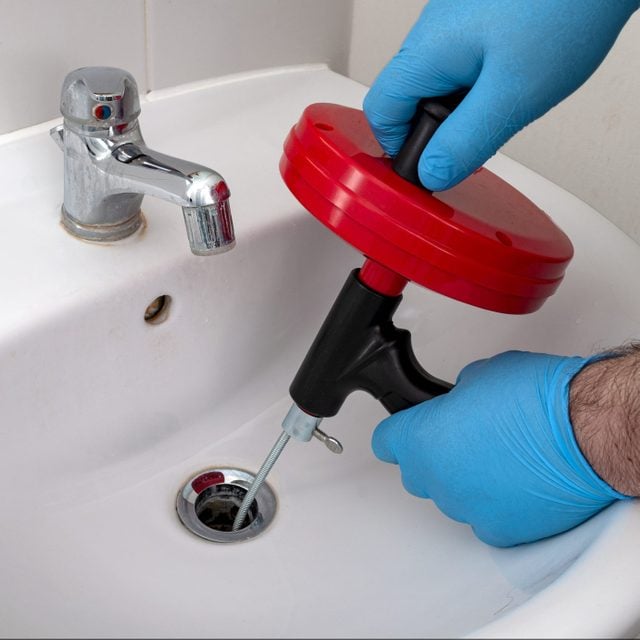
4. Hand Drain Snake (for deep, stubborn clogs)
If plunging doesn’t work, a hand drain snake can reach deep into pipes to break up or retrieve clogs that are located beyond the P-trap.
- Remove the sink stopper and strainer to access the drain opening.
- Feed the end of the snake into the drain, turning the handle clockwise as you push it deeper into the pipe.
- When you feel resistance (the clog), continue turning the handle to break up the obstruction, or pull the snake back to retrieve hair or debris caught on the coil.
- Repeat until the snake passes through the clog with no resistance.
- Flush the drain with hot water to wash away remaining particles. For clogs located in the P-trap, you can also feed the snake up through the opening under the sink after removing the trap.
 A hand drain snake can reach 2-6 feet into pipes to dislodge clogs that plungers cannot reach
Credit: www.ars.com
A hand drain snake can reach 2-6 feet into pipes to dislodge clogs that plungers cannot reach
Credit: www.ars.com
5. P-Trap Manual Cleaning (for trap-specific clogs)
The P-trap is the U-shaped pipe section under your sink that holds a small amount of water to block sewer gases from entering your home; it is also the most common spot for clogs to get stuck.
- Clear out any items under the sink, and place a small bucket directly under the P-trap.
- Use an adjustable wrench to loosen the slip nuts on both ends of the P-trap (turn counterclockwise). For plastic traps, you may be able to loosen them by hand.
- Carefully pull the P-trap free, and empty any water and debris into the bucket.
- Use an old toothbrush or small scrub brush to clean out any gunk stuck inside the trap, then rinse it with hot water.
- Reattach the P-trap, tightening the slip nuts by hand first, then giving them a quarter turn with the wrench to create a watertight seal. Do not over-tighten, as this can crack plastic traps.
- Run hot water to check for leaks and clear drainage. A common mistake is forgetting to place a bucket under the trap, which leads to dirty water spilling under your sink.
 The P-trap is the most common location for sink clogs to get trapped
Credit: www.familyhandyman.com
The P-trap is the most common location for sink clogs to get trapped
Credit: www.familyhandyman.com
6. Wire Hanger Hack (for minor hair clogs, no special tools needed)
If you don’t have a drain snake, a wire coat hanger works in a pinch for minor hair clogs located near the drain opening.
- Straighten the hanger, leaving only the hook end bent.
- Use pliers to straighten the hook slightly so it can fit down the drain.
- Feed the hook end into the drain, twisting and pushing it gently to catch hair and debris.
- Pull the hanger out, wipe off the gunk, and repeat until no more hair comes out.
- Flush with hot water to clear remaining particles. Note that this method only works for shallow clogs; it will not reach deep pipe blockages.
When (and How) to Use Chemical Drain Cleaners Safely
Chemical drain cleaners should be a last resort for stubborn clogs that DIY methods cannot clear, as they can damage pipes, harm septic systems, and pose serious health risks if misused. If you choose to use a chemical cleaner, follow the guidance below to use it safely and effectively.
Types of Chemical Drain Cleaners
Not all chemical cleaners are created equal, and using the wrong type for your clog or pipe type can cause permanent damage:
| Cleaner Type | Active Ingredients | Best For | Key Considerations |
|---|---|---|---|
| Caustic (alkaline) | Lye (sodium hydroxide), bleach | Grease, soap scum, and food-based clogs in metal or plastic pipes | Works quickly, but can corrode older metal pipes and damage septic bacteria if overused |
| Oxidizing | Bleach, peroxides | Hair, paper, and organic clogs | Less corrosive than caustic cleaners, but still harsh on older plumbing |
| Acid | Sulfuric acid, hydrochloric acid | Severe, deep clogs in metal pipes only | Extremely corrosive, can melt plastic pipes and cause severe burns; avoid for most residential use |
Critical Safety Precautions
- Always wear thick rubber gloves and safety goggles to avoid skin and eye contact; acidic and caustic cleaners can cause severe burns in seconds.
- Work in a well-ventilated area (open windows, run an exhaust fan) to avoid inhaling toxic fumes, which can cause respiratory irritation.
- Never mix chemical drain cleaners with other products, including vinegar, bleach, or other drain cleaners; mixing can cause violent chemical reactions that release toxic gas or cause explosions.
- Always follow the product label instructions exactly: do not use more than the recommended amount, and never leave the cleaner in pipes longer than directed.
- Keep cleaners away from children, pets, and food preparation surfaces; store them in a locked cabinet out of reach.
Environmental Impact and Septic System Safety
Chemical drain cleaners make up a significant portion of household hazardous waste in U.S. landfills, as residual cleaner can leach into groundwater and harm aquatic life. The University of Minnesota Extension's guide to drain cleaners recommends using only enzyme-based cleaners for homes with septic systems to avoid killing the beneficial bacteria needed to break down waste. To reduce environmental impact, opt for enzyme-based cleaners for routine maintenance, reserve harsh chemicals for only the most stubborn clogs, and never pour leftover cleaner down the drain or toilet. Always follow local hazardous waste disposal guidelines for unused products. Enzyme-based cleaners are also a safe, effective option for eliminating drain odors, as our odor-fighting drain solution demonstrates.
Prevent Future Sink Pipe Blockages
Regular preventative maintenance is the most effective way to avoid costly and inconvenient clogs. Follow these habits to keep your sinks draining freely year-round:
Daily and Weekly Habits
- Never pour grease, fats, or cooking oil down the drain: instead, pour cooled grease into a disposable container and throw it in the trash. Even small amounts of grease build up over time to cause major clogs.
- Use a drain strainer in every sink: Choose a fine-mesh strainer for kitchen sinks to catch food scraps, and a hair-catching strainer for bathroom sinks to catch hair and soap scum. Empty the strainer into the trash after every use to prevent buildup.
- Run hot water down the drain for 30 seconds after every use: This flushes away small debris before it can stick to pipe walls. For kitchen sinks, run hot water while you wash dishes to rinse away grease.
- Avoid putting fibrous or starchy foods down the garbage disposal: Things like celery, onion skins, potato peels, and coffee grounds can tangle in the disposal or clump together to create clogs. Throw these in the trash instead. For deeper garbage disposal cleaning that removes embedded food particles and odor-causing bacteria, use a dedicated disposal deodorizing treatment once a month for best results.
Monthly Maintenance Routine
- Do a baking soda and vinegar flush once a month: Follow the steps from the DIY section to break down minor organic buildup before it becomes a full clog.
- For garbage disposals, grind ice cubes and citrus peels once a month: Ice sharpens the disposal blades and scours the interior, while citrus peels deodorize and break down grease.
- Clean the P-trap every 3-6 months: Follow the manual cleaning steps to remove any buildup that has accumulated in the trap before it causes a clog.
Upgrade Your Drain Protection
- Install a drain guard with a fine mesh for bathroom sinks: These catch most hair before it enters the drain, reducing hair clogs significantly.
- For kitchen sinks, use a sink splash guard that catches small food scraps: These are inexpensive, easy to clean, and prevent food from going down the drain.
- If you have hard water, consider a whole-home water softener: This reduces mineral buildup in all your pipes, extending their lifespan and reducing clog risk. Mineral deposits can also build up on sink fixtures and appliances; our stain-removing all-purpose cleaner is safe for most surfaces and dissolves hard water stains quickly.
Signs You Need to Call a Professional Plumber
DIY methods work for most minor to moderate clogs, but certain signs indicate a deeper, more serious plumbing issue that requires professional equipment and expertise to fix. Call a licensed plumber if you notice any of the following:
Persistent Recurring Clogs
If you unclog a drain and it clogs again within a week, there is likely a deep obstruction in the main sewer line, or a pipe is misaligned, damaged, or collapsing. DIY methods will only provide temporary relief for these issues, and delaying professional repair can lead to more costly damage down the line.
Multiple Drains Clogging Simultaneously
If your kitchen sink, bathroom sink, and toilet all drain slowly at the same time, this is a sign of a blocked main sewer line, which requires professional motorized augers or hydro-jetting equipment to clear.
Gurgling Noises or Water Backup
If you hear gurgling sounds when you run water, flush the toilet, or use the washing machine, this indicates air is trapped in the pipes from a deep clog, which can lead to sewage backups if not addressed. If water backs up into your bathtub or shower when you run the washing machine, this is a sign of a severe main line clog that requires immediate attention to avoid water damage and health hazards.
Leaks or Water Damage Under the Sink
If you notice water pooling under your sink after unclogging, or if pipes are corroded or cracked, you need a plumber to repair the damage to avoid mold, rot, and structural water damage. If you notice water pooling under your sink, start by drying the area with a clean cloth, then use a grease-cutting surface cleaner to remove any grime that could be masking the source of the leak while you wait for a plumber.
Frequently Asked Questions
How long does it take to unclog a sink pipe?
Minor clogs can be cleared in 5-10 minutes with boiling water, baking soda and vinegar, or a plunger. Moderate clogs that require a drain snake or P-trap cleaning take 15-30 minutes. Severe clogs that require a plumber may take a few hours to fix, depending on the location of the obstruction.
Can I use chemical drain cleaners on all pipe types?
No. Chemical drain cleaners are safe for most metal and PVC residential pipes, but they can corrode older galvanized steel pipes, damage septic systems, and melt plastic pipes if misused. They should only be used as a last resort, and never on garbage disposals with plastic components.
Why does my sink clog again after I unclog it?
Recurring clogs are usually caused by undiagnosed deep obstructions, pipe damage, mineral buildup from hard water, or poor drain habits (like pouring grease down the drain). If clogs return within a week, you likely have a main line issue that requires professional inspection.
Is it safe to use a drain snake on PVC pipes?
Yes, as long as you use a hand snake (not a motorized auger) and feed it gently into the pipe. Avoid forcing the snake, as this can scratch or crack PVC piping. For deep clogs in PVC pipes, it is best to call a plumber to avoid damage.
Can I prevent sink clogs with homemade drain cleaners?
Yes. A monthly mix of ½ cup baking soda, ½ cup vinegar, and a flush of hot water is a safe, effective way to break down minor organic buildup and prevent clogs, and it is safe for all pipe types and septic systems.
Conclusion
Most sink pipe blockages are fixable with simple, low-cost DIY methods that take less than 30 minutes, no plumber required. The key to avoiding clogs is consistent preventative maintenance: avoid pouring grease down the drain, use drain strainers, and do a monthly baking soda and vinegar flush to break down minor buildup before it becomes a full obstruction. If you do encounter a persistent clog, start with the simplest methods first and work your way up to more involved techniques to avoid unnecessary damage to your pipes.
For more low-cost, DIY kitchen maintenance tips to avoid costly plumbing repairs, check out our guide to steam cleaning kitchen appliances for simple, chemical-free cleaning methods that keep your kitchen running smoothly.

I’m Abby Lu, a passionate home cook who loves simplifying everyday meals. At PlugChef.com, I share product reviews and cooking guides to help you find the best tools for your kitchen.
Related posts:
 Pull Down Under Cabinet Spice Rack: Maximize Your Space
 How to Organize T Shirts on a Shelf: Expert Tips
 Navy Bean And Ham Recipes: Delicious Comfort Food Ideas
 Cherry Pistachio Chocolate Ice Cream: Irresistible Summer Delight
 How to Freeze Bacon Strips: Easy Tips for Freshness & Flavor
Iced Coffee With French Press: Ultimate Guide for Bold Refreshment
How to Freeze Bacon Strips: Easy Tips for Freshness & Flavor
Iced Coffee With French Press: Ultimate Guide for Bold Refreshment

