
Have you ever stopped to think about the material of your cooking utensils? If you’re like most people, you probably haven’t given it much thought.
But choosing the right material can make a big difference in your cooking experience. Whether you’re whipping up a quick breakfast or preparing a gourmet dinner, the utensils you use can affect everything from taste to texture. Imagine feeling the satisfaction of cooking with tools that enhance your meals and make cooking a joy rather than a chore.
You’re about to discover which materials can transform your kitchen into a space of culinary creativity and efficiency. Keep reading to find out how the right materials can elevate your cooking game and make every meal a masterpiece.
Stainless Steel
Stainless steel is a top choice for cooking utensils. It offers durability and resists rust and stains. Its non-reactive nature ensures flavors stay pure, making it ideal for everyday cooking.
When choosing the best material for your cooking utensils, stainless steel often tops the list. It’s renowned for its durability, ease of maintenance, and sleek appearance. But what makes stainless steel a preferred choice in kitchens worldwide? Let’s dive into its key attributes.Durability And Strength
Stainless steel utensils are incredibly durable. They can withstand the wear and tear of daily cooking without bending or breaking. Unlike wooden or plastic utensils, they don’t absorb odors or stains. This makes them perfect for a variety of cooking tasks. Have you ever tried to flip a heavy steak with a flimsy spatula? Stainless steel provides the strength you need. It won’t warp under pressure, ensuring longevity.Heat Conductivity
Stainless steel is a poor heat conductor, which is actually an advantage for utensils. You won’t burn your hand if you leave a stainless steel spoon in a hot pot by mistake. This material is often combined with other metals like aluminum or copper in cookware to balance heat distribution. However, for utensils, it stands alone effectively. Have you noticed how quickly some utensils get hot? With stainless steel, that’s one less worry in your kitchen routine.Maintenance And Care
Caring for stainless steel utensils is simple. They are dishwasher safe, which saves you time after a long cooking session. However, hand washing can extend their lifespan. Use mild soap and a soft sponge to keep them looking new. Ever been annoyed by stubborn food sticking to your spatula? Stainless steel resists sticking, making clean-up a breeze. So, when considering your next kitchen addition, think about the long-term benefits stainless steel offers. Its combination of durability, safety, and low maintenance might be just what you need to elevate your cooking experience.
Credit: stahlkitchens.com
Cast Iron
Cast iron has been a favorite in kitchens worldwide. It offers durability and excellent cooking results. Many chefs trust cast iron for its unique qualities. This material is tough and long-lasting. It provides unmatched heat retention, seasoning benefits, and versatile cooking options. Let’s explore why cast iron stands out.
Heat Retention
Cast iron retains heat exceptionally well. It keeps your food warm for longer periods. This feature is ideal for slow-cooked meals. Stews and soups benefit greatly from its heat retention. Cast iron heats evenly across its surface. This ensures consistent cooking results every time.
Seasoning Benefits
Seasoning cast iron creates a natural non-stick surface. This process involves applying oil to the pan. The oil bonds with the iron during heating. Over time, seasoning improves the pan’s performance. It enhances flavor and prevents food from sticking. Properly seasoned cast iron lasts for generations.
Versatility In Cooking
Cast iron can handle various cooking methods. Use it for frying, baking, or roasting. It’s perfect for stovetop and oven use. You can even use it on a grill or campfire. Cast iron’s versatility makes it a valuable kitchen tool. It adapts to different recipes and cooking styles with ease.
Non-stick Coatings
Choosing the right material for cooking utensils is essential for safe and efficient cooking. Non-stick coatings like Teflon ensure easy food release and quick cleaning. Ceramic coatings offer a healthier option, free from harmful chemicals, providing durability and excellent heat distribution.
Cooking is an art, and like any artist, you need the right tools. Non-stick coatings have become a popular choice for cooking utensils, offering convenience and efficiency. They promise easy food release, making cooking and cleaning a breeze. But are they the best choice for your kitchen? Let’s dive into the specifics to help you decide.Ease Of Use
When you’re flipping pancakes or sautéing vegetables, non-stick coatings can feel like a lifesaver. Food slides off effortlessly, reducing the need for excess oil or butter. Imagine cooking an omelet without the frustration of it sticking to the pan. Non-stick surfaces can make your cooking experience smoother and more enjoyable.Health Considerations
Here’s where things get interesting. While non-stick coatings reduce the need for oil, you should consider what they are made of. Some coatings, like Teflon, can release harmful chemicals if overheated. If you’re health-conscious, look for newer non-stick technologies that are free from such risks. Your choice in cookware can impact your health, so make sure you’re informed.Cleaning And Maintenance
After a tasty meal, cleaning up is often the last thing you want to do. Non-stick cookware simplifies this task. A gentle swipe with a sponge is usually enough to remove food residues. However, non-stick surfaces can be delicate. Avoid abrasive cleaners or metal utensils that can scratch the coating. Keeping your utensils in top shape requires some care, but it pays off in longevity. Would you trade some durability for convenience? Non-stick coatings offer ease but come with their own set of considerations. The choice is yours, but it’s essential to weigh these factors carefully.Copper
Copper has long been a favorite material for cooking utensils. It boasts superior heat conductivity and a stunning aesthetic appeal. Despite its beauty and utility, copper requires special care. Understanding its benefits and care can enhance your cooking experience.
Superior Heat Conductivity
Copper conducts heat quickly and evenly. This means food cooks evenly without hot spots. Chefs love copper for its precise temperature control. It responds quickly to temperature changes. Whether simmering or searing, copper delivers consistent results.
Aesthetic Appeal
Copper utensils have a timeless, elegant look. Their warm, metallic luster adds charm to any kitchen. Over time, copper develops a unique patina. This natural aging enhances its rustic beauty. Many display copper pieces as kitchen decor.
Care Requirements
Copper requires regular maintenance to retain its shine. It tarnishes over time and needs polishing. Use gentle cleaners and soft cloths for polishing. Handwash copper utensils to prevent damage. Avoid using them with acidic foods. This can cause discoloration.
Silicone
Silicone is an excellent choice for cooking utensils due to its heat resistance and flexibility. It prevents scratches on cookware and withstands high temperatures, making it ideal for stirring and flipping. Plus, its non-stick surface ensures easy cleaning, enhancing the cooking experience.
Silicone is increasingly popular in kitchens around the world. Its colorful appearance and versatile nature make it a favorite among home cooks and professional chefs. But what makes silicone so special for cooking utensils? Let’s dive into its unique characteristics.Heat Resistance
Silicone can withstand high temperatures, often up to 500°F (260°C). This means you can use silicone spatulas or spoons without worrying about them melting or warping. Imagine stirring a hot soup without any concern about your utensil getting damaged—silicone delivers just that. You might have experienced the frustration of a wooden spoon absorbing heat or a plastic one warping. Silicone eliminates these worries, offering peace of mind during intense cooking sessions. So, could silicone be the heat-resistant hero your kitchen needs?Flexibility And Safety
Silicone is incredibly flexible, making it easy to maneuver around bowls and pots. Its soft texture ensures that it won’t scratch your non-stick pans or delicate surfaces. This flexibility is a game-changer if you’ve ever struggled to scrape batter from mixing bowls or flip delicate pancakes. Safety is another strong point. Silicone is non-toxic and doesn’t leach chemicals into food. If safety in your kitchen is a priority, silicone offers a reliable choice for protecting your meals from harmful substances.Limitations In Use
While silicone has numerous advantages, it also has some limitations. It’s not ideal for cutting or chopping tasks because it’s too flexible to apply force effectively. Have you tried using a silicone spatula to chop vegetables? It’s not the best tool for the job. Silicone may not be suitable for high-impact cooking tasks. It’s important to know when to opt for sturdier materials like metal or wood. Are you prepared to balance silicone’s flexibility with its limitations in your culinary adventures? Silicone utensils bring a blend of heat resistance, flexibility, and safety to your kitchen, with some limitations. Consider how these factors align with your cooking style.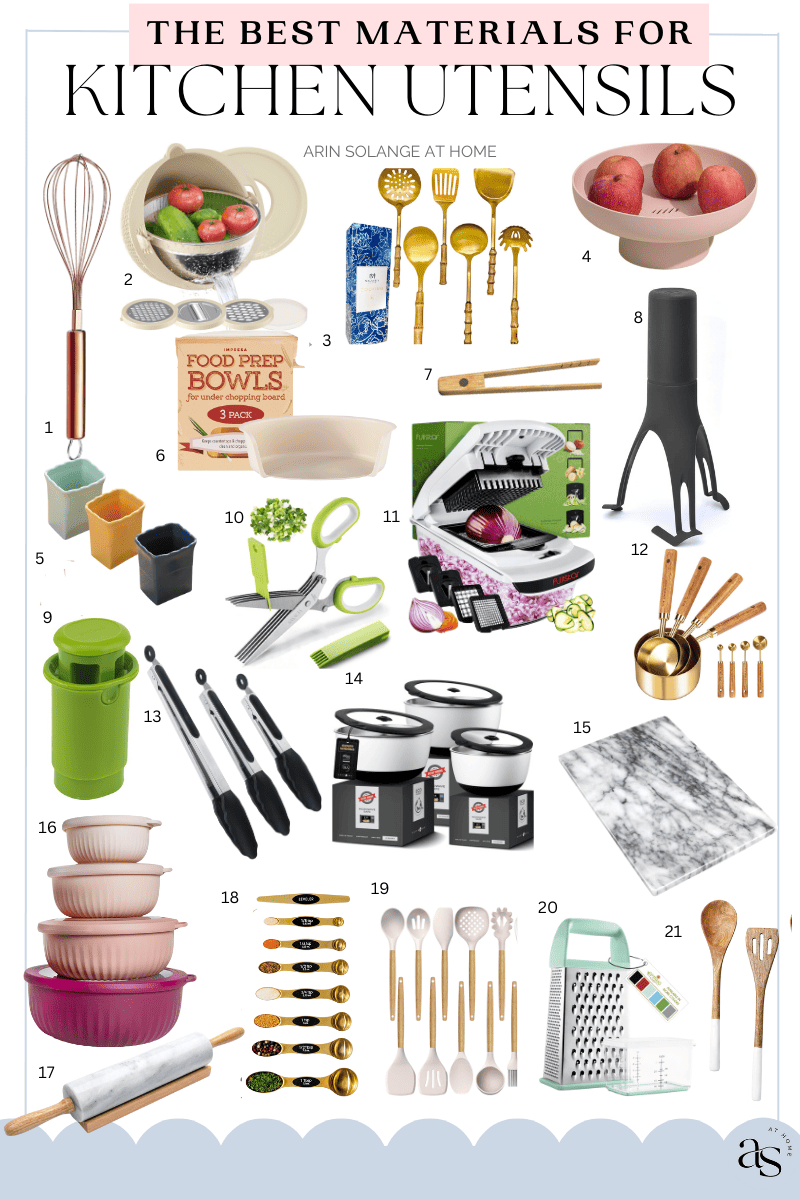
Credit: arinsolangeathome.com
Wood
Wooden cooking utensils hold a special place in many kitchens. Known for their natural charm and utility, wooden spoons and spatulas are timeless. They offer a balance of functionality and aesthetics. Many home cooks appreciate their rustic appeal. But what makes wood so special? Let’s explore its unique benefits.
Natural And Eco-friendly
Wood is a renewable resource. It makes a sustainable choice for cooking utensils. Unlike plastic, wood breaks down naturally. This reduces waste and environmental impact. Many wooden utensils are handcrafted. This adds a personal touch to your kitchen. Opt for utensils made from responsibly sourced wood. This supports sustainable practices.
Gentle On Cookware
Wooden utensils are gentle on pots and pans. They prevent scratches on non-stick surfaces. Metal utensils can harm your cookware. But wood preserves the integrity of your kitchenware. Wooden spoons don’t conduct heat. This keeps them cool to the touch. They are safe and comfortable to use.
Maintenance Tips
Proper care extends the life of wooden utensils. Avoid soaking them in water. This prevents warping and cracking. Wash them by hand with mild soap. Dry them immediately after washing. Occasionally, treat with food-safe oil. This keeps the wood hydrated and prevents drying. Store them in a dry place away from moisture.
Plastic
Plastic utensils are popular in many kitchens today. They are lightweight and easy to handle. These utensils are perfect for those new to cooking. Many people choose plastic for its versatility. But, it’s crucial to understand its benefits and drawbacks.
Affordability
Plastic cooking utensils are very affordable. They fit well into any budget. This makes them a great choice for families and students. Despite the low cost, they often last a long time. For many, this makes plastic a practical choice. You can easily replace them if they break.
Safety Concerns
Plastic utensils have some safety concerns. Heat can cause them to melt or warp. This may release harmful chemicals into food. Check for BPA-free labels on your utensils. This ensures safer cooking. Always avoid using plastic on high heat.
Best Uses
Plastic utensils are perfect for non-stick cookware. They prevent scratches and damage. Use them for stirring sauces or serving salads. They are great for young cooks learning in the kitchen. Use them with care to avoid heat-related issues.

Credit: ptal.in
Comparing Materials
Choosing the best material for cooking utensils is crucial for kitchen efficiency. Stainless steel offers durability and resistance to rust. Wood provides a gentle touch for non-stick surfaces. Silicone withstands high temperatures without scratching cookware. Each material has unique benefits, fitting different cooking needs and preferences.
Cooking utensils come in a variety of materials, each offering unique benefits and drawbacks. Whether you’re a seasoned chef or a cooking enthusiast, choosing the right material can make a noticeable difference in your cooking experience. Do you find yourself gravitating towards the classic appeal of stainless steel, or do the eco-friendly vibes of bamboo catch your eye? Let’s compare these materials by looking at their performance, longevity, cost, and environmental impact.Performance In Different Cooking Styles
Different cooking styles demand different utensil qualities. Stainless steel is excellent for high-heat cooking, like searing and frying, due to its durability and heat resistance. On the other hand, silicone utensils shine in baking and delicate cooking tasks. They won’t scratch your non-stick pans and are flexible enough for intricate mixing. Wooden utensils are great for stirring soups and sauces, offering a gentle touch that doesn’t react with acidic foods. Ever tried flipping pancakes with a bamboo spatula? It’s light and has a great feel, but not ideal for high heat. What cooking style resonates with your kitchen adventures?Longevity And Cost
Think about longevity and cost when selecting kitchen tools. Stainless steel is a frontrunner for durability, often lasting a lifetime without losing its shine. However, it comes with a higher price tag. Plastic utensils are budget-friendly but can wear down quickly, especially under high heat. Wooden utensils are mid-range in cost and offer decent longevity if properly cared for. Have you noticed how bamboo utensils can crack if left soaking in water? This highlights the need for careful maintenance. Is investing a bit more upfront for stainless steel worth the longevity it offers?Environmental Impact
Consider the planet when choosing your cooking utensils. Bamboo scores high for being renewable and biodegradable, making it a great choice for eco-conscious cooks. Plastic, while cheap, contributes to landfill waste and takes years to decompose. Stainless steel is recyclable, but its production is resource-intensive. Wooden utensils provide a natural option but come with the responsibility of ensuring sustainable sourcing. Have you ever thought about how your cooking choices affect the environment? Would you opt for a material that’s kind to Mother Earth? Whether you’re upgrading your kitchen tools or starting fresh, material choice is crucial. Evaluate your cooking style, budget, and environmental values to make informed decisions. What will you choose for your culinary creations?Frequently Asked Questions
What Is The Safest Material For Cooking Utensils?
Stainless steel and silicone are the safest materials for cooking utensils. They resist heat and are non-reactive. Bamboo is also a safe, eco-friendly option. Always ensure materials are food-grade and BPA-free to ensure safety. Choose high-quality utensils to avoid potential toxins in your cooking.
What Type Of Material Is Best For Utensils?
Stainless steel is the best material for utensils. It is durable, rust-resistant, and easy to clean. Stainless steel doesn’t react with food, ensuring safety and longevity. It’s also heat-resistant, making it ideal for cooking. Opt for high-quality stainless steel for the best performance and longevity.
What Is The Healthiest Choice For Cooking Utensils?
Choose stainless steel, cast iron, or silicone utensils for healthy cooking. These materials are non-toxic and durable. Avoid plastic and non-stick coatings that may release harmful chemicals. Opt for materials that withstand high temperatures and are safe for food contact to ensure healthier meals.
Is It Better To Cook With Wooden Or Silicone Utensils?
Wooden utensils offer a natural feel and are gentle on cookware. Silicone utensils resist heat and are non-stick. Choose wooden for tradition and silicone for easy cleaning. Both have advantages, but your preference depends on cooking style and cookware type.
Conclusion
Choosing the right material for cooking utensils can enhance your kitchen experience. Stainless steel offers durability and easy cleaning. Wood brings a natural feel and is gentle on pans. Silicone provides flexibility and heat resistance. Each material has its unique benefits.
Consider your cooking style and preferences. Make sure your choice fits your needs. Good utensils lead to better cooking results. Explore options to find what suits you best. Your kitchen deserves the right tools. Happy cooking!

Hi, I’m Daniel Brooks—a food lover and kitchen gear enthusiast. I enjoy testing cookware, utensils, and gadgets to see what really works in everyday cooking. At PlugChef.com, I share honest reviews, comparisons, and simple guides to help you choose the best tools for a safer, smarter, and more enjoyable kitchen.
Related posts:
 What Type of Cooking Utensils are Safe: Expert Picks
 What Innovations Could Blenders Make: Unleashing Future Tech
 Smart Strategies to Organize a Small Kitchen: Maximize Space
 How to Organize a Kitchen Cabinet: Expert Tips & Tricks
 How to Organize Kitchen Drawers: Expert Tips and Tricks
 How to Organize a Corner Kitchen Cupboard: Expert Tips