
Have you ever wondered what makes a chef’s knife so special? Understanding the different parts of your knife can change the way you cook—and how you feel holding it.
When you know the key elements, you can choose the right knife, use it more safely, and even sharpen it like a pro. Ready to discover what’s behind your kitchen’s most important tool? Keep reading, and you’ll see your chef’s knife in a whole new light.

Credit: www.wekivaculinary.org
Blade
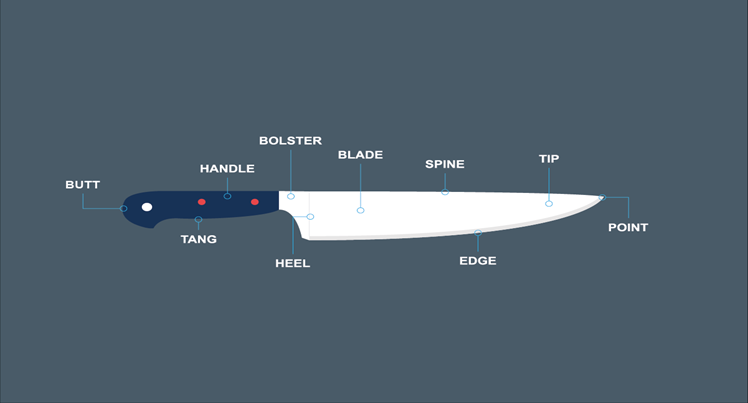
The blade is the heart of your chef’s knife. It’s where all the cutting, slicing, and dicing magic happens. Understanding its parts helps you handle your knife better and improve your cooking skills.
Tip
The tip of the blade is the sharp point at the front. It’s perfect for delicate tasks like trimming herbs or making intricate cuts.
If you’ve ever struggled to get that precise cut, using the tip can make a big difference. It’s also great for piercing foods like tomatoes without crushing them.
Edge
The edge is the sharp, cutting side of the blade. This part does the actual slicing and chopping.
Keeping the edge sharp is key. A dull edge forces you to press harder, increasing the chance of accidents and uneven cuts. You want your knife to glide through ingredients smoothly.
Spine
The spine is the thick, blunt top of the blade opposite the edge. It doesn’t cut but adds weight and balance to your knife.
You might use the spine to apply pressure when chopping hard vegetables. Some chefs even use it to crush garlic cloves safely.
Heel
The heel is the rear part of the blade near the handle. It’s the widest and strongest area, ideal for heavy chopping.
When you need power—like cutting through tough squash or bones—the heel is your go-to spot. It helps you work efficiently without straining your wrist.
Handle
The handle of a chef’s knife plays a vital role in control and comfort. It connects the user to the blade and affects cutting precision. A well-made handle reduces hand fatigue and improves safety during use.
Materials
Handles come in various materials. Common options include wood, plastic, and composite. Wood offers a classic look and good grip but needs care to avoid damage. Plastic handles are easy to clean and resist moisture. Composite materials combine durability and comfort. Each material affects the knife’s weight and balance.
Ergonomics
Ergonomic design fits the hand naturally. Curved shapes and smooth edges help prevent slipping. A good handle feels comfortable during long use. It reduces strain on fingers and wrist. Proper size and shape improve control and cutting accuracy.
Tang
The tang is the metal part inside the handle. Full tangs extend the blade metal through the handle. They provide strength and balance. Partial tangs are shorter and may be less durable. A secure tang helps keep the handle firmly attached to the blade.
Bolster
The bolster is a small but crucial part of a chef’s knife that often goes unnoticed. It is the thick junction between the blade and the handle. This section plays a vital role in balancing the knife and providing safety during use.
Purpose
The bolster adds weight to the knife, helping you maintain better control while chopping or slicing. It acts as a finger guard, preventing your hand from slipping onto the sharp blade. This safety feature can make a big difference, especially during fast, repetitive cutting tasks.
Have you ever felt your hand slide forward while cutting? A good bolster can stop that, making your work more secure and comfortable. It also strengthens the knife, adding durability at the point where the blade meets the handle.
Types
Not all bolsters are the same. Here are the common types you might encounter:
- Full Bolster:Extends along the entire width of the blade, offering maximum balance and finger protection. Often found on high-end knives.
- Partial Bolster:Covers only part of the blade’s width, making the knife lighter and easier to sharpen. Popular among professional chefs who prefer more blade exposure.
- No Bolster:Some knives skip the bolster entirely for a lighter feel and better maneuverability. This requires more skill and care to avoid injury.
Think about how you use your knife. Do you need extra weight and protection, or do you prefer a nimble blade? Your choice of bolster type can affect your cutting experience more than you might expect.

Credit: www.youtube.com
Rivets
Rivets hold the handle firmly to the blade of a chef’s knife. They provide strength and stability during cutting tasks. These small metal pins keep the knife durable and safe to use.
The rivets on a chef’s knife might seem like minor details, but they play a crucial role in the tool’s performance and longevity. These small, often overlooked components are pivotal in ensuring the handle stays firmly attached to the blade. Understanding their function and placement can enhance your appreciation for the craftsmanship behind a well-made knife.Function
Rivets serve a fundamental purpose in maintaining the integrity of a chef’s knife. They secure the handle scales to the tang, which is the part of the blade that extends into the handle. This connection is vital for ensuring stability and safety during use. Imagine slicing through a tough vegetable, and suddenly, the handle wobbles. The rivets prevent this by providing a solid, immovable joint. A firm grip and secure handle enhance cutting efficiency and reduce the risk of accidents.Placement
Typically, rivets are strategically placed along the handle to optimize balance and grip. Most chef’s knives will feature two to three rivets evenly spaced along the handle. This placement distributes force evenly, enhancing comfort during prolonged use. The positioning of rivets is not just about aesthetics; it’s about functionality. They need to be perfectly aligned to ensure the handle’s durability and longevity. When examining a knife, noticing well-placed rivets can be a good indicator of the knife’s overall quality. Have you ever noticed how some knives just feel right in your hand? The secret often lies in the meticulous placement of components like rivets. Next time you pick up a chef’s knife, take a moment to appreciate these small but significant elements.Pommel
The pommel is the small but crucial part at the very end of a chef’s knife handle. It might seem insignificant at first glance, but it plays a vital role in the knife’s overall function and feel. Understanding the pommel can help you choose a knife that suits your grip and cutting style perfectly.
Balance
The pommel helps to balance the knife by adding weight to the handle’s end. This balance affects how the knife feels in your hand during chopping or slicing. A well-weighted pommel can reduce hand fatigue and give you better control over your cuts.
Think about the last time you used a knife that felt too heavy at the blade or too light in the handle. Did you notice how it affected your precision or comfort? The pommel’s weight is a key factor in achieving that perfect balance.
Design
The design of the pommel varies widely between knives, from simple rounded shapes to decorative metal caps. Some pommels are flat, allowing the knife to rest securely on a surface without tipping over. Others may have textured or ergonomic designs to improve grip security.
Choosing a knife with a pommel design that fits your hand and cooking habits can improve your overall experience. Have you ever held a knife that felt awkward or slippery? The pommel design might be why.
Credit: myfoodiemymoodie.medium.com
Frequently Asked Questions
What Are The Main Parts Of A Chef’s Knife?
A chef’s knife has a blade, edge, spine, heel, bolster, tang, handle, and rivets. Each part plays a key role in cutting, balance, and comfort.
Why Is The Blade Important In A Chef’s Knife?
The blade is the cutting surface. Its shape, length, and material determine sharpness, precision, and durability for various kitchen tasks.
What Is The Function Of The Bolster In A Chef’s Knife?
The bolster provides balance and safety. It strengthens the knife and protects fingers from slipping onto the blade.
How Does The Handle Affect A Chef’s Knife Performance?
The handle offers grip and control. A comfortable, well-designed handle reduces hand fatigue and improves cutting accuracy.
Conclusion
A chef’s knife has many important parts. Each part helps with cutting, chopping, and slicing. Knowing these parts makes cooking easier and safer. A sharp blade, strong handle, and firm bolster all matter. Use your knife with care and keep it clean.
Understanding your knife helps you cook with confidence. Simple tools, great results.

Hi, I’m Daniel Brooks—a food lover and kitchen gear enthusiast. I enjoy testing cookware, utensils, and gadgets to see what really works in everyday cooking. At PlugChef.com, I share honest reviews, comparisons, and simple guides to help you choose the best tools for a safer, smarter, and more enjoyable kitchen.
Related posts:
 What Type of Cooking Utensils are Safe: Expert Picks
 What Innovations Could Blenders Make: Unleashing Future Tech
 Smart Strategies to Organize a Small Kitchen: Maximize Space
 How to Organize a Kitchen Cabinet: Expert Tips & Tricks
 How to Organize Kitchen Drawers: Expert Tips and Tricks
 How to Organize a Corner Kitchen Cupboard: Expert Tips