

When it comes to keeping your workplace safe, having the right first aid kit is not just a good idea—it’s a legal requirement. You might wonder what exactly OSHA expects from your first aid supplies and how to make sure your kit meets those standards.
Missing even one crucial item could put your team at risk and leave you open to penalties. You’ll discover the essential OSHA requirements for first aid kits, so you can protect your employees and stay compliant with the law. Keep reading to learn how to get it right the first time.

Credit: www.amazon.com
Osha Regulations
OSHA regulations set clear rules for workplace first aid kits. These rules ensure workers can get immediate help during injuries. Employers must follow these rules to keep the workplace safe. Understanding OSHA requirements helps avoid penalties and protect employees.
Overview Of Standards
OSHA requires employers to provide first aid kits at all worksites. The kits must contain essential supplies to treat minor injuries. The contents should match the workplace hazards and the number of workers.
According to OSHA Standard 29 CFR 1910.151, first aid kits must be accessible at all times. Employers should check kits regularly to replace used or expired items.
- Basic bandages and dressings
- Antiseptic wipes or solutions
- Adhesive tape
- Scissors and tweezers
- Disposable gloves
Importance Of Compliance
Following OSHA rules protects workers from severe injuries. Quick access to first aid can reduce the severity of accidents. Employers who comply avoid fines and legal issues.
Compliance also shows a commitment to worker safety. It creates a safer work environment and boosts employee trust. Regular training on first aid kit use is vital for readiness.

Credit: www.proguardsafety.my
First Aid Kit Contents
A well-stocked first aid kit is essential for workplace safety. It must meet OSHA requirements to ensure quick and effective response to injuries. The contents should cover a variety of minor emergencies. Proper supplies help reduce the severity of injuries and support immediate care.
Mandatory Items
- Adhesive bandages of various sizes
- Sterile gauze pads for wound dressing
- Adhesive tape to secure dressings
- Antiseptic wipes or solution to clean wounds
- Scissors and tweezers for removing debris
- Disposable gloves to prevent contamination
- CPR face shield or mask
- Burn treatment supplies
- Eye wash solution for eye injuries
- First aid instruction booklet
Recommended Supplies
- Elastic bandages for sprains and strains
- Cold packs to reduce swelling
- Thermometer to check body temperature
- Pain relief medication like aspirin
- Eye pads and eye cups
- Finger splints for immobilizing injuries
- Alcohol wipes for disinfecting tools
- Emergency blanket for shock or cold
- Burn gel or ointment
- Additional sterile dressings in various sizes
Workplace Assessment
Assessing the workplace is vital for meeting OSHA requirements for first aid kits. It ensures the kit matches the workplace’s needs and hazards. Employers must evaluate the environment carefully to provide effective first aid supplies.
Risk Evaluation
Identify hazards present in the workplace. These may include sharp tools, chemicals, or heavy machinery. Consider the likelihood and severity of injuries. The number of employees and work shifts also impact risks. This evaluation guides the choice of first aid items needed.
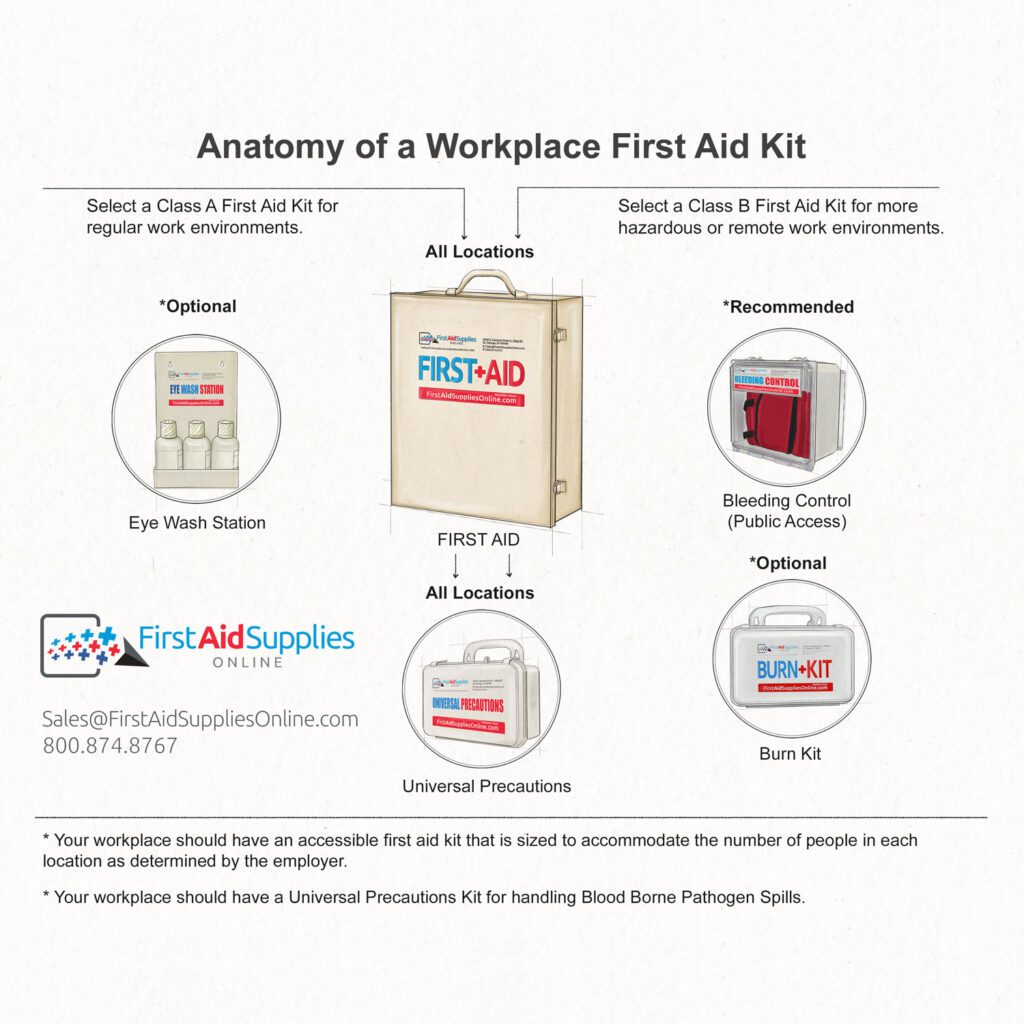
Customizing Kits
Standard first aid kits may not fit all workplaces. Customize kits based on the risk evaluation results. Include items specific to possible injuries, like burn cream or eye wash. Keep kits accessible and well-stocked at all times. Regularly review and update contents as workplace risks change.
Credit: firstaidsuppliesonline.com
Training Requirements
Training requirements for first aid kits under OSHA are essential to ensure that employees know how to respond effectively during emergencies. Proper training not only helps in handling injuries promptly but also reduces the severity of workplace accidents. Understanding what OSHA expects from your training programs can make a real difference in safety outcomes.
Employee Training
OSHA requires that employees who might need to use first aid kits receive appropriate training. This means you should provide clear instructions on how to use the supplies correctly and when to seek professional medical help.
Training should cover:
- Identifying different types of injuries and illnesses.
- Using first aid equipment such as bandages, antiseptics, and CPR masks.
- Understanding basic first aid principles and limitations.
Think about your workplace: are your employees confident in using the first aid kit? If not, their hesitation could cost valuable time during emergencies.
Emergency Response Procedures
Knowing how to use a first aid kit is just one part of the puzzle. OSHA emphasizes training on emergency response procedures to ensure employees know the full process during an incident.
This includes:
- How to assess the situation quickly and safely.
- When to call emergency services versus when to provide on-site aid.
- Steps to document the incident properly as required by OSHA.
Have you ever considered whether your team can handle a real emergency calmly and efficiently? Practicing these procedures regularly can build that confidence and improve response times dramatically.
Inspection And Maintenance
Keeping your first aid kits ready and reliable means regularly inspecting and maintaining them. OSHA requires that first aid kits be checked frequently to ensure all supplies are present, accessible, and in good condition. Overlooking this task can lead to missing or expired items when you need them most.
Regular Checks
Check your first aid kits at least once a month. Look for expired medications, empty or damaged packages, and missing items. Restock anything that is running low or has been used.
Pay special attention to items like antiseptic wipes, bandages, and pain relievers, as these can expire or degrade over time. Imagine needing a bandage during an emergency only to find it torn or soiled—regular checks prevent that frustration.
Have a designated person responsible for these inspections. This helps avoid confusion and ensures accountability. Would you trust your safety to a kit that hasn’t been inspected in six months?
Documentation Practices
Keep a log of every inspection to track when checks were done and what was replaced. This documentation helps you stay organized and proves compliance with OSHA requirements during audits.
Your inspection log can be a simple notebook or a digital spreadsheet. Include dates, the inspector’s name, and notes on any items added or removed. This record makes it easier to spot patterns, like frequently used supplies that may need larger quantities.
Sharing this documentation with your team encourages transparency. It also reminds everyone that safety is a continuous effort, not just a one-time setup. How often do you review your inspection logs to improve your first aid readiness?
Penalties And Consequences
Ignoring OSHA requirements for first aid kits can lead to serious penalties and consequences that affect your business and employees. Understanding these risks is crucial to keep your workplace safe and compliant. Let’s look at what you face if you don’t meet OSHA’s standards.
Non-compliance Risks
Failing to maintain proper first aid kits puts your workers at risk during emergencies. This can lead to increased injuries or delayed treatment, which impacts overall safety and productivity.
OSHA inspections often catch missing or inadequate first aid supplies. If your kit isn’t stocked according to OSHA guidelines, you could face citations that disrupt your operations and damage your reputation.
- Higher chances of workplace accidents escalating
- Employee distrust in safety measures
- Potential for costly downtime during inspections
Legal Implications
OSHA can issue fines for failing to comply with first aid kit requirements. These fines vary but often reach thousands of dollars depending on the severity and frequency of violations.
Legal troubles don’t stop at fines. You could be held liable if an employee suffers harm due to inadequate first aid preparedness. This could lead to lawsuits, increased insurance costs, and long-term financial damage.
Ask yourself: Is your first aid kit just a box on the wall, or a vital tool that protects your team and your business? Ensuring compliance is not just about avoiding penalties; it’s about responsibility and care.
Frequently Asked Questions
What Are Osha’s First Aid Kit Requirements?
OSHA requires workplaces to have first aid kits readily accessible. Kits must contain supplies suitable for the specific workplace hazards. Employers must regularly inspect and replenish kits to ensure readiness during emergencies.
How Often Should Osha First Aid Kits Be Inspected?
OSHA recommends inspecting first aid kits monthly. Regular checks ensure supplies are complete, unexpired, and in usable condition. This helps maintain compliance and guarantees prompt treatment availability.
What Items Must Be Included In Osha First Aid Kits?
OSHA suggests including bandages, antiseptics, gloves, and burn treatments. Kits should match workplace risks and employee needs. Employers can customize kits beyond OSHA’s minimum requirements for safety.
Are Employers Required To Provide First Aid Training?
While OSHA does not mandate first aid training, it strongly encourages it. Training enables employees to use kits effectively during emergencies. Proper training enhances workplace safety and injury response.
Conclusion
Meeting OSHA requirements for first aid kits keeps workplaces safe and ready. Proper supplies help handle injuries quickly and reduce risks. Regularly checking kits ensures everything is fresh and usable. Training employees on kit use saves time during emergencies. Follow OSHA rules closely to avoid fines and protect workers.
Safety starts with being prepared and informed. Keep first aid kits stocked, accessible, and compliant at all times. Simple steps make a big difference in workplace safety.

I’m Abby Lu, a passionate home cook who loves simplifying everyday meals. At PlugChef.com, I share product reviews and cooking guides to help you find the best tools for your kitchen.
Related posts:
 What Type of Cooking Utensils are Safe: Expert Picks
 What Innovations Could Blenders Make: Unleashing Future Tech
 Smart Strategies to Organize a Small Kitchen: Maximize Space
 How to Organize a Kitchen Cabinet: Expert Tips & Tricks
 How to Organize Kitchen Drawers: Expert Tips and Tricks
 How to Organize a Corner Kitchen Cupboard: Expert Tips