There’s nothing more frustrating than pulling a bag of sprouting potatoes or soft, moldy onions from your pantry mid-meal prep. Onions and potatoes are two of the most versatile, budget-friendly kitchen staples, but their short shelf lives and conflicting storage needs often lead to wasted food and cluttered counter space. Proper onion and potato storage in the kitchen doesn’t just keep produce fresh longer — it cuts down on grocery waste, streamlines meal prep, and keeps your kitchen looking tidy, aligning with core kitchen workflow tips for busy home cooks. In this guide, we’ll break down science-backed storage principles, common mistakes to avoid, and the best organizational tools (from low-cost hacks to premium containers) to keep your root vegetables in peak condition for weeks.
Why Onions and Potatoes Need Separate, Specialized Storage
Many home cooks default to tossing onions and potatoes in the same mesh bag or pantry bin, but this common habit drastically cuts the shelf life of both vegetables. Understanding their unique biological needs is the first step to keeping them fresh.
The Science of Conflicting Storage Needs
Onions release high levels of ethylene gas as they age, a natural ripening hormone that accelerates potato sprouting and rot, per USDA produce storage guidelines. Potatoes are also sensitive to light, which triggers solanine production: a bitter, mildly toxic compound that causes stomach upset if consumed in large quantities, according to USDA agricultural research on root vegetables. Beyond ethylene exposure, the two vegetables have conflicting humidity requirements: potatoes thrive at 60-70% relative humidity, while onions prefer drier 50-60% conditions to prevent mold.
Ideal Storage Conditions for Both Vegetables
For maximum freshness, store both vegetables in a cool (45-55°F / 7-13°C), dark, well-ventilated space away from heat sources (ovens, dishwashers, direct sunlight). Avoid the refrigerator for standard storage: cold temperatures convert potato starch to sugar, leading to a gritty, unpleasantly sweet texture when cooked, and high fridge humidity causes onions to become mealy and spoil faster. The only exception is for home cooks in very hot, humid climates where room temperature storage leads to spoilage in less than 3 days: in that case, store potatoes and onions in separate sealed bins in the fridge’s crisper drawer for no more than 1 week to preserve texture.
Common Onion and Potato Storage Mistakes to Avoid
A few small missteps can cut produce shelf life in half. Avoid these frequent errors:
- Storing onions and potatoes together: Even small amounts of ethylene gas from onions will speed up potato sprouting.
- Keeping produce in sealed plastic bags: Traps moisture, leading to mold, rot, and premature sprouting.
- Placing produce near light or heat: Direct sunlight or proximity to warm appliances triggers solanine build-up and softens vegetable texture.
- Washing produce before storage: Excess surface moisture encourages mold growth; only wash onions and potatoes right before use.
- Storing in the fridge for long periods: Ruins texture and flavor for both vegetables, even in separate bins.
Low-Cost, No-Tool Storage Hacks for Freshness
You don’t need expensive containers to keep produce fresh. These free or low-cost hacks work for any kitchen setup:
- Swap plastic bags for paper or burlap sacks: These materials block excess light while allowing consistent airflow to prevent moisture buildup.
- Store onions in a hanging mesh bag hung from a pantry hook, away from potato storage: Keeps the two vegetables separate, fully ventilated, and out of direct light.
- Use separate labeled shelves in a cool, dark cabinet for each vegetable: Eliminates the risk of accidental cross-contamination from ethylene exposure.
- Add a small open container of baking soda to storage areas: Absorbs excess moisture and odors that accelerate spoilage.
- For small kitchens with no pantry space, mount a wall-mounted wire rack: Keeps produce off countertops, out of direct light, and fully ventilated. For a reusable alternative to disposable paper bags, reusable produce bags made of breathable mesh work equally well for short-term countertop storage.
Top Organizational Tools for Onion and Potato Storage
The right storage tool makes it easy to keep produce fresh and your kitchen tidy. Below are the best options for every kitchen size and budget, with honest assessments of trade-offs:
| Product Type | Best For | Capacity | Price Point |
|---|---|---|---|
| Metal countertop set (Dekosilave) | Small households, countertop storage | ~6 lbs total | Mid-range |
| Stackable wire baskets (GGIU, 2-piece set) | Bulk pantry storage | ~30 lbs total | Budget |
| Clear plastic stackable bins (Ducoak, Spacemart, REAXYZNN) | Quick ID, pantry storage | ~10-15 lbs total | Budget to mid-range |
| Rolling 4-tier carts (CHLORYARD, HapiRm) | Small kitchens, mobile storage | ~25-50 lbs total | Mid-range |
| Rotating 5-tier organizer (SNTD) | Deep pantries, large households | ~30 lbs total | Mid-range |
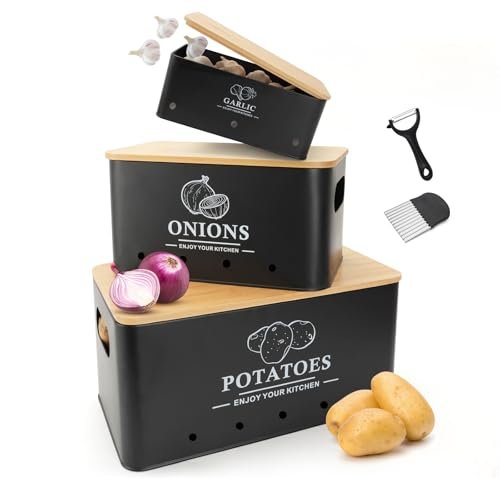
Dekosilave 3-Piece Metal Produce Storage Set
 Perfect for small-batch countertop storage of onions, garlic, and potatoes.
This 3-piece set is designed for home cooks who store small quantities of produce on the counter rather than in a deep pantry. The powder-coated metal construction resists denting and rust, while evenly spaced ventilation holes promote consistent airflow to prevent moisture buildup and mold. The solid wooden lids block out light to stop sprouting, and the compact 6x6x4 inch per container size fits easily on most countertops or open shelf space.
Pros:
Perfect for small-batch countertop storage of onions, garlic, and potatoes.
This 3-piece set is designed for home cooks who store small quantities of produce on the counter rather than in a deep pantry. The powder-coated metal construction resists denting and rust, while evenly spaced ventilation holes promote consistent airflow to prevent moisture buildup and mold. The solid wooden lids block out light to stop sprouting, and the compact 6x6x4 inch per container size fits easily on most countertops or open shelf space.
Pros:
- Durable, rust-resistant metal build for daily use
- Built-in ventilation eliminates need for extra airflow modifications
- Light-blocking wooden lids extend produce shelf life by preventing light exposure
- Sleek minimalist design complements modern kitchen decor Cons:
- Small capacity (holds ~2 lbs of potatoes per container) is not ideal for bulk shoppers
- Wooden lids require occasional mineral oil treatment to prevent cracking from moisture exposure
- Only available in black, which may show dust more readily than lighter finishes Shop the Dekosilave 3-piece metal storage set on Amazon
GGIU Stackable Wire Kitchen Organizer
 Maximizes vertical pantry space for bulk produce storage.
This stackable wire basket is ideal for households that buy produce in bulk and store it in a pantry or deep cabinet. The open-wire design provides 360-degree airflow, eliminating moisture traps that cause rot, and the stackable frame lets you build vertical storage to save shelf space. The slim 9x9x2 inch profile fits easily on standard pantry shelves, and the smooth black finish resists fingerprints and staining.
Pros:
Maximizes vertical pantry space for bulk produce storage.
This stackable wire basket is ideal for households that buy produce in bulk and store it in a pantry or deep cabinet. The open-wire design provides 360-degree airflow, eliminating moisture traps that cause rot, and the stackable frame lets you build vertical storage to save shelf space. The slim 9x9x2 inch profile fits easily on standard pantry shelves, and the smooth black finish resists fingerprints and staining.
Pros:
- Fully stackable design maximizes vertical storage space
- 360-degree ventilation keeps produce fresh by preventing moisture buildup
- Durable steel construction supports up to 15 lbs per basket
- Slim profile fits standard pantry and cabinet shelves Cons:
- Open design is not suitable for small loose items (e.g., garlic cloves) that can fall through the gaps
- Limited color options (only black and silver available)
- May dent if dropped from height Shop the GGIU stackable wire organizer on Amazon
Ducoak 2-Piece Stackable Plastic Produce Organizers
 Great for pantry storage with visible contents for quick meal prep.
These clear plastic organizers are perfect for busy cooks who need to quickly identify produce stock without opening containers. The stackable design saves vertical pantry space, while the snap-tight lids block out light and keep pests out. The integrated handles make it easy to pull containers off high shelves or transport them to the counter for meal prep. The BPA-free plastic is safe for food storage and resists staining from onion skins.
Pros:
Great for pantry storage with visible contents for quick meal prep.
These clear plastic organizers are perfect for busy cooks who need to quickly identify produce stock without opening containers. The stackable design saves vertical pantry space, while the snap-tight lids block out light and keep pests out. The integrated handles make it easy to pull containers off high shelves or transport them to the counter for meal prep. The BPA-free plastic is safe for food storage and resists staining from onion skins.
Pros:
- Clear design lets you see contents at a glance, reducing meal prep time
- Snap-tight lids keep produce fresh and protected from pests
- Integrated handles make heavy containers easy to move
- Stackable frame fits standard pantry shelves Cons:
- Plastic can retain strong onion odors over time if not washed regularly
- Limited capacity (holds ~5 lbs of produce per bin) is not ideal for large households
- Not fully airtight, so not suitable for storage longer than 2 weeks Shop the Ducoak 2-piece stackable plastic organizers on Amazon
Spacemart 2-Piece Stackable Pantry Organizers
 Compact budget-friendly option for small pantry spaces.
Made by the trusted housewares brand Spacemart, this 2-piece set is a budget-friendly pick for small pantries or apartment kitchens. The clear polypropylene construction is shatter-resistant and lets you see contents at a glance, while the stackable design saves horizontal shelf space. The smooth edges won’t damage other pantry items, and the set is dishwasher-safe for easy cleaning after produce storage.
Pros:
Compact budget-friendly option for small pantry spaces.
Made by the trusted housewares brand Spacemart, this 2-piece set is a budget-friendly pick for small pantries or apartment kitchens. The clear polypropylene construction is shatter-resistant and lets you see contents at a glance, while the stackable design saves horizontal shelf space. The smooth edges won’t damage other pantry items, and the set is dishwasher-safe for easy cleaning after produce storage.
Pros:
- Affordable price point for budget-conscious shoppers
- Shatter-resistant plastic resists cracking if dropped
- Stackable design fits standard 12-inch wide pantry shelves
- Dishwasher-safe for easy cleaning after use Cons:
- Small size (7x7x7 inches per bin) only holds small batches of produce
- Lids are not fully airtight, so not suitable for long-term storage
- Clear plastic may scratch over time with heavy use Shop the Spacemart 2-piece stackable pantry organizers on Amazon
REAXYZNN 2-Piece Ventilated Stackable Produce Organizers
 Ventilated design keeps produce fresh longer for daily use.
This 2-piece set is designed specifically for root vegetable storage, with built-in side ventilation holes that promote consistent airflow to prevent moisture buildup. The clear plastic lets you monitor produce freshness at a glance, and the stackable design saves pantry space. The smooth, rounded edges are safe for households with children, and the durable plastic resists cracking from heavy produce weight.
Pros:
Ventilated design keeps produce fresh longer for daily use.
This 2-piece set is designed specifically for root vegetable storage, with built-in side ventilation holes that promote consistent airflow to prevent moisture buildup. The clear plastic lets you monitor produce freshness at a glance, and the stackable design saves pantry space. The smooth, rounded edges are safe for households with children, and the durable plastic resists cracking from heavy produce weight.
Pros:
- Built-in side ventilation extends produce shelf life by preventing moisture buildup
- Clear design lets you see freshness levels at a glance
- Stackable design fits standard pantry shelves
- BPA-free, food-safe plastic is safe for all produce types Cons:
- Ventilation holes are large enough for small items (e.g., garlic cloves) to fall through
- Limited capacity (holds ~4 lbs of produce per bin) is not ideal for bulk shoppers
- Lids are not fully airtight for storage longer than 2 weeks Shop the REAXYZNN 2-piece ventilated produce organizers on Amazon
2-Piece Stackable Wire Storage Baskets with Optional Lids
 Flexible design for both countertop and pantry storage.
These 2-piece wire baskets are a versatile pick for both countertop and pantry storage. The open-top design makes it easy to grab produce quickly during meal prep, while optional matching lids (sold separately) block light for longer storage. The sturdy steel construction supports up to 20 lbs per basket, and the stackable frame saves counter or shelf space. The slim 13x9x8.6 inch profile fits easily next to small appliances.
Pros:
Flexible design for both countertop and pantry storage.
These 2-piece wire baskets are a versatile pick for both countertop and pantry storage. The open-top design makes it easy to grab produce quickly during meal prep, while optional matching lids (sold separately) block light for longer storage. The sturdy steel construction supports up to 20 lbs per basket, and the stackable frame saves counter or shelf space. The slim 13x9x8.6 inch profile fits easily next to small appliances.
Pros:
- Versatile open-top or lidded design fits both short-term counter and long-term pantry storage
- Sturdy steel construction supports heavy produce loads
- Stackable design saves vertical space
- Smooth finish resists rust and staining Cons:
- Open design is not suitable for small loose items
- Optional lids are sold separately, adding to total cost
- Large footprint may overwhelm small countertops Shop the 2-piece stackable wire storage baskets on Amazon
CHLORYARD 4-Tier Removable Produce Cart
 Mobile storage for small kitchens or households that move produce frequently.
This 4-tier rolling cart is ideal for small kitchens or households that need to move produce between the pantry, counter, and dining area frequently. The removable tiers let you customize storage space for different produce types, and the smooth-rolling wheels lock in place to prevent accidental movement. The solid wood top adds extra counter space for meal prep, and the sturdy steel frame supports up to 50 lbs total.
Pros:
Mobile storage for small kitchens or households that move produce frequently.
This 4-tier rolling cart is ideal for small kitchens or households that need to move produce between the pantry, counter, and dining area frequently. The removable tiers let you customize storage space for different produce types, and the smooth-rolling wheels lock in place to prevent accidental movement. The solid wood top adds extra counter space for meal prep, and the sturdy steel frame supports up to 50 lbs total.
Pros:
- Removable tiers let you customize storage for different produce types
- Locking wheels provide stable, mobile storage for small kitchens
- Solid wood top adds extra meal prep space
- High weight capacity supports bulk produce storage Cons:
- Assembly required (takes ~15 minutes with included tools)
- Only available in black, which may not match all kitchen decor
- Large footprint (18x12x36 inches) is not suitable for very small kitchens Shop the CHLORYARD 4-tier rolling produce cart on Amazon
HapiRm 4-Tier Rolling Kitchen Storage Cart
 Spacious mobile storage for large households or bulk shoppers.
This 4-tier cart is a spacious pick for large households or bulk shoppers who need to store 20+ lbs of produce at once. The smooth-rolling wheels make it easy to move the cart out of the way during cleaning, and the solid wooden top provides extra space for small appliances or meal prep. The sturdy steel frame resists denting, and the open design provides full ventilation for produce.
Pros:
Spacious mobile storage for large households or bulk shoppers.
This 4-tier cart is a spacious pick for large households or bulk shoppers who need to store 20+ lbs of produce at once. The smooth-rolling wheels make it easy to move the cart out of the way during cleaning, and the solid wooden top provides extra space for small appliances or meal prep. The sturdy steel frame resists denting, and the open design provides full ventilation for produce.
Pros:
- Large 4-tier capacity holds up to 25 lbs of produce
- Locking wheels keep the cart stable when in use
- Solid wood top adds extra counter space for meal prep
- Open design provides full 360-degree ventilation Cons:
- Assembly required (takes ~20 minutes with included tools)
- Large footprint (20x14x38 inches) is not suitable for very small kitchens
- Wooden top requires occasional sealing to prevent water damage from produce moisture Shop the HapiRm 4-tier rolling kitchen cart on Amazon
SNTD 5-Tier Rotating Produce Organizer
 Rotating design for easy access to stored produce in deep pantries.
This 5-tier rotating organizer is perfect for households with deep pantries that make it hard to reach items in the back. The 360-degree rotating base lets you access all produce without moving other items, and the smooth-rolling wheels make it easy to pull the organizer out for restocking. The metal frame is durable and rust-resistant, and the open design provides full ventilation for produce.
Pros:
Rotating design for easy access to stored produce in deep pantries.
This 5-tier rotating organizer is perfect for households with deep pantries that make it hard to reach items in the back. The 360-degree rotating base lets you access all produce without moving other items, and the smooth-rolling wheels make it easy to pull the organizer out for restocking. The metal frame is durable and rust-resistant, and the open design provides full ventilation for produce.
Pros:
- 360-degree rotating base eliminates hard-to-reach pantry items
- 5 tiers provide ample storage for large households
- Locking wheels keep the organizer stable when in use
- Open design provides full ventilation for produce Cons:
- Large 5-tier footprint (18x18x36 inches) is not suitable for small kitchens
- Weight of fully loaded organizer may be difficult to move without the wheels
- Open design is not suitable for small loose items Shop the SNTD 5-tier rotating produce organizer on Amazon
Spacemart 2-Piece Compact Stackable Pantry Organizers
 Compact bins for small cabinet or pantry shelves.
This 2-piece set from Spacemart is a compact, budget-friendly pick for small pantries or cabinet shelves. The clear polypropylene construction lets you see contents at a glance, and the stackable design saves horizontal shelf space. The smooth, rounded edges won’t damage other pantry items, and the set is dishwasher-safe for easy cleaning.
Pros:
Compact bins for small cabinet or pantry shelves.
This 2-piece set from Spacemart is a compact, budget-friendly pick for small pantries or cabinet shelves. The clear polypropylene construction lets you see contents at a glance, and the stackable design saves horizontal shelf space. The smooth, rounded edges won’t damage other pantry items, and the set is dishwasher-safe for easy cleaning.
Pros:
- Compact size (7x7x7 inches per bin) fits small cabinet or pantry shelves
- Stackable design saves horizontal storage space
- Clear design lets you see contents at a glance
- Affordable price point for budget shoppers Cons:
- Small capacity only holds small batches of produce
- Lids are not fully airtight for long-term storage
- Clear plastic may scratch over time with heavy use Shop the Spacemart 2-piece stackable pantry organizer set on Amazon
Organizing Onions and Potatoes for Small Kitchens
If you don’t have a dedicated pantry, there are still plenty of ways to store produce without cluttering your limited counter or cabinet space. Prioritize vertical storage: wall-mounted wire racks, under-shelf hanging baskets, and narrow rolling carts that tuck into gaps between the fridge and wall are all ideal for small spaces. For households with children or pets, store produce in upper cabinets or add cabinet safety locks to lower cabinet doors to keep produce out of reach. A rolling 3-tier cart is the most versatile pick for small kitchens, as it can be tucked next to the fridge when not in use and pulled out for meal prep.
Frequently Asked Questions
Should I store onions and potatoes in the refrigerator?
For most home cooks, no. Refrigerators have high humidity levels that cause onions to become mealy and spoil faster, and cold temperatures convert potato starch to sugar, leading to a gritty, unpleasantly sweet texture when cooked. The only exception is if you live in a very hot, humid climate where room temperature storage leads to spoilage in less than 3 days: in that case, store potatoes and onions in separate sealed bins in the fridge’s crisper drawer for no more than 1 week to preserve texture.
Can I store chopped onions and potatoes?
Chopped produce has a much shorter shelf life than whole. Store chopped onions in an airtight container in the fridge for up to 5 days, and chopped potatoes in a sealed container covered with cold water (change the water daily) for up to 3 days. For longer storage, freeze chopped produce in airtight freezer bags for up to 6 months.
How long do properly stored onions and potatoes last?
Whole yellow or white onions stored in a cool, dark, well-ventilated space last 2-4 weeks. Sweet onions (e.g., Vidalia) have a shorter shelf life of 1-2 weeks due to their higher sugar and water content. Whole potatoes stored under the same conditions last 2-3 months, while sweet potatoes last 1-2 months.
Are mesh produce bags good for onion and potato storage?
Yes, as long as they are stored in a cool, dark space away from direct sunlight. Mesh bags provide maximum airflow to prevent moisture buildup, but avoid storing them in sealed plastic bags, which trap humidity and accelerate rot. For longer storage, transfer produce from mesh bags to ventilated containers or paper bags.
What’s the best way to store produce in a small apartment with no pantry?
For small spaces without a dedicated pantry, a rolling 3-4 tier cart that tucks next to the fridge or under a counter overhang is ideal. Store onions and potatoes on separate tiers to avoid ethylene exposure, and keep the cart in a shaded spot away from direct sunlight and heat sources.
Do I need to wash onions and potatoes before storing them?
No. Excess surface moisture encourages mold and rot. Only wash onions and potatoes right before you plan to use them. If you do need to rinse produce before storage, pat it completely dry with a clean towel before placing it in a ventilated container.
Final Tips for Long-Lasting, Organized Onion and Potato Storage
The best storage solution for your kitchen depends on your cooking habits, available space, and aesthetic preferences. For small households that store small batches of produce on the counter, the Dekosilave metal set offers a stylish, durable pick. For bulk shoppers with deep pantries, the GGIU wire baskets or Spacemart stackable bins provide maximum capacity at a low cost. For small kitchens without dedicated pantry space, a rolling cart like the HapiRm or CHLORYARD model offers flexible, mobile storage that tucks out of the way when not in use. No matter which tool you choose, always store onions and potatoes separately, keep them in a cool, dark space, and avoid sealed plastic bags to maximize freshness. If you opt for a rolling cart, place a non-slip kitchen runner along the path between your pantry and prep area to prevent the cart from sliding on smooth floors. For more small kitchen organization hacks to cut down on waste and streamline meal prep, check out our full library of kitchen workflow tips and affordable storage solutions to make the most of your space.

Hi, I’m Daniel Brooks—a food lover and kitchen gear enthusiast. I enjoy testing cookware, utensils, and gadgets to see what really works in everyday cooking. At PlugChef.com, I share honest reviews, comparisons, and simple guides to help you choose the best tools for a safer, smarter, and more enjoyable kitchen.
Related posts:
 Best Rated Electric Fondue Pots: Elevate Your Cheese and Chocolate Experience
 Best Burr Coffee Grinder Under 100: Top Affordable Options for Coffee Lovers
 Best Mug for Coffee Warmer: Top Picks to Keep Drinks Hot
 Best Ice Cream Maker for Kids: Fun, Easy Homemade Desserts
 Best Fluffy Shaved Ice Machine: Top Picks for Perfect Summer Treats
 White Kitchen Appliance Package Deals: Elevate Your Culinary Space Effortlessly