

Are you curious about the difference between Irish Tea and English Breakfast? You might think they’re just two simple cups of tea, but there’s more to these classic brews than meets the eye.
Which one suits your taste better? Which one gives you that perfect morning boost? By the end of this read, you’ll know exactly what sets them apart—and which one you should reach for next time. Keep reading to discover the surprising flavors and traditions behind Irish Tea and English Breakfast.
Origins Of Irish Tea
Irish tea has a rich history that reflects Ireland’s culture and traditions. It is not just a drink but a social ritual. The origins of Irish tea date back centuries. It evolved through trade, colonization, and local preferences. Understanding its roots helps appreciate why it tastes unique today.
Historical Roots
Tea arrived in Ireland in the 18th century. It came through British trade routes. The Irish quickly embraced tea as part of daily life. Tea became a symbol of hospitality and warmth. Over time, tea drinking grew from the upper class to all social levels. It also became linked to Irish identity and community gatherings.
Traditional Blends
Irish tea blends focus on strong, rich flavors. They often use black teas like Assam and Ceylon. These teas provide a bold taste and deep color. The blend is designed to hold milk well. This makes Irish tea creamy and smooth. Many families have their own special blend recipes. These blends differ slightly but share a common strength and warmth.
Origins Of English Breakfast
English Breakfast tea has a rich history rooted in British culture. It became popular as a strong, full-bodied blend. People enjoyed it with their morning meals for a fresh start. Its origins trace back to the 19th century. The blend was designed to pair well with a hearty English breakfast. Over time, it has gained worldwide recognition and love.
Creation And Evolution
The blend likely began in Scotland or England during the 1800s. Merchants mixed different black teas to find a bold taste. This mix suited the British palate, which preferred robust flavors. Over decades, the recipe evolved as new teas arrived from India and Sri Lanka. The blend became famous for its rich aroma and strong taste. Today, it remains a staple in many households.
Key Ingredients
English Breakfast tea consists mainly of black teas. Common components include:
- Assam tea from India, known for its malty flavor
- Ceylon tea from Sri Lanka, adding brightness and citrus notes
- Kenyan tea, offering a strong and bold character
The mix varies by brand but keeps the full-bodied nature. The blend is meant to be enjoyed with milk or sugar. This balance makes it perfect for a morning boost.
Flavor Profiles Compared
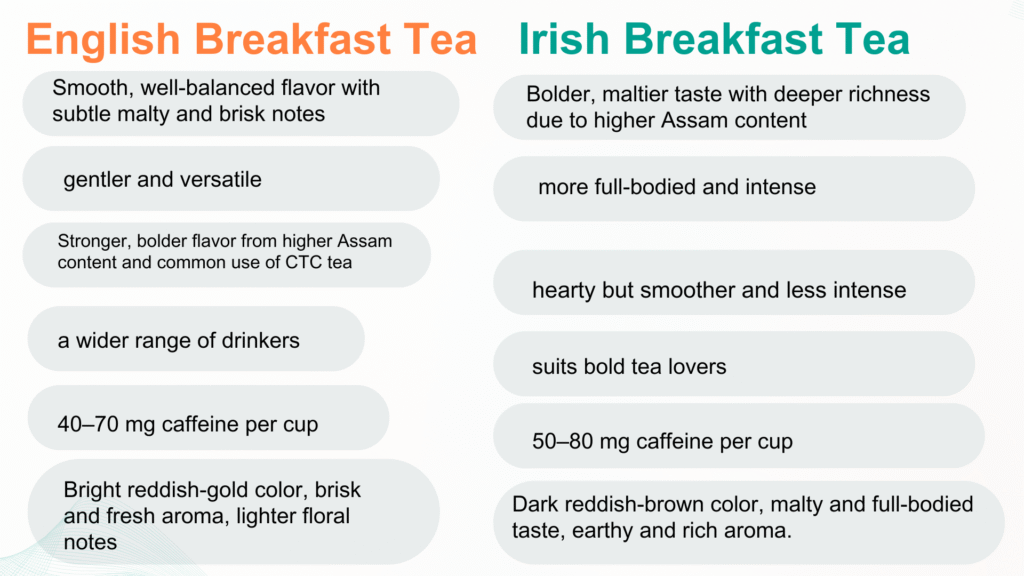
Irish Tea offers a smooth, mild taste with a slight sweetness. English Breakfast is bold, strong, and slightly bitter, perfect for a morning boost. Both bring unique flavors for different tea lovers.
Comparing the flavor profiles of Irish Tea and English Breakfast offers a delightful exploration of two beloved traditions. Both teas boast unique characteristics that cater to different palates, enriching your tea-drinking experience with their distinctive tastes and aromas. Whether you prefer the boldness of Irish Tea or the subtler nuances of English Breakfast, understanding their flavor profiles can enhance your appreciation for these classic blends.Taste Characteristics Of Irish Tea
Irish Tea is known for its robust and full-bodied flavor, often described as malty and strong. It’s typically made with a high proportion of Assam tea, contributing to its rich and hearty taste. This makes it an excellent choice for those who enjoy a powerful cup that can stand up to milk and sugar. Some Irish Tea blends may include Kenyan teas, adding a brisk and lively finish. If you crave a morning pick-me-up that awakens your senses, Irish Tea might just be your perfect match. Its strength is not just in its flavor but in how it can invigorate your spirit.Taste Characteristics Of English Breakfast
English Breakfast Tea, on the other hand, is renowned for its smooth and balanced profile. It often combines teas from Assam, Ceylon, and Kenya, creating a harmonious blend that’s both rich and mellow. This blend is versatile, making it suitable for any time of the day. The tea’s subtle sweetness and slightly floral undertones make it a favorite for those who prefer a gentler start to their mornings. Its adaptability means it can be enjoyed with or without milk, offering you flexibility in how you savor it.Aroma Differences
The aroma of Irish Tea is as bold as its flavor, with a deep, malty scent that immediately captures attention. It has an earthy essence that complements its strong taste, making each sip a sensory delight. In contrast, English Breakfast Tea presents a more delicate fragrance. Its aroma is softer, with hints of honey and floral notes that invite you to relax and unwind. This gentle scent enhances the tea’s smooth flavor, offering a soothing experience. Which aroma resonates more with you? The hearty, comforting scent of Irish Tea or the calming, fragrant bouquet of English Breakfast? Your choice may reveal your preference for boldness or subtlety in your daily cup.Brewing Techniques
Brewing tea is more than just pouring hot water over leaves. The brewing technique can change the flavor, aroma, and strength of your cup dramatically. Whether you prefer Irish Tea or English Breakfast, understanding the right brewing approach will help you enjoy every sip to its fullest.
Irish Tea Brewing Tips
Irish Tea is typically strong and bold, so you want to extract deep flavors without bitterness. Use freshly boiled water at about 212°F (100°C) for best results.
- Steep your tea for 3 to 5 minutes to get a robust taste.
- Avoid steeping longer than 5 minutes to prevent harshness.
- Use about one heaped teaspoon of tea leaves or one tea bag per cup.
Try adding a splash of cold water after steeping to bring out smoother flavors. I once brewed Irish Tea too long and it tasted bitter—adjusting steep time made a huge difference.
English Breakfast Brewing Tips
English Breakfast tea is rich yet balanced, requiring careful timing to capture its classic flavor. Start with water just off the boil, around 200°F (93°C).
- Steep the tea for 3 to 4 minutes to avoid overpowering bitterness.
- Use one teaspoon of loose tea or one tea bag per cup.
- Stir gently after adding hot water to mix the flavors evenly.
Experiment with steeping times—sometimes I prefer 3 minutes for a lighter brew, other times closer to 4 for a stronger cup. Have you noticed how subtle changes in time can shift the taste?
Cultural Significance
Tea is more than just a drink in both Ireland and England; it’s a symbol of daily life and social connection. Understanding the cultural significance behind Irish Tea and English Breakfast reveals how each tradition shapes community and comfort. Your next cup might carry more meaning than you realize.
Irish Tea Traditions
Irish Tea is deeply woven into the fabric of everyday life. It’s not just about the tea itself but the moments shared over it. In many Irish homes, offering tea is a gesture of welcome and warmth.
People often enjoy Irish Tea multiple times a day, especially during breaks at work or when catching up with friends. You might notice the tea is brewed strong and served with milk, creating a rich, comforting flavor. This simple ritual fosters a sense of belonging and pauses the rush of daily life.
Have you ever experienced a moment when a cup of tea helped you feel truly at home? That’s the essence of Irish Tea culture—comfort in community.
English Breakfast Rituals
English Breakfast tea holds a special place in morning routines across the UK. It’s the go-to choice for starting the day with energy and focus. The tradition often involves pairing the robust tea with a hearty breakfast, making it a cornerstone of the morning.
The ritual is about more than taste; it’s about setting a tone for the day ahead. Many people swear by brewing the tea strong and adding milk and sugar to balance the bold flavors. This practice not only wakes you up but also connects you to a long-standing cultural habit.
Think about how your morning routine shapes your mindset. Could adopting a ritual like English Breakfast tea bring more intention to your day?
Credit: teauniverses.com
Health Benefits And Ingredients
Tea lovers often wonder about the health benefits and ingredients of Irish Tea and English Breakfast. Both teas offer unique flavors and nutrients. Understanding their nutritional aspects helps in choosing the right cup for your day.
Nutritional Aspects Of Irish Tea
Irish Tea is usually strong and rich. It often uses robust black tea leaves. These leaves contain antioxidants called polyphenols. Antioxidants help protect the body from damage by free radicals.
Irish Tea typically has:
- High caffeine content for energy
- Low calories when served without milk or sugar
- Essential minerals like manganese and potassium
The strong brew may improve focus and alertness. It also supports heart health by improving blood flow. Drinking Irish Tea can be a simple way to boost your daily antioxidant intake.
Nutritional Aspects Of English Breakfast
English Breakfast tea is a blend of several black teas. It has a bold taste and a bright amber color. Like Irish Tea, it contains antioxidants that fight inflammation.
Key nutritional points include:
- Moderate caffeine levels for steady energy
- Contains flavonoids that support heart health
- Low in calories when taken plain
This tea blend is known to improve digestion and reduce stress. It also helps maintain healthy cholesterol levels. English Breakfast tea offers a balanced boost without overwhelming the senses.
Pairing Irish Tea And English Breakfast
Pairing tea with food enhances the taste and experience of both. Irish Tea and English Breakfast offer unique flavors that suit different dishes. Understanding their profiles helps create perfect pairings.
Irish Tea is strong and malty. It carries a bold flavor that stands well against rich and hearty foods. English Breakfast is robust but slightly lighter. It pairs nicely with classic breakfast items and sweet treats.
Food Pairings For Irish Tea
- Hearty stews and meat pies balance Irish Tea’s strength
- Cheddar cheese complements the maltiness
- Brown bread with butter enhances the bold flavor
- Dark chocolate pairs well with the tea’s robust notes
- Roasted nuts add a crunchy contrast
Food Pairings For English Breakfast
- Traditional fried eggs and sausages match the tea’s heartiness
- Toast with jam or marmalade highlights subtle sweetness
- Scones with clotted cream create a classic British combo
- Light pastries like croissants balance the tea’s strength
- Fresh fruit adds a refreshing contrast

Credit: www.teawithtae.com
Choosing Your Perfect Cup
Choosing your perfect cup of tea means thinking about what suits your mood and taste. Both Irish Tea and English Breakfast offer rich flavors but differ in strength and aroma. Knowing these differences helps you pick the right tea for any time of day.
Factors To Consider
- Strength of the tea: Irish Tea is usually stronger and bolder.
- Flavor notes: English Breakfast tends to be malty and smooth.
- Brewing time: Irish Tea may need a shorter steep to avoid bitterness.
- Milk and sugar: Both teas go well with milk, but Irish Tea handles more milk without losing flavor.
- Time of day: English Breakfast is perfect for mornings; Irish Tea suits afternoons.
Personal Taste Preferences
Think about your favorite tea experience. Do you enjoy a strong, full-bodied cup? Irish Tea may be your choice. Prefer a lighter, balanced brew? English Breakfast fits well.
Consider how you take your tea. More milk or sugar? Irish Tea’s boldness can hold extra additions. Like tea plain or with a splash of milk? English Breakfast is gentle and smooth.

Credit: teauniverses.com
Frequently Asked Questions
What Are The Main Differences Between Irish Tea And English Breakfast?
Irish Tea is stronger and maltier, often made with robust black teas. English Breakfast is smoother, a blend of Assam, Ceylon, and Kenyan teas. Irish Tea suits milk well, while English Breakfast balances well with lemon or milk.
Which Tea Is Better For Morning Energy, Irish Or English?
Irish Tea offers a stronger caffeine kick, ideal for mornings. English Breakfast provides moderate caffeine, giving steady energy. Both are excellent morning choices, but Irish Tea is preferred for a bolder start.
Can I Drink Irish Tea And English Breakfast With Milk?
Yes, both teas pair well with milk. Irish Tea’s robust flavor complements creaminess. English Breakfast also tastes smooth with milk, enhancing its flavor. Milk softens the bitterness and adds richness to each brew.
How Do Brewing Times Differ For Irish Tea And English Breakfast?
Irish Tea requires 3-5 minutes steeping for full strength. English Breakfast needs 3-4 minutes for optimal flavor. Oversteeping either can cause bitterness, so timing is key for the perfect cup.
Conclusion
Both Irish Tea and English Breakfast offer unique flavors and warmth. Irish Tea is strong and rich, perfect for those who like bold taste. English Breakfast is smooth and balanced, ideal for a gentle start. Each tea suits different moods and moments.
Try both to find your favorite. Enjoy the simple pleasure of a good cup of tea. Taste and tradition come together in every sip. Which will you choose today?

Hi, I’m Daniel Brooks—a food lover and kitchen gear enthusiast. I enjoy testing cookware, utensils, and gadgets to see what really works in everyday cooking. At PlugChef.com, I share honest reviews, comparisons, and simple guides to help you choose the best tools for a safer, smarter, and more enjoyable kitchen.
Related posts:
 What Type of Cooking Utensils are Safe: Expert Picks
 What Innovations Could Blenders Make: Unleashing Future Tech
 Smart Strategies to Organize a Small Kitchen: Maximize Space
 How to Organize a Kitchen Cabinet: Expert Tips & Tricks
 How to Organize Kitchen Drawers: Expert Tips and Tricks
 How to Organize a Corner Kitchen Cupboard: Expert Tips

