
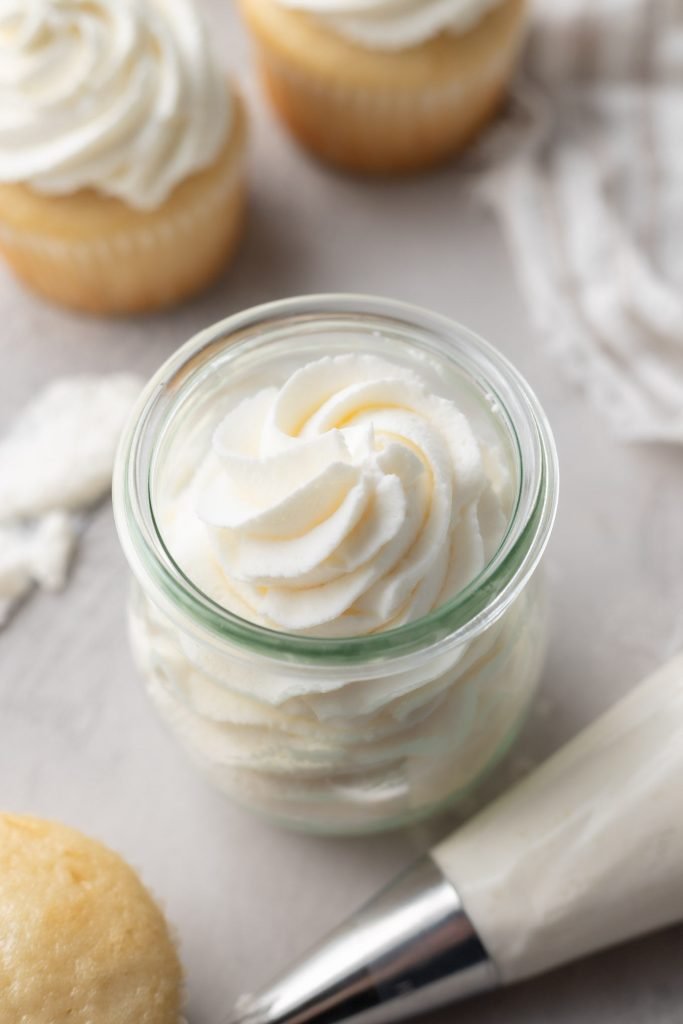
Whipped cream that droops, weeps, or collapses minutes after you plate it ruins the look and texture of desserts. This guide shows practical, kitchen-tested methods to stabilize whipped cream so it holds clean peaks, pipes well, and stays fresh for serving or short-term storage. You’ll get clear recipes, step-by-step techniques, troubleshooting tips, and safe storage guidance—everything needed to get reliable results every time.
Quick primer: what makes whipped cream stable
- Fat content: Higher fat creams trap air and form stronger structure. Use heavy cream/heavy whipping cream (typically labeled 36% fat) or whipping cream (around 30–35%). Lower-fat creams rarely reach stiff peaks and collapse faster.
- Temperature: Cold fat is firmer and incorporates air better. Chill cream, bowl, and beaters before whipping.
- Structure-builders (stabilizers): Small amounts of gelatin, cornstarch, cream cheese, or instant pudding add body and slow separation.
- Technique: Proper whipping speed and knowing visual cues (soft vs. stiff peaks) prevent under- or over-whipping.
Use these principles as you pick ingredients and a method below.
Choose the right cream
Start by reading the label. Look for:
- “Heavy cream” or “heavy whipping cream” (top choice).
- “Whipping cream” (works if at least ~30% fat).
- Avoid “light cream,” “half-and-half,” or low-fat products for stable peaks.
In practice: if you need tall peaks for piping decorations, choose heavy cream (36% fat) and keep it cold until the last moment. For folding into mousses, whipping cream with 30–35% fat is usually fine.

Credit: www.livewellbakeoften.com
Chill bowl and cream for best whipping results.
Tools and prep that matter
- Bowls: Stainless steel or glass bowls chill faster and hold cold better than plastic.
- Beatters/mixers: Hand whisk (small batches), electric hand mixer (fast, convenient), or stand mixer (best for large/consistent results).
- Chill time: Place bowl and beaters/whisk in the fridge 15–30 minutes, or 10–15 minutes in the freezer for a quick chill. Keep cream refrigerated until you start.
- Room temperature: Work in the coolest part of your kitchen—hot rooms make cream sluggish and more likely to weep.
A quick workflow to follow every time:
- Chill bowl and beaters.
- Measure cream and any stabilizer ingredients.
- Start whipping at medium speed to build structure, then increase as needed.
Stabilizing methods with exact steps
Below are reliable methods used by pastry chefs and home bakers. Recipes use 2 cups (about 480 mL) heavy cream as the baseline—scale proportionally.
Note: in practice different stabilizers change mouthfeel and sweetness. Pick one that fits the dessert (e.g., gelatin for neutral flavor, cream cheese for tangy frosting).
1) Gelatin method — neutral flavor, excellent hold
- Ingredients: 1 teaspoon unflavored powdered gelatin, 2 tablespoons cold water, 1–2 tablespoons warm water.
- Steps:
- Sprinkle gelatin over 2 tbsp cold water; let bloom 3–5 minutes.
- Gently warm (microwave 5–10 seconds or use a double boiler) until fully dissolved; do not boil. Cool to lukewarm.
- Whip cream to soft peaks, then slowly drizzle in the dissolved gelatin while whipping to stiff peaks.
- Result: stable cream that holds shape several hours in the fridge; good for piping and layered cakes.
2) Powdered sugar + cornstarch — easy, pantry-friendly
- Ingredients: 2–3 tablespoons confectioners’ (powdered) sugar mixed with 1 tablespoon cornstarch (for 2 cups cream).
- Steps:
- Combine powdered sugar and cornstarch to remove graininess.
- Add to cream as it thickens and whip to desired peaks.
- Result: slightly sweet, lightly thickened cream. Cornstarch helps reduce weeping.
3) Cream cheese — richer, tangy stability
- Ingredients: 1–2 ounces (30–60 g) full-fat cream cheese, softened, per 2 cups cream.
- Steps:
- Beat softened cream cheese until smooth.
- Whip cream to medium-soft peaks and fold or whisk in the cream cheese until combined and at the desired stiffness.
- Result: a firmer, cream-cheesy topping ideal for desserts where extra body and tang are welcome.
4) Instant pudding mix — fast and foolproof
- Ingredients: 1–2 tablespoons instant vanilla (or matching flavor) pudding mix per 2 cups cream.
- Steps:
- Sprinkle pudding mix into cream while whipping; it thickens quickly.
- Result: very stable, slightly flavored cream. Use when flavor matches the dessert.
5) Mascarpone or stabilized cheese blend
- Method: Replace 1/4–1/3 of the cream with mascarpone or fold in equal parts after whipping to increase stability and richness.
- Result: luxurious texture and good hold for tarts and tiramisu.
Quick comparison table (for 2 cups cream):
- Gelatin: 1 tsp — neutral, strong hold, clear flavor.
- Cornstarch+Powdered sugar: 1 tbsp cornstarch + 2–3 tbsp powdered sugar — easy, lightly sweet.
- Cream cheese: 1–2 oz — tangy, richer texture.
- Instant pudding: 1–2 tbsp — flavorful, very stable.
- Mascarpone: replace 1/4–1/3 cream — rich, stable.

Credit: www.livewellbakeoften.com
Common stabilizers: gelatin, cornstarch, cream cheese.
Whipping technique: how to get perfect peaks
- Start speed: Begin at medium speed to incorporate air steadily and avoid splatter. Increase speed as volume builds.
- Peak stages:
- Soft peaks: hold a finger of cream tip that folds over—good for folding into batters.
- Stiff peaks: tips stand straight and hold shape—best for piping and toppings that need structure.
- How to test: Lift beaters; the cream should hold an upright peak without drooping for stiff peaks.
- Avoiding overwhip: Stop as soon as peaks form. Overwhipping leads to grainy texture and eventual butter separation.
- Fixing overwhip: Add 1–2 tablespoons of fresh cold cream and gently fold until smooth.
In practice, constant visual checks are the best control. If you’re using gelatin, add it at soft-peak stage to distribute evenly before reaching final stiffness.
Storage and serving
- Short-term refrigeration: Place stabilized whipped cream in an airtight container and refrigerate. Most stabilized creams keep 2–3 days refrigerated; some gelatin-stabilized creams may hold up slightly longer. Keep your fridge at or below 40°F (4°C) for dairy safety—see USDA refrigeration guidance for safe storage recommendations (USDA).
- Freezing: Pipe or spoon dollops onto parchment on a tray and freeze solid, then transfer to a freezer bag. Frozen portions are convenient for topping hot desserts; best quality is within 2–4 weeks.
- Serving in warm conditions: Stabilized cream tolerates brief exposure to room temperature better than plain whipped cream, but avoid serving in direct heat or on hot fillings for long.
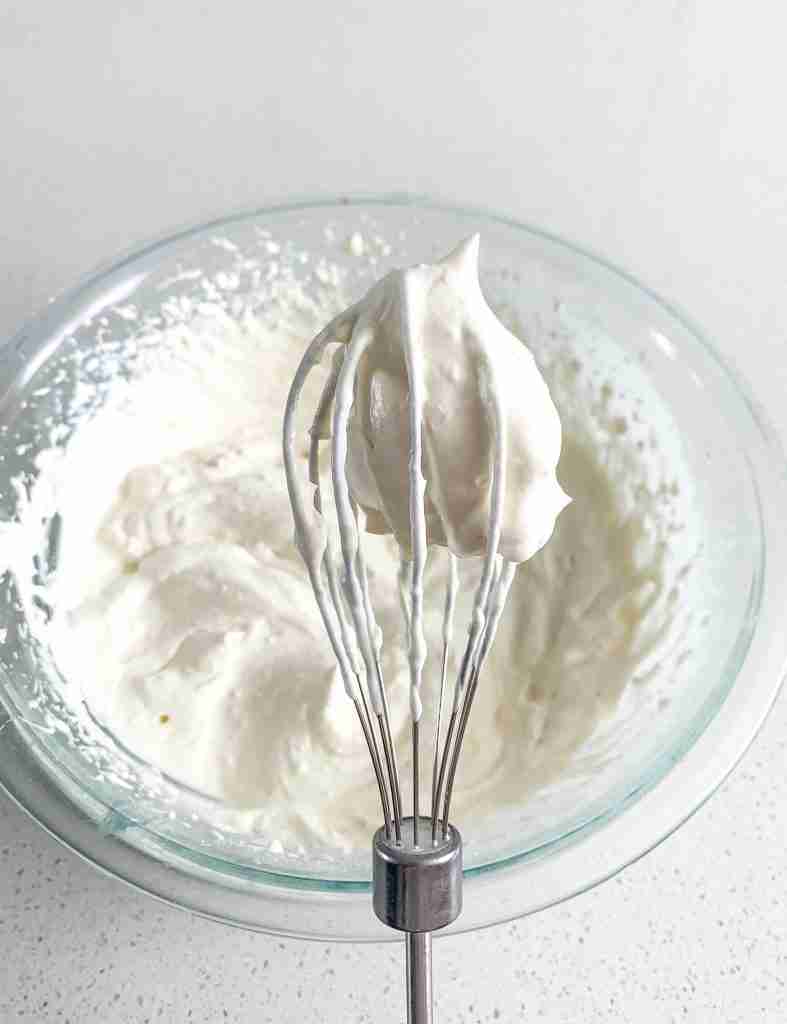
Credit: plumbranchhome.com
Freeze dollops on a tray for easy future use.
For science-based explanations of food chemistry and common stabilizers, university extension resources explain ingredient functions in detail (see University of Minnesota Extension for food science basics: extension.umn.edu).
Troubleshooting: common problems and fixes
- Runny or weeping cream:
- Cause: under-whipped, warm environment, or too much liquid added.
- Fix: Re-whip gently after chilling if under-whipped. Use cornstarch or gelatin method for longer hold.
- Grainy or buttery texture:
- Cause: overwhipping (fat has started to separate).
- Fix: Add small amounts of cold cream and fold to smooth; if butter separates fully, start over.
- Too sweet or flavored unexpectedly:
- Cause: powdered sugar or pudding mix amount too high.
- Fix: Use less sweetener next time or choose neutral stabilizer like gelatin.
- Collapsing after piping:
- Cause: insufficient stabilizer or low fat cream.
- Fix: Use a stronger stabilizer (gelatin or cream cheese) and ensure cream is at stiff peaks before piping.
A common mistake is adding stabilizer at the wrong stage—gelatin should be added at soft peaks, powdered sugar early as it dissolves, and cheeses folded in gently.
Vegan and dairy-free options
If you need dairy-free alternatives:
- Coconut cream: Chill a can of full-fat coconut milk overnight, scoop the solidified cream and whip. Add a pinch of xanthan gum (very small amount, 1/8 tsp per 2 cups) or a teaspoon of cornstarch mixed into powdered sugar for stability.
- Aquafaba (chickpea brine): Whip 3/4–1 cup aquafaba with 1/4 tsp cream of tartar and 3–4 tbsp powdered sugar to stiff peaks. This creates a meringue-like topping (not dairy cream) and can be stabilized with agar-agar or cream of tartar. Note: aquafaba behaves differently and will have a meringue texture rather than creamy mouthfeel.
Frequently asked questions
Q: How long will stabilized whipped cream last?
A: Refrigerated, stabilized whipped cream typically holds 2–3 days. Shelf life depends on stabilizer used and refrigeration. For safety, follow general dairy refrigeration guidance from USDA (usda.gov).
Q: Can I stabilize whipped cream without gelatin?
A: Yes. Use cornstarch + powdered sugar, softened cream cheese, instant pudding mix, or mascarpone depending on flavor and texture desired.
Q: Can I pipe stabilized whipped cream?
A: Yes — gelatin and cream-cheese methods are excellent for piping. Use a stiff peak and chilled filling/nozzle for best definition.
Q: What if my cream separates into butter?
A: It’s overwhipped. Add a few tablespoons of cold cream and fold gently to re-emulsify; if that fails, start fresh.
Q: Is it okay to make stabilized whipped cream ahead?
A: Yes—store in an airtight container up to 2–3 days. For longer storage, freeze dollops and thaw briefly in the fridge before serving.
Q: Are powdered sugar and granulated sugar interchangeable?
A: Powdered sugar dissolves faster and typically contains cornstarch, which slightly stabilizes cream. Granulated sugar can work but may leave a grainy mouthfeel if not fully dissolved—dissolve it by adding early and whipping thoroughly.
Conclusion
Stable, attractive whipped cream is an achievable skill—choose the right cream, chill your tools, and pick a stabilizer that fits your dessert. Gelatin gives neutral, strong hold; cornstarch or powdered sugar keeps things simple; cream cheese or mascarpone adds richness. Use the whipping techniques and storage tips here to make peaks that hold, pipe cleanly, and keep your desserts looking professional.
Try one method tonight: whip 2 cups of chilled heavy cream with 1 teaspoon gelatin (prepared as above) and pipe small rosettes—see how long they hold compared with plain whipped cream. Enjoy better, more reliable toppings every time.

Hi, I’m Daniel Brooks—a food lover and kitchen gear enthusiast. I enjoy testing cookware, utensils, and gadgets to see what really works in everyday cooking. At PlugChef.com, I share honest reviews, comparisons, and simple guides to help you choose the best tools for a safer, smarter, and more enjoyable kitchen.
Related posts:
 How to Make a Fruit Basket for a Gift: Easy DIY Guide
 Do You Need a Basket? Essential Guide for Air Fryers
 What Blenders Do Tropical Smoothie Use: Expert Insights
Stainless Steel Vs White Kitchen Appliances: Ultimate Showdown
What Blenders Do Tropical Smoothie Use: Expert Insights
Stainless Steel Vs White Kitchen Appliances: Ultimate Showdown
 Kitchen Appliances for Wedding Registry: Must-Have Essentials
 Top 10 Best Non-Toxic Cooking Utensils – Safe & Durable Choices for Healthy Homes

