
Have you ever opened your deep desk drawer only to be met with chaos? Papers scattered everywhere, pens mingling with forgotten receipts, and items you didn’t even know you had.
It’s enough to make anyone feel overwhelmed. But imagine a space where everything has its place. Picture the ease of finding exactly what you need, exactly when you need it. You can achieve this, and it’s simpler than you think.
By organizing your deep desk drawer, you’ll not only save time but also create a more productive and stress-free environment. Dive into this guide and discover practical, straightforward steps to transform your drawer from cluttered to pristine. You won’t want to miss these tips that could change the way you work forever.

Credit: www.amazon.com
Assessing Drawer Space
Assessing drawer space is essential for organizing a deep desk drawer effectively. Begin by measuring the depth and width to maximize storage. Consider using dividers or containers to separate items, ensuring easy access and visibility.
Assessing your deep desk drawer space is the first crucial step in organizing it effectively. It’s easy to overlook how much room you actually have and how it can be optimized for your needs. By thoroughly evaluating the available space, you can devise a strategy that ensures every inch is used wisely.Understand The Dimensions
Start by measuring the dimensions of your drawer. Knowing the width, depth, and height will help you choose organizational tools that fit perfectly. Consider using a tape measure for accuracy.Identify Usage Patterns
Think about what you use most frequently. Are there items you reach for daily, or things that sit untouched for weeks? This assessment helps prioritize what should be most accessible and what can be stored in the back.Evaluate Item Size And Shape
Consider the size and shape of the items you intend to store. Are they bulky, irregular, or compact? Knowing this will guide you in selecting the right containers or dividers that can accommodate them efficiently.Consider Drawer Mechanics
Check how smoothly your drawer opens and closes. Is there a risk of items getting stuck or jammed? Ensuring your drawer operates smoothly can save you from future frustrations and potential damage.Think About Future Needs
Are there future additions you might need space for? Keeping a bit of extra room for future items can prevent the need for constant reorganization. It’s always better to plan for growth than to scramble for space later.Utilize Vertical Space
Don’t forget to look up! Vertical space can be a game-changer. Adding stackable trays or tiered organizers can help you maximize the height of your drawer without cluttering the base.Sorting Essentials
Organizing a deep desk drawer can seem like a daunting task. But with the right approach, it can become manageable and even satisfying. The first step in this process is sorting essentials. This involves carefully assessing what you have and deciding what stays and what goes. It’s about creating order from chaos and making your drawer a functional space once more.
Categorizing Items
Begin by emptying your drawer completely. Lay everything out on a flat surface. This helps you see what you have. Next, start grouping similar items together. Use categories that make sense to you. For example, you might have categories for stationery, electronics, and personal items. Using small boxes or dividers can help keep these categories organized inside the drawer.
Discarding Unnecessary Items
Once you’ve categorized your items, it’s time to make some tough decisions. Evaluate each item based on its usefulness. Ask yourself if you really need it. If an item hasn’t been used in months, consider letting it go. This includes old pens, broken gadgets, and outdated documents. Discarding unnecessary items will free up space and make your drawer more efficient.
Choosing Storage Solutions
Organize a deep desk drawer by using dividers for different items. This helps to categorize stationery, cables, and gadgets efficiently. Keep frequently used items at the front for easy access.
Choosing the right storage solutions for a deep desk drawer is crucial. It ensures everything has its place, preventing clutter. With the right tools, a messy drawer becomes organized and efficient. Let’s explore some storage options to enhance your desk drawer.Drawer Dividers
Drawer dividers are essential for neat organization. They create separate spaces for different items. Use them to keep pens, paper clips, and sticky notes apart. Adjustable dividers offer flexibility as your needs change. Choose dividers made of durable materials for long-term use.Stackable Bins
Stackable bins maximize vertical space in deep drawers. They come in various sizes to suit different items. Use them to store larger items like notebooks or cables. Bins with clear sides allow easy identification of contents. They are perfect for maintaining order without sacrificing accessibility.Custom Inserts
Custom inserts fit perfectly within your drawer dimensions. They are tailored to your specific storage needs. With custom inserts, every item has a designated spot. This reduces the time spent searching for items. They provide a clean, professional look to your workspace.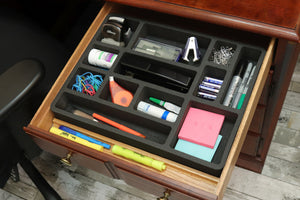
Credit: polarwhale.com
Optimizing Vertical Space
Maximize the space in a deep desk drawer by stacking items vertically. Use dividers to separate sections for easy access. Place frequently used items on top, while rarely used ones can go deeper.
Optimizing vertical space in a deep desk drawer can transform clutter into order. This approach maximizes storage while keeping essentials accessible. Use the entire height of the drawer, especially if it’s deep. Vertical organization helps you see everything at a glance, reducing the time spent searching for items.Using Tiered Trays
Tiered trays make it easy to stack items. They provide multiple levels for storing different objects. Choose trays with adjustable tiers to fit various heights. Stack smaller items on the top tier for visibility. Use the lower tiers for larger items. This method keeps everything organized and within reach.Utilizing Tall Containers
Tall containers are perfect for holding pens, rulers, and scissors. They use the full height of the drawer. Place containers towards the back to leave room for shorter items. Opt for clear containers to quickly identify contents. Group similar items in each container. Label containers for easy identification. This strategy reduces clutter and enhances accessibility.Labeling For Efficiency
Labeling for efficiency in a deep desk drawer involves sorting items by category. Use dividers to separate sections. Clearly label each area for easy access and quick retrieval.
Organizing a deep desk drawer can transform your workspace from chaotic to efficient. A key aspect of this organization is labeling. Labels not only help you find what you need quickly but also maintain order. They guide you and anyone else using the drawer, ensuring everything is returned to its proper place. Let’s explore how you can implement efficient labeling in your deep desk drawer.Why Labeling Matters
Labeling creates a roadmap for your drawer. When everything has a designated spot, it prevents clutter from building up. Imagine opening your drawer and instantly seeing where each item belongs. This clarity saves you time and reduces frustration.Choosing The Right Labels
Select labels that are clear and durable. Handwritten labels can work, but printed ones are often more legible. If you use your drawer frequently, consider labels that are waterproof or adhesive. This way, your labels stay intact even with regular use.Using Color Coding
Color coding can add another layer of organization. Assign different colors to different categories like office supplies, personal items, and electronics. This visual cue speeds up your search process. Plus, it makes the drawer look more organized and inviting.Creating A Labeling System
Develop a system that suits your needs. You might label by frequency of use, with items you use daily at the front. Alternatively, label by category or project. Think about what makes sense for your workflow.Label Placement
Where you place your labels matters. Ensure they’re visible without needing to remove items. Consider labeling the top of boxes or the front of containers. This way, you can spot the label at a glance, even if your drawer is full.Updating Labels
Over time, your needs may change. Don’t hesitate to update your labels to reflect your current situation. Regularly review your drawer’s contents and adjust labels as necessary. Keeping your labeling system flexible ensures it continues to serve you well.Personal Experience With Labeling
I once struggled with a cluttered drawer, constantly searching for essentials. Implementing a labeling system transformed my routine. Now, I find items in seconds. This simple change saved me time and stress, proving the power of efficient labeling. Have you labeled your desk drawer yet? What system works best for you?
Credit: www.tiktok.com
Maintaining Organization
Maintaining organization in a deep desk drawer is crucial for ensuring that the system you have put in place continues to serve you efficiently. Without regular attention, even the most meticulously organized drawer can become a chaotic mess. The key lies in consistency and adaptability. You must be proactive in keeping your drawer orderly and be ready to modify your strategy as your needs evolve. Let’s dive into some practical tips on maintaining this organization.
Regular Clean-ups
Think of your deep desk drawer as a living space that requires periodic maintenance. Regular clean-ups are essential to keep it functioning optimally. Set a reminder on your phone or calendar to tidy up the drawer at least once a month. This prevents clutter from accumulating.
During your clean-up, remove all items from the drawer. Assess which ones are necessary and discard or relocate those that are not. This step helps refresh your drawer and gives you a clear view of what you have. A clean drawer is more inviting and makes locating items a breeze.
Organize items by category and place them back in designated spots. Use drawer dividers or small containers to keep things separated and easy to find. A consistent cleaning routine keeps your drawer organized and helps you identify what is useful and what can go.
Adapting To Changing Needs
Your needs may change over time, requiring adjustments in how you organize your drawer. Perhaps you’ve taken up a new hobby or your job responsibilities have shifted, resulting in different items to store. Be flexible and willing to revise your organizational system to accommodate these changes.
Start by evaluating your current drawer contents. Are there items you no longer use or need? Consider donating or storing them elsewhere. This frees up space for new essentials, ensuring your drawer remains functional for your current lifestyle.
Experiment with different organizational tools and techniques. Perhaps a new set of dividers or a change in layout could better suit your evolving needs. Don’t shy away from trying something new; the right setup can make a significant difference in your productivity.
How often do you reassess your drawer’s organization? Regular evaluation is crucial to maintaining a system that works for you. Adjust your approach as needed to keep your drawer a helpful resource rather than a source of frustration.
Frequently Asked Questions
How To Organize Deep Desk Drawers?
Maximize space with drawer organizers. Group similar items together. Use vertical stacking for smaller objects. Label sections clearly. Regularly declutter to maintain order.
How To Organize Drawers That Are Too Deep?
Use dividers or bins to categorize items. Stack items vertically for visibility. Store frequently used items at the front. Use labels for easy identification. Regularly declutter to maintain organization.
How To Organize Pots And Pans In A Deep Drawer?
Use dividers to separate pots and pans. Store lids vertically with a lid organizer. Place heavier items at the bottom. Stack similar-sized pots together. Arrange pans side by side for easy access.
How To Pack Deep Drawers?
Organize deep drawers by using dividers for categorization. Store items vertically for easy access. Use clear containers to see contents. Keep frequently used items at the front. Label sections for quick identification.
Conclusion
Organizing a deep desk drawer is easier with clear steps. Start by emptying the drawer and sorting items. Use dividers to create sections for different things. Label each section for quick access. Regularly check and remove items you don’t need.
This prevents clutter and keeps your drawer neat. Remember, organization saves time and boosts productivity. A clean drawer makes it easy to find what you need. You’ll enjoy a tidy workspace and feel more focused. Try these tips today for a well-organized drawer.

I’m Abby Lu, a passionate home cook who loves simplifying everyday meals. At PlugChef.com, I share product reviews and cooking guides to help you find the best tools for your kitchen.
Related posts:
 What Type of Cooking Utensils are Safe: Expert Picks
 What Innovations Could Blenders Make: Unleashing Future Tech
 Smart Strategies to Organize a Small Kitchen: Maximize Space
 How to Organize a Kitchen Cabinet: Expert Tips & Tricks
 How to Organize Kitchen Drawers: Expert Tips and Tricks
 How to Organize a Corner Kitchen Cupboard: Expert Tips