

Imagine whipping up a batch of delicious cupcakes, only to realize your baking tools aren’t as clean as they should be. You know that cleanliness is key, not just for health but for the perfect bake.
Properly sanitized and well-stored tools can make all the difference in your culinary creations. But how often do you think about the cleanliness of your spatulas, mixing bowls, and measuring cups? You deserve a kitchen that not only inspires creativity but ensures safety for you and your loved ones.
This guide will equip you with simple, effective steps to keep your baking tools spotless and organized. Dive in and discover how easy it is to maintain your baking arsenal, making sure every bake is as delightful and safe as possible.

Credit: www.cleanipedia.com
Importance Of Clean Baking Tools
Ensuring baking tools are clean prevents contamination and keeps flavors pure. Sanitize to remove bacteria and germs. Store tools properly to maintain their condition and longevity.
Ensuring your baking tools are clean is fundamental to achieving successful baking results. Clean tools maintain the integrity of your recipes and help prevent contamination. Imagine baking a cake with a whisk that still has traces of yesterday’s garlic-infused meal. Not only does this affect the flavor, but it also poses a health risk. Clean tools ensure your baked goods taste as intended and are safe to consume.Why Clean Baking Tools Matter
Baking is both an art and a science, where precision is key. A dirty measuring cup can alter your ingredients’ proportions, leading to less-than-perfect results. Consistency in taste and texture is compromised with unclean tools. Also, bacteria thrive in leftover food residues. Using tools that aren’t properly cleaned can introduce harmful bacteria into your food. This can lead to foodborne illnesses, something no baker wants for their family or customers.Preventing Cross-contamination
Cross-contamination isn’t just a concern for professional kitchens; it matters in home baking too. Using the same spatula for raw egg and then icing can cause problems. You wouldn’t want traces of raw ingredients in your finished product. Ensure you wash your tools thoroughly after each use. Consider having separate tools for different tasks if you bake frequently. This simple step can significantly reduce the risk of cross-contamination.Prolonging The Life Of Your Tools
Baking tools can be an investment. Proper cleaning extends their life, saving you money in the long run. For example, wooden spoons can crack if not cleaned and dried properly. Metal tools can rust if left with water or food residues. Taking a few extra minutes to clean and dry your tools ensures they remain in top condition.How Often Should You Clean Baking Tools?
After every use, is the short answer. Letting residues sit on your tools can make them harder to clean later. It also increases the risk of bacteria multiplying. If you’re in the middle of a baking marathon, a quick rinse can suffice until you’re done. But a thorough cleaning should follow every baking session. This habit ensures your tools are ready for your next baking adventure. The importance of clean baking tools can’t be overstated. They ensure your creations are safe, delicious, and consistent. So next time you bake, take a moment to clean your tools. Your taste buds and your health will thank you.Essential Cleaning Supplies
Keeping your baking tools and equipment clean is crucial. Clean tools ensure food safety and maintain taste. Having the right cleaning supplies makes this task easier. Let’s explore the essential cleaning supplies you need.
Soap And Water
Soap and water are basic yet effective. Use mild dish soap for washing tools. Warm water helps in removing grease and residue. Rinse thoroughly to avoid soap traces.
White Vinegar
White vinegar is a natural disinfectant. It helps in sanitizing surfaces and tools. Mix equal parts vinegar and water for a cleaning solution. Spray and wipe for a clean finish.
Baking Soda
Baking soda is a powerful cleaning agent. It helps in scrubbing off stubborn stains. Make a paste with water and apply to dirty areas. Let it sit, then scrub and rinse.
Microfiber Cloths
Microfiber cloths are gentle and effective. They absorb moisture and dirt easily. Use them to wipe down surfaces and tools. Wash and reuse for longevity.
Scrub Brushes
Scrub brushes reach into small crevices. Choose brushes with firm bristles for tough spots. They are great for cleaning pans and mixers. Keep a few sizes for different tools.
Sanitizing Sprays
Sanitizing sprays kill bacteria and germs. Choose food-safe sprays for kitchen use. Spray on tools after cleaning for extra protection. Allow them to air dry completely.
Step-by-step Cleaning Process
Begin by rinsing baking tools and equipment with warm water to remove residue. Scrub gently using mild soap and a sponge, then sanitize using a food-safe solution. Ensure items are completely dry before storing in a clean, dry place. Proper cleaning and storage maintain hygiene and extend the life of your baking tools.
Cleaning your baking tools and equipment is crucial for maintaining their longevity and ensuring your next baking adventure is as delightful as the last. By following a step-by-step cleaning process, you not only keep your tools in pristine condition but also prevent any unwanted flavors or bacteria from spoiling your culinary creations. Let’s dive into how you can efficiently clean, sanitize, and store your baking tools and equipment with ease.Removing Residue
Start by removing any food residue on your tools. Use a spatula or brush to scrape off dough or batter remnants. If you’re dealing with stubborn spots, soak the tools in warm water for a few minutes. This will loosen the residues, making them easier to clean.Washing With Soap
Use a mild dish soap for washing. Apply a few drops on a sponge or cloth and gently scrub your tools. Pay special attention to grooves and edges where food particles tend to hide. Ensure you clean all surfaces thoroughly.Rinsing Techniques
Rinse your tools under warm running water. Make sure all soap is washed off, as leftover soap can impact the taste of your next bake. For larger equipment, consider using a detachable showerhead for a more thorough rinse.Drying Methods
Dry your tools with a clean towel or let them air dry. Avoid leaving them wet, as this can lead to rust or mold. For wooden tools, ensure they’re completely dry before storing to prevent cracking or warping. Have you ever found a rusty whisk or a moldy rolling pin in your drawer? Proper cleaning and drying can prevent such unpleasant surprises. By adopting these steps, you’re not just cleaning—you’re caring for your tools, ensuring they’re ready to assist your baking creativity. Now that you know how to clean your baking tools efficiently, imagine the joy of reaching for a perfectly clean spatula or whisk when you bake. Will your next bake be a scrumptious cake or perhaps crispy cookies? Whatever it is, your tools are ready for the challenge!Sanitizing Baking Tools
Sanitizing baking tools is crucial for maintaining a hygienic kitchen. It prevents the spread of bacteria and ensures your baked goods are safe to eat. Proper sanitization also extends the lifespan of your tools, keeping them in top condition.
Choosing The Right Sanitizer
Not all sanitizers are suitable for kitchen tools. It’s vital to choose a product that is safe for surfaces used in food preparation. Look for sanitizers labeled as food-safe or kitchen-friendly. Ensure it effectively kills germs without leaving harmful residues.
Consider using a sanitizer that is easy to apply. Sprays, wipes, or solutions that can be dipped are usually convenient. Always check the instructions on the label for proper use. This ensures maximum effectiveness.
Sanitizing Techniques
Start by washing the tools with warm water and soap. This removes visible dirt and grease. Rinse thoroughly to eliminate soap residue.
Apply the chosen sanitizer to the tool’s surface. Let it sit for the recommended time. This allows the solution to kill bacteria effectively.
Rinse the tools again with water. This removes any sanitizer residue. Finally, dry the tools completely. Use a clean towel or let them air dry.
Regular sanitizing keeps your baking tools safe. It also ensures your baked goods remain fresh and delicious.
Storing Baking Tools Properly
Proper storage of baking tools ensures they last longer. Well-maintained equipment enhances your baking experience. It keeps your workspace tidy and efficient. Here’s how to store your baking tools correctly.
Organizing Your Tools
Start by categorizing your tools. Group similar items together. Store measuring cups and spoons in one area. Keep mixing bowls stacked neatly. This reduces clutter and saves space. Use drawer dividers for smaller tools. Label shelves or containers for easy access. It helps you find what you need quickly.
Avoiding Moisture
Moisture damages baking tools. Keep them dry to prevent rust. Use air-tight containers for metal tools. Store wooden tools in cool, dry places. Ensure your kitchen has proper ventilation. Consider silica gel packets for cabinets. They absorb moisture effectively.
Preventing Damage
Proper storage prevents damage. Avoid stacking heavy items on delicate tools. Use protective covers for sharp objects. Store silicone molds flat to maintain shape. Hang rolling pins vertically to prevent warping. Regularly check tools for wear and tear. Prompt repairs extend their lifespan.
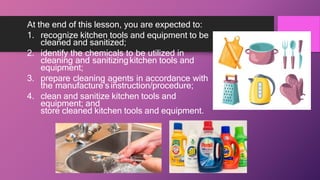
Credit: www.slideshare.net
Common Mistakes To Avoid
Cleaning, sanitizing, and storing baking tools and equipment is crucial. Yet, many people make common mistakes. These errors can lead to damage or unsanitary conditions. Knowing what to avoid can help preserve your tools. It also ensures safe and tasty baking results.
1. Not Reading Manufacturer InstructionsMany ignore manufacturer instructions for cleaning tools. This oversight can lead to damage. Always check labels or manuals. Some tools have special cleaning requirements. Following these guidelines helps maintain their quality.
2. Using Harsh ChemicalsUsing strong chemicals can harm your tools. They may cause wear or leave residues. Opt for mild detergents. Gentle cleaning agents protect your equipment. They also ensure safe baking surfaces.
3. Improper DryingNeglecting proper drying is a common mistake. Moisture leads to rust or mold. Always dry tools thoroughly. Use a clean towel or air dry them. This prevents damage and keeps them hygienic.
4. Mixing Metal and Wooden ToolsStoring metal and wooden tools together can cause issues. Metal can scratch wooden surfaces. Separate storage helps prevent damage. Use different compartments or containers for each type. This keeps your tools in good condition.
5. Ignoring Regular MaintenanceSkipping regular maintenance can shorten tool lifespan. Check tools for any signs of wear. Tighten loose parts and replace worn-out items. Regular care extends the life of your equipment.
Expert Tips For Maintenance
Keeping baking tools and equipment in good shape is essential. Proper maintenance ensures they last longer and work efficiently. Regular cleaning and storage are vital. But there’s more to consider. Learn expert tips for maintaining your baking essentials. This will help you bake with ease and precision.
Regular Inspection
Make it a habit to check your tools often. Look for any signs of wear or damage. This includes cracks, rust, or loose parts. A quick inspection can prevent bigger issues. It also ensures your tools are safe to use. Clean tools work better and last longer.
Inspect your equipment before and after use. This keeps your tools in top condition. Regular checks help spot problems early. This saves time and money in the long run.
Replacing Worn Tools
Worn-out tools can affect your baking results. They may not perform as well as new ones. Replace any tools that show signs of wear. This includes dull knives or bent whisks. Using faulty equipment can lead to frustration.
Keep an eye out for sales or discounts. This makes replacing tools more affordable. Investing in quality tools is worth it. They last longer and offer better performance.

Credit: www.homeservicestoronto.com
Frequently Asked Questions
How To Clean And Sanitize Baking Tools?
Wash baking tools with warm soapy water. Scrub gently using a sponge or brush. Rinse thoroughly and dry completely. Sanitize by soaking in a vinegar solution or using a food-safe sanitizer spray. Store in a clean, dry area to prevent contamination.
Regular cleaning ensures hygiene and longevity of your baking tools.
What Is Clean, Sanitize, And Store Kitchen Tools And Equipment?
Clean kitchen tools with soap and water to remove debris. Sanitize with a disinfectant to kill germs. Store them in a dry place to prevent contamination.
How Clean And Sanitized Equipment Can Be Stored?
Store clean, sanitized equipment in a dry, dust-free area. Use shelves or cabinets to prevent contamination. Ensure the storage space is well-ventilated and separate from dirty items. Regularly check and maintain the cleanliness of the storage area. Label and organize equipment for easy access and monitoring.
How To Clean, Maintain, And Store Tools And Equipment?
Clean tools with a damp cloth and mild soap. Dry them thoroughly to prevent rust. Regularly inspect for damage and lubricate moving parts. Store tools in a dry, organized space. Use protective covers or cases for sensitive equipment. Follow manufacturer guidelines for specific maintenance needs.
Conclusion
Cleaning and storing baking tools is essential. Protects your investment. Keeps everything hygienic. Follow the steps regularly. Prevents bacteria and mold growth. Use gentle soap and water for cleaning. Dry tools completely before storing. Organize them in a dry, cool place.
Avoid clutter for easy access. Proper care extends their lifespan. Ensures safe food preparation. Try these tips today. Make baking fun and worry-free. Your kitchen will thank you. Simplify your routine. Enjoy baking with clean tools. Keep it simple. Bake more.
Stress less. Happy baking!

I’m Abby Lu, a passionate home cook who loves simplifying everyday meals. At PlugChef.com, I share product reviews and cooking guides to help you find the best tools for your kitchen.
Related posts:
 What Type of Cooking Utensils are Safe: Expert Picks
 What Innovations Could Blenders Make: Unleashing Future Tech
 Smart Strategies to Organize a Small Kitchen: Maximize Space
 How to Organize a Kitchen Cabinet: Expert Tips & Tricks
 How to Organize Kitchen Drawers: Expert Tips and Tricks
 How to Organize a Corner Kitchen Cupboard: Expert Tips

